A puppy drum is a young red drum, a popular saltwater fish found along the Atlantic and Gulf coasts of the United States. Anglers may also call it a juvenile redfish or simply a small red drum.
The term is not a universal scientific name. Its meaning can vary by state and fishing region. In most U.S. coastal waters, however, “puppy drum” means a smaller red drum (Sciaenops ocellatus), not a young dogfish or a separate fish species.

What does a puppy drum look like?
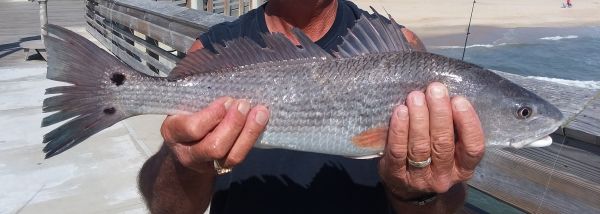
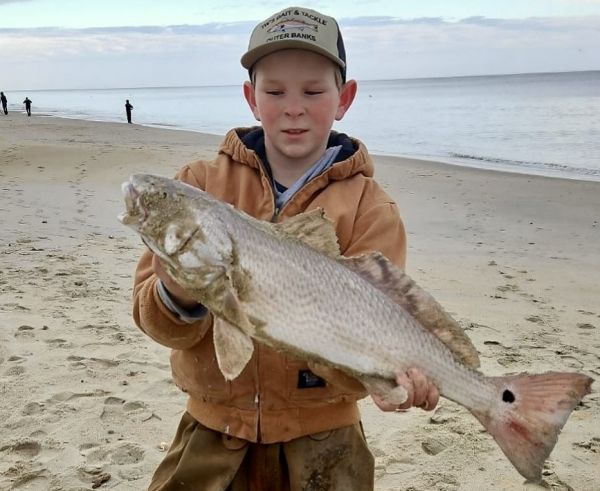
A puppy drum has the same basic shape as an adult red drum. It has a long, narrow body, a sloped head, and a copper, bronze, or reddish color along its sides.


The most useful identifying mark is the dark spot near the base of the tail. A red drum may have one spot or many spots. Some fish have spots on both sides of the body.
Key traits include:
- A copper, bronze, or reddish body
- A white or pale belly
- A single large spot or several dark spots near the tail
- A long, pointed head
- A slightly downturned mouth
- A firm, streamlined body
- A deep drumming sound in some adult fish
The spot can fade after the fish dies or after rough handling. For that reason, look at the fish while it is still in the water or freshly landed.
Why is it called a drum?
Red drum belong to the drum family, Sciaenidae. Fish in this family can make low sounds by moving muscles against their swim bladders.
The sound resembles a drumbeat. Male red drum often make this noise during spawning, though the name “drum” applies to the fish group as a whole.
Is a puppy drum a redfish?
Usually, yes. Redfish is a common U.S. name for red drum, especially along the Gulf Coast. Red drum and redfish generally refer to the same species.
“Puppy drum” describes a smaller fish. It does not describe a separate species.

How big is a puppy drum?
There is no single nationwide size that defines a puppy drum. The term is informal, and local anglers use it in different ways.
In many Atlantic Coast fishing areas, anglers use “puppy drum” for red drum that are smaller than adult fish. Some use the term for fish under about 18 inches. Others use it for young fish under 24 inches.
That informal size does not replace the law. A state may set its own:


- Minimum size
- Maximum size
- Slot limit
- Daily bag limit
- Seasonal closure
- Gear rule
- Release requirement
A fish can be called a puppy drum by an angler and still be legal to keep—or illegal to keep—depending on the state and the water where it was caught.
Puppy drum size compared with adult red drum
| Term | Common meaning | Important limit |
|---|---|---|
| Puppy drum | A small or young red drum | Not a formal nationwide size class |
| Slot-size red drum | A fish within a state’s legal size range | Rules vary by state |
| Adult red drum | A mature or larger red drum | Large adults may be protected |
| Bull red | A large adult red drum, often a catch-and-release fish | Local rules still apply |
The phrase “bull red” also varies. Many anglers use it for large red drum, often over 30 inches. It is an angling term, not a separate species.
Why size matters
Red drum often move through different habitats as they grow. Young fish tend to use shallow estuaries, marsh creeks, and protected bays. Larger fish may move into deeper channels, inlets, sounds, and nearshore ocean waters.
Size can therefore offer a rough clue about age and habitat. It cannot tell you the fish’s exact age.

Where do puppy drum live in the United States?
Puppy drum live in coastal waters from the Gulf of Mexico and southern Florida to the Atlantic Coast as far north as Massachusetts and nearby waters. Their numbers and local names differ by region.
Young red drum often live in:
- Salt marsh creeks
- Tidal rivers
- Shallow bays
- Oyster reefs
- Seagrass beds
- Mud flats
- Brackish water
- Estuary edges
An estuary is a place where fresh water mixes with salt water. These areas offer food and shelter for young fish.
In the Mid-Atlantic and Southeast, puppy drum may gather near creek mouths, marsh banks, docks, bridges, oyster beds, and current breaks. Along the Gulf Coast, young redfish often use shallow bays, grass flats, passes, and marsh drains.
The best habitat changes with the tide, season, water temperature, salinity, and food supply.
What do puppy drum eat?
Young red drum eat small fish and bottom-dwelling animals. Their food may include:
- Shrimp
- Small crabs
- Mullet
- Menhaden
- Silversides
- Small spot
- Mud minnows
- Worms
- Other small crustaceans
They often feed near the bottom. A moving tide can carry shrimp and baitfish past marsh edges, rocks, oyster beds, and channel mouths.
Are puppy drum good to eat?
Puppy drum can be good to eat when they are legally caught, properly handled, and cooked well. Their flesh is usually firm, mild, and slightly sweet.
Taste can depend on:


- Fish size
- Water quality
- Season
- Handling
- Bleeding and icing
- Cooking method
- Local habitat
Smaller red drum may have a milder texture than large fish. Large red drum can be edible, but many anglers release them because older breeding fish support the fishery and may be protected by local rules.
Before keeping one, check the current regulations for the exact state and water. Also check local fish-consumption advisories. Advisories may limit how often people should eat fish from certain rivers, bays, or industrial areas.
How should you handle a puppy drum for the table?
If the fish is legal to keep:
- Confirm its size with a legal measuring tool.
- Check the bag limit and season.
- Kill it quickly and humanely.
- Bleed it if local practice and regulations allow.
- Put it on ice as soon as possible.
- Clean it with a clean knife and board.
- Remove dark meat if you prefer a milder taste.
- Cook it fully.
Do not keep a fish just because it looks close to the legal size. A fish that is under the limit by even a small amount may still be illegal to possess.

How do you catch puppy drum?
The best way to catch puppy drum is to match the bait and lure to the habitat. Young red drum often feed along shallow structure and current edges.
Common options include:
- Soft plastic shrimp or minnows
- Spoons
- Small jigs
- Popping lures
- Live shrimp
- Mud minnows
- Cut bait
- Small mullet
- Bottom rigs with natural bait
Fish near places where current moves food. Good starting points include marsh drains, creek mouths, oyster edges, grass lines, bridge pilings, and channel drop-offs.
A simple shore-fishing method
For a basic setup:
- Use medium-light or medium spinning tackle.
- Tie on a leader that can handle contact with oysters and structure.
- Cast near a current seam or marsh edge.
- Let the lure reach the desired depth.
- Retrieve it slowly with short pauses.
- Set the hook when the line comes tight.
- Keep steady pressure during the fight.
- Check the fish against the current state regulations.
A slow retrieve often works because puppy drum may follow a bait before striking. In shallow water, a quiet approach can matter more than a long cast.
How do you know you caught a puppy drum?
A puppy drum often gives a strong, steady pull. It may make a short run toward cover or along the bank. Its body feels solid, even when the fish is not large.
Do not identify the fish by fight alone. Check its body shape, tail spot, and color. Other coastal fish can pull hard and may look similar at a quick glance.
Signs that your approach is working
You may be in a productive area when:
- You see shrimp or baitfish fleeing
- Birds work over small bait
- The tide pushes water from a marsh drain
- You find clean current near structure
- Fish strike near the bottom or along an edge
- Several red drum appear in the same shallow zone
If you catch small fish but no puppy drum, change one factor at a time. Try a slower retrieve, a smaller bait, a different depth, or the next current seam.


Puppy drum vs. black drum: What is the difference?
Puppy drum and black drum can share the same bays, rivers, and marshes. They are different species, however.
| Feature | Puppy drum | Black drum |
|---|---|---|
| Species | Red drum (Sciaenops ocellatus) | Black drum (Pogonias cromis) |
| Body color | Copper, bronze, or reddish | Gray, silver-gray, or dark gray |
| Tail mark | Often one or more dark spots | Usually no clear red drum-style tail spot |
| Chin | Usually smooth | Has short whisker-like barbels |
| Body shape | More streamlined | Deeper and heavier |
| Common sound | Can drum | Also known for drumming |
The tail spot is the fastest clue, but it is not the only one. A black drum has small feelers under its chin that help it find food on the bottom.
Local names can create confusion. In some areas, people may use “drum” for both red drum and black drum. When a fish matters for a legal size limit, identify the species carefully.

Is a puppy drum the same as a spot or croaker?
No. A puppy drum is a young red drum. A spot and a croaker are different fish.
Spot and Atlantic croaker are also members of the drum family. They may live in the same estuaries and may produce drum-like sounds. Their body shape, markings, and legal rules differ.
A red drum usually has a noticeable dark spot near the tail. Spot have a distinct dark mark behind the gill cover, while Atlantic croaker often have a more silver body and barbels near the chin.
If you are unsure, use a regional fish identification guide from a state marine fisheries agency. Do not rely on a common name alone.
What should you do after catching a puppy drum?
Your first step is to identify the fish and check the local rule. Regulations can change by state, season, water body, and fish size.
If you plan to release it
Handle the fish as little as possible.
- Wet your hands before touching it.
- Keep the fish in the water when you can.
- Support its body with both hands.
- Do not squeeze the belly.
- Avoid touching the eyes and gills.
- Remove the hook with pliers.
- Cut the leader if the hook is deep.
- Do not drag the fish across sand or a boat deck.
- Release it facing into gentle current.
If the fish is exhausted, hold it upright in the water. Let water flow across the mouth and gills. Release it when it can swim away on its own.
If you plan to keep it
Measure the fish on a flat surface with the mouth closed and the tail compressed, unless the local rule gives a different method. Use the exact method stated by the agency that manages the water.
Record the fish’s length and species if you keep a log. A quick photo can help confirm the identification, but do not delay release or expose a fish to extra harm just to take a picture.


Common mistakes when identifying or keeping puppy drum
Several errors cause confusion or accidental violations.
Mistake 1: Treating “puppy drum” as a legal term
It is usually a local nickname. The law may refer to red drum, redfish, or Sciaenops ocellatus instead.
Mistake 2: Assuming one size rule applies everywhere
A rule in North Carolina may not match a rule in Virginia, Florida, Texas, or another state. Even nearby waters can have different management rules.
Mistake 3: Counting on the tail spot alone
The spot is a strong clue, but poor light, water, and fish condition can make it hard to see. Check the body shape and compare the fish with a trusted local guide.
Mistake 4: Confusing a puppy drum with a black drum
Both fish can live near oyster beds and marsh edges. Look for the red drum’s tail spot and the black drum’s chin barbels.
Mistake 5: Handling a released fish with dry hands
Dry hands can remove the fish’s protective slime coat. Wet your hands first and keep the fish out of the air for as little time as possible.
Mistake 6: Using old regulation information
Fishing laws change. Check the current state marine fisheries website before fishing, especially if you are traveling or fishing near a state boundary.

Frequently asked questions
Is a puppy drum a baby redfish?
Yes. In common U.S. fishing language, a puppy drum is usually a young or small red drum, also called a redfish.
Are puppy drum freshwater fish?
No. Red drum are saltwater and estuarine fish. Young red drum can enter brackish water, where fresh and salt water mix, but they are not freshwater fish.
Can a puppy drum live in a river?
Yes, if the river has tidal or brackish sections. Young red drum often use tidal rivers and creeks, especially where those waters connect with bays or salt marshes.
Do puppy drum have teeth?
Red drum do not have large, sharp teeth like a bluefish. They have strong jaws and crushing plates that help them eat shrimp, crabs, and small fish. Handle them with care, but their mouth is not usually the main injury risk.
What is the best bait for puppy drum?
Live shrimp, mud minnows, small mullet, and cut bait can work. Artificial shrimp, soft plastics, jigs, and spoons can also be effective. Match the bait to the local forage and fish near current or structure.
Should you release large red drum?
Many anglers release large red drum because they are important breeding fish and may be protected by a slot limit or other rule. Always follow the current local regulation. A large fish may not be legal to keep.
Key takeaways
- A puppy drum is usually a young red drum.
- Its scientific name is Sciaenops ocellatus.
- The dark spot near the tail is a key identifying feature.
- The term is informal, so its size meaning varies by region.
- Puppy drum live in U.S. coastal bays, marshes, rivers, and estuaries.
- Red drum can be confused with black drum and other drum-family fish.
- Check current state rules before keeping, measuring, or transporting one.
- Wet your hands and handle the fish gently if you release it.
Conclusion
A puppy drum is not a separate species. It is the common name most often used for a small or young red drum along the U.S. Atlantic and Gulf coasts.


The safest way to identify one is to check its copper-colored body, tail spot, body shape, and local fish guide. Then confirm the current state regulations before deciding whether to keep it. For the next fishing trip, save the local marine fisheries page on your phone and carry a measuring tool.

Senior Music Reviewer
Alex Carter is a seasoned music reviewer with over a decade of experience in the world of sound and instruments. Passionate about helping musicians and enthusiasts make informed choices, he brings sharp insights and in-depth knowledge to every review. From classical instruments to modern gear, Alex combines technical expertise with a love for music to deliver content that resonates with readers.
As a Senior Music Reviewer and expert author on Tuneluma.com, Alex is dedicated to sharing honest evaluations, practical advice, and thoughtful commentary to guide readers in their musical journey.