How Are The Strings Of A Violin Tuned: Easy Guide
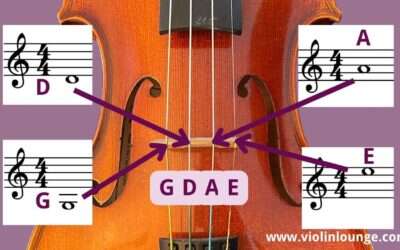
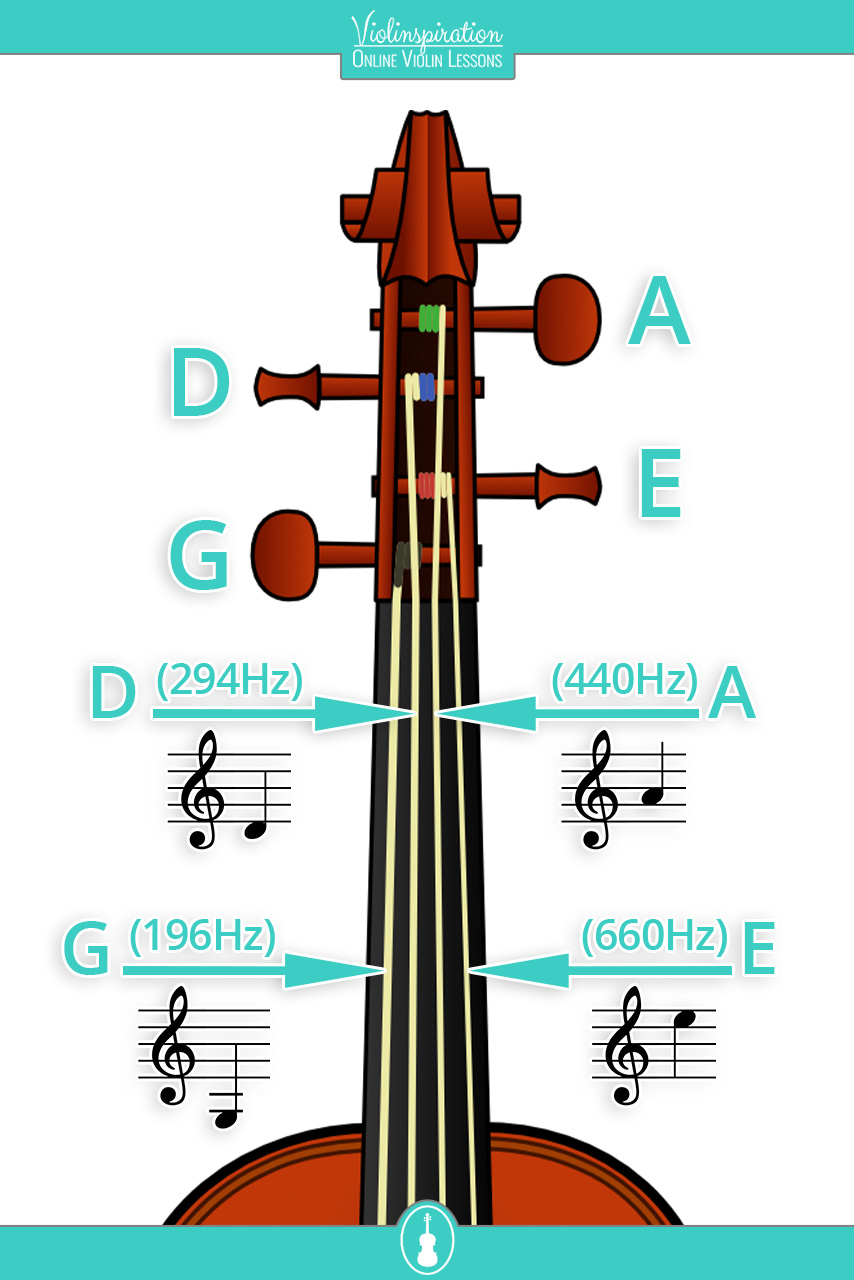
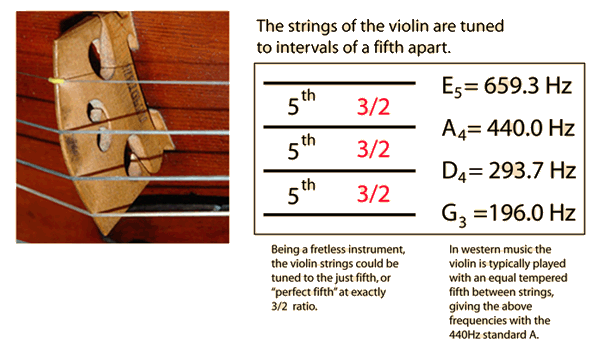
Violin strings are tuned in perfect fifths to G3, D4, A4, and E5, from lowest to highest.
Learning how are the strings of a violin tuned is the first step toward a clear, stable sound. The process uses the violin’s tuning pegs, fine tuners, and a reference pitch, usually A4 at 440 hertz. With the right order and a gentle touch, even a beginner can tune safely and accurately.
How Are the Strings of a Violin Tuned?
A violin has four strings. From lowest to highest, they are:
• G string: G3, about 196 hertz
• D string: D4, about 293.7 hertz
• A string: A4, 440 hertz
• E string: E5, about 659.3 hertz
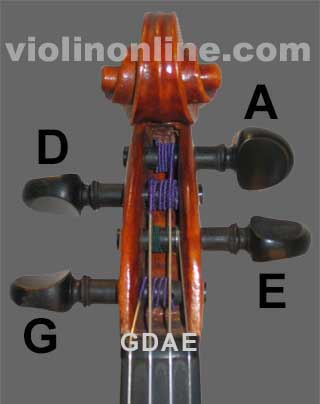
Each neighboring string is separated by a perfect fifth. This means the pitch relationship is based on a simple musical interval. The open strings are tuned as G, D, A, and E.
Most violinists tune the A string first. They then tune the D string to the A string, the G string to the D string, and the E string to the A string. This method creates a balanced set of pitches across the instrument.

Why Violin Strings Use Perfect Fifths
Perfect fifths give the violin a wide and useful range. They also make it easier to play scales, chords, double stops, and common melodies.
The relationship between the strings is easy to hear. When two strings are close to the correct interval, the sound feels smooth and stable. When they are slightly out of tune, you may hear a pulsing sound called a beat.
A beat happens when two nearby frequencies interfere with each other. As you adjust the string, the beat becomes slower. When the interval is correct, the beat almost disappears.
This is one reason experienced players do not rely only on a digital tuner. They use the tuner for accuracy, then listen to the relationship between strings. The ear helps confirm whether the violin sounds musical as a whole.
What You Need to Tune a Violin
Before asking how are the strings of a violin tuned, it helps to understand the basic tools. You do not need a large setup.
Useful tools include:
• A chromatic tuner or violin tuning app
• A reliable reference pitch for A4
• Tuning pegs for large pitch changes
• Fine tuners for small pitch changes
• A properly fitted bridge
• A quiet room with little background noise
Many beginner violins have four fine tuners. Some professional violins use only one fine tuner on the E string. The other strings are adjusted mainly with the pegs.
A tuner shows whether a note is sharp or flat. Sharp means the pitch is too high. Flat means the pitch is too low. The goal is to bring each open string to the center of the correct note.
How to Tune Violin Strings Step by Step
Use this method when learning how are the strings of a violin tuned. Go slowly, especially if the strings are new.
1. Place the violin correctly
hold the violin in a safe position, or place it on a soft, stable surface. Keep the bridge standing straight between the f-holes.
Never tune with the bridge leaning forward or backward. String tension can pull the bridge out of place, which may damage the instrument.
2. Start with the A string
The A string is the main reference string. Play it with a slow, even bow stroke or gently pluck it.
Compare the note with a tuner set to A4 at 440 hertz. Adjust the pitch until the tuner shows A.
3. Use the fine tuner for small changes
Turn the fine tuner clockwise to raise the pitch. Turn it counterclockwise to lower the pitch.
Make small turns. A quarter turn can create a clear change in pitch, so avoid fast or forceful adjustments.
4. Tune the D string
Play the open A and D strings one after the other. The D string should sound a perfect fifth below the A string.
Use the D fine tuner if your violin has one. If the string is far from the correct pitch, use the tuning peg first, then finish with the fine tuner.
5. Tune the G string
Compare the open G string with the open D string. The G string should form a perfect fifth below D.
Tune the G string with the peg when needed. Stop often to check the bridge and make sure it remains upright.
6. Tune the E string
The E string is the highest and thinnest string. Tune it against the A string or use a chromatic tuner set to E5.
The E string can break if you turn its peg too quickly. Use tiny movements and release pressure if the pitch rises too fast.
7. Check every string again
Tuning one string changes the total tension on the violin. This can slightly affect the other strings.
Play G, D, A, and E again. Make small corrections until all four strings sound stable.
How to Use the Tuning Pegs Safely
Tuning pegs control large pitch changes. They must turn smoothly but also hold firmly when released.
To raise a string’s pitch, turn the peg so the string becomes tighter. To lower the pitch, turn it so the string becomes looser. The exact direction depends on the peg and the side of the pegbox, so watch the pitch rather than memorizing one direction.
Use this safe technique:
- Turn the peg a very small amount.
- Keep gentle inward pressure on the peg.
- Pluck the string after each adjustment.
- Stop if the peg slips or feels stuck.
- Check the bridge after major adjustments.
Do not force a tight peg. A violin technician can clean, fit, or lubricate it safely. Too much pressure may damage the pegbox or cause a string to snap.
How to Use Fine Tuners
Fine tuners are designed for small adjustments. They are especially helpful for beginners because they offer more control than pegs.
If a fine tuner is almost fully tightened, loosen it before using the peg. This gives you room for future corrections. If the screw reaches its limit, do not keep turning it.
A common mistake is to use the fine tuner for a very large pitch change. This can leave the screw at the end of its range and make future tuning difficult. Use the peg for large changes and the fine tuner for the final adjustment.
How Are the Strings of a Violin Tuned With a Digital Tuner?
A digital tuner detects the pitch and shows whether the note is too high or too low. This is one of the easiest methods for new players.
Follow these steps:
• Turn on chromatic mode if the tuner has different settings.
• Play one open string at a time.
• Confirm the tuner displays G, D, A, or E.
• Adjust the string until the indicator reaches the center.
• Play the string again after each small change.
• Check the other strings when finished.
Clip-on tuners often work well because they detect vibration through the violin. Phone apps can also work, but loud rooms, poor microphones, and background noise may affect their readings.
A tuner is a useful guide, not a replacement for listening. The display may show the right note while the strings still sound uneven because of poor tone, unstable tension, or a weak battery.
How Are the Strings of a Violin Tuned by Ear?
Many players tune by ear after setting the A string to a reference pitch. This method develops musical awareness and helps players hear intervals.
First, play the open A string. Then play the open D string. Adjust D until the two notes form a smooth perfect fifth.
Repeat the process:
• Tune D against A.
• Tune G against D.
• Tune E against A.
Listen for beats between the strings. If the beats are fast, the interval needs more adjustment. As the strings become accurately tuned, the beats slow down and the sound becomes calm.
This method takes practice. Beginners should use a tuner first and then check the strings by ear. That combination builds confidence without allowing small errors to grow.

How Are the Strings of a Violin Tuned When Strings Are New?
New strings stretch during the first hours or days. They may go flat several times after installation.
Tune new strings often, but make small adjustments. Avoid pulling hard on the string, as this can damage the string or place extra stress on the bridge.
After installing a string:
- Bring it close to the correct note.
- Check the bridge position.
- Play gently for a short time.
- Retune the string.
- Repeat until the pitch becomes more stable.
A new string may need several tuning cycles before it holds its pitch well. This is normal. Synthetic-core strings often settle more slowly than steel-core strings, though the exact time depends on the brand, instrument, temperature, and playing conditions.
Common Problems When Tuning Violin Strings
Understanding common problems makes how are the strings of a violin tuned much easier to manage.
The peg keeps slipping
A slipping peg may not grip the pegbox correctly. Humidity, wear, poor fitting, or incorrect pressure can cause this problem.
Do not push harder and harder. If the peg continues to slip, ask a violin shop or trained technician to inspect it.
The pitch changes too much
This usually happens when the peg moves too far. Use smaller turns and check the note after each adjustment.
New players often turn the peg while watching the tuner but forget that the pitch may continue to rise for a moment. Slow movements give the string time to respond.
The bridge leans forward
String tension can pull the bridge toward the fingerboard. A leaning bridge may warp or fall.
Check the bridge each time you tune. Its feet should sit flat, and the side facing the tailpiece is usually close to a right angle with the violin top. If you are unsure, stop and get professional help.
A string breaks
Strings can break because of age, sharp contact points, over-tightening, or normal wear. Keep your face away from the pegbox while making large adjustments.
Replace the string with the correct size and type. If the same string breaks repeatedly in the same place, the violin may need inspection.

How Often Should You Tune a Violin?
Most players should check tuning every time they play. A violin can shift because of temperature, humidity, travel, and regular playing.
A beginner may need to tune before each practice session. An active performer may check tuning before rehearsals, during breaks, and before going on stage.
Tune more often when:
• The violin has new strings
• The weather changes quickly
• The instrument has traveled
• The violin was stored for several days
• The sound feels tense or unstable
• You are playing with other musicians
Wood responds to changes in moisture and temperature. Avoid leaving a violin in a hot car, near a radiator, or in direct sunlight. Stable storage helps the instrument hold its tuning and protects the wood.
Standard Tuning and Alternative Tunings
Standard violin tuning is G3, D4, A4, and E5. This is the tuning used in most classical, folk, school, and orchestral music.
Some music uses scordatura, which means the strings are tuned differently from standard tuning. A composer may raise or lower one string to create a special sound or make certain notes easier to play.
Alternative tuning can increase tension if used incorrectly. Never raise a string far above its normal pitch without expert guidance. Always check the music instructions and use suitable strings when required.
Standard tuning also varies slightly by group. Many ensembles use A4 at 440 hertz, while some orchestras tune to A4 at 442 or 443 hertz. The correct reference is the pitch given by the ensemble leader or conductor.

Practical Tuning Lessons for Beginners
One of the most useful lessons is to tune in small steps. Large peg movements create stress and make it easy to overshoot the target.
Another lesson is to check the bridge often. A violin can sound out of tune when the real problem is a bridge that has moved or a string that is not seated correctly.
Use these habits:
• Tune in a quiet room.
• Keep a spare set of strings nearby.
• Learn the names of all four strings.
• Check the A string before the others.
• Use your ears and a tuner together.
• Ask a teacher to demonstrate peg control.
• Stop if a peg feels stuck or a string looks damaged.
A simple routine prevents most tuning problems. Over time, your hands will learn how much each peg should move, much like learning how much pressure to use when turning a faucet.
The Benefits and Limits of Different Tuning Methods
A digital tuner is accurate and easy to use. It works well for lessons, home practice, and players who are still training their ears.
Tuning by ear improves listening skills and helps players match intervals with other musicians. However, it can be difficult in a noisy room or for someone who is still developing pitch memory.
Fine tuners offer control but cannot replace proper peg adjustment. Pegs handle large changes, while fine tuners handle small ones. The best method combines a stable reference pitch, careful peg work, fine adjustments, and active listening.
No method can correct a mechanical problem. A slipping peg, warped bridge, worn string, or damaged tailpiece may require a qualified violin technician.

Frequently Asked Questions About How Are the Strings of a Violin Tuned
What are the four violin strings tuned to?
The four violin strings are tuned from lowest to highest to G3, D4, A4, and E5. These notes are separated by perfect fifths.
Which violin string should be tuned first?
The A string is usually tuned first because it provides the main reference pitch. Many players use A4 at 440 hertz, unless an ensemble requests a different pitch.
Can I tune a violin without a tuner?
Yes, you can tune a violin by ear if you have a reliable reference pitch and enough listening experience. Beginners should use a tuner while also practicing how the strings sound against one another.
Why does my violin go out of tune so quickly?
New strings stretch, and changes in temperature or humidity can affect pitch. Slipping pegs, worn strings, and bridge movement can also cause frequent tuning problems.
Should I use the pegs or fine tuners?
Use the pegs for large pitch changes and the fine tuners for small adjustments. Turning a fine tuner too far can remove its useful adjustment range.
How do I know if a violin string is too tight?
A string is too tight if the pitch rises above its target note or the string feels unusually tense. Stop turning the peg at once and lower the pitch carefully.
Conclusion
Violin strings are tuned from low to high as G, D, A, and E, with each string a perfect fifth apart. Start with the A string, use a tuner or trusted reference pitch, make small peg movements, and finish with fine tuners when needed.
Check the bridge, listen for smooth fifths, and retune often when strings are new or the weather changes. With steady practice, how are the strings of a violin tuned becomes a simple routine rather than a stressful task. Practice this method at your next session, then explore more violin care and playing guides to build confidence.

Senior Music Reviewer
Alex Carter is a seasoned music reviewer with over a decade of experience in the world of sound and instruments. Passionate about helping musicians and enthusiasts make informed choices, he brings sharp insights and in-depth knowledge to every review. From classical instruments to modern gear, Alex combines technical expertise with a love for music to deliver content that resonates with readers.
As a Senior Music Reviewer and expert author on Tuneluma.com, Alex is dedicated to sharing honest evaluations, practical advice, and thoughtful commentary to guide readers in their musical journey.