Where To Buy A Good Quality Violin: Best Places To Shop
The best place to buy a good quality violin is a reputable violin shop with expert setup support.
Choosing where to buy a good quality violin can shape your comfort, progress, and sound for years. A trusted local shop, skilled violin maker, or respected online dealer can help you avoid poor materials, hidden damage, and instruments that are difficult to play. This guide explains how to compare sellers, test violins, understand prices, and buy with confidence.
The Best Places to Buy a Good Quality Violin
The best place to buy a good quality violin depends on your skill level, budget, and need for personal help. Most players should start with a specialist violin shop. These shops often offer trial periods, professional setup, repairs, and trade-in options.
Here are the main places to consider:
- Local violin shops: Best for hands-on testing, expert advice, and after-sale support.
- Professional violin makers: Ideal for advanced players seeking a handmade or custom instrument.
- Reputable online violin dealers: Useful for wider choice, clear return policies, and home trials.
- School music stores: Suitable for beginners, especially when renting an instrument.
- Private sellers: Sometimes affordable, but they carry the highest risk for hidden damage.
- Auction sites and marketplaces: Best for experienced buyers who can inspect violins carefully.
A violin is not like a phone or a pair of shoes. Two violins with the same price can feel and sound very different. The wood, setup, bow, strings, bridge, and sound post all affect the playing experience.
When people ask where to buy a good quality violin, I usually suggest starting with a specialist shop. A good shop will ask about your age, playing level, teacher, budget, and musical goals before showing you instruments.

Why a Specialist Violin Shop Is Often the Safest Choice
A specialist shop has staff who understand violin construction and setup. They can spot issues that most buyers cannot see, such as a warped neck, open seams, poor bridge placement, or an incorrectly fitted sound post.
A reliable shop should let you:
- Play several violins in the same price range.
- Compare instruments with the same bow and strings.
- Take a violin home for a trial period.
- Ask a teacher to test it.
- Return or exchange it under written terms.
- Receive help with future repairs and adjustments.
The setup matters as much as the violin itself. A well-made violin can feel harsh or difficult if the bridge is too high, the strings are poor, or the pegs do not turn smoothly. A skilled repairer can often improve these areas, but major problems may cost more than expected.
In my experience helping people compare instruments, beginners often focus only on a bright sound. That can be a mistake. A bright violin may sound exciting in a small room but become sharp and tiring during practice. A balanced sound is usually easier to live with.
Ask the shop these questions:
- Who made or supplied the violin?
- Was the instrument professionally set up?
- What repairs have been completed?
- Is there a trial period?
- What does the warranty cover?
- Can I return it if my teacher dislikes it?
- Are trade-ins available later?

Buying a Violin From a Professional Maker
A professional violin maker, also called a luthier, can be an excellent choice for intermediate and advanced players. A luthier may build new instruments, restore older violins, or sell selected instruments from other makers.
Handmade violins often have more individual character than mass-produced models. They may offer a richer tone, better response, and stronger long-term value. However, handmade does not always mean better for every player.
A new violin from a respected maker can require a larger budget. It may also need time to open up as the wood vibrates through regular playing. Older violins can sound mature, but age alone does not guarantee quality.
When buying from a luthier, inspect:
- The maker’s training and reputation.
- The quality of the spruce top and maple back.
- The shape and condition of the arching.
- The quality of the varnish.
- The fit of the bridge and sound post.
- The condition of the fingerboard and pegs.
- The written return and repair policy.
A good luthier will not pressure you to buy quickly. They should welcome questions and allow you to compare the violin with others. If a seller refuses a reasonable trial or avoids questions about repairs, consider that a warning sign.

Where to Buy a Good Quality Violin Online
Buying online can work well when the dealer specializes in string instruments. It is less risky when the seller provides videos, detailed photos, professional setup, insurance, and a clear return period.
Search for dealers that show:
- Full front, back, side, and scroll photos.
- The violin’s measurements.
- Its maker, model, age, or production details.
- The type and age of the strings.
- Recent setup work.
- Sound samples from more than one position.
- A written return policy.
- Safe shipping and insurance information.
Do not judge a violin from a recording alone. Microphones, room size, playing style, and editing can change the sound. A violin that sounds warm online may feel dull in your hands, while a powerful violin may sound overly bright through a phone speaker.
A useful online trial process is simple:
- Ask the seller to send the violin with a suitable bow.
- Have your teacher or experienced player test it.
- Play slow scales, short melodies, and higher positions.
- Check tuning stability and string response.
- Compare it with at least one other violin.
- Return it if it does not feel comfortable or reliable.
When deciding where to buy a good quality violin online, the return policy may matter more than the lowest price. Read the rules before paying. Check who pays return shipping, how many days you have, and whether restocking fees apply.

Should You Rent or Buy a Violin?
Renting is often the smartest first step for a young student or complete beginner. Children may outgrow fractional violins quickly, and renting allows an easy size exchange.
Many rental programs include basic maintenance. Some also let part of the rental cost apply toward a future purchase. This can reduce the risk of buying a violin before the student knows whether they will continue.
Buying may make more sense when:
- The player practices regularly.
- The correct size is unlikely to change soon.
- The family understands the care involved.
- A teacher recommends a suitable instrument.
- The player has compared several violins.
Avoid very cheap outfits with unclear labels and poor accessories. A low price may hide a weak bow, thin strings, hard pegs, or a bridge that was cut without care. The result can be frustration, even when the student is working hard.
For many beginners, a properly set-up rental violin is better than a poorly made new violin. It should respond easily, stay in tune, and allow the student to develop good habits.
How Much Does a Good Quality Violin Cost?
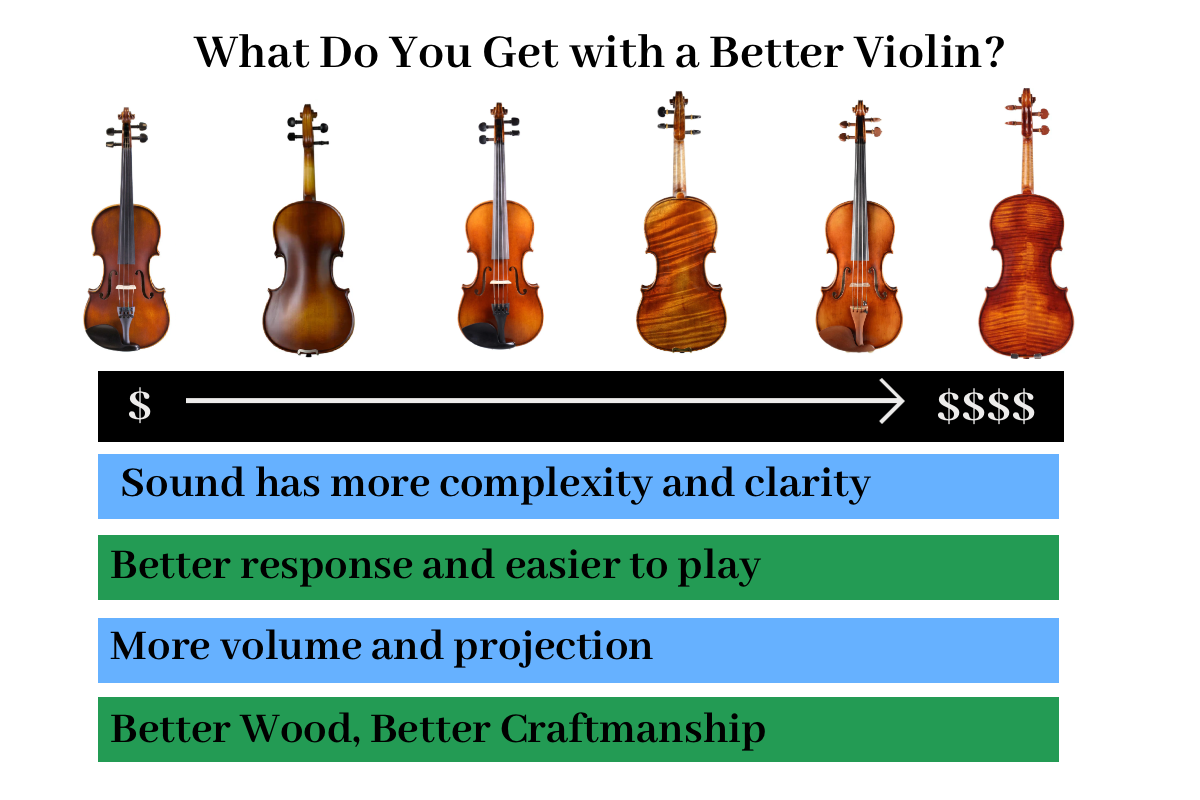
Prices vary widely by size, materials, maker, age, condition, and setup. A beginner outfit may cost a few hundred dollars. Intermediate instruments can range from several hundred to several thousand dollars. Professional instruments may cost far more.
Treat price as a guide, not proof of quality. A costly violin can have damage or poor setup, while a reasonably priced instrument may offer an excellent playing experience.
Your budget should include more than the violin:
- Bow.
- Case.
- Rosin.
- Shoulder rest.
- Extra strings.
- Tuner.
- Music stand.
- Insurance or repair funds.
A complete beginner outfit often needs a service check soon after purchase. The shop may need to adjust the bridge, fit the pegs, or replace low-quality strings. Ask whether these services are included.
In my experience, buyers often spend too much on the violin and too little on the bow. A good bow helps control tone, articulation, and dynamics. It is better to choose a balanced violin and a usable bow than to spend the entire budget on the instrument alone.

How to Test a Violin Before You Buy
Testing a violin is the most important part of the buying process. You do not need to be an expert, but you should use a simple and repeatable method.
Start with open strings. Listen for an even sound from the lowest string to the highest. Then play slow scales and simple songs. Notice whether the violin responds quickly or feels slow and resistant.
Check these areas:
- Comfort: The neck should feel smooth, and the instrument should not cause unusual tension.
- Response: Notes should speak without excessive force.
- Tone: The sound should be clear, balanced, and pleasant.
- Projection: The violin should carry across the room without sounding harsh.
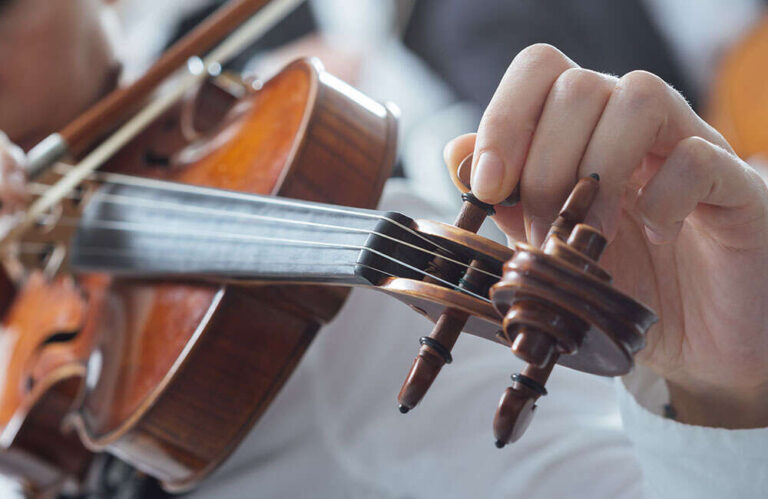
- Tuning: The pegs should turn smoothly and hold pitch.
- Intonation: Notes should be easy to place with normal finger pressure.
- Noise: Listen for buzzing, rattling, or unwanted wolf tones.
- Dynamic range: The violin should respond to both soft and strong playing.
Have someone else play while you listen from several feet away. Players often hear a different sound under the ear than the audience hears. If possible, test the violin in a larger room as well as a small practice room.
Take short notes after each test. Write down what you liked and disliked. This prevents the first violin you try from becoming your automatic choice.

What to Look for in Violin Construction
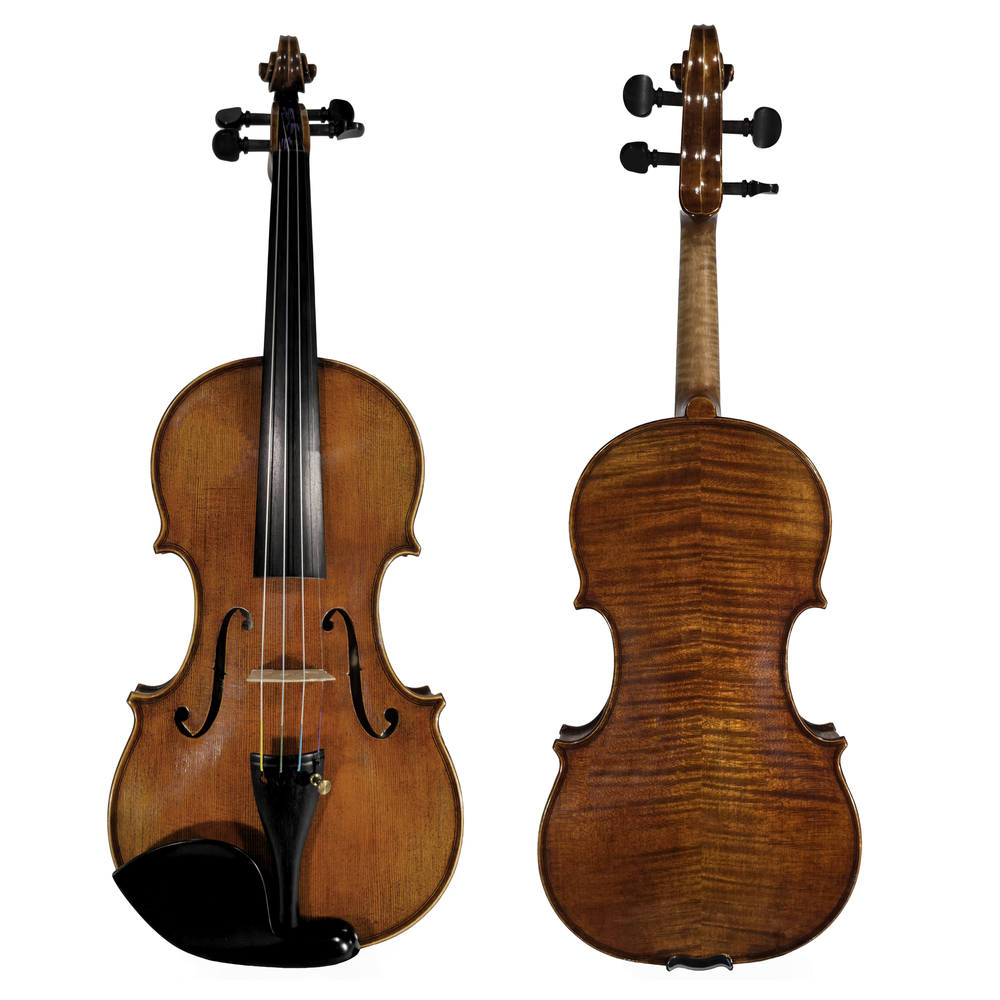
A good quality violin usually has clean workmanship and sensible proportions. The top is commonly made from spruce, while the back, ribs, and neck are often maple. Ebony is commonly used for the fingerboard and fittings.
Do not expect every instrument to look perfect. Natural wood has different grain patterns, and hand varnish may show small variations. What matters most is sound, structure, setup, and repair history.
Look closely at:
- Open cracks in the top or back.
- Seams that are separating.
- A bridge that leans or looks poorly cut.
- A fingerboard that is uneven.
- Pegs that slip or are hard to turn.
- A tailpiece that sits too close to the bridge.
- A neck that appears twisted.
- Excess glue or rough edges.
- Deep scratches or signs of careless repair.
Small marks may be harmless. Structural cracks, neck problems, and serious arching damage can be expensive. Ask a qualified repairer to inspect any older violin before you buy it.
Labels inside violins can also mislead buyers. A label may name a famous maker even when the instrument is only a factory copy. The label is not proof of origin. Construction, condition, sound, and expert evaluation matter more.

Red Flags When Buying a Violin
Knowing where to buy a good quality violin also means knowing where not to buy one. Be careful with sellers who use exaggerated claims, fake certificates, or urgent sales tactics.
Watch for these warning signs:
- The seller promises that every violin is professional quality.
- The listing uses only stock photos.
- There is no return policy.
- The seller will not provide measurements or repair details.
- The instrument arrives with no setup.
- The price is far below similar instruments without a clear reason.
- The seller claims a famous label proves value.
- The violin makes buzzing sounds that are dismissed as normal.
- The seller discourages inspection by a teacher or luthier.
A trustworthy seller will explain limitations. They may say that a violin suits a beginner but may not meet the needs of an advanced soloist. That honesty is a good sign.
Be cautious with online marketplaces that combine thousands of unrelated products. Some inexpensive violins are sold as “professional” because of marketing language rather than real craftsmanship.
Questions to Ask Your Teacher or Violinist
Your teacher can help you identify a violin that supports good technique. They can also hear details that are difficult for a new player to notice.
Before shopping, ask your teacher:
- What size violin do I need?
- What budget is realistic?
- Should I rent first?
- Which sound qualities suit my playing?
- Can you test instruments with me?
- Is this violin suitable for my current level?
- Will this bow help me progress?
A teacher does not need to choose the most expensive instrument. Their main job is to help you find one that responds well and encourages steady practice.
You can also ask an experienced violinist to test the instrument in another room. Two opinions are useful, especially when the purchase involves a large amount of money.
A Practical Buying Checklist
Use this checklist before making a final decision about where to buy a good quality violin:
- Confirm the correct violin size.
- Set a total budget for the violin, bow, case, and accessories.
- Compare at least three instruments.
- Test each violin with the same bow when possible.
- Ask about setup and repair history.
- Have a teacher or luthier inspect the instrument.
- Read the warranty and return terms.
- Check shipping insurance for online orders.
- Keep receipts, photos, and written evaluations.
- Allow time before making a final choice.
Do not let a salesperson rush you. A violin should feel like a helpful partner, not a problem you must learn to tolerate. If the instrument makes practice harder, it may not be the right choice.
Frequently Asked Questions About Where to Buy a Good Quality Violin
Where is the safest place to buy a violin?
A specialist violin shop is usually the safest option for most buyers. It can provide professional setup, trial periods, repair support, and guidance from staff who understand string instruments.
Is it safe to buy a good quality violin online?
Yes, buying online can be safe when the dealer offers detailed information, professional setup, secure shipping, and a clear return policy. Always have a teacher or luthier test the violin during the trial period.
How much should I spend on a beginner violin?
A beginner should budget for the complete outfit, not only the violin. The right amount depends on local prices, but a reliable rental or professionally set-up student instrument is often better than the cheapest new option.
Should I buy a new or used violin?
Both can be good choices. A new violin may offer predictable condition and warranty support, while a used violin may have a mature sound and better value if a qualified expert confirms its condition.
How can I tell if a violin is good quality?
Test its comfort, response, tone, tuning stability, and construction. A teacher, experienced player, or luthier should inspect it because serious problems may not be visible to a beginner.
Is a violin label proof of its value?
No. Labels can be copied, changed, or misunderstood. A violin’s true value depends on its construction, maker, condition, sound, history, and professional evaluation.
Conclusion
The best answer to where to buy a good quality violin is usually a respected violin shop, skilled luthier, or specialist online dealer with strong trial and return support. Compare several instruments, test the setup, involve your teacher, and look beyond labels and marketing claims.
A good violin should make practice feel more natural, not more difficult. Take your time, ask clear questions, and choose an instrument that fits your level, goals, and budget. Explore trusted local shops and online trial programs, then share your experience with other players who are beginning the same search.

Senior Music Reviewer
Alex Carter is a seasoned music reviewer with over a decade of experience in the world of sound and instruments. Passionate about helping musicians and enthusiasts make informed choices, he brings sharp insights and in-depth knowledge to every review. From classical instruments to modern gear, Alex combines technical expertise with a love for music to deliver content that resonates with readers.
As a Senior Music Reviewer and expert author on Tuneluma.com, Alex is dedicated to sharing honest evaluations, practical advice, and thoughtful commentary to guide readers in their musical journey.