What Guitar Did Jimmy Page Play: Iconic Guitars
Jimmy Page played several famous guitars, but his main instruments were Gibson Les Pauls, a double-neck SG, and a Danelectro.
The question “what guitar did Jimmy Page play” has more than one answer because the Led Zeppelin guitarist used different guitars for distinct sounds, songs, and stages of his career. His gear combined powerful electric tones, unusual alternate tunings, acoustic textures, and custom modifications that helped shape hard rock.
What guitar did Jimmy Page play most often?
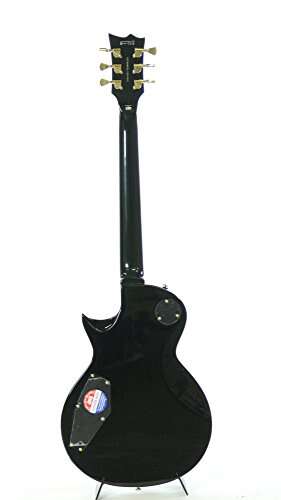
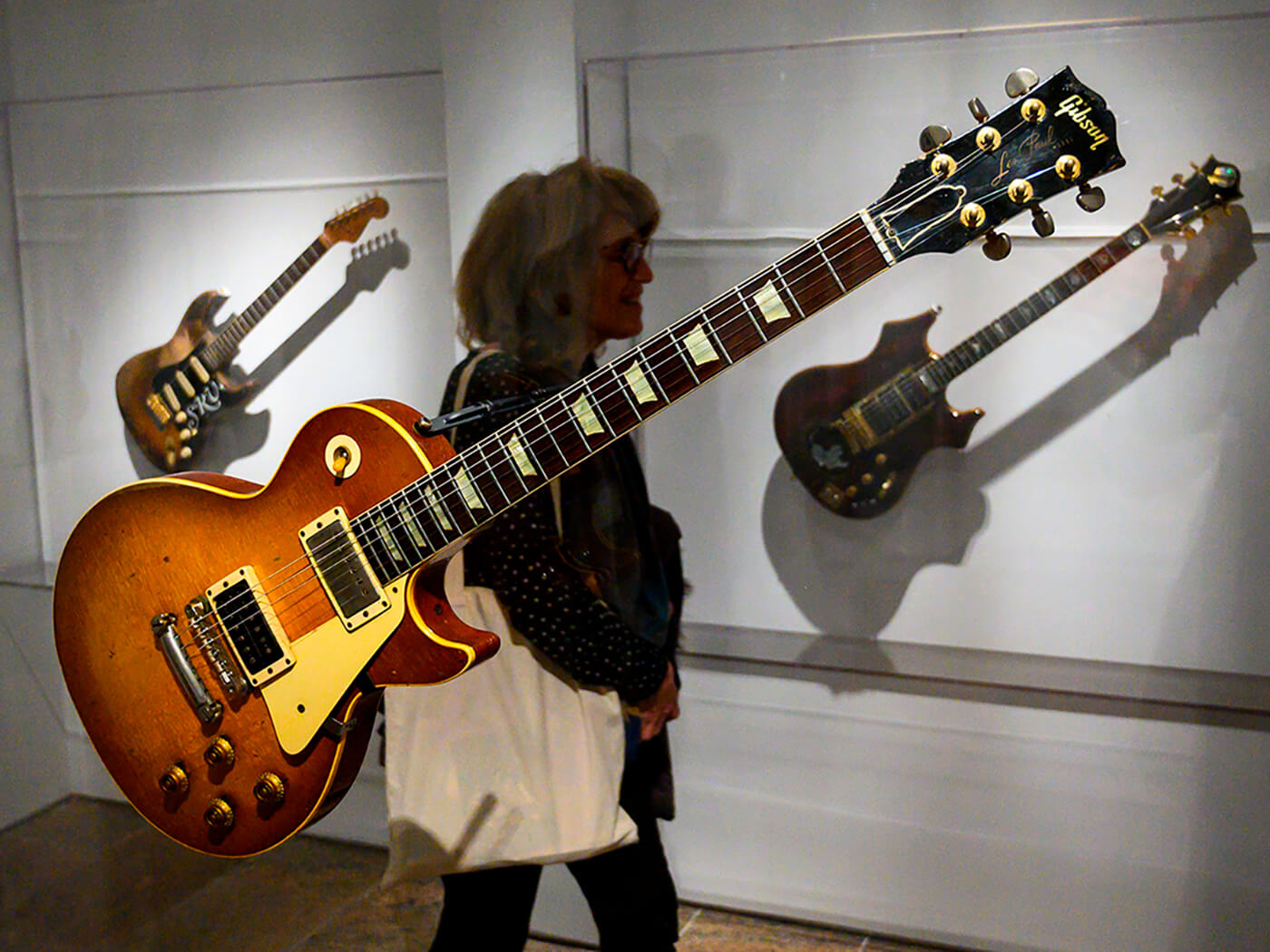
The guitar most closely linked to Jimmy Page is his 1959 Gibson Les Paul Standard, widely known as “Number One.” Page bought it from Joe Walsh in 1969, and it soon became his main electric guitar with Led Zeppelin.
The Les Paul had a solid mahogany body, a carved maple top, and two humbucking pickups. That design gave Page a thick, warm tone with strong sustain. It also responded well to his heavy picking and loud Marshall amplifiers.
Page used Number One for many Led Zeppelin concerts and recordings. Its sound is strongly tied to songs such as:
• “Whole Lotta Love”
• “Dazed and Confused”
• “The Ocean”
• “Since I’ve Been Loving You”
• “Black Dog”
The guitar also had a shaved neck. This made it feel slimmer and faster in Page’s hand. The neck pickup was later modified, and the original finish showed years of heavy use.

Jimmy Page’s Gibson Les Paul Number one
number One was not just a famous guitar. It was a working tool that Page trusted night after night. Its worn finish, altered neck, and powerful pickups reflected the way he played rather than a desire to keep the instrument untouched.
The guitar’s control setup also allowed Page to shape his sound during performances. He could move between a sharp, biting lead tone and a warmer rhythm sound without changing instruments.
One important detail is that photographs and technical records do not always agree on every modification date. Vintage guitars often changed over many years, and some details were altered or repaired after heavy touring. Still, the 1959 Gibson Les Paul Standard remains the clearest answer to the question, “what guitar did Jimmy Page play?”
Page’s Number One also influenced the modern guitar market. Gibson later produced limited-edition recreations based on its appearance and modifications. These models are expensive because they copy a historic instrument, not simply because they are standard Les Pauls.
Why did Page prefer the Les Paul?
The Les Paul suited Page for several practical reasons:
• It had strong sustain for long bends and feedback-based effects.
• Its humbuckers reduced noise compared with many single-coil guitars.
• Its shorter scale felt comfortable for fast bends.
• Its thick tone stayed powerful at high volume.
• Its solid body handled demanding stage use.
From my research into Page’s equipment, the biggest lesson is that his sound came from the whole system. The guitar mattered, but the amplifier, effects, pickup settings, playing attack, and room all played a part.
Jimmy Page’s second Gibson Les Paul
Jimmy Page also played a second 1959 Gibson Les Paul, often called “Number Two.” He acquired it in the early 1970s as a backup for Number One.
Number Two had a darker finish and several important modifications. A famous change involved push-pull switching that let Page alter the pickup wiring. This gave him access to additional tones beyond the normal Les Paul setup.
The modifications could create brighter, thinner, or more unusual sounds. They did not turn the guitar into a completely different instrument, but they gave Page more control during live shows.
Page used Number Two when he wanted a different feel or needed a reliable alternative to Number One. This is a useful point for guitar players today: professional musicians often carry backup instruments that are similar to their main guitar. Familiarity matters when the pressure is high.
The answer to “what guitar did Jimmy Page play” therefore includes both Number One and Number Two. They looked similar, but their necks, wiring, and setup made them different tools.
 one”
style=”max-width: 100%; height: auto; border: 2px solid black; border-radius: 10px; display: block; margin: 0 auto;”
loading=”lazy”
/>
What guitar did Jimmy Page use for “Stairway to Heaven”?
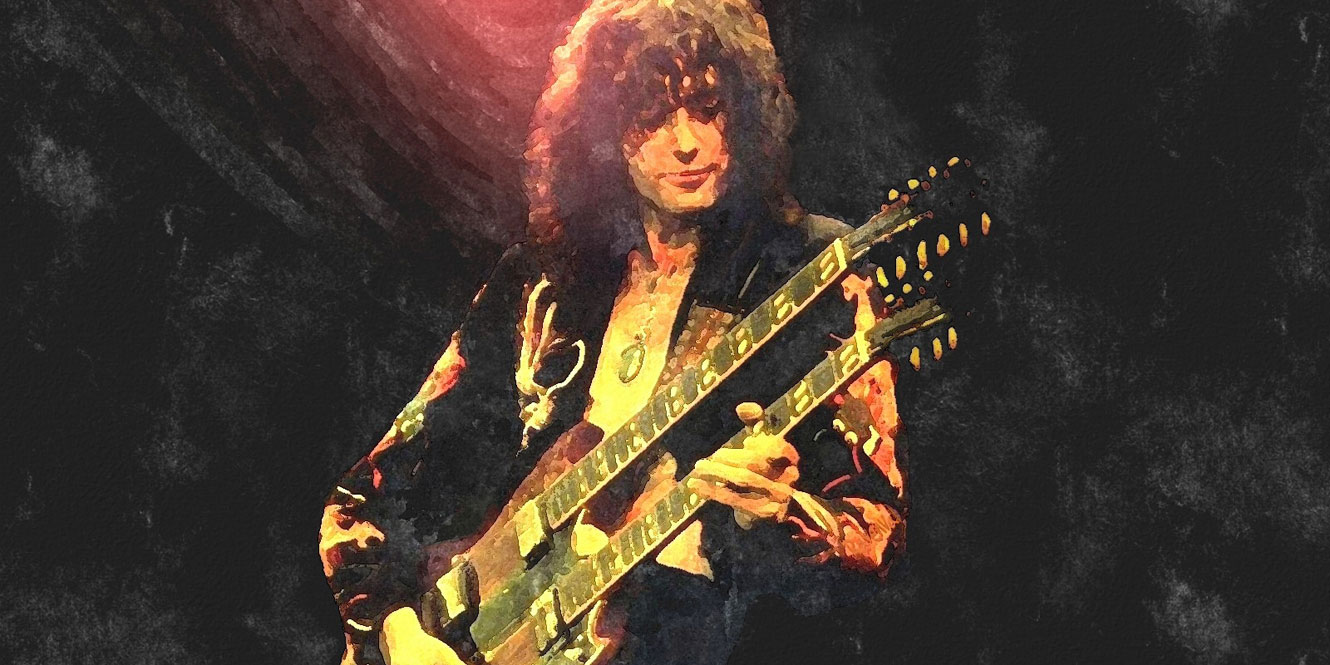
For live performances of “Stairway to Heaven,” Jimmy Page famously used a Gibson EDS-1275 double-neck guitar. It has a six-string neck and a 12-string neck on the same body.
The double-neck allowed Page to play the song’s acoustic-style 12-string sections and electric lead parts without stopping to change guitars. This was especially useful on stage, where “Stairway to Heaven” moves from a quiet opening to a large electric guitar climax.
The Gibson EDS-1275 became one of the most recognizable guitars in rock history. Its cherry-red body and two necks made it visually striking, but its real value was practical. Page could move between different string arrangements during one performance.
The 12-string neck created the bright, layered sound needed for the song’s opening and middle sections. The six-string neck handled the heavier solo and final passages.
Many players find a double-neck guitar difficult to hold because it is heavy and wide. Page made it part of his performance style. He also used similar guitars for songs such as “The Song Remains the Same.”
Did Page record “Stairway to Heaven” with a double-neck?
Not in the same way he performed it live. The studio recording used several instruments and layered guitar parts. The double-neck became especially important for live versions because it let Page reproduce the song’s changing textures on stage.
This distinction matters when researching what guitar did Jimmy Page play. The guitar seen in a famous concert photograph may not be the same instrument used for every part of the studio recording.
Jimmy Page’s Fender Telecaster
Before the Gibson Les Paul became his main guitar, Jimmy Page used Fender Telecasters. Jeff Beck gave Page a Fender Telecaster, and Page used it during his early Led Zeppelin period.
Page used a Telecaster on the first Led Zeppelin album and during early performances. The guitar had a brighter and more cutting sound than his later Les Pauls. That tone helped create sharp riffs and aggressive lead lines.
One well-known Telecaster was decorated with a dragon design. Page painted and modified the guitar, turning it into a personal instrument rather than leaving it in a standard factory condition.
Page used the Telecaster with the Yardbirds and during the early formation of Led Zeppelin. It is often linked to early versions of “Dazed and Confused” and other songs from the band’s first era.
The Telecaster also appeared during Page’s work with the Yardbirds. Its clear attack worked well with fuzz, echo, and bow effects.
Why did Page move from the Telecaster to the Les Paul?
The Les Paul gave Page more sustain, output, and thickness. Those qualities suited the larger, heavier sound Led Zeppelin developed after its first album.
This does not mean the Telecaster was less useful. It offered a different voice. Page’s career shows why many guitarists keep several instruments: no single guitar produces every sound equally well.
A practical mistake is to buy a famous guitar and expect it to create a famous tone by itself. Page’s Telecaster sounded like Page because of his hands, his setup, his amplifiers, and his musical choices.

Jimmy Page’s Gibson Les Paul Custom “Black Beauty”
Before Number One, Page owned a 1960 Gibson Les Paul Custom. It was a black, three-pickup model with a Bigsby vibrato tailpiece. The guitar became known as “Black Beauty.”
Page used the instrument during his session musician years and with the Yardbirds. Its three pickups gave it a different range of sounds from his later sunburst Les Paul Standards.
The Black Beauty was stolen in 1970. For decades, it was missing. It was eventually located and returned to Page many years later. Its recovery attracted major attention because the guitar was an important part of his early career.
The guitar’s Bigsby vibrato also set it apart from Number One and Number Two. Bigsby systems allow a player to raise or lower pitch, but they can require careful setup. They are often less stable than a fixed bridge when a player uses extreme bends.
Page’s Black Beauty is an example of how an instrument can carry historical value beyond its price. It was connected to his early studio work and development as a professional guitarist.
What guitar did Jimmy Page use for “Kashmir”?
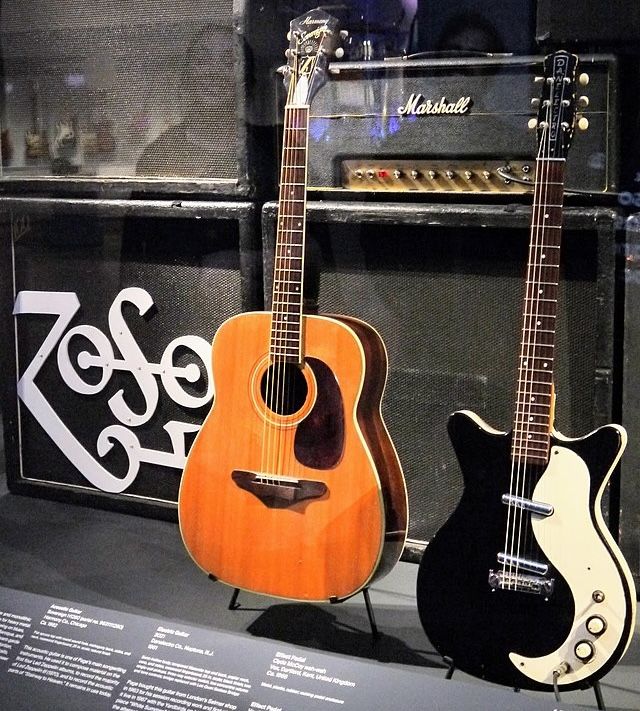
Jimmy Page commonly used a Danelectro 59 DC for songs played in unusual tunings, including “Kashmir.” The Danelectro was a major contrast to his Gibson Les Paul.
The Danelectro 59 DC has a lightweight body, lipstick-style pickups, and a distinctive bright tone. It does not sound as thick as a Les Paul, but that difference helped Page create a clear, focused sound.
Page used Danelectro guitars for several songs and tunings. The instrument is also associated with “White Summer,” “Kashmir,” and “In My Time of Dying,” although the exact guitar and setup could vary by performance.
“Kashmir” requires a broad, droning sound. Page’s use of alternate tuning helped create that effect. The Danelectro’s clean attack allowed the notes to remain clear inside the song’s large arrangement.
This is one of the best examples of Page choosing a guitar for a musical job. He did not always use the most expensive or powerful instrument. He used the guitar that gave him the right response.

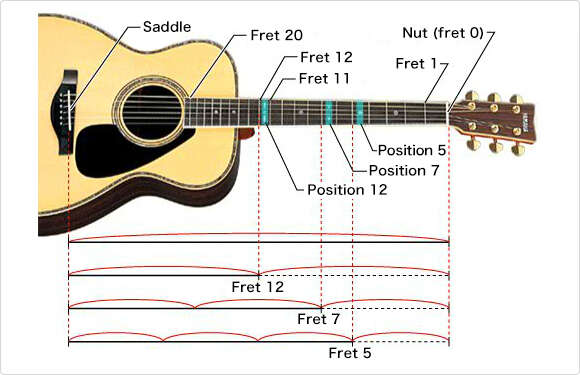
Jimmy Page’s acoustic guitars
Jimmy Page played several acoustic guitars during his career. His acoustic instruments helped create the softer side of Led Zeppelin’s music.
Important acoustic guitars linked to Page include: