Best Beginner Piano Lessons For Adults: Easy Top Picks
The best beginner piano lessons for adults combine clear steps, useful songs, theory, and flexible practice.
You may have wanted to learn piano for years, yet work, family, or fear of starting late kept getting in the way. A good adult piano method removes that pressure. It gives you short lessons, simple goals, and songs that sound musical before your hands feel fully confident. I reviewed these books for lesson flow, reading skills, technique, song choice, and ease of self-study. The result is a practical guide to the best beginner piano lessons for adults, whether you own an acoustic piano or a digital keyboard.
Adult Piano Adventures Book 1

Adult Piano Adventures Book 1 is one of the strongest all-in-one choices for a new adult player. The method introduces notes, rhythm, chords, technique, and basic theory in a steady order. Its pages feel designed for mature learners rather than children, so the wording stays direct and the musical goals feel practical. I also like how the book lets you play both hands early without rushing the basics.
The digital audio adds useful support during home practice. You can hear how a piece should flow, then copy the sound while reading the page. The book also moves between familiar styles, short exercises, and creative tasks, which helps prevent practice from feeling like a chore. For many learners, this balanced design makes it a leading option among the best beginner piano lessons for adults.
Pros:
- Combines lessons, theory, technique, and songs in one book
- Uses an adult-focused teaching style
- Introduces chords and music notation at a useful pace
- Includes digital audio for guided practice
- Works well for self-learners and teacher-led study
- Builds two-hand coordination without overwhelming new players
Cons:
- Some learners may want more popular songs
- Digital audio access may require an internet-connected device
- The book works best when you follow the lesson order
My Recommendation
I recommend Adult Piano Adventures Book 1 for adults who want a complete path rather than a loose song collection. It suits a learner who wants to read music, understand chords, and build sound technique from day one. It is also a good match for someone who may later study with a private teacher because the progression is clear and easy to discuss. In my view, it offers excellent value when you want one main book for steady progress.
Piano Book for Adult Beginners

This piano book takes a friendly, song-first approach to learning. It teaches basic music reading, theory, and hand technique while giving you recognizable pieces to play. That matters for adults who need an early reward after a long day. A familiar song can act like a small lamp on the path, showing that each practice session is doing real work.
The streaming video lessons make the book more useful for independent learners. You can watch a concept, pause it, and return to the page when you are ready. The format is a good fit for people who learn well by seeing and hearing a teacher. Still, you must practice slowly and repeat hard sections, since videos cannot correct every posture or hand problem in the way an in-person teacher can.
Pros:
- Uses famous songs to keep practice engaging
- Includes streaming video lessons
- Covers reading, theory, and technique together
- Friendly for adults who feel nervous about music lessons
- Supports flexible study at home
- Gives beginners clear musical goals
Cons:
- Song interest may vary from one learner to another
- Video access depends on a stable internet connection
- Some students may need extra drills for rhythm and sight-reading
My Recommendation
I would choose this book for the adult who says, “I want to play real songs, not only exercises.” It is especially useful for visual learners and people who prefer video guidance over long written explanations. The method can also help a returning player rebuild confidence after years away from the keyboard. Among the best beginner piano lessons for adults, this is a strong choice when motivation matters as much as structure.
Alfred’s Basic Adult Piano Course

Alfred’s Basic Adult Piano Course remains a familiar name in beginner piano study. The Level One lesson book presents notes, rhythm, chords, and playing habits in small steps. Its layout is plain and focused, which can help learners who dislike busy pages or too much decoration. I find it useful because the book gives each new idea room to settle before adding another.
This is a lesson book, so it does not try to be a huge library of popular songs. Instead, it builds a solid base that can support later books and extra music. The approach may feel traditional, but traditional does not mean weak; clear repetition often creates strong recall. If you want a dependable starting point from a long-running method, this remains one of the best beginner piano lessons for adults.
Pros:
- Clear, familiar lesson sequence
- Strong focus on core reading skills
- Introduces chords and rhythm in simple steps
- Easy-to-follow page design
- Works well with a piano teacher
- Often affordable compared with a full private lesson program
Cons:
- May feel less modern than newer digital methods
- The lesson book alone may not provide enough song variety
- Self-learners may need outside help with posture and fingering
My Recommendation
I recommend this book to adults who value a proven, no-frills method. It is best for patient learners who want to develop note reading instead of jumping straight to simplified songs. Teachers can also use it as a clean lesson backbone. Its overall value is strong, and its long history makes it easy to pair with other Alfred materials or extra practice books.
Alfred’s Adult All-in-One Course

The Alfred All-in-One Course gathers lesson, theory, and technic work into one spiral-bound volume. That format helps adults who want fewer books on the music stand. The binding also lies flatter than many standard paperbacks, which makes it easier to play and turn pages. Each section supports the others, so the theory on the page connects with what your fingers do at the keyboard.
I see this as a practical choice for learners who like a thorough course. It asks you to work through exercises instead of relying only on songs, and that can produce better long-term skill. The pace is manageable if you practice a little at a time, but it may feel dense if you skip several weeks. For a structured home course, it belongs in any serious comparison of the best beginner piano lessons for adults.
Pros:
- Combines three core study areas in one volume
- Spiral binding stays open on a piano or keyboard
- Offers a clear path for regular practice
- Builds theory beside practical playing skills
- Useful for teacher-led or independent study
- Helps reduce the need to buy several separate books
Cons:
- Some pages may feel information-heavy to complete beginners
- It may not satisfy learners who want only current pop songs
- A teacher or video guide can still help with technique
My Recommendation
This is best for the organized adult who wants a complete course in one place. I especially like it for learners who keep losing separate theory and lesson books. It can also suit a busy student who wants to track steady progress from one week to the next. If you plan to practice at least several short sessions each week, this book offers good value and strong coverage.
120 Famous Easy Piano Songs

This collection focuses on the part many adults love most: playing songs they know. It includes easy arrangements, popular sheet music, and simplified classical pieces. The large song count gives you room to choose music that fits your taste and mood. That choice can make practice feel less like homework and more like opening a playlist with your hands.
Videos, theory notes, and technique guidance add more than a basic songbook usually offers. Still, a collection like this works best beside a main lesson method. It can build fluency and confidence, but it may not present skills in a carefully graded order from the first page to the last. I would use it as a motivating companion within the best beginner piano lessons for adults, not as the only course.
Pros:
- Provides a wide range of beginner-friendly songs
- Includes popular music and classical pieces
- Offers videos to support learning
- Lets adults choose songs that match personal taste
- Useful for short, rewarding practice sessions
- Can help improve confidence and sight-reading
Cons:
- Song collections may not follow a complete lesson sequence
- Some arrangements may still challenge a brand-new player
- It may need to be paired with a full theory method
My Recommendation
I recommend this book for adults who lose motivation when every lesson feels like a drill. It is also a smart add-on for a student who already owns a method book and wants more music to play. Choose it if you enjoy variety and want quick wins during the first months. Its value is highest when you use one song at a time and keep a core lesson course beside it.
Piano Lesson Book Level 1

Piano Lesson Book: Complete Level 1 is written for the later beginner. That makes it appealing to adults who may have tried a few lessons, know a little about the keyboard, or want to restart with a cleaner plan. It does not assume that age is a problem. Instead, it gives the learner a direct route through basic notes, rhythm, fingering, and musical reading.
The book is useful when you want a lesson path but do not need a very slow introduction to every keyboard detail. It can help bridge the gap between “I have touched a piano before” and “I can play a short piece with both hands.” I would still spend time on relaxed shoulders and curved fingers, since a method book cannot watch your body. For a later starter, it is a thoughtful option among the best beginner piano lessons for adults.
Pros:
- Designed for later beginners and returning players
- Moves at a useful pace for adults with some prior exposure
- Builds reading and coordination together
- Supports a fresh start after a long break
- Keeps the lesson path focused and practical
- Can work well with a teacher or careful self-study
Cons:
- May move too quickly for someone with no music experience
- May need a separate song book for more variety
- Does not replace feedback on posture and technique
My Recommendation
This is best for the adult who has played a little before but still feels like a beginner. It also suits a former student who remembers note names but has lost speed and confidence. I would not make it my first choice for someone who has never seen a keyboard, yet it can save time for a learner with basic background. It gives that audience a focused and affordable route back to regular playing.
Hit Songs Super Easy Songbook

Hit Songs Super Easy Songbook is built for quick access to familiar music. The arrangements use simple piano parts, letter note names, and chord diagrams to reduce the first barrier for new players. Those visual aids can calm the fear that often comes with reading a full staff. An adult can sit down, find the notes, and begin making music without waiting months for a first song.
This easy format is helpful, but it should support—not replace—proper instruction. Letter names can guide the hand, yet overuse may slow note-reading growth if you never look at the staff. I suggest using the diagrams for a hard passage, then returning your eyes to the written notes. In that role, this songbook adds fun and momentum to the best beginner piano lessons for adults.
Pros:
- Features 60 popular songs
- Uses letter names to help new readers
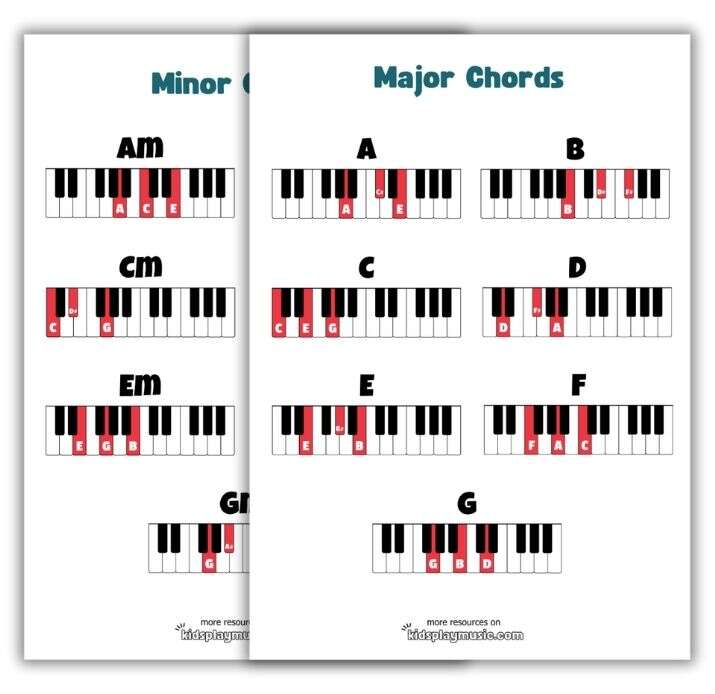
- Includes chord diagrams for simple accompaniment
- Offers fast musical rewards
- Good for casual players and adult beginners
- Can help learners understand common chord shapes
Cons:
- Very easy arrangements may not build full reading skill alone
- Some players may outgrow the book quickly
- It offers less step-by-step theory than a full method
My Recommendation
I recommend this songbook for adults who need a gentle entry point or a boost in confidence. It is a good fit for casual players, singers who want simple accompaniment, and learners who feel blocked by standard notation. Pair it with a structured method to keep building technique and reading. Its low-pressure style makes it a useful first step, especially when the goal is to enjoy the keyboard right away.
Accelerated Piano Adventures Book 2

Accelerated Piano Adventures Book 2 is aimed at older beginners who can move faster than a young child starting from zero. It covers the material found across early levels in a more compact route. This design can work well for an adult who practices often, reads basic notes, or has learned a few chords from videos. The lessons remain organized, but they do not spend as long on the earliest concepts.
I like the balance between method work and real musical pieces. The book encourages progress while still asking for careful rhythm, fingering, and reading. It is not a shortcut around practice; it is a more efficient map for the right learner. If you have a little background, this may be one of the best beginner piano lessons for adults because it respects your time without ignoring the fundamentals.
Pros:
- Designed for teens and adults who learn at an accelerated pace
- Combines several early stages in a focused format
- Supports reading, rhythm, and technique
- Helps experienced beginners avoid very slow early drills
- Offers a clear progression toward more advanced study
- Works well for adults with regular practice time
Cons:
- Too fast for a learner with no prior music background
- May expose weak note-reading habits if you rush
- Students may need an earlier book for extra review
My Recommendation
Choose this book if you already know basic note names, simple rhythms, or common keyboard patterns. It is best for a motivated adult who wants progress but can still practice with care. I would not use it to prove that you can rush; I would use it to remove repeated material you already understand. When matched to the right learner, it offers strong value and a clear next step.
Big Book of Beginner Piano Classics
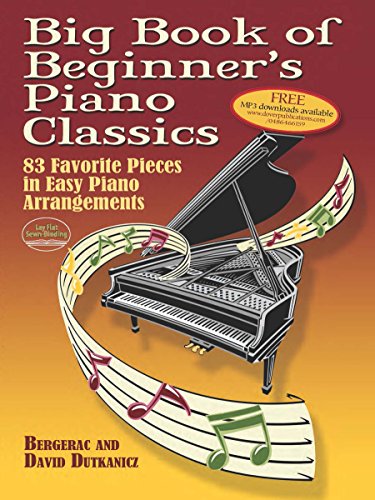
The Big Book of Beginner Piano Classics gives adult learners a broad set of familiar classical pieces in easy arrangements. It includes 83 selections, so you can explore several composers and styles without buying many separate books. The pieces can also help you learn phrasing, balance, and musical shape. Even simple classical music can teach you how to make notes speak, not merely how to press the right keys.
Downloadable MP3 audio gives you a model for tempo and style. I suggest listening first, then practicing hands separately before joining them. This is a repertoire book rather than a complete beginner course, so it does not replace lessons in theory or basic technique. Used with a method, however, it can add depth and beauty to the best beginner piano lessons for adults.
Pros:
- Includes 83 easy classical arrangements
- Offers wide style and composer variety
- Provides downloadable MP3 audio
- Builds phrasing and musical expression
- Gives adults meaningful pieces beyond basic drills
- Useful for sight-reading and review practice
Cons:
- Not a complete course in theory or technique
- Some pieces may be harder than others at the same level
- Classical music may not appeal to every learner
My Recommendation
This collection is best for the adult who enjoys classical music or wants to develop a more expressive sound. It also makes a useful second book after you begin a core method. I like it for learners who want many short pieces instead of spending weeks on one long song. The low cost and large repertoire make it a worthwhile addition, but beginners should pair it with a graded lesson book.
Bastien Piano for Adults

Bastien Piano for Adults presents lessons, theory, technic, and sight-reading in one beginning course. The material follows a practical sequence, so each new task builds on the last. It gives the learner repeated contact with the skills that matter most at the keyboard. I find that helpful for adults who want a calm routine instead of a scattered collection of tips.
The method has a traditional feel, yet that can be a benefit when you need clear direction. You can work through a page, repeat it, and move on when your hands feel secure. The sight-reading material encourages you to look ahead rather than memorize every note. For a learner who values steady foundations, it remains a worthy candidate among the best beginner piano lessons for adults.
Pros:
- Combines lessons, theory, technique, and sight-reading
- Offers a logical path for first-time learners
- Encourages regular review and repetition
- Useful for adults who prefer a traditional method
- Supports teacher-led instruction
- Helps develop skills beyond memorizing songs
Cons:
- May feel less entertaining than a song-heavy book
- Self-learners may want audio or video guidance
- Some adults may prefer a more modern page design
My Recommendation
I recommend Bastien Piano for Adults to learners who want a balanced foundation and do not need flashy extras. It is especially suitable for someone working with a teacher or following a fixed weekly plan. The sight-reading focus is helpful for adults who want to read new music instead of learning every song by memory. Overall, it is a dependable and reasonably priced course book.
How I Judged These Piano Methods
When I compare the best beginner piano lessons for adults, I look beyond the cover and song list. A beginner method should teach skills in a sensible order. It should also give the learner enough music to stay interested. Adults need both structure and a reason to return to the piano tomorrow.
I looked at five main points: clarity, pacing, technique, reading, and motivation. I also considered whether each book can support self-study, since many adults cannot attend a weekly lesson. Digital audio and video can help, but they do not replace a teacher who can see your hands and correct tension. A good book should make practice easier, not promise instant results.
Lesson Order and Skill Growth
The best methods introduce one new idea at a time. They may begin with keyboard geography, finger numbers, rhythm, and a few notes. Later, they add larger note ranges, chords, hand movement, and more complex rhythms. This slow climb protects beginners from the common mistake of trying hard songs before they can control the basics.
I favor books that mix review with new work. Review is not wasted time; it is how a skill moves from thought to habit. A short piece that feels easy today can improve timing and confidence. Adults often have limited practice time, so a method must use that time well.
Music Reading and Theory
Letter names can help you start, but long-term progress depends on learning to read patterns on the staff. Chords, scales, intervals, and rhythm also matter. They help you understand why music works and make new songs less mysterious. The strongest beginner piano lessons for adults teach these skills without burying the learner in hard terms.
I suggest saying note names aloud at first, then noticing shapes and intervals. For example, a step moves to the next note, while a skip leaves one note between. This small habit can make sight-reading faster. It also keeps you from staring at each note as if it were a separate puzzle.
Technique and Healthy Practice
Technique begins with comfort. Sit high enough that your forearms can reach the keys without lifting your shoulders. Keep your wrists loose and let your fingers curve in a natural way. Stop if you feel sharp pain, numbness, or lasting strain.
Experts in music education often stress relaxed movement, gradual practice, and breaks. I agree. Five focused minutes can teach more than 30 rushed minutes. Start slowly, use a metronome when needed, and increase speed only when your hands stay even.
Digital Audio and Video
Audio helps you hear the target. It can show the beat, mood, and general pace of a piece. Video can show where a hand moves and how a teacher counts. These tools are useful, but beginners should avoid copying speed before understanding the notes.
Use technology as a guide, not a crutch. Listen once, study the score, and then practice a small section. If a book includes online content, check the current access details before buying because digital features can change over time. In 2026, many adults use phones and tablets at the keyboard, but a printed page still works without a battery or notification.
Which Type of Adult Beginner Are You?
The right book depends on your starting point. Someone who has never touched a piano needs a different pace from someone who played as a child. Your goal matters too. Playing pop songs, reading classical music, accompanying a singer, and preparing for formal study all call for different tools.
The Complete Beginner
If you do not know the keys, finger numbers, or staff, choose a complete course. Adult Piano Adventures Book 1, Alfred’s Basic Adult Course, Alfred’s All-in-One Course, and Bastien Piano for Adults all offer useful structure. Pick the one whose page style feels easiest to follow. The method you open often is better than the method that looks perfect but stays closed.
The Song-First Learner
If you need familiar music to stay engaged, look at Piano Book for Adult Beginners, 120 Famous Easy Piano Songs, or Hit Songs Super Easy Songbook. These books can give you early wins. Pair one with theory and technique work so your progress does not stop when a song becomes harder. Motivation is a real learning tool, not a minor extra.
The Returning Player
If you played years ago, you may remember more than you think. Piano Lesson Book: Complete Level 1 and Accelerated Piano Adventures Book 2 can help you restart at a useful level. Begin with an easy piece and test your reading before choosing the faster path. Pride can make a learner skip review, but review often saves time later.
The Classical Music Fan
If your goal is classical repertoire, use a complete method first, then add Big Book of Beginner Piano Classics. Easy arrangements still teach important musical ideas. Work on even rhythm, clean releases, and gentle phrasing. A simple piece played with care can sound better than a hard piece played with tension.
How to Practice With a Beginner Piano Book
I recommend a simple 20-minute routine for most new adults. Spend five minutes reviewing notes or rhythm. Use ten minutes for the current lesson, then use five minutes for a song you enjoy. This plan is short enough to fit a busy day and long enough to create a useful habit.
Do not always start at the beginning of a piece. Find the hardest two or four measures and work there first. Play very slowly, check the fingering, and repeat the section several times. Then connect it to the measures before and after it.
Count out loud when rhythm causes trouble. You can count “one and two and” for simple eighth notes or tap the beat before playing. If both hands feel confusing, practice each hand alone. This is not a step backward; it is like building one side of a bridge before joining both sides.
Use a metronome with care. Start at a speed where you can play every note evenly. Raise the setting by a small amount only after several clean attempts. A metronome should support your pulse, not make you panic.
Finally, keep a practice log. Write down the pages you studied, the sections that felt hard, and one small win. Adults often miss their own progress because improvement arrives in quiet steps. A log turns those steps into visible proof.
Common Mistakes Adult Beginners Make
The first mistake is buying too many books at once. More choices can create less practice. Pick one main method and, if needed, one song book. Finish enough of them to learn what works for you.
The second mistake is trying to play too fast. Speed hides weak timing and makes mistakes harder to fix. Slow practice is not boring when you listen for even notes, relaxed hands, and clear rhythm.
The third mistake is ignoring posture. Adults may practice after sitting at a desk all day, so the shoulders and wrists may already feel tight. Adjust the bench, relax your arms, and take short breaks. If discomfort continues, seek advice from a qualified piano teacher or health professional.
The fourth mistake is treating theory as optional. You do not need to master every term before playing music. Still, basic theory helps you spot patterns, remember songs, and understand chords. The best beginner piano lessons for adults make theory part of playing rather than a separate school subject.
The last mistake is expecting a book to do all the teaching. A method can give you a map, but you still need to listen, think, and repeat. A teacher can be very helpful once a month, even if weekly lessons do not fit your budget. Occasional feedback can stop a small habit from becoming a large problem.
Best Features at a Glance
| Best for | Why |
|---|---|
| Complete adult beginners | Adult Piano Adventures Book 1 offers a balanced path through reading, chords, theory, and technique. |
| Adults who want popular songs | Piano Book for Adult Beginners and Hit Songs Super Easy Songbook provide familiar music and simple guidance. |
| Traditional, structured study | Alfred’s All-in-One Course and Bastien Piano for Adults build skills through lessons, theory, and practice. |
What You Need Before You Start
You do not need a concert grand piano to begin. A full-size digital keyboard with touch-sensitive keys can work well for early study. Weighted keys may feel more like an acoustic piano, but a simple keyboard can still help you learn notes and rhythm. Choose the best instrument you can use often, not the most expensive one you can rarely reach.
Use a stable bench rather than a soft chair that puts you too low. Keep your book at a readable angle, and place a pencil nearby for fingering notes. A metronome app can help, though a basic physical metronome also works. Headphones may be useful if you practice near other people.
Before buying, check the edition, format, and any digital access details. Product listings can change, and some books have several versions. Make sure the title matches your level and that you understand whether audio or video comes as a download, streaming feature, or separate purchase. These small checks prevent disappointment after delivery.
How Long Does It Take to Learn Piano as an Adult?
Most adults can learn basic notes, simple rhythms, and short pieces within the first few weeks of consistent practice. The exact pace depends on practice time, past experience, and the difficulty of the music. Ten to 20 focused minutes on most days can create steady progress. A single long session each month usually cannot replace that habit.
After a few months, many learners can play simple melodies with both hands and use basic chords. More advanced skills take longer because the hands must gain control while the brain reads and listens. Do not compare your first month with another person’s fifth year. Piano learning is a path with many small hills, not one test you pass or fail.
FAQs Of best beginner piano lessons for adults
Can adults really learn piano from a book?
Yes. A good book can teach the order of notes, rhythm, basic theory, and simple technique. A teacher or video can add feedback, but many adults make strong early progress with careful self-study.
What is the best piano method for a complete beginner?
Adult Piano Adventures Book 1 is a strong all-around choice because it combines reading, chords, theory, technique, songs, and audio. Alfred and Bastien also work well for learners who prefer a traditional lesson path.
Should I learn chords or sheet music first?
Learn both in small steps. Chords help you play songs and accompany singing, while sheet music supports wider reading skills. The best beginner piano lessons for adults usually connect these skills instead of treating them as rivals.
How often should an adult beginner practice?
Aim for 15 to 30 minutes on most days. If time is short, practice for five focused minutes rather than skipping the day. Regular contact helps your hands remember patterns.
Do I need a teacher if I use one of these books?
Not always, but feedback can improve posture, fingering, and rhythm. Even an occasional lesson can help you correct habits and choose the next level. Self-study works best when you listen closely and practice slowly.
Final Verdict: Which Should You Buy?
Adult Piano Adventures Book 1 is my top pick for the best beginner piano lessons for adults. It offers the most balanced mix of reading, theory, technique, chords, songs, and audio support.
Choose a songbook as a companion if motivation matters most. With steady practice and realistic goals, any adult can build a rewarding piano habit in 2026.

Senior Music Reviewer
Alex Carter is a seasoned music reviewer with over a decade of experience in the world of sound and instruments. Passionate about helping musicians and enthusiasts make informed choices, he brings sharp insights and in-depth knowledge to every review. From classical instruments to modern gear, Alex combines technical expertise with a love for music to deliver content that resonates with readers.
As a Senior Music Reviewer and expert author on Tuneluma.com, Alex is dedicated to sharing honest evaluations, practical advice, and thoughtful commentary to guide readers in their musical journey.