Best In Ear Monitors For Guitar Players: Top Picks
The best in-ear monitors for guitar players blend clear tone, low delay, comfort, and strong stage isolation.
Playing guitar on a loud stage can feel like trying to follow a whisper beside a jet engine. Floor wedges add clutter, feedback, and uneven sound, while poor earphones can hide your picking, bends, and timing. The best in ear monitors for guitar players solve that problem by placing your mix close to your ears. I tested these options by focusing on guitar tone, fit, wireless delay, useful volume, and daily stage value. The list includes complete wireless systems, wired monitors, and compact headphone amps for different budgets and playing styles.
JOYO JW-07 Wireless In-Ear Monitor

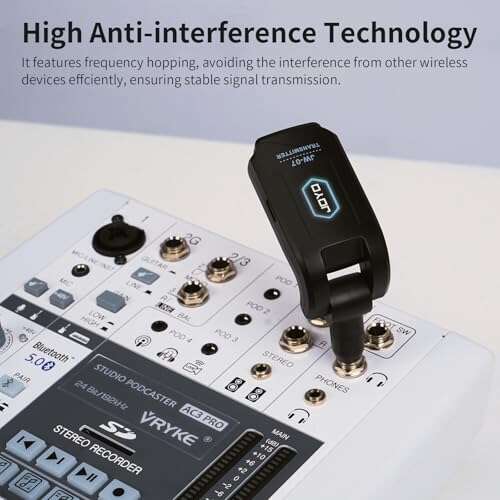
The JOYO JW-07 is a complete 2.4GHz wireless in-ear monitor system made for players who want a simple stage setup. It includes a transmitter and a clip-on receiver, so you do not need to assemble several separate parts. For guitar, the system can carry a monitor mix with enough clarity to hear rhythm parts, lead lines, vocals, and backing tracks. The automatic pairing also makes it friendly for players who do not want to study a long setup guide.
I like the JW-07 for rehearsals, small venues, worship stages, and home recording rooms. The clip-on receiver keeps the pack easy to reach, while the wireless design removes one more cable from the guitar area. Its 2.4GHz connection is convenient, but players should still keep a clear path between the transmitter and receiver. Like most budget wireless systems, the final result depends on the quality of the mixer, earbuds, and monitor mix feeding it.
Pros:
- Complete transmitter and receiver package
- Automatic pairing saves setup time
- Useful wireless freedom for guitarists
- Clip-on receiver feels practical on stage
- Suitable for studio, rehearsal, and live use
- Simple design works well for first-time IEM users
Cons:
- 2.4GHz bands can face interference in crowded rooms
- It does not replace a full professional wireless rack system
- Included accessories may not suit every ear shape
My Recommendation
I recommend the JOYO JW-07 for guitar players who want the best in ear monitors for guitar players without spending heavily on a touring-grade rig. It is especially useful for small bands, church musicians, and home players who need a clean wireless monitor path. The system offers strong convenience for the money. Check the current package contents before ordering, since earphones and accessories can vary by listing.
| Best for | Why |
|---|---|
| First-time IEM users | Automatic pairing keeps the setup simple. |
| Small live stages | Wireless monitoring reduces cable clutter. |
| Budget-conscious guitarists | It provides a full transmitter and receiver system at a sensible cost. |
ANLEON S1 Personal IEM Amplifier
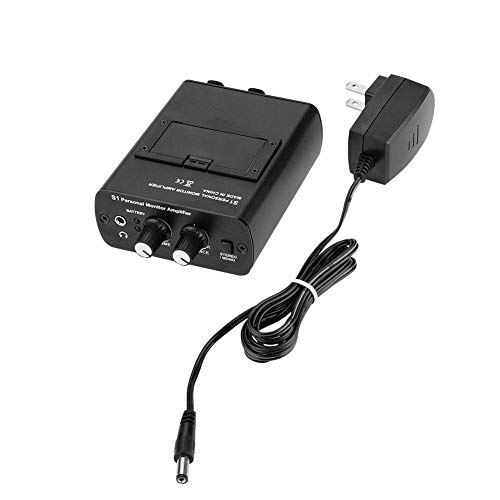
The ANLEON S1 is a personal in-ear monitor amplifier rather than a wireless transmitter system. It accepts a monitor signal and gives the musician local control over headphone volume. That feature is valuable for guitar players who share a monitor feed with a drummer, singer, or keyboard player. Instead of asking the sound engineer for every small volume change, I can make a quick adjustment at my side.
This unit suits wired IEM setups, rehearsal rooms, recording spaces, and stages with an existing monitor output. It can help a player hear a guitar modeler, vocal mic, click, or band mix at a useful level. The sound depends on the source mix and the in-ear monitors connected to it, so I would pair it with comfortable, efficient earphones. It is also a good way to start using personal monitoring before investing in a more complex wireless system.
Pros:
- Gives the player local volume control
- Useful for guitar, bass, vocals, drums, and keys
- Good fit for wired IEM monitoring
- Helps reduce repeated monitor requests during soundcheck
- Practical for rehearsal and recording work
- Compact format is easy to place near a pedalboard or belt
Cons:
- It requires a cable from the monitor output
- It is not a wireless IEM system by itself
- It cannot improve a poor or noisy source mix
My Recommendation
The ANLEON S1 is best for guitar players who already have a monitor feed and want personal control at a low cost. It is a smart choice for bands that use wired stage boxes or for musicians who record with a small interface. In my view, it is one of the best in ear monitors for guitar players who value control more than wireless freedom. Its value is strongest when you already own suitable wired IEMs.
| Best for | Why |
|---|---|
| Wired stage monitoring | It gives you a direct connection and handy level control. |
| Shared monitor mixes | You can adjust your own volume without changing the whole band mix. |
| Home recording | It offers a simple way to monitor without buying a wireless rig. |
WENTELMUSIC A98T Wireless IEM System
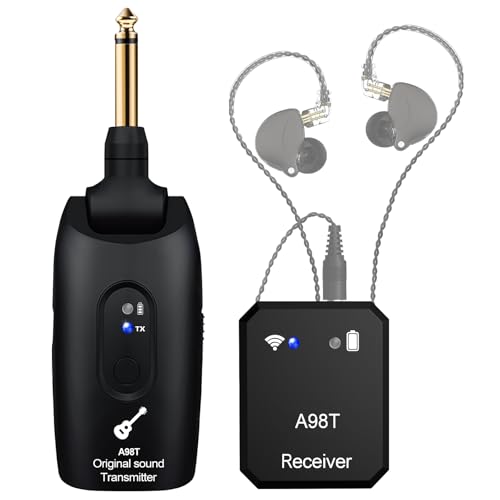
The WENTELMUSIC A98T uses a 2.4GHz wireless link for personal in-ear monitoring. Its main appeal is fast setup and a compact design that can work well for guitar, DJ, studio, and live performance duties. A wireless monitor system lets me move around the stage without dragging a headphone cable from the mixer. That freedom can make a major difference when I play guitar and need space for footwork.
The A98T is a sensible choice for musicians who need a straightforward stereo monitoring path. It can carry a band mix, vocal blend, guitar modeler output, or playback track, depending on the mixer connection. I would test the range in the actual room before a show because walls, wireless microphones, and busy Wi-Fi areas can affect any 2.4GHz product. With a clean signal source and a good ear seal, it can deliver a useful monitoring experience.
Pros:
- Wireless 2.4GHz operation removes stage cable limits
- Compact setup suits mobile guitar players
- Useful for live, studio, and DJ applications
- Fast pairing reduces pre-show work
- Can support a clean personal monitor mix
- Convenient for players who move across a stage
Cons:
- Wireless performance depends on the room and nearby devices
- Battery care is needed before every performance
- It may not offer the advanced control of premium touring systems
My Recommendation
I would choose the A98T for a guitarist who wants an affordable wireless step up from a fixed headphone cable. It is best for small and medium venues, mobile performers, and players who also work as DJs or producers. Among the best in ear monitors for guitar players, this model stands out for its broad use and simple workflow. It offers good value when portability matters most.
| Best for | Why |
|---|---|
| Mobile performers | The wireless connection allows more movement on stage. |
| Multi-use musicians | It works across guitar, DJ, studio, and live applications. |
| Quick soundchecks | A simple wireless layout helps reduce setup steps. |
M-VAVE SWS-12 Wireless IEM System

The M-VAVE SWS-12 is a 2.4GHz stereo IEM system with automatic pairing and a low-latency focus. Guitar players need timing that feels natural, especially when they use a click, drum loop, or amp modeler. A delayed monitor can make palm mutes and fast runs feel disconnected. The SWS-12 is designed to keep that wireless path quick enough for practical playing.
One useful feature is the one-to-more concept, which can help in setups where more than one receiver is needed. That may appeal to a band that wants to share a monitor source, although users should confirm the exact channel and receiver arrangement before buying. The stereo format also helps preserve left-right placement in a full mix. I see this as a useful option for guitarists who want wireless monitoring with more flexibility than a basic single-user kit.
Pros:
- Stereo 2.4GHz monitoring supports a wider mix
- Low-latency design helps preserve playing feel
- Automatic pairing speeds up setup
- One-to-more potential suits group monitoring plans
- Useful for guitar studios and live performance
- Wireless format keeps the playing area tidy
Cons:
- Multi-receiver use may require careful channel planning
- Wireless range can change in crowded venues
- Users must charge the system before a long show
My Recommendation
The M-VAVE SWS-12 is best for guitar players who care about stereo sound and quick response. I would consider it for a modeler-based rig, a rehearsal space, or a band that may expand its monitoring needs later. It belongs on a shortlist of the best in ear monitors for guitar players because its low-latency goal matches the needs of modern digital guitar rigs. Its overall value depends on how well its multi-user features fit your exact setup.
| Best for | Why |
|---|---|
| Digital guitar rigs | Low latency helps the monitor feel closer to the source. |
| Stereo players | A stereo path can keep guitars, vocals, and effects easier to place. |
| Growing bands | One-to-more support may help add receivers later. |
Depusheng Wireless In-Ear Monitor System

The Depusheng wireless IEM system is built around a transmitter and clip-on receiver for stage and studio monitoring. Its layout is familiar, which makes it easy for a guitarist to understand at a glance. The transmitter stays near the mixer, while the receiver rides on the player’s belt or strap area. This arrangement gives a practical balance between mobility and simple operation.
I would look at this model for small bands, local gigs, practice rooms, and performers who need more freedom than wired headphones provide. It can help a guitarist hear a vocal mix, backing track, click, or direct guitar signal without standing beside a monitor wedge. The automatic pairing feature reduces the chance of a rushed setup mistake. As with any budget wireless product, I recommend a full rehearsal before relying on it for an important show.
Pros:
- Transmitter and receiver come as one usable system
- Clip-on bodypack is convenient for guitarists
- Automatic pairing makes operation approachable
- Useful for stage, studio, and rehearsal work
- Removes a cable from the musician’s movement area
- Practical design for singers and other band members too
Cons:
- Performance can vary with wireless congestion
- It may need frequent charging during heavy use
- It lacks the deeper system management of high-end touring gear
My Recommendation
The Depusheng system is a good match for a beginner or working local guitarist who wants an uncomplicated wireless monitor kit. I would place it among the best in ear monitors for guitar players who value ease of use and a modest price. It is not my first pick for a major tour, but it makes sense for rehearsals, small stages, and community performances. Check Amazon for the current price and included accessories before purchase.
| Best for | Why |
|---|---|
| Local gigging | The basic transmitter and receiver layout is easy to carry. |
| Beginner IEM users | Automatic pairing keeps the first setup less stressful. |
| Rehearsal rooms | It offers movement without the cost of a premium wireless rack. |
JOYO JW-07 and JW-06 Wireless Bundle

This JOYO bundle combines the JW-07 wireless in-ear monitor system with the JW-06 5.8GHz wireless guitar system. That combination targets guitarists who want to remove both the instrument cable and the monitor cable. A clean wireless floor can make a stage feel much less crowded. It also lets me focus on playing instead of stepping over cords.
The two systems use different wireless jobs, which is useful because the guitar signal and monitor signal do not need to share the same path. Still, I would plan the rig carefully and test every connection before a performance. Wireless systems need charged batteries, sensible placement, and backup cables for important work. For home players, worship musicians, cover bands, and small-stage performers, this bundle can offer a neat starting point.
Pros:
- Combines guitar wireless and wireless IEM monitoring
- Reduces cable clutter around the pedalboard
- Helpful for performers who move often
- Includes a coordinated setup from one brand
- Useful for practice, worship, and live shows
- Can simplify a portable guitar rig
Cons:
- More wireless devices mean more batteries to manage
- Users must test both links for interference and range
- A wireless backup cable remains wise for critical shows
My Recommendation
I recommend this bundle for guitarists who want an almost cable-free stage without piecing together separate products. It is one of the best in ear monitors for guitar players when the goal includes wireless instrument freedom too. It suits cover bands, worship players, and performers who cross a wide stage. The value is attractive if you need both systems, but buying only the JW-07 may cost less if your guitar already uses a cable.
| Best for | Why |
|---|---|
| Cable-free stages | It handles both the guitar link and personal monitoring link. |
| Worship musicians | The tidy setup works well on open stages and risers. |
| Busy performers | Less cable around your feet means easier movement. |
INGPARTNER A98T Wireless IEM System

The INGPARTNER A98T is a wireless IEM system with a 270-degree rotatable transmitter. That rotating design can help with awkward output jacks and cramped mixer layouts. Instead of forcing the transmitter into one position, I can angle it to make the connection more comfortable. Small physical details like this matter when a guitarist sets up beside a pedalboard or rack.
This system is aimed at studio work, live performance, and personal monitoring. Its wireless format helps players move, while the bodypack-style receiver keeps the earphone cable close to the body. I would use it for rehearsals, small venues, and direct monitoring from a mixer or audio interface. The A98T is not a substitute for a carefully coordinated professional RF system, but it can be a practical everyday tool for many guitarists.
Pros:
- Rotatable transmitter helps with tight equipment layouts
- Wireless design allows free stage movement
- Useful for guitar, studio, and live applications
- Compact receiver is easy to clip onto clothing
- Can reduce cable strain near the audio output
- Friendly choice for players who value flexible placement
Cons:
- Wireless range depends on the venue
- It needs battery planning before shows
- It may not provide the advanced RF options of premium systems
My Recommendation
The INGPARTNER A98T is best for guitar players who often work in tight spaces or use mixers with awkward output positions. I see it as one of the best in ear monitors for guitar players who want a small physical convenience that solves a real setup problem. It is suitable for rehearsals, small gigs, and studio sessions. Its value is strongest for users who will actually use the rotating transmitter.
| Best for | Why |
|---|---|
| Compact rigs | The rotating transmitter can fit better around nearby gear. |
| Small venues | Wireless monitoring gives useful freedom without a large rack. |
| Flexible setup needs | The transmitter angle helps solve awkward connection points. |
Sennheiser IE 40 PRO Wired IEM

The Sennheiser IE 40 PRO is a wired professional-style in-ear monitor with a molded fit and dynamic driver design. For guitar players, its greatest strength is a focused and balanced presentation that can reveal pick attack, string noise, vocal detail, and amp texture. A wired monitor also avoids wireless delay, battery worries, and radio congestion. That makes it a dependable choice for practice, recording, and live use with a suitable headphone amp or IEM belt pack.
Fit is critical with any in-ear monitor, and the IE 40 PRO includes interchangeable ear tips to help create a stable seal. A good seal improves bass response and reduces the need to turn up the volume in a loud room. I prefer this type of direct, predictable setup when I need to judge guitar tone accurately. It is not a wireless system, but it may deliver a more consistent result than a cheap wireless kit in many real-world situations.
Pros:
- Clear, detailed sound for guitar monitoring
- Wired connection avoids wireless delay
- Replaceable ear tips help improve fit
- Good isolation when the ear seal is correct
- Useful for stage, studio, and focused practice
- Professional design from an established audio brand
Cons:
- The cable can limit movement on stage
- It needs a headphone amp, belt pack, or monitor output
- Fit and isolation vary from one ear shape to another
My Recommendation
The IE 40 PRO is my strongest wired pick for guitar players who want clear sound and reliable timing. It belongs near the top of any list of the best in ear monitors for guitar players, especially for recording musicians and performers who already use a wired monitor pack. It also makes sense for players who dislike charging wireless equipment. For long-term value, its replaceable-fit approach is more useful than a low-cost earbud that cannot stay in place.
| Best for | Why |
|---|---|
| Recording guitarists | The wired path gives a direct and predictable monitor signal. |
| Accurate tone checks | Detail helps reveal pick attack, effects, and amp texture. |
| Players avoiding batteries | It works without wireless charging or RF planning. |
Personal Two-Channel IEM Headphone Amp

This personal headphone amplifier is designed for monitoring jobs such as drums, bass, recording, and live audio. Its two-channel mono format can be useful when a musician needs separate control over two incoming monitor signals. For a guitarist, that might mean a band mix on one channel and a guide or auxiliary feed on the other, depending on the mixer and wiring. It offers a low-cost route into personal monitoring without requiring a wireless transmitter.
I would consider this type of amp for a rehearsal room, home studio, or wired stage rig. It places volume control close to the player and can help prevent a strong monitor signal from getting lost in a long cable run. The exact channel behavior matters, so I would read the current manual and confirm the connector layout before purchase. It works best as part of a planned wired system, not as a standalone pair of earphones.
Pros:
- Two-channel mono design adds routing flexibility
- Personal level control stays near the musician
- Useful for guitar, bass, drums, and recording
- Wired signal avoids wireless interference
- Helpful for rehearsals and small studio setups
- Can support more personal monitoring control at a low cost
Cons:
- It does not provide wireless movement
- Connector and channel needs require careful checking
- It depends on a clean monitor feed from the mixer
My Recommendation
This amp is best for guitar players who need personal control but already plan to run cables. It can be one of the best in ear monitors for guitar players when the real need is a useful headphone amplifier, not another wireless link. I would pair it with efficient, well-fitting IEMs and a short, strong cable. It offers good value for home studios, band practice, and simple live monitoring.
| Best for | Why |
|---|---|
| Two-feed setups | Two-channel operation can support more flexible monitor routing. |
| Home studios | It adds nearby level control without a large monitor rack. |
| Wired rehearsals | A cable-based path avoids RF problems and charging. |
D Debra Audio PRO ER-202 UHF IEM System

The D Debra Audio PRO ER-202 is a UHF wireless in-ear monitor system with a transmitter and two bodypack receivers. That two-pack design is helpful for a guitar duo, singer and guitarist, or two members of a small band. Instead of buying separate basic kits, two performers can share one monitor source when the channel plan allows it. UHF systems can also behave differently from common 2.4GHz products, so this model may appeal to users who want another wireless format.
The system is made for stage, studio, guitar, and band performance work. Two bodypacks can make soundcheck easier when both players need the same mix, though each person may still want a different monitor balance. I would confirm the included frequency settings and local wireless rules before a major show. The ER-202 makes the most sense for small bands that value multiple receivers and want a more organized personal monitor setup.
Pros:
- Includes two bodypack receivers
- Useful for duos and small bands
- UHF format offers an alternative to 2.4GHz systems
- Supports wireless stage movement
- Designed for guitar, studio, and live performance
- Can reduce the cost of providing two monitor packs
Cons:
- Frequency planning matters more with UHF equipment
- Two users may need separate monitor mixes
- It requires more setup than a basic single-user system
My Recommendation
I recommend the ER-202 for two performers who need to hear a shared monitor feed. It is one of the best in ear monitors for guitar players when a single receiver is not enough. Guitar duos, worship teams, and small bands can get strong practical value from the two bodypacks. I would buy it only after checking frequency needs, input connections, and the included accessories for the current listing.
| Best for | Why |
|---|---|
| Guitar duos | Two receivers can serve two musicians from one transmitter. |
| Small bands | The system can reduce the need for separate entry-level kits. |
| UHF users | It provides an alternative to crowded 2.4GHz wireless gear. |
How I Choose the Best In-Ear Monitors for Guitar Players
Choosing an IEM is not only about sound quality. A guitar monitor must let me hear the parts that control my playing. I listen for pick attack, low-string definition, vocal clarity, and the shape of effects such as delay and reverb. If the mix turns into a wall of bass, I lose the small details that make a performance feel tight.
I also separate the earphone from the wireless system. A wireless transmitter sends the mix, but the IEM converts that signal into sound. A great wireless pack cannot fix poor earphones, and expensive earphones cannot fix a noisy monitor output. The best in ear monitors for guitar players come from matching both parts as a complete chain.
Sound Signature and Guitar Tone
Guitarists often need a balanced sound rather than a huge bass boost. Too much bass can cover the kick, bass guitar, and low guitar strings. Too much treble can make pick noise sharp and tiring. I prefer a monitor with clear mids because the midrange carries much of the guitar’s identity.
That does not mean every player should choose a flat sound. A rock guitarist may enjoy extra punch, while a jazz player may want smooth highs. A worship guitarist may need space for vocals and keys. The right choice should make the full monitor mix easy to understand at a safe, useful level.
Fit, Seal, and Comfort
Fit is one of the most important parts of an IEM review. If the ear tip does not seal, bass drops away and outside stage noise enters. Many players then turn up the volume to compensate. That habit can cause listening fatigue and may increase hearing risk.
I suggest trying the supplied tips one size at a time. The correct tip should feel secure without painful pressure. The cable should loop over the ear when the design supports it. During a rehearsal, move your head, bend down, and play with your guitar strap on; an IEM that shifts during those actions is not ready for a show.
Wired Versus Wireless IEMs
Wired IEMs offer the simplest signal path. They do not need radio pairing or battery charging, and they add no wireless transmission delay. They are often excellent for recording, practice, and stages where a wired belt pack is already available.
Wireless IEMs offer freedom. I can walk, turn, and move around without pulling a cable from the mixer. That freedom comes with more planning. I need to charge the system, manage frequencies or wireless bands, check range, and keep a backup plan.
For a small local gig, a 2.4GHz system may be easy and affordable. For a bigger production, UHF equipment or a professional digital system may offer better coordination. No wireless product should be judged without considering the room, the number of wireless devices, and the distance between transmitter and receiver.
Latency Matters for Guitar
Latency is the short delay between playing a note and hearing it in the monitor. A tiny amount may not bother a singer standing still, but guitarists can notice it during fast playing. It can make palm mutes feel soft and make a modeled amp feel less connected to the hands.
This is why low-latency wireless IEM systems are attractive for digital guitar rigs. Still, total delay comes from the entire chain. The guitar wireless unit, modeler, digital mixer, wireless IEM system, and any computer plug-in can all add time. I always test the complete rig, not just one product on its own.
Isolation and Hearing Safety
Good isolation helps a guitarist hear the monitor mix over drums and loud amplifiers. It can also reduce the temptation to raise the monitor volume. I treat in-ear monitors like safety equipment as well as audio equipment. I start at a low level, raise it only as needed, and take breaks when possible.
Do not use an IEM as an excuse to make the mix painfully loud. Ask the engineer for a cleaner mix instead. Removing unnecessary low-end noise and adding the guitar or vocal slightly can work better than turning up everything. Hearing protection is part of a long guitar career.
What Should Be in a Guitar Monitor Mix?
A useful guitar mix usually includes enough of the guitar to support timing and tone, but not so much that it hides the band. I often start with lead vocal, kick, snare, bass, guitar, and a small amount of keys or tracks. Add click only when the performance needs it. Too many channels create fog.
For a guitarist using a modeler, I like to hear the direct guitar sound and enough of the room or band to stay connected. Some players prefer a mostly direct signal. Others need more vocals and drums. A good soundcheck is a conversation with the engineer, not a race to make every channel loud.
How to Set Up Wireless IEMs for a Show
- Charge the transmitter, receiver, and any wireless guitar units.
- Connect the transmitter to the correct monitor output.
- Pair the transmitter and receiver before connecting the earphones.
- Set the receiver volume low before putting the IEMs in your ears.
- Check both sides for signal, noise, and correct stereo or mono behavior.
- Walk the stage and look for dropouts.
- Keep a spare cable or wired earphone option nearby.
I never wait until the first song to discover a wireless issue. I test while wearing the guitar, using the same strap, pedalboard, and monitor cable that I will use on stage. Small changes in position can reveal a bad connection or weak battery. A five-minute test can prevent a very long night.
Common Mistakes Guitar Players Make
The first mistake is buying an IEM based only on the product title. Words such as “professional,” “low latency,” and “stereo” do not tell the whole story. I check the included parts, connector type, battery details, operating band, and return policy before ordering.
The second mistake is ignoring the monitor output. A wireless IEM system needs a suitable signal from the mixer, interface, or headphone amplifier. Some boards offer aux outputs, while others use different connector types. Confirm the output before the show.
The third mistake is using the wrong ear tip. A poor seal makes the mix thin and weak. Trying another tip can improve the result more than changing the wireless system. Fit is the quiet hero of the whole setup.
Which Type of IEM Is Right for You?
Choose a wired model if you record at home, rehearse in one spot, or already own a personal headphone amp. A wired option is also useful as a backup for any wireless system. It is simple, stable, and free from radio concerns.
Choose a basic 2.4GHz system if you want affordable wireless movement for rehearsals and smaller shows. These systems are easy to use, but you should test them around other wireless devices. Keep the transmitter in a good line-of-sight position.
Choose a two-receiver UHF system if two performers need the same feed. This can be useful for guitar duos and compact bands. Check local frequency rules and plan the monitor mix before the event.
Choose a bundle with wireless guitar and wireless IEM links if you want a clean stage with fewer cables. It costs more than one system, but the convenience can be worth it. I still keep a normal instrument cable in my gig bag.
FAQs Of best in ear monitors for guitar players
Are in-ear monitors good for guitar players?
Yes. They can make guitar tone, vocals, drums, and click tracks easier to hear. They also reduce stage clutter and feedback compared with loud floor wedges. The best result comes from a good ear seal and a clear monitor mix.
Should guitar players use wired or wireless IEMs?
Wired IEMs are simple and have no wireless delay. Wireless IEMs offer more movement but need charging and frequency planning. I recommend wired models for recording and wireless systems for players who move around the stage.
Do IEMs change the sound of a guitar amp modeler?
They can change how you perceive the sound, but they do not change the modeler’s output by themselves. Ear tip fit and the monitor’s sound balance affect what you hear. Use a balanced IEM and test the full signal chain.
Can I use regular earbuds for guitar monitoring?
You can, but regular earbuds may not stay secure or isolate enough stage noise. They may also lack the detail needed for a full band mix. Purpose-built IEMs usually provide a better fit and more controlled monitoring experience.
How loud should guitar IEMs be?
Set them only loud enough to hear the mix clearly. Start low and ask for a cleaner monitor mix instead of adding more volume. Take breaks and protect your hearing during long rehearsals and shows.
Final Verdict: Which Should You Buy?
For most guitarists, the Sennheiser IE 40 PRO is the best wired choice, while the JOYO JW-07 is a strong affordable wireless pick. The D Debra ER-202 suits two users. The best in ear monitors for guitar players depend on fit, signal needs, movement, and budget.
Choose the system that makes your mix clear and your setup calm. With the right IEM, guitar playing feels less like fighting the stage and more like hearing the music.

Senior Music Reviewer
Alex Carter is a seasoned music reviewer with over a decade of experience in the world of sound and instruments. Passionate about helping musicians and enthusiasts make informed choices, he brings sharp insights and in-depth knowledge to every review. From classical instruments to modern gear, Alex combines technical expertise with a love for music to deliver content that resonates with readers.
As a Senior Music Reviewer and expert author on Tuneluma.com, Alex is dedicated to sharing honest evaluations, practical advice, and thoughtful commentary to guide readers in their musical journey.