What A Beautiful Name Chords Piano: Easy Guide
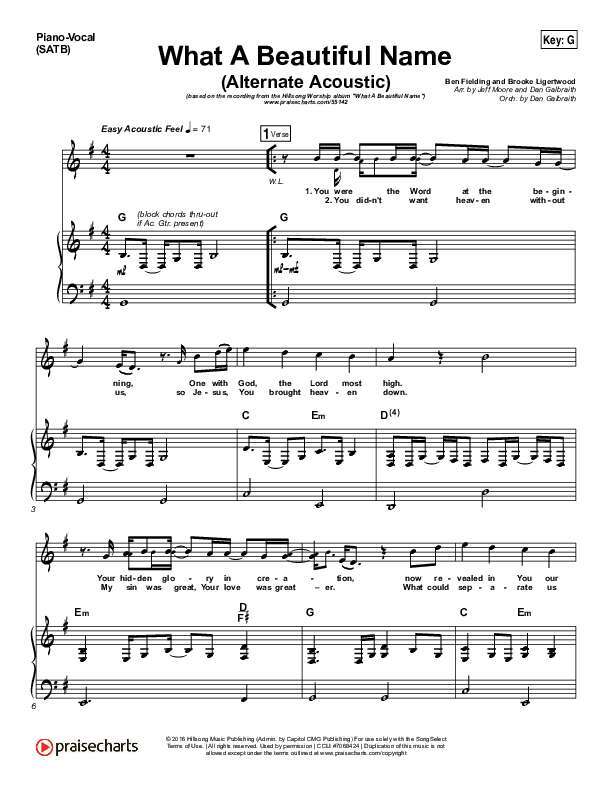
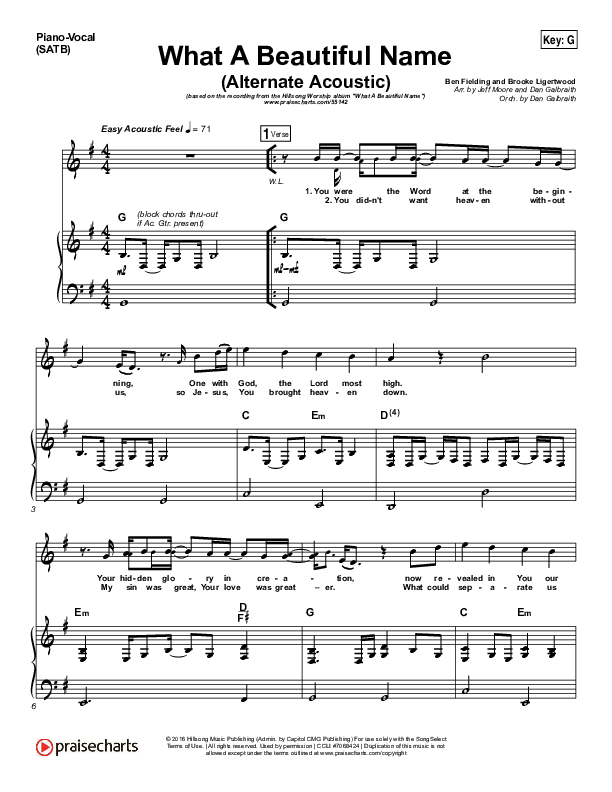
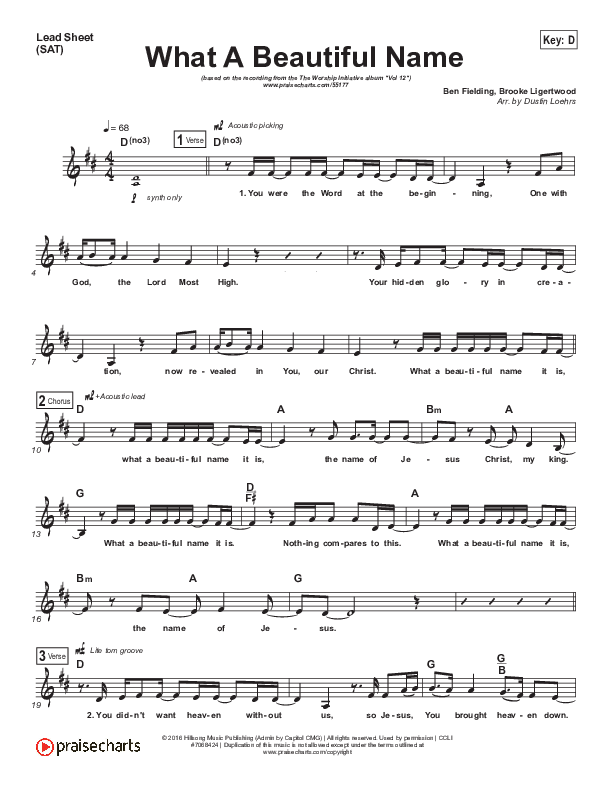
What a Beautiful Name piano chords are often played in D with D, A/C#, Bm7, and G as the main chord family.
Learning What a Beautiful Name chords piano players use can help you sound confident without reading a dense score. This worship song by Hillsong Worship has a gentle verse, a rising pre-chorus, and a wide, emotional chorus. In this guide, you will learn the core chords, easy versions, chord progressions, playing patterns, and useful tips for making the song sound musical on piano.
What Key Is What a Beautiful Name In?
The most common piano arrangement of What a Beautiful Name is in the key of D major. This key uses two sharps, F-sharp and C-sharp, and it fits the song’s warm, bright sound.
The main chords are simple enough for beginners:
• D major
• A major
• B minor
• G major
• E minor
• F-sharp minor
The most important chord movement is:
D A/C# Bm7 G
This progression gives the song its smooth and familiar sound. The A/C# chord is an A major chord with C-sharp as the lowest note. That low bass note creates a gentle step from D down toward B minor.
When studying What a Beautiful Name chords piano arrangements, focus on the bass movement as much as the chord names. The left hand helps connect each chord, while the right hand adds the color and emotion.

What a Beautiful Name Chords Piano Chart
Here is a practical chord chart for the common key of D. These shapes are useful for beginners, church pianists, and players who want a simple worship arrangement.
| Chord | Notes | Easy piano shape |
|---|---|---|
| D | D, F-sharp, A | D–F-sharp–A |
| A | A, C-sharp, E | A–C-sharp–E |
| A/C-sharp | C-sharp, E, A | C-sharp–E–A |
| Bm | B, D, F-sharp | B–D–F-sharp |
| Bm7 | B, D, F-sharp, A | B–D–F-sharp–A |
| G | G, B, D | G–B–D |
| Em7 | E, G, B, D | E–G–B–D |
| D/F-sharp | F-sharp, A, D | F-sharp–A–D |
You do not need to play every note in every chord. A beginner can start with three-note triads. More advanced players can add sevenths, suspended notes, and repeated tones for a fuller worship sound.
A useful rule is to keep common notes close together. For example, instead of jumping from one side of the keyboard to the other, use nearby inversions. This makes the changes smoother and helps the song feel calm.

Main Chord Progression for the Song
The central progression in What a Beautiful Name chords piano players use is:
D A/C# Bm7 G
You can play one chord per bar in 4/4 time. Hold each chord for four beats before changing to the next one.
A basic version may look like this:
| D | A/C# | Bm7 | G |
The left hand can play single bass notes:
Left hand:  D     C#     B      G
Right hand: D     A      Bm7    G
For a fuller sound, play the bass note with the left hand and the chord with the right hand. Keep the left hand soft. The goal is to support the singer, not overpower the melody.
Another useful version uses seventh chords:
| Dmaj7 | A/C# | Bm7 | Gmaj7 |
These added notes create a softer and more modern worship sound. Use them during quiet sections, then return to stronger major triads when the song builds.
Verse Chords for Beginners
The verse is usually played with a gentle form of the main progression. You can begin with simple triads:
| D | A/C# | Bm | G |
If A/C# feels difficult, use A major instead:
| D | A | Bm | G |
This version is easier because the left hand does not need to find C-sharp. However, the bass line will sound less connected.
Try this beginner pattern:
- Play the left-hand bass note on beat one.
- Play the right-hand chord on beat one.
- Repeat the chord softly on beats three and four.
- Change chords at the start of the next bar.
For example:
Beat:        1   2   3   4
Left hand:   D
Right hand:  chord       chord
Start slowly at about 60 beats per minute. Accuracy matters more than speed. Once the changes feel easy, increase the tempo a little at a time.

Pre-Chorus Chords and Chord Movement
The pre-chorus creates forward motion. It often uses E minor, D/F-sharp, G, and A to lift the music toward the chorus.
A useful arrangement is:
| Em7 | D/F# | G | A |
You may also see this progression written with simpler chords:
| Em | D/F# | G | A |
The difference between Em and Em7 is one added note. Em contains E, G, and B. Em7 adds D.
The D/F-sharp chord is important because it keeps the bass moving upward:
E → F-sharp → G → A
This rising bass line adds energy without making the harmony feel harsh. If you are new to slash chords, play F-sharp in the left hand and a D major chord in the right hand.
Chorus Chords for What a Beautiful Name
The chorus returns to the strong main pattern. A simple arrangement is:
| D | A/C# | Bm7 | G |
You can repeat this progression as needed for the section. The chord names may vary slightly between published charts and live performances, but the harmonic shape remains close.
For a bigger chorus sound, use wider voicings:
Left hand:   D       C#      B       G
Right hand:  A-D-F#  A-C#-E  A-B-D-F#  B-D-G
This approach keeps the left hand low and the right hand in the middle register. Avoid placing too many low notes together. Low, crowded chords can sound muddy on a piano.
A strong chorus should not always mean hitting the keys harder. Try these changes instead:
• Play fuller chords.
• Use octaves in the left hand.
• Add an octave melody note in the right hand.
• Open the chord spacing.
• Use the sustain pedal with care.
These choices create growth while keeping the sound clean.
Easy Piano Version in the Key of C
Some beginners prefer the key of C because it uses mostly white keys. You can transpose the song from D to C.
The common progression becomes:
C G/B Am7 F
The chord chart is:
| D major key | C major key |
|---|---|
| D | C |
| A/C# | G/B |
| Bm7 | Am7 |
| G | F |
| Em7 | Dm7 |
| D/F# | C/E |
| A | G |
This key is often easier for new players. It also works well for singers who find the original key too high or too low.
To transpose What a Beautiful Name chords piano players can use, move every chord by the same number of notes. Do not change only one chord. Consistent transposition keeps the relationships between the chords correct.
Piano Chord Inversions That Make Changes Easier
Chord inversions place a different chord note at the bottom. They help your hand move less and make the progression sound smooth.
For the main progression, try these shapes:
D:       D–F#–A
A/C#:    C#–E–A
Bm7:     B–D–F#–A
G:       B–D–G
Notice how the notes stay close. This is called good voice leading. It is one of the most useful skills in worship piano.
For the right hand, you could use:
D:       F#–A–D
A:       E–A–C#
Bm7:     F#–A–B–D
G:       G–B–D
Do not worry if your first arrangement uses different inversions. The best shape is the one that lets you change chords without tension.
A common mistake is to play every chord in root position. That is not wrong, but it can create large jumps. Inversions act like stepping stones between chords.
Worship Piano Patterns for This Song
Once you know the chords, the next step is choosing a pattern. The pattern should match the section and support the singer.
Simple Block Chords
Play each chord once and hold it. This works well for a quiet verse or prayerful setting.
D A/C# Bm7 G
Use the sustain pedal lightly. Lift it when the chord changes to prevent a blurred sound.
Broken Chords
Play the notes one at a time: