Is Piano Or Guitar Harder: Which Is Easier To Learn
For most beginners, guitar feels harder at first, while piano becomes harder at advanced levels.
The question “is piano or guitar harder” has no single answer because each instrument tests different skills. Piano offers a clear layout and easy first notes, while guitar demands finger strength, chord shapes, and careful coordination. This guide compares both instruments by difficulty, technique, learning speed, cost, theory, and long-term progress so you can choose with confidence.

Is piano or guitar harder for beginners?
For many beginners, guitar feels harder during the first few weeks. New players must press strings firmly, shape chords, and move between shapes without stopping the rhythm. Fingertip pain is also common at the start.
Piano usually feels easier at the very beginning. Each key produces a clean note, and the notes follow a simple left-to-right pattern. You can play a basic melody with one finger after a short lesson.
However, early progress can be misleading. Piano may give you quick wins, but playing two independent hand parts, reading both clefs, and using proper rhythm can become demanding.
Guitar has a steeper physical start. Piano has a wider long-term skill range. That difference explains why people give different answers to the question, “is piano or guitar harder?”

Why guitar can be harder at first
Guitar combines several new skills at once. Your fretting hand must form shapes, while your picking or strumming hand keeps time. Your hands also work in different ways, much like two people trying to carry one table.
Finger strength and fingertip pain
Steel-string acoustic guitars can feel tough on new fingertips. Pressing the strings may cause soreness, and weak finger muscles can make notes buzz or sound muted.
This discomfort normally improves with short, regular practice. Beginners should stop when they feel sharp pain, numbness, or strain. Ten to fifteen minutes per day is safer and more useful than one long session each week.
A guitar with high action can make learning much harder. “Action” means the distance between the strings and the fretboard. If the strings sit too high, ask a qualified guitar technician to check the instrument.
Chord changes and rhythm
Many popular songs use chords such as G, C, D, E minor, and A minor. These shapes are simple on paper, but changing between them at a steady speed takes practice.
A common mistake is to practice chord shapes without a beat. Instead, use a slow metronome and change chords every four beats. Accuracy matters more than speed.
Intonation and note accuracy
On piano, pressing the right key gives you the correct pitch. On guitar, your finger position affects the pitch. Press too far from the fret, and the note may buzz. Press in the wrong spot, and the pitch may sound sharp.
This makes guitar a more physical instrument in the early stages. You must train your fingers to find small spaces with consistent pressure.
Tuning and instrument setup
Guitars need regular tuning. Temperature, humidity, string age, and playing style can all affect tuning. Beginners may find this frustrating, especially when a song sounds wrong even though the chords are correct.
A digital tuner solves much of this problem. A well-set-up guitar also makes a major difference. Good equipment does not replace practice, but poor setup can create an unfair barrier.

Why piano can be harder over time
Piano often feels friendly at first because the layout is clear. The white and black keys repeat in a logical pattern, and beginners can learn simple tunes quickly.
The challenge grows when music requires both hands to do different jobs. One hand may play a melody while the other plays chords, bass notes, or a moving pattern.
Hand independence
Hand independence is one of the biggest piano challenges. Your right hand may play three notes while your left hand plays two. The hands may also use different rhythms.
This skill develops slowly. Practice each hand alone first, then combine them at a very slow speed. If the passage falls apart, reduce the tempo rather than forcing it.
Reading two musical lines
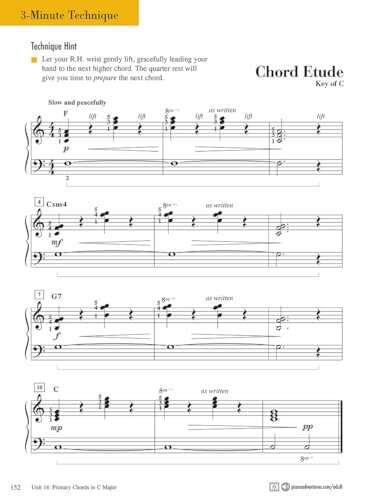
Piano music often uses the treble clef for the right hand and the bass clef for the left hand. Reading both at once requires attention, memory, and rhythm control.
This is different from guitar tablature, which often shows string numbers and fret positions. Guitar may be easier for players who want to copy songs without reading standard notation.
Rhythm and timing
Piano players must control note length, rests, accents, and changes in speed. A song can have the right notes but still sound weak if the rhythm is uneven.
A metronome helps. Start slowly, count out loud, and focus on steady timing. Good rhythm is more important than playing fast.
Dynamics and expression
Piano technique includes touch. Playing a key softly and playing it firmly create different sounds. Advanced players also use pedaling, phrasing, articulation, and changes in volume.
These skills make piano deeply expressive, but they also add layers of difficulty. A beginner can play the notes of a song quickly, yet making the song sound polished takes much longer.

Piano vs. guitar: a skill-by-skill comparison
The answer to “is piano or guitar harder” depends on the skill you want to develop. Here is a practical comparison.
| Skill | Piano | Guitar |
|---|---|---|
| Playing one simple melody | Usually easier | Moderate |
| Playing basic chords | Easy to moderate | Moderate |
| Hand coordination | Moderate to hard | Hard |
| Finger strength | Low at first | High at first |
| Reading standard music | Moderate | Moderate to hard |
| Playing popular songs quickly | Moderate | Often easy after basic chords |
| Improvisation | Clear note layout | Flexible shapes and patterns |
| Portability | Low to moderate | High |
| Self-accompaniment | Easy to see and map | Common and highly practical |
| Advanced technique | Very demanding | Very demanding |
Piano is often more visual. Notes move in a straight line, and the same note appears in the same place. Guitar offers repeated notes across different strings, which gives players more choices but can also create confusion.
Guitar may suit someone who wants to sing and play songs around a campfire. Piano may suit someone who enjoys melody, harmony, classical music, songwriting, or music production.
Neither instrument is easy at a high level. A concert pianist and a skilled guitarist both need years of focused practice, refined timing, and strong musical judgment.

Which instrument is easier to learn?
If your goal is to play simple songs soon, piano may be easier for single-note melodies. Guitar may be easier for basic pop, folk, and rock songs once you learn a few common chords.
The easier choice depends on your body, music taste, learning method, and instrument quality. A motivated learner can progress on either instrument.
Piano may be easier if you:
• Want a clear visual layout
• Prefer playing melodies with one hand
• Enjoy classical music or film scores
• Want to understand music theory through patterns
• Have access to a keyboard at home
• Prefer not to deal with fingertip soreness
Guitar may be easier if you:
• Want to sing while playing
• Enjoy rock, pop, blues, folk, or country music
• Need a portable instrument
• Like rhythm and chord patterns
• Want to learn songs from chord charts
• Enjoy a more physical playing style
In my experience with practice-based learning examples, beginners make faster progress when their instrument matches their real goals. A learner who loves songwriting may stay committed to guitar, even if the first month is uncomfortable. A learner who enjoys structure may remain more engaged at the piano.
Motivation is not a small detail. It is the fuel that keeps practice going after the first excitement fades.

Learning curve: piano vs. guitar
The first three months often look different on each instrument.
First month
Piano beginners can usually play simple melodies with one hand. They may also learn basic triads and simple rhythms.
Guitar beginners often spend the first month building finger strength, learning chord shapes, tuning, and practicing clean notes. Progress may feel slow, but these skills form the foundation for later playing.
Three months
A piano student may play simple songs with both hands and read easy music. A guitar student may know several chords, use basic strumming patterns, and play complete songs.
At this stage, guitar players often feel a stronger connection to popular music. Piano players may have better access to melody and harmony at the same time.
One year
After a year of consistent practice, both players can become capable musicians. A piano student may read intermediate pieces, play scales, and use pedals with control. A guitar student may play barre chords, riffs, fingerstyle patterns, and basic solos.
Practice quality matters more than the calendar. Fifteen focused minutes each day can beat a random two-hour session once a month.

Which instrument is harder to master?
Mastery is difficult on both instruments, but the challenges differ.
Piano mastery requires:
• Precise timing
• Hand independence
• Dynamic control
• Sight-reading
• Chord knowledge
• Pedal technique
• Musical interpretation
• Fast and accurate finger movement
Guitar mastery requires:
• Clean fretting
• Controlled picking
• Advanced rhythm
• Bending and vibrato
• Barre chord strength
• Fingerstyle coordination
• Fretboard knowledge
• Tone and effects control
A pianist has one note location for most pitches, but must coordinate both hands across a wide keyboard. A guitarist can play the same pitch in several locations, but must choose the best position and control the sound physically.
That is why the question “is piano or guitar harder” changes at each level. Guitar may be harder physically at first. Piano may become harder when the music demands complex coordination. Advanced guitar can also become extremely difficult, especially in jazz, classical, and fingerstyle playing.
Common mistakes new players should avoid
Many beginners struggle because of practice habits, not a lack of talent.
Practicing too fast
Fast practice can hide mistakes. Slow practice teaches your hands the correct movement and gives your brain time to process each note.
Skipping rhythm
Players often focus on notes and ignore timing. Use a metronome, count aloud, or tap your foot. Music needs a steady pulse.
Choosing an instrument that is hard to play
An old piano with broken keys or a guitar with high action can make learning miserable. Test the instrument or ask a teacher or technician for advice.
Practicing only what feels easy
Repeating easy songs feels good, but growth requires small challenges. Spend most of your time on manageable work that is slightly above your current level.
Comparing yourself with advanced players
Online videos show polished performances, not the years behind them. Compare your playing with your own performance from last month.
Ignoring tension
Tight shoulders, bent wrists, and excessive finger pressure can slow progress and cause injury. Relax often and take short breaks.
A useful practice plan includes warm-up, technique, song work, and review. Even a simple plan can make each session more focused.
Piano or guitar for children and adults
Children can learn either instrument, but the best choice depends on size, interest, and attention span. A child who loves singing may enjoy guitar. A child who likes patterns, games, or melodies may enjoy piano.
Piano keys are larger and easier to see, which can help young learners understand pitch. Guitar necks require more precise finger placement and may be uncomfortable for very small hands.
Adults should not assume they are too old. Adult learners often have stronger focus, clearer goals, and better self-awareness. They may progress well with short practice sessions and realistic expectations.
The best instrument is the one the learner wants to touch regularly. Interest creates practice, and practice creates skill.
Cost, space, and maintenance
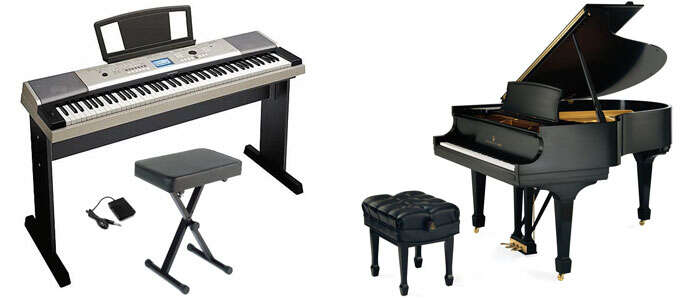
A basic keyboard can be affordable and fits well in a small home. A full-size digital piano costs more but can provide weighted keys and a more realistic playing feel.
Guitars range from inexpensive beginner models to costly professional instruments. You may also need a tuner, picks, a strap, extra strings, and possibly an amplifier.
Consider these practical points:
• A guitar is easier to carry
• A digital keyboard can use headphones
• Acoustic pianos need tuning
• Guitars need string changes
• Digital instruments need power or batteries
• Both instruments benefit from proper storage
• A teacher or quality course may add to the cost
Noise also matters. A piano with headphones can be quiet, while an acoustic guitar may still be heard through walls. Electric guitar can be quiet with headphones, but it usually needs extra equipment.
How to choose between piano and guitar
Use this simple process before buying an instrument.
- Choose three artists or songs you love.
- Decide whether you want melody, chords, rhythm, or singing.
- Try both instruments for at least 20 minutes.
- Notice which instrument feels more natural and enjoyable.
- Check the instrument’s comfort and condition.
- Take one beginner lesson on each if possible.
- Commit to one instrument for at least eight weeks.
Do not choose based only on which instrument seems easier. Choose the one that supports the music you want to make.
If you are unsure, a keyboard may offer a gentle start in music theory. A guitar may offer a direct path to playing songs with friends. There is no rule that says you must choose only one forever.
Practice tips that work for both instruments
Effective practice is simple, but it requires consistency.
• Practice five days per week
• Keep sessions short and focused
• Start at a slow speed
• Use a metronome when timing matters
• Break hard passages into small parts
• Record yourself once a week
• Relax your hands and shoulders
• Review old material
• Learn songs you truly enjoy
• Ask a teacher to correct technique early
A useful beginner session may look like this:
- Warm up for three minutes.
- Practice one technical skill for five minutes.
- Work on a song for ten minutes.
- Review one older song for five minutes.
- Write down what to practice next time.
Recording yourself is especially helpful. What feels smooth while you play may sound uneven in a recording. This feedback can reveal timing problems without making practice feel negative.
Frequently Asked Questions About Is Piano or Guitar Harder
Is piano or guitar harder for a complete beginner?
Guitar often feels harder during the first few weeks because of chord shapes, fingertip soreness, and tuning. Piano usually offers easier first notes, but advanced coordination can become very challenging.
Is piano or guitar harder to play while singing?
Guitar is often easier for singing and strumming once you know basic chords. Piano can also support singing well, but coordinating a separate vocal line with two hands may take more practice.
Is piano or guitar harder to learn without a teacher?
Both can be learned with books, apps, and videos, but feedback helps prevent poor habits. Guitar players may struggle with posture and chord technique, while piano players may need help with rhythm, fingering, and hand tension.
Is piano or guitar harder for children?
Piano may be easier for young children because the keys are clear and do not require much finger strength. Guitar can work well for older children who enjoy rhythm and have hands large enough to form chords comfortably.
Is piano or guitar harder to master?
Both are very difficult to master. Piano demands advanced hand independence, reading, and control, while guitar requires detailed fretboard knowledge, picking skill, rhythm, and tone control.
Can I learn piano and guitar at the same time?
You can, but beginners often progress faster by focusing on one instrument first. After building basic rhythm and music knowledge, adding the second instrument becomes easier.
Which instrument is better for songwriting?
Both are excellent for songwriting. Piano makes chords and harmony easy to see, while guitar offers portable chord shapes and works naturally with singing.
Conclusion
So, is piano or guitar harder? Guitar usually presents a tougher physical start, while piano often demands more complex coordination as your skills grow. Your goals, music taste, practice habits, physical comfort, and access to a good instrument matter more than a simple difficulty ranking.
Try both instruments if you can. Choose the one that makes you want to practice tomorrow, then build a steady routine with small goals. Explore beginner lessons, record your progress, and share your experience or questions in the comments.

Senior Music Reviewer
Alex Carter is a seasoned music reviewer with over a decade of experience in the world of sound and instruments. Passionate about helping musicians and enthusiasts make informed choices, he brings sharp insights and in-depth knowledge to every review. From classical instruments to modern gear, Alex combines technical expertise with a love for music to deliver content that resonates with readers.
As a Senior Music Reviewer and expert author on Tuneluma.com, Alex is dedicated to sharing honest evaluations, practical advice, and thoughtful commentary to guide readers in their musical journey.