How Many Notes On A Guitar: Complete Guide
A standard guitar has 12 note names, repeated across its strings, frets, and different octaves.
The answer to how many notes on a guitar depends on what you mean by “notes.” A guitar has 12 notes in the chromatic music system, but each string and fret creates many playable note positions. Once you understand the difference between note names, pitches, frets, and octaves, the guitar neck becomes much easier to read and use.

How Many Notes Are on a Guitar?
A standard six-string guitar uses 12 different note names:
• A
• A♯ or B♭
• B
• C
• C♯ or D♭
• D
• D♯ or E♭
• E
• F
• F♯ or G♭
• G
• G♯ or A♭
These 12 notes form the chromatic scale. After G♯, the pattern starts again at A in the next octave.
However, how many notes on a guitar can be played depends on the guitar’s design. A guitar with six strings and 22 frets has 138 fret positions if you count the six open strings:
6 strings × 23 positions = 138 positions
The 23 positions include the open string and frets 1 through 22. These are not 138 different note names. Many positions play the same note at different locations on the neck.
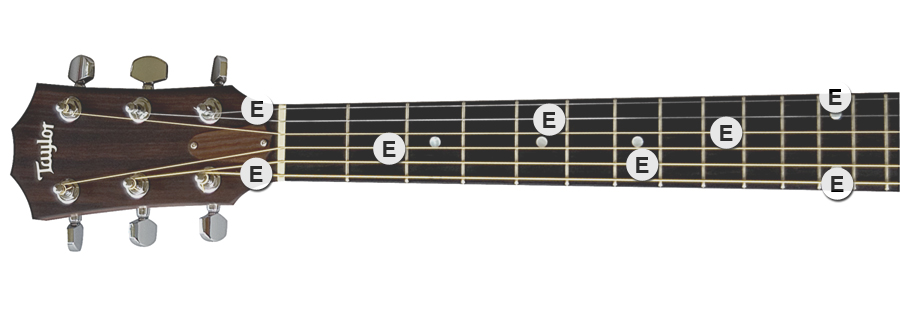
For example, the note E appears on the open sixth string, the second fret of the fourth string, the seventh fret of the fifth string, and several other places. This repetition gives guitarists a major advantage because one melody or chord can often be played in several positions.
The 12 Notes Used on Guitar
The guitar follows the same 12-note system used by the piano, bass, violin, and most Western instruments. The notes move upward in half steps, also called semitones.
The full chromatic scale is:
A, A♯, B, C, C♯, D, D♯, E, F, F♯, G, G♯
The sharp names can also use flat names. For example:
• A♯ is the same pitch as B♭
• C♯ is the same pitch as D♭
• D♯ is the same pitch as E♭
• F♯ is the same pitch as G♭
• G♯ is the same pitch as A♭
This is called enharmonic spelling. The sound is the same, but the correct name depends on the key and musical context.
There are no sharp or flat notes between B and C or between E and F. That is why moving from B to C or E to F takes only one fret. Every other natural-note pair has a fret between it.

How Frets Create Different Notes
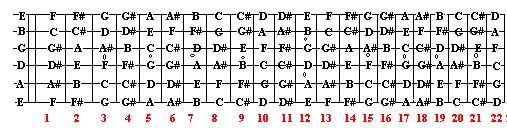
Each fret raises a string by one half step. When you move from an open string to the first fret, the pitch rises by one semitone. Moving to the second fret raises it by two semitones.
For example, the sixth string on a standard-tuned guitar is low E:
- Open string: E
- First fret: F
- Second fret: F♯
- Third fret: G
- Fourth fret: G♯
- Fifth fret: A
- Sixth fret: A♯
- Seventh fret: B
- Eighth fret: C
- Ninth fret: C♯
- Tenth fret: D
- Eleventh fret: D♯
- Twelfth fret: E
The 12th fret produces the same note name as the open string, but one octave higher. This pattern repeats above the 12th fret.
That octave pattern is one of the most useful facts about how many notes on a guitar. The 12th fret acts like a musical halfway point. Notes after it repeat the same order, but at a higher pitch.
How Many Notes Are on Each Guitar String?
Each guitar string contains a long series of notes. The exact number depends on the number of frets.
A 22-fret guitar has 23 playable positions on each string:
• One open-string position
• Twenty-two fretted positions
• Twenty-three total positions per string
Across six strings, that gives 138 playable note positions. A 24-fret guitar has 150 positions:
6 strings × 25 positions = 150 positions
A 20-fret guitar has 126 positions:
6 strings × 21 positions = 126 positions
Still, these numbers count locations rather than unique pitches. The same pitch may appear on several strings. For instance, the note G can be played in many places, such as the third fret of the sixth string, the 10th fret of the fifth string, and the fifth fret of the fourth string.
This duplication is not a flaw. It lets you choose a position that feels comfortable, sounds bright or dark, or fits a chord shape better.
How Many Unique Notes Does a Guitar Have?
A typical 22-fret guitar can play about 48 distinct fixed pitches in standard tuning, from low E to the D♯ above the high E string. A 24-fret guitar can play about 49 distinct pitches, reaching a higher E.
The word “about” matters because the total changes with:
• The number of frets
• The tuning
• The number of strings
• The use of open strings
• Whether you count only fixed fretted notes
• Whether you include bends, slides, harmonics, and vibrato
A 20-fret guitar has a slightly smaller range. A seven-string guitar adds a lower string, while a 12-string guitar usually doubles its six strings rather than adding a completely new set of note names.
So, how many notes on a guitar are there in total? A practical answer is this:
• 12 note names repeat across the neck
• Around 46 to 49 distinct fixed pitches appear on many six-string guitars
• More than 120 physical note positions may be available
• Almost unlimited pitch variation is possible through bends and other techniques
Standard Guitar Tuning and Note Names
Standard tuning from the thickest string to the thinnest is:
E, A, D, G, B, E
The sixth string is the thick low E string. The first string is the thin high E string. Both are tuned to E, but they are two octaves apart.
The distance between most adjacent open strings is a perfect fourth. The exception is the distance between the G and B strings, which is a major third. This unusual gap explains why some scale and chord shapes change when they cross from the G string to the B string.
Here are the first five frets of each standard-tuned string:
| String | Open | 1st fret | 2nd fret | 3rd fret | 4th fret | 5th fret |
|---|---|---|---|---|---|---|
| 6th | E | F | F♯ | G | G♯ | A |
| 5th | A | A♯ | B | C | C♯ | D |
| 4th | D | D♯ | E | F | F♯ | G |
| 3rd | G | G♯ | A | A♯ | B | C |
| 2nd | B | C | C♯ | D | D♯ | E |
| 1st | E | F | F♯ | G | G♯ | A |
Learning these first five frets gives you a strong starting map. The fifth fret also helps with tuning because it usually matches the open string below it. The exception is the G string, where the fourth fret matches the open B string.
Why the Same Note Appears in Many Places
Guitar music often gives you several ways to play one note. This happens because the guitar neck is arranged in overlapping patterns.
For example, middle C can appear in multiple locations. On a standard guitar, one common position is the first fret of the second string. It can also appear on other strings higher up the neck.
Playing the same note in different places changes its tone. A note on a thick string may sound warm and full. The same pitch on a thinner string may sound clearer and brighter.
This choice matters in real playing. When I work through a melody, I do not simply find the nearest note. I also look for a position that keeps the hand relaxed and avoids awkward jumps. A note map is useful, but musical phrasing should guide the final choice.
The Difference Between Notes, Pitches, and Note Positions
These three terms are related, but they do not mean the same thing.
• A note name is a label, such as C or F♯.
• A pitch is the actual high or low sound you hear.
• A note position is a physical place where you play that sound.
The note E can occur in several octaves. Each E has the same basic note name but a different pitch level.
The open first string and the open sixth string are both E notes. They do not sound the same because the first string is much higher. The guitar therefore repeats note names across several octaves.
This distinction solves much of the confusion around how many notes on a guitar. You may count 12 note names, 138 positions, or roughly 48 distinct pitches. Each number answers a different question.

How to Learn Every Note on the Guitar Neck
You do not need to memorize the whole fretboard in one day. A simple system works better.
- Memorize the open strings: E, A, D, G, B, E.
- Learn the natural notes on the sixth and fifth strings.
- Use the 12th fret as an octave reference.
- Find all natural notes before adding sharps and flats.
- Practice one note across all six strings.
- Test yourself without looking at a diagram.
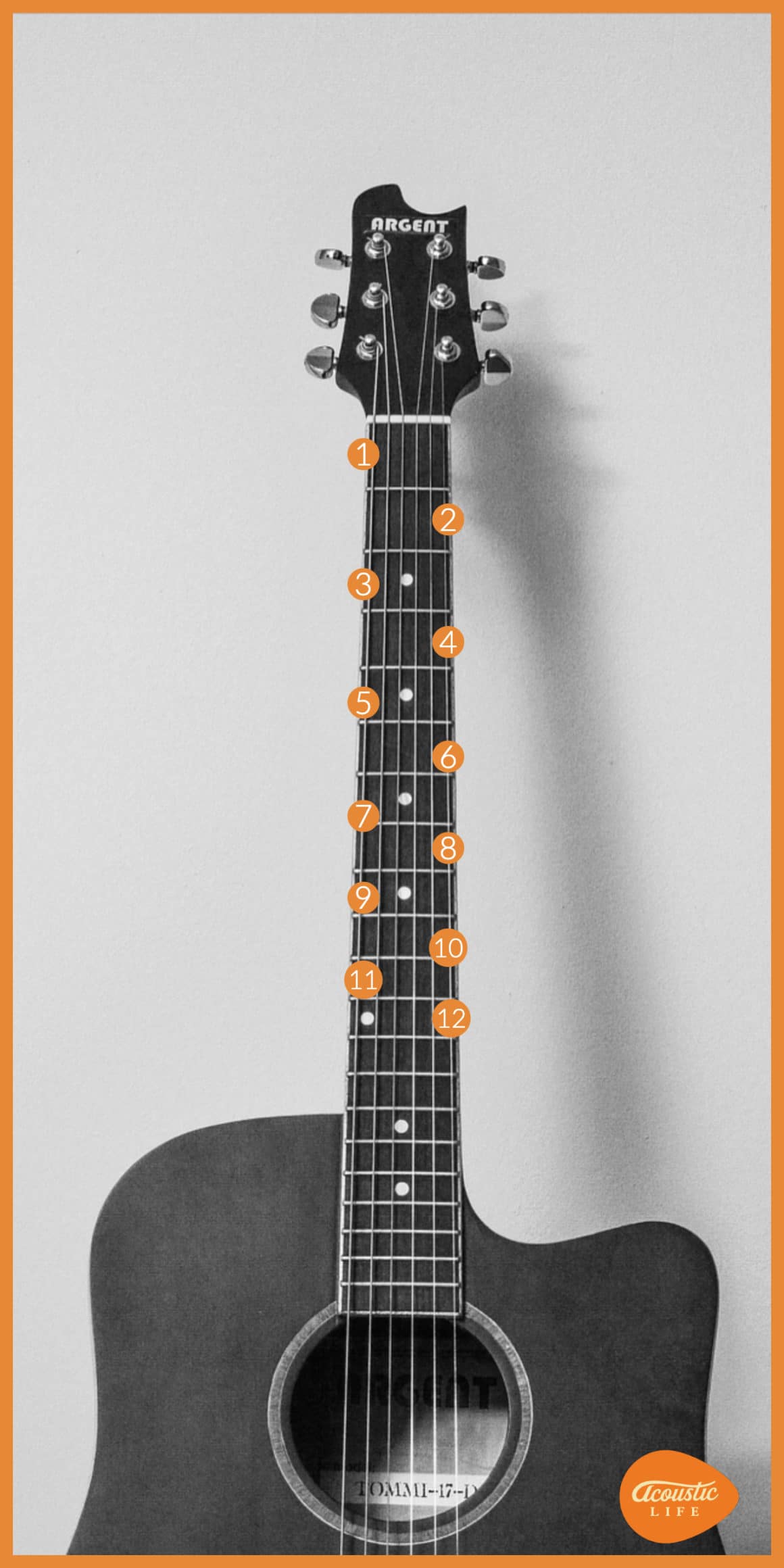
Start with the fifth and sixth strings because many chord names and scale shapes use them as reference points. Learn the notes at frets 3, 5, 7, 9, and 12 first. These fret markers make navigation easier.
A helpful exercise is to find every C on the guitar. Then repeat the exercise with G, A, and E. Say the note aloud as you play it. This joins the sound, the name, and the physical location.
One mistake I see often is relying only on fret markers. Markers can help, but they are not a substitute for note knowledge. Try to identify the note before your hand reaches the fret. That small habit builds real fretboard skill.
Do Different Guitar Tunings Change the Notes?
Alternate tunings change the starting notes of the strings, but they do not change the 12-note musical system. In drop D tuning, for example, the sixth string moves from E down to D.
Common tunings include:
• Standard tuning: E A D G B E
• Drop D: D A D G B E
• Open G: D G D G B D
• Open D: D A D F♯ A D
• DADGAD: D A D G A D
The fret spacing stays the same. Each fret still raises the string by one semitone. What changes is the note at the open string and, therefore, every note above it.
Alternate tunings can make certain chords easier and create useful drone sounds. They can also make familiar scale shapes less reliable. Before using a pattern you already know, check the open-string notes first.
Does a 12-String Guitar Have More Notes?
A 12-string guitar usually has six courses, with each course containing two strings. The paired strings are tuned together or one octave apart, depending on the course.
A 12-string guitar does not normally provide 12 separate note names. It provides a fuller, wider version of the same six-string layout. The doubled strings create a chorus-like sound because tiny differences in pitch and vibration make the tone shimmer.
The physical instrument has more strings, but the basic note system remains the same. You still work with the same 12 chromatic notes, though the sound and playing feel are different.
Seven-string and eight-string guitars do add more range. Their extra low strings provide lower notes, while the 12-note system remains unchanged.
Guitar Notes Beyond the Frets
A fretted guitar does more than play the fixed notes between the nut and the final fret. Players can also change pitch with several techniques.
• Bending raises a note smoothly above its fretted pitch.
• Vibrato moves the pitch slightly up and down.
• Sliding connects two or more pitches.
• Natural harmonics produce clear, bell-like tones.
• Artificial harmonics create higher partials above fretted notes.
• Tapping adds notes with the picking hand.
Because of these techniques, the possible sounds on a guitar are not limited to simple fret positions. A bend can reach a pitch that sits between two frets, although skilled players aim to control the bend accurately.
The physical limit is also different from the musical limit. A guitar may produce very high harmonics, but those sounds may not function like ordinary fretted notes in a melody. For clear counting, most players count the standard fretted range first.
Why Learning the Notes Matters
Knowing how many notes on a guitar is useful, but knowing where those notes are matters more. Fretboard knowledge helps you:
• Build chords in different positions
• Play scales without getting lost
• Write stronger guitar parts
• Find alternate voicings
• Read music and tablature with more confidence
• Improvise across the full neck
• Connect rhythm playing with lead playing
You do not need perfect knowledge before making music. Learn one small area, use it in a song, and then expand. The fretboard becomes familiar through repeated use, much like learning streets in a new town.
A tuner can tell you whether a string is in tune, but it cannot replace note knowledge. Use tools to check your work, then train your ear and memory to do more of the job.
Common Mistakes When Counting Guitar Notes
Many beginners count every fret as a new note. That creates an inflated number because the same note appears in several locations.
Other common mistakes include:
• Counting only the 12 note names and ignoring octaves
• Forgetting to count open strings
• Treating a 12-string guitar as 12 independent note systems
• Assuming every guitar has the same number of frets
• Ignoring alternate tunings
• Confusing a note position with a unique pitch
• Forgetting that bends can create changing pitches
The best answer depends on the goal. If you are learning music theory, think about 12 note names. If you are studying the fretboard, think about note locations. If you are comparing instruments, think about range, strings, and frets.
Frequently Asked Questions About How Many Notes on a Guitar
How many notes are on a six-string guitar?
A six-string guitar uses 12 note names in the chromatic scale. A typical 22-fret guitar has 138 playable positions when you count open strings, but many positions produce the same note at different octaves or locations.
How many notes are on a guitar with 22 frets?
A six-string, 22-fret guitar has 138 physical note positions. This comes from six strings multiplied by 23 positions per string, including the open string and frets 1 through 22.
Does a guitar have 12 notes or more?
It has 12 basic note names, but those notes repeat across multiple octaves. The guitar can produce many distinct pitches and note positions because each string covers a different range.
How many notes are on a guitar fretboard?
The number depends on the guitar. A 20-fret, six-string guitar has 126 positions, a 22-fret model has 138, and a 24-fret model has 150 when open strings are included.
Are the notes on every guitar the same?
The 12 note names are the same, but the available range can differ. String count, fret count, tuning, scale length, and instrument design all affect which pitches you can play.
What is the highest note on a standard guitar?
On a typical 22-fret guitar in standard tuning, the highest fretted note is D♯ on the first string at the 22nd fret. A 24-fret guitar reaches E, one whole step higher.
Conclusion
A standard guitar has 12 note names, but those notes repeat across strings, frets, and octaves. A typical six-string guitar may offer more than 120 physical note positions and around 46 to 49 distinct fixed pitches, depending on its fret count and tuning.
The most useful way to understand how many notes on a guitar is to separate note names from pitches and fretboard locations. Start by learning the open strings, the natural notes on the sixth and fifth strings, and the octave pattern at the 12th fret.
Pick up your guitar today and find every E, A, or C on the neck. Then use those notes in a scale, chord, or song, and keep expanding your map one small section at a time.

Senior Music Reviewer
Alex Carter is a seasoned music reviewer with over a decade of experience in the world of sound and instruments. Passionate about helping musicians and enthusiasts make informed choices, he brings sharp insights and in-depth knowledge to every review. From classical instruments to modern gear, Alex combines technical expertise with a love for music to deliver content that resonates with readers.
As a Senior Music Reviewer and expert author on Tuneluma.com, Alex is dedicated to sharing honest evaluations, practical advice, and thoughtful commentary to guide readers in their musical journey.