Best Reverb Pedal For Bass Guitar: Top Tone Picks
The best reverb pedal for bass guitar is the BOSS RV-6, thanks to its clear tone, strong build, and flexible reverb modes.
A dry bass sound can feel flat, especially during slow songs, ambient parts, and home recording. The right reverb adds space without washing out your low notes. I tested the key features that matter for bass players, including clean headroom, blend control, bypass behavior, tone shaping, size, and value. Below, I compare nine popular pedals so you can find the best reverb pedal for bass guitar and your playing style.
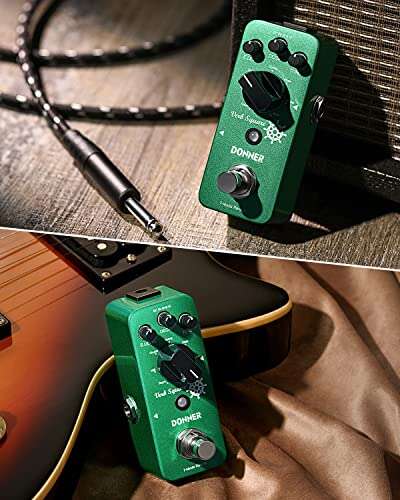
Donner Verb Square Reverb Pedal

The Donner Verb Square gives bass players seven digital reverb modes in a small, low-cost pedal. Its mode range includes room, hall, church, spring, plate, studio, and mod sounds. That range makes it useful for simple depth as well as more colorful textures. I like this pedal for players who want to explore reverb without spending much on a first unit.
On bass, the main task is control. Keep the effect level low, and the Donner can add a soft halo around your notes without taking away their punch. Higher settings create a wider, more dramatic sound for intros, post-rock parts, and loops. True bypass also helps keep the dry signal clean when the pedal is off.
Pros:
- Seven useful reverb modes in one compact enclosure
- Low price makes it friendly for beginners
- True bypass helps preserve the dry bass tone
- Small size saves room on a crowded pedalboard
- Works well for room, spring, plate, and ambient sounds
- Simple controls are easy to learn during a rehearsal
Cons:
- Digital modes may sound less detailed than premium pedals
- Small controls can feel close together on a dark stage
- It offers less deep editing than advanced stereo reverbs
My Recommendation
I recommend the Donner Verb Square to new players, home musicians, and bassists who need several reverb colors at a low cost. It is not the most refined option here, but it gives you a useful set of sounds for practice, demos, and live use. For many beginners, it can be the best reverb pedal for bass guitar because it offers variety without a steep learning curve. Its overall value is strong when price and compact size matter most.
M-VAVE Mini Universe Pro Reverb
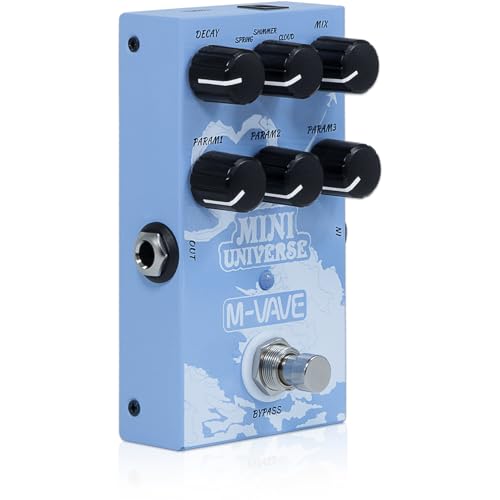
The M-VAVE Mini Universe Pro packs nine digital reverb effects into a very small metal pedal. Its listed modes include room, hall, plate, spring, shimmer, cloud, bloom, swell, and lo-fi. This is a broad sound set for a pedal that takes little board space. It also supports dual power options, which can help players who switch between a power supply and a battery-style setup.
I find the M-VAVE especially interesting for bassists who use effects as part of their main voice. The shimmer, cloud, bloom, and swell modes can turn a plain sustained note into a large pad-like sound. Use restraint with the mix, since thick ambient effects can hide the attack of low strings. The metal housing should also suit players who want a compact pedal for regular rehearsal and gig use.
Pros:
- Nine reverb modes cover both classic and modern sounds
- Very small footprint leaves room for another bass effect
- Metal housing feels suitable for regular pedalboard use
- Includes creative shimmer, cloud, bloom, and swell voices
- True bypass helps maintain the dry signal when disengaged
- Dual power support adds setup flexibility
Cons:
- Ambient modes can blur bass notes at high mix settings
- Mini controls may be hard to adjust while playing
- It gives less control than larger professional reverb units
My Recommendation
The M-VAVE Mini Universe Pro suits bassists who want unusual textures in a small space. It is a good pick for ambient rock, worship, indie, experimental music, and home recording. I would not choose it first for a player who only wants a natural room sound, but it can be the best reverb pedal for bass guitar when creative modes matter. Its combination of size, effect count, and price gives it impressive practical value.
BOSS RV-6 Reverb Pedal

The BOSS RV-6 is the safest all-around choice in this comparison. It offers eight reverb types, including room, hall, plate, spring, shimmer, dynamic, modulate, and plus. BOSS designed the pedal for guitar, but its wide frequency response and strong signal handling also make it a dependable choice for bass. The familiar BOSS enclosure adds confidence for players who need a pedal that can handle years of use.
The RV-6 stands out because it sounds polished without requiring complex programming. Its controls let you set the effect level, tone, and time, so you can keep the bass clear while adding space. The dynamic mode can help preserve note definition, while shimmer and modulate open the door to more atmospheric sounds. If I had to choose one unit for a mixed pedalboard, the BOSS RV-6 would be my first recommendation.
Pros:
- Clear, musical reverb sounds for clean and driven bass
- Eight modes cover natural, spring, modulated, and ambient effects
- Strong BOSS build quality suits frequent stage use
- Simple control layout allows fast adjustments
- Dynamic mode can help keep bass notes defined
- Works well in studios, rehearsals, and live rigs
Cons:
- Costs more than compact budget alternatives
- It does not offer deep preset storage or menu editing
- Mono operation may limit some stereo pedalboard setups
My Recommendation
The BOSS RV-6 is best for working musicians, serious beginners, studio players, and anyone who wants one reliable reverb pedal. It handles subtle room ambience well, yet it can create wide shimmer and modulated effects when the song calls for more. For me, it is the best reverb pedal for bass guitar because it balances tone, durability, control, and ease of use better than most options in this group. Its higher price is easier to justify if you plan to keep the pedal for many years.
SONICAKE Sonic Ambience Delay and Reverb

The SONICAKE Sonic Ambience combines delay and reverb in one compact effects pedal. That two-in-one layout can save space and money for bassists who want both echo and room sound. It includes several ambience styles and a tap-tempo function for setting delay repeats to a song. For a small board, this combination can be more useful than a reverb-only pedal.
I like this design for bass lines that need movement. A short delay plus light reverb can make repeated notes feel wider without turning them into a muddy cloud. Tap tempo is helpful when the delay must follow a drummer or backing track. Still, I would set the repeats carefully, since long delay trails can compete with the low end in a busy mix.
Pros:
- Combines delay and reverb in one pedal
- Tap tempo helps match delay time to the song
- Compact design saves valuable board space
- Useful for ambient intros, fills, and sustained bass parts
- Works with both guitar and bass setups
- Offers more value than buying two separate budget pedals
Cons:
- Shared controls may limit independent effect adjustment
- Long delay trails can reduce bass note clarity
- It may not satisfy players who want only classic reverb
My Recommendation
The Sonic Ambience is best for bassists with small boards and players who want delay and reverb together. It fits bedroom rigs, church setups, indie bands, and experimental pedalboards. I would choose it over a basic reverb when rhythmic repeats are just as important as space. It may become the best reverb pedal for bass guitar for a player who needs maximum function from a minimum amount of board room.
SONICAKE Levitate Delay and Reverb

The SONICAKE Levitate is another two-in-one pedal that joins digital delay and reverb in a compact enclosure. Its main appeal is simple: one footswitch gives you access to two effects that often work together. This can help a new player build a useful ambient sound without filling a pedalboard with separate boxes. The pedal also makes sense for travel rigs and quick recording setups.
For bass, I would start with a low reverb level and short delay time. That setting adds depth while keeping the rhythm firm. Turn up the time and feedback for spacious parts, but listen for low-end buildup through your amplifier or interface. The Levitate is most useful when you want a practical effect combination rather than detailed studio-style editing.
Pros:
- Delay and reverb share one compact pedal
- Good choice for beginners building a first effects board
- Creates wide ambience for sustained bass notes
- Simple format keeps setup and operation straightforward
- Useful for practice, demos, and small live rigs
- Reduces the number of cables and power connections needed
Cons:
- Offers less separate control than two dedicated pedals
- Ambient settings can soften bass attack
- Players seeking vintage spring detail may want another option
My Recommendation
I recommend the Levitate to casual players, students, and musicians who want delay and reverb at a modest cost. It is also a smart choice when your pedalboard has no room for another full-size unit. The pedal does not aim to replace a premium reverb processor, but it delivers useful sounds with little fuss. As a budget solution, it can be the best reverb pedal for bass guitar when versatility and simplicity come first.
JHS 3 Series Octave Reverb

The JHS 3 Series Octave Reverb takes a more focused approach than multi-mode reverbs. It combines reverb with an octave effect, allowing bassists to create sounds that move from normal ambience to a large, unusual wash. The 3 Series format is known for clear controls and a direct layout. This pedal is aimed at players who want a distinctive effect rather than a plain room simulation.
On bass, the octave feature can make single notes feel deeper, wider, or more synth-like. It works best when you play clean, sustained lines and leave room between phrases. The reverb can then act like the air around the octave sound. I would place this pedal before drive or distortion if I wanted a more aggressive texture, though the best order depends on your rig and taste.
Pros:
- Creates unique octave-and-reverb bass textures
- Strong choice for ambient, shoegaze, and post-rock players
- Simple controls make experimentation quick
- Can add size to clean single-note bass lines
- Distinctive sound sets it apart from standard reverb pedals
- Useful for songwriting, loops, and atmospheric transitions
Cons:
- Octave reverb may be too unusual for traditional bass work
- Costs more than many basic digital reverbs
- It offers fewer conventional reverb choices
My Recommendation
The JHS 3 Series Octave Reverb is best for creative bassists who want a signature sound. Choose it if you write ambient music, use loops, or need a dramatic effect for intros and bridges. I would not call it the best reverb pedal for bass guitar for every player, but it may be the best specialized choice for someone who values originality over a large mode list. Its value comes from its character, not from doing every possible reverb job.
LEKATO Multi-Effects Pedal With IR Loading

The LEKATO multi-effects pedal goes beyond reverb. It includes nine amp models, impulse response loading, delay, reverb, distortion, overdrive, recording support, and Bluetooth 5.0. That makes it a small practice and recording tool rather than a single-purpose stompbox. Bassists can use it when they need several sounds but do not want a large traditional pedalboard.
This type of unit is helpful for silent practice, direct recording, and travel. You can build a complete basic signal chain with fewer pieces of gear. The reverb section adds space after the amp or drive sounds, while the IR function can help shape a direct signal. I would spend time learning the controls before a show, since multi-effects units often require more setup than a simple three-knob pedal.
Pros:
- Offers amp models, drive, delay, reverb, and IR loading
- Bluetooth 5.0 supports convenient practice and backing tracks
- Rechargeable design suits portable playing
- Useful for direct recording and headphone-style practice setups
- Can replace several beginner-level pedals
- Good value for musicians who need a full compact rig
Cons:
- More complex to learn than a dedicated reverb pedal
- Multi-effects editing may slow down quick stage changes
- Sound quality can vary across amp and cabinet simulations
My Recommendation
I recommend the LEKATO multi-effects pedal to beginners, traveling musicians, and bassists who record at home. It is not the purest answer for someone seeking only the best reverb pedal for bass guitar, but it offers far more functions per dollar. Choose it when practice, recording, amp simulation, and portability matter as much as reverb. For a first compact rig, its broad feature set can be hard to beat.
LEKATO EP-03 Digital Reverb Pedal

The LEKATO EP-03 is a dedicated digital reverb pedal with nine Universe-style effects. Its listed voices include room, hall, shimmer, lo-fi, spring, bloom, swell, plate, and cloud. This gives it a broad range, from mild room depth to large ambient trails. The pedal uses a compact format that should fit easily on most bass boards.
I see the EP-03 as a useful middle ground for players who want more variety than a basic reverb but less complexity than a full multi-effects unit. Room and hall sounds can support normal bass parts, while swell and cloud modes can fill space between phrases. Keep the effect blend below the dry signal when playing with a drummer. That small adjustment often makes the difference between a rich bass tone and a muddy one.
Pros:
- Nine reverb effects provide strong tonal variety
- Includes classic spring and plate sounds
- Creative bloom, swell, cloud, and shimmer modes add depth
- Compact enclosure fits small and medium pedalboards
- Dedicated design is easier to use than a full multi-effects unit
- Useful for both subtle ambience and experimental parts
Cons:
- Digital character may not match high-end studio reverbs
- Limited controls may restrict precise tone shaping
- Some modes need careful mixing to keep bass clear
My Recommendation
The LEKATO EP-03 is best for players who want nine reverb colors in a simple, affordable box. It suits home players, indie bands, worship musicians, and anyone building an atmospheric sound. If you want the best reverb pedal for bass guitar under a tighter budget, this model deserves a close look. It gives you a useful creative range while staying easier to operate than a larger effects processor.
M-VAVE Mini Universe Reverb Pedal

The M-VAVE Mini Universe is built around nine reverb modes for guitar and bass. It includes room, hall, shimmer, lo-fi, spring, bloom, swell, plate, and cloud effects. The mode list covers the sounds most bassists use, plus several options for modern ambient work. Its compact design makes it easy to add reverb to a board that already contains tuner, compressor, drive, and modulation pedals.
For a bass rig, I would begin with room or plate for a natural sense of space. Spring can add character to clean lines, while shimmer and cloud work better for slow parts and open arrangements. The pedal becomes more useful when you treat reverb as seasoning rather than the main meal. With a low mix and sensible decay, it can add air while letting the fundamental stay strong.
Pros:
- Nine modes cover common and creative reverb sounds
- Small format works well on crowded boards
- Includes lo-fi and shimmer effects for modern tones
- Room and plate settings can suit everyday bass playing
- Affordable way to add ambient effects to a basic rig
- Designed for both guitar and bass applications
Cons:
- Mini enclosure leaves little room for large foot movements
- Creative modes may sound too thick in a full band mix
- It has fewer advanced features than premium digital pedals
My Recommendation
The M-VAVE Mini Universe is best for budget-minded bassists who want many sounds in very little space. It is a sensible option for practice, small gigs, and home recording. I would choose it for players who enjoy trying new textures but still need basic room and spring sounds. It can be the best reverb pedal for bass guitar for a compact-board user who wants maximum effect variety at a low entry cost.
MINI-UNIVERSE Digital Reverb Pedal
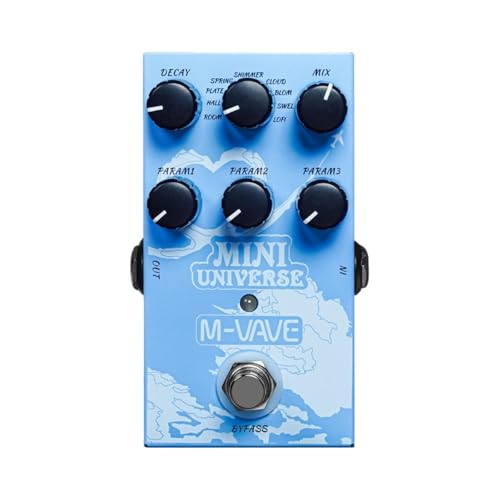
The MINI-UNIVERSE digital reverb pedal is made for electric guitar and bass. Its appeal comes from its compact size and broad digital ambience approach. It gives players a way to add room, depth, and more unusual trails without using a large multi-effects board. This kind of pedal is easy to place after a compressor or drive in a basic bass signal chain.
I would use a pedal like this for clean bass, ambient layers, and melodic parts. Reverb can make a bass line feel like a low cloud under the band, but the dry note must remain easy to hear. Start with a short decay and low effect level, then raise each control until the note gains space. That method works better than beginning with a huge wash and trying to recover clarity later.
Pros:
- Compact footprint suits small pedalboards
- Provides digital ambience for guitar and bass
- Useful for clean lines, pads, and melodic bass parts
- Easy way to expand a simple effects setup
- Budget-friendly option for first-time reverb buyers
- Can add space without requiring a separate processor
Cons:
- Limited information may make detailed comparison difficult
- Digital trails may not satisfy players seeking vintage realism
- Small controls can be less convenient during live use
My Recommendation
The MINI-UNIVERSE is best for beginners and casual bassists who need an affordable, compact reverb. It also makes sense as a backup pedal or a low-cost way to test whether reverb belongs in your rig. I would select a more established model for heavy touring, but this unit can still deliver useful depth in practice and recording. It is a practical entry point for anyone searching for the best reverb pedal for bass guitar on a limited budget.
Best Reverb Pedal for Bass Guitar: Quick Comparison
| Best for | Why |
|---|---|
| Overall performance | The BOSS RV-6 offers reliable construction, clear reverb, useful modes, and simple controls. |
| Best budget variety | The Donner Verb Square provides seven reverb modes in a small and affordable enclosure. |
| Delay and reverb together | The SONICAKE pedals save board space by combining two common effects in one unit. |
How I Chose the Best Reverb Pedal for Bass Guitar
A reverb pedal can sound excellent on guitar and still work poorly on bass. Bass has more low-frequency energy, longer wave cycles, and a larger role in the song’s foundation. When reverb adds too much low-end wash, the bass loses focus. I judged these pedals by asking a simple question: can the effect add space while the original bass note stays strong?
I also looked at control layout. A pedal should let you change the blend and decay without a long menu dive. This matters during practice, but it matters even more under stage lights. I prefer controls that let me make quick changes by ear. A clear pedal is like a clean window; it helps you hear what the bass already does.
Build quality also affects value. A pedal that sits at home may not need the same toughness as one that travels every weekend. The BOSS RV-6 has the strongest reputation for hard use in this group, while the smaller budget models offer excellent space savings. I also considered bypass design, power needs, pedalboard size, and the number of useful sounds rather than simply counting every mode.
Why Bass Players Use Reverb
Reverb creates the sense that your bass is playing in a room, hall, chamber, or larger space. A dry signal sits close to the listener. A reverberated signal seems to move farther away. That change can make a simple bass part feel more emotional and more connected to the rest of the track.
Most bassists should use less reverb than guitarists. The bass must support the kick drum and hold the low end together. A short room setting can add life without creating a long tail. A plate or hall sound can work well for solos, intros, and slow songs. Shimmer, cloud, swell, and octave effects suit players who use bass as a melodic or textural instrument.
Placement matters too. Many players put reverb near the end of the effects chain. This lets the pedal create space around the sound after compression, drive, and modulation. Some players prefer reverb before distortion for a smeared, vintage-like effect. There is no single correct order, but I suggest starting with reverb late in the chain because it is easier to control.
What to Look for in a Bass Reverb Pedal
Low-end clarity
The most important feature is note clarity. Listen to the low E, B, and A strings with the effect engaged. If the fundamental becomes weak or blurry, lower the effect level or shorten the decay. Some pedals may also sound clearer when you turn down the tone control or use a less dense mode.
Blend or effect level
The blend control sets how much reverb joins the dry bass. This control is your safety net. Keep the dry note in front, then add enough reverb to create depth. For normal band playing, a low or medium setting often works best. Ambient players may use more, but they should leave space in the arrangement.
Decay or time
Decay controls how long the reverb lasts. Short decay gives a small-room feel. Long decay creates a large tail. Long decay can sound beautiful when you play slow notes, but it can cover the next note when you play fast. I always set decay while playing the actual song, not while playing alone in a silent room.
Reverb modes
Room, hall, plate, and spring cover most normal needs. Modulated, shimmer, cloud, bloom, swell, lo-fi, and octave modes offer more color. More modes do not always mean better quality. A pedal with four excellent modes may beat one with ten average modes. Pick the voices that match your music.
True bypass and buffered bypass
True bypass removes the effect circuit from the signal path when the pedal is off. Buffered bypass can help maintain signal strength across a long chain of cables. Neither option is always better. The right choice depends on the number of pedals, cable length, and the rest of your bass rig.
Power and noise
Check the required power before buying. Many compact pedals use a standard 9-volt center-negative supply, but you should confirm the product details. A clean isolated power supply can reduce hum. Rechargeable or dual-power designs may help mobile players, but always test battery life before a show.
Mono and stereo connections
Some bassists run a mono amplifier, while others use stereo amps, interfaces, or two-channel recording setups. A mono pedal keeps things simple. Stereo reverb can create a wider image, but it also needs more cables and careful signal routing. Do not pay extra for stereo outputs unless your rig can use them.
How to Set Reverb on Bass
Start with the reverb off. Play the bass part at the same volume and tempo you will use with the band. Turn the effect level up slowly until you hear the room around the note. Then lower it a little. This “less than you think” approach keeps the bass clear in a full mix.
Next, set the decay. Use a short setting for fast bass lines and a longer setting for sustained notes. If the effect runs into the next beat, shorten the decay. If the bass still feels dry after you add a little mix, try a room or plate mode before raising the effect level too far.
Finally, test the pedal with your compressor and drive. Compression can bring up the reverb tail. Distortion can make the effect sound larger and more aggressive. If the result feels muddy, lower the reverb before changing your whole pedalboard. Small adjustments often solve the problem.
Reverb Pedal Placement in a Bass Signal Chain
A common bass chain starts with a tuner, then compression, drive, modulation, delay, and reverb. This order places reverb at the end, where it can add space around the finished tone. The SONICAKE delay-and-reverb pedals fit naturally near the end of such a chain. A multi-effects pedal may handle several of these jobs in one unit.
Try reverb before overdrive if you want a rougher, more blended sound. This can make the reverb react with the drive and create a thick wall of tone. It may sound excellent for heavy music, but it can reduce note separation. I suggest recording both positions and choosing the one that serves the song.
If you use a bass amplifier effects loop, test the reverb there as well. A loop can place time-based effects after the preamp section. This often keeps the reverb cleaner when the amplifier itself adds overdrive. However, some bass rigs do not have a loop, so a front-of-amp setup remains perfectly valid.
Do You Need a Bass-Specific Reverb Pedal?
Not always. Many reverb pedals carry a guitar label but work well with bass. The key points are signal headroom, frequency response, noise, and how the effect handles low notes. The BOSS RV-6, for example, is marketed as a guitar pedal yet offers the control and clarity many bassists need.
A bass-specific pedal may include low-cut filtering or a blend that protects the dry signal. Those features can help in a crowded mix. Still, a guitar pedal with a good mix control can perform very well. I would judge the sound through your own bass and amplifier instead of trusting the label alone.
Common Mistakes Bassists Make With Reverb
Using too much mix
Heavy reverb often sounds impressive in a bedroom. In a band, it can make the bass vanish. Keep the dry sound in front and let the reverb sit behind it. If you want a dramatic effect, automate or switch it on for selected parts rather than using it all night.
Choosing a long decay for fast music
A long tail can fill every gap between notes. That may create a wall of low-end sound. Use short decay for busy lines and save long decay for open sections. The best reverb pedal for bass guitar should serve the rhythm, not fight it.
Ignoring the kick drum
Bass and kick drum share important low frequencies. If the reverb tail overlaps the kick, the groove may feel soft. Ask the drummer or engineer to listen while you adjust the pedal. A small cut in reverb can make the whole band sound tighter.
Setting the effect alone
A setting that sounds thin alone may sound perfect with drums and guitars. A setting that sounds huge alone may overwhelm the mix. Always check your sound in context. Your band is the final test bench.
Which Reverb Mode Works Best on Bass?
Room reverb is the easiest starting point. It adds a little air and often keeps the attack clear. Plate reverb can make clean bass sound smooth and polished. Spring reverb adds character, though it may not fit every modern bass tone.
Hall reverb creates more size and works well for slow songs. Modulated reverb adds movement to sustained notes. Shimmer, cloud, bloom, and swell effects suit ambient music, but they need more space in the arrangement. Octave reverb can turn bass into a pad or lead voice, which makes the JHS pedal a strong specialty choice.
FAQs Of best reverb pedal for bass guitar
Can I use a guitar reverb pedal with bass?
Yes. Many guitar reverb pedals work well with bass. Look for clear low-end response, good headroom, and a blend control. Test the pedal with your lowest notes before buying for live use.
Where should I place a reverb pedal in my bass chain?
Most players place reverb near the end of the chain, often after delay and modulation. This creates space around the finished tone. Try it before drive if you want a thicker and more blended effect.
Does reverb make bass sound muddy?
It can, especially with a high mix, long decay, or busy playing. Start with a short room setting and a low effect level. Keep the dry bass louder than the reverb tail.
Is true bypass important for bass guitar?
True bypass can help keep the original signal unchanged when the pedal is off. It is useful, but it is not the only factor that matters. Cable length, power quality, noise, and pedal placement also affect your tone.
Which reverb mode is best for live bass?
A short room, plate, or moderate hall setting usually works best live. These modes add depth without covering the groove. Save shimmer, cloud, and swell sounds for open sections or special parts.
Final Verdict: Which Should You Buy?
The BOSS RV-6 is my top pick because it offers clear sound, strong build quality, useful modes, and simple control. It is the best reverb pedal for bass guitar for most players, from beginners to working musicians.
For a lower budget, choose Donner or M-VAVE. For delay and reverb together, choose SONICAKE. Pick the pedal that adds space while keeping your low notes firm and easy to hear.

Senior Music Reviewer
Alex Carter is a seasoned music reviewer with over a decade of experience in the world of sound and instruments. Passionate about helping musicians and enthusiasts make informed choices, he brings sharp insights and in-depth knowledge to every review. From classical instruments to modern gear, Alex combines technical expertise with a love for music to deliver content that resonates with readers.
As a Senior Music Reviewer and expert author on Tuneluma.com, Alex is dedicated to sharing honest evaluations, practical advice, and thoughtful commentary to guide readers in their musical journey.