Best Budget Audio Interface For Recording Drums: Top Picks
For most home studios, the Focusrite Scarlett 2i2 4th Gen is the best budget audio interface for recording drums.
A drum kit can sound huge in the room yet thin and harsh in a recording. The usual problem is not the drummer. It is the interface, the mic count, or a weak input stage. I know the pain of trying to capture kick, snare, and overheads with too few inputs. The right interface gives your mics clean gain, stable drivers, and a simple path into your DAW. Below, I compare affordable models for drum practice, demos, live takes, and serious home recording.
Focusrite Scarlett Solo 3rd Gen

The Scarlett Solo 3rd Gen remains a strong low-cost choice for a singer, guitarist, or drummer who records one source at a time. It has one XLR mic input with phantom power and one separate instrument input. Its mic preamp delivers clean results for an overhead, room mic, or kick mic with a suitable adapter. The front-panel gain halo also makes levels easy to check at a glance.
For drum recording, the Solo works best with a compact setup. I would use it for a single microphone, a kick-and-overhead blend through a small mixer, or scratch tracks. It records at up to 24-bit/192 kHz, and its direct monitoring helps prevent distracting delay. Still, two physical inputs do not equal a full multitrack drum rig.
Pros:
- Clean third-generation mic preamp
- Simple controls for first-time users
- Separate XLR and instrument inputs
- Direct monitoring reduces recording delay
- Compact body fits small desks
- Works well for vocals, guitar, and basic drum demos
Cons:
- Only one microphone input
- Not suitable for recording a full kit on separate tracks
- Does not offer MIDI input and output
My Recommendation
I recommend the Scarlett Solo 3rd Gen for beginners who need a reliable, low-cost interface for one mic at a time. It is also useful for drummers who already own a mixer or want to record a single overhead. If you need the best budget audio interface for recording drums with separate kick, snare, and overhead tracks, move up to a two-input or eight-input model. Its value remains excellent when available at a reduced price.
Focusrite Scarlett Solo 4th Gen

The Scarlett Solo 4th Gen improves the popular Solo design with a newer USB-C connection, a wider-gain microphone preamp, and updated monitoring features. Its microphone input suits an overhead, vocal mic, or room mic. The instrument input gives a guitar or bass a clean direct path. For a small home studio, the layout feels polished and easy to learn.
I especially like the improved auto gain and clip-safe tools for new users, though their usefulness depends on your recording style. The interface can help prevent a sudden loud hit from ruining a take. However, the Solo still has one XLR input, so it cannot capture a normal multi-mic drum kit by itself. It is better for songwriting, rehearsal capture, and single-mic drum experiments than full drum production.
Pros:
- Modern USB-C connection
- Improved gain range for quiet microphones
- Helpful automatic level tools
- Clear front-panel metering
- Strong headphone and monitor control
- Small size works well in mobile rigs
Cons:
- One XLR input limits drum mic choices
- Not a full drum-recording interface
- USB-C cable or adapter may be needed for older computers
My Recommendation
The Solo 4th Gen is best for a new producer who wants current features, easy setup, and clean sound in a small box. I would choose it over the 3rd Gen when the prices are close. For a drummer who only needs one overhead or room microphone, it can be the best budget audio interface for recording drums. For a full kit, spend more on the Scarlett 2i2 or Tascam US-16×08.
PIYONE 2×2 Audio Interface

The PIYONE 2×2 presents an appealing feature list for a modest price. It offers two combo inputs, 48-volt phantom power, monitor mix control, and support for high sample rates up to the stated 24-bit/192 kHz format. Two combo inputs let you connect two microphones, such as a kick mic and overhead. That makes it more useful for basic drum tracking than a one-input interface.
Its loopback feature may also help stream a drum lesson, rehearsal, or practice session with computer audio. I would keep expectations realistic, since a two-input design still cannot create a separate track for every drum microphone. The gain controls and input meters are helpful for setting levels before recording. As with any lesser-known interface, I would confirm current driver support for your computer before buying.
Pros:
- Two combo XLR/TRS inputs
- Supports a basic kick-and-overhead setup
- Includes 48-volt phantom power
- Monitor mix control helps manage latency
- Loopback suits streaming and online lessons
- High sample-rate support on paper
Cons:
- Two inputs still limit a full drum kit
- Long-term driver support may be less proven
- Small controls may feel crowded
My Recommendation
I recommend this model for a budget-minded drummer who wants two mic inputs and useful streaming tools. It suits a kick-and-overhead demo, acoustic guitar, vocals, and online content. If you want the best budget audio interface for recording drums from a lesser-known brand, the PIYONE offers good flexibility for the money. Buy it only after checking current operating-system compatibility.
USB-C Audio Interface for Recording

This compact silver USB-C interface targets music recording, podcasts, and streaming. Its small footprint makes it easy to place beside a laptop or carry to a rehearsal. For drum work, its usefulness depends on the exact input layout and the amount of gain available for your microphones. A two-channel design is generally best for a simple stereo or kick-and-overhead setup.
The appeal here is simple operation and low cost. You can use it for a demo, voice track, electric guitar, or one or two microphones without filling your desk with gear. I would not select it for a large acoustic kit unless I planned to feed it from a separate mixer. Before purchase, check the included cable, phantom-power behavior, and computer compatibility, since budget interfaces can vary in support.
Pros:
- Portable USB-C design
- Useful for music, podcasts, and streams
- Small footprint saves desk space
- Can support simple two-channel recording
- Easy control layout for casual users
- Often costs less than major-brand options
Cons:
- Limited information about long-term driver updates
- Not designed for many drum microphones
- Feature details can vary by seller or revision
My Recommendation
This interface is best for a beginner who wants a cheap, portable way to record simple ideas. It can handle a basic two-mic drum demo if its input specifications meet your needs. I would choose a Focusrite for a main studio, but this model may be the best budget audio interface for recording drums when portability and price matter most. Check the listing carefully before ordering.
M-Audio M-Track Duo

The M-Track Duo is one of the most practical low-cost two-channel interfaces. It has two combo inputs, phantom power, a headphone output, and a USB connection for a computer. Those two inputs give you more room to experiment with drum recording than a Solo. I like it for a kick mic and overhead, two overheads, or two close mics on a small kit.
Its direct monitoring switch helps you hear the input without depending on software monitoring. That can make a big difference when you want a tight performance. The M-Track Duo is not flashy, but its controls are clear and its price is often friendly. It also works for guitar, vocals, keyboard connections, and simple podcast production.
Pros:
- Two combo microphone and line inputs
- 48-volt phantom power for condenser mics
- Direct monitoring keeps input delay low
- Simple gain and output controls
- Good fit for kick-and-overhead recording
- Useful for many home-recording tasks
Cons:
- Two inputs cannot record a large kit separately
- Basic meters offer limited visual detail
- Build and controls feel less refined than premium units
My Recommendation
The M-Track Duo is best for a drummer who wants the lowest-cost path to two microphones. It gives you the core tools without a steep learning curve. For a simple home demo, it may be the best budget audio interface for recording drums under a tight spending limit. I would pair it with careful mic placement and a quiet room for the best result.
MAONO PS22 Lite

The MAONO PS22 Lite is aimed at PC recording, guitar, vocals, and streaming. Its compact two-input format can also serve a small drum setup. You might connect two dynamic mics, or use one condenser overhead with phantom power. The front controls are friendly for a first-time user who does not want to study a complex routing panel.
I see this interface as a flexible starter tool rather than a dedicated drum-recording hub. It can capture an idea quickly, but drum sessions demand clean gain, strong monitoring, and stable software support. You should check whether your chosen microphones need phantom power and whether the interface supplies it as expected. For basic music projects, the PS22 Lite offers useful features in a small package.
Pros:
- Two-channel recording layout
- Compact size suits small workspaces
- Useful for guitar, vocals, and streaming
- Supports a simple two-mic drum setup
- Easy controls for beginners
- Convenient choice for mobile recording
Cons:
- Not enough inputs for a fully mic’d kit
- Less established for demanding studio work
- May require careful gain setting with loud drums
My Recommendation
I would suggest the PS22 Lite to a beginner who records several types of content and only sometimes records drums. It is best for demos, lessons, streams, and small music sessions. It could be the best budget audio interface for recording drums for a creator who needs one affordable all-purpose box. A dedicated studio drummer should consider a model with more inputs.
Focusrite Scarlett 2i2 4th Gen
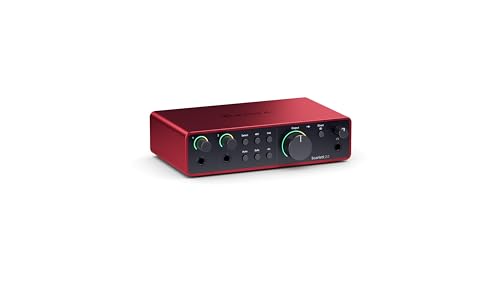
The Scarlett 2i2 4th Gen is my top pick for most people shopping for the best budget audio interface for recording drums. It provides two mic preamps, two combo inputs, USB-C connectivity, direct monitoring, and strong software support. Two inputs let you record an overhead pair, kick and overhead, or two close microphones. That is enough to make a convincing demo without a rack full of gear.
The newer 2i2 also adds useful gain tools, clear front-panel meters, and a sturdy metal body. Its preamps are quiet enough for common dynamic and condenser microphones, while 48-volt phantom power supports studio condensers. It cannot record eight separate drum tracks, but it gives beginners a clean path into real multitrack production. I value its balance of sound, ease, support, and resale value.
Pros:
- Two clean microphone preamps
- Excellent choice for kick and overhead recording
- USB-C connection works well with modern computers
- Useful auto gain and clip-safe features
- Clear meters make level checks fast
- Strong brand support and recording software bundle
- Solid metal construction
Cons:
- Only two simultaneous mic inputs
- Cannot provide separate tracks for kick, snare, toms, and overheads
- Costs more than basic two-channel alternatives
My Recommendation
I recommend the Scarlett 2i2 4th Gen to home producers, drummers, and songwriters who want dependable results without overspending. It is the best budget audio interface for recording drums when two microphones are enough and quality matters. Choose it for a first serious studio, mobile rig, or long-term starter setup. It offers enough control to grow with your skills and remains widely available.
Tascam US-16×08
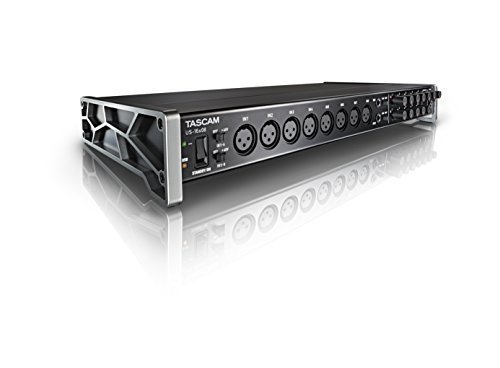
The Tascam US-16×08 is the clear choice here for a fully mic’d drum kit. It offers eight XLR microphone inputs, additional line inputs, eight outputs, and MIDI connectivity in a rackmount-style body. That input count lets you record kick, snare, toms, and overheads on separate tracks. Separate tracks give you far more control over punch, balance, room sound, and repair work.
This is not the smallest or simplest interface in the group. You need time to plan cables, set gain, label tracks, and manage the control software. Still, the extra channels can cost less than buying several smaller interfaces, and they make the US-16×08 a practical home-studio investment. I would choose it when the drum kit is the main reason for the purchase.
Pros:
- Eight microphone preamps for a real drum setup
- Separate tracks allow detailed mixing
- Extra line inputs expand the studio later
- Eight outputs support flexible routing
- MIDI input and output add keyboard control
- Rackmount design suits a permanent studio
- Strong value for multichannel drum recording
Cons:
- Larger and less portable than two-channel units
- Setup takes more planning and cable work
- Control software may feel less simple to beginners
My Recommendation
The US-16×08 is best for a drummer who needs separate tracks from a full acoustic kit. It is the best budget audio interface for recording drums when input count matters more than pocket size. Choose it for a home studio, rehearsal room, or band project that may add more microphones later. Its value is excellent if you will use most of its channels.
FIFINE AmpliGame SC3

The FIFINE AmpliGame SC3 is primarily a gaming audio mixer, not a traditional multichannel studio interface. Its individual faders, volume controls, and chat-friendly layout make it useful for streaming and online performance. A musician may use it to mix a microphone, computer audio, and another source. That can be handy during drum lessons or live practice broadcasts.
I would not buy it as the main interface for acoustic drum recording. A drum kit needs proper mic preamps, enough XLR inputs, reliable phantom power, and clean multitrack conversion. The SC3 makes more sense after your recording interface, not instead of it. It can still help a creator who wants to stream a drum performance and control several audio sources from the desk.
Pros:
- Separate faders offer fast hands-on control
- Useful for gaming and music streams
- Easy access to computer audio levels
- Helps manage chat and performance sound
- Friendly layout for live content
- Compact alternative to a large mixer
Cons:
- Not a dedicated multichannel drum interface
- Limited microphone expansion for acoustic kits
- Streaming features may not suit studio recording
- Requires careful checking of input and output needs
My Recommendation
The SC3 is best for a streamer, gamer, or drummer who broadcasts practice sessions. I would not call it the best budget audio interface for recording drums in a DAW. For actual drum tracks, select the Scarlett 2i2, M-Track Duo, or Tascam instead. Buy the SC3 when live control is your priority and studio multitracking is secondary.
BOMGE Mini 2-Channel Interface

The BOMGE mini interface focuses on the essentials: two channels, XLR connectivity, phantom power, and USB recording. Its small size makes it a convenient choice for a bedroom studio, desk setup, or travel bag. Two inputs give you enough room for two overheads or a kick-and-snare approach. You can also use it for guitar, vocals, voice work, or a podcast.
At this price, I would treat it as a starter interface rather than a high-end converter. Good mic placement will matter more than the printed sample-rate number. Keep the input peaks below clipping, especially with loud drums, and test headphone volume before a take. As a low-cost tool, the BOMGE can help you start recording without a large investment.
Pros:
- Two channels support basic stereo drum recording
- Built-in phantom power for condenser microphones
- Very small and easy to carry
- Useful for guitar and vocal recording
- Simple controls reduce setup time
- Low entry price for new producers
Cons:
- Not enough inputs for a fully mic’d kit
- Budget construction may not suit heavy touring
- Driver and support details need checking before purchase
My Recommendation
The BOMGE is best for a beginner who needs two channels at the lowest practical cost. It can be the best budget audio interface for recording drums when you are making demos and learning mic technique. I would choose a major brand for paid sessions or long-term expansion. For casual home use, its small body and basic feature set are easy to appreciate.
What Matters in a Drum Recording Interface?
The best budget audio interface for recording drums is not always the model with the highest sample-rate number. The main question is how many separate microphone signals you need at once. A simple drum demo may need two channels. A modern close-mic setup may need eight or more.
Input count
Count the microphones before you shop. Two inputs can handle:
- One kick mic and one overhead
- Two overhead microphones
- One snare mic and one room mic
- A stereo output from a small drum mixer
Four inputs can support kick, snare, and two overheads. Eight inputs give you a much better chance to record kick, snare, toms, hi-hat, and overheads as separate tracks. Separate tracks act like separate paint colors. You can shape each sound later without changing the others.
Mic preamp quality
A preamp boosts the small signal from a microphone. A good preamp adds enough gain without obvious hiss. It should also leave enough headroom for sharp snare hits and strong kick transients. Clean gain matters more than extreme sample rates in most bedroom studios.
Dynamic microphones often need more gain than condenser microphones. Ribbon microphones may need even more care. Check the interface gain range before buying if you plan to use quiet dynamic mics on overheads or room duties.
Phantom power
Many condenser microphones require 48-volt phantom power. If you plan to use condenser overheads, make sure the interface provides it. Most two-channel interfaces apply phantom power to both inputs at once. That is usually fine, but it can affect how you mix microphone types.
Direct monitoring and latency
Latency is the small delay between hitting the drum and hearing it back. A direct-monitor switch or monitor mix knob lets you hear the input with almost no delay. This feature helps drummers play naturally. It also makes overdubbing less frustrating.
Driver support
A stable driver can matter more than a fancy control panel. Focusrite, M-Audio, and Tascam have long histories in home recording. Lesser-known brands may still work well, but I suggest checking current Windows and macOS support. Also confirm whether your tablet or phone needs a powered USB hub.
Connection and power
USB-C is now common on newer computers, but the port does not always tell you the whole story. Some interfaces use USB-C on the box while still following older USB data standards. That is not a problem for normal recording. It is more important to use the right cable and provide enough power.
Sample rate and bit depth
24-bit recording gives you useful level room and is the normal choice for music production. A 44.1 or 48 kHz session works well for most drum tracks. Higher rates can use more computer storage and processing power. Do not let a 192 kHz label distract you from input count, noise, and driver stability.
Room and microphone placement
An interface cannot fix a poor room. A drum kit in a hard, empty room may sound bright and distant. Soft furnishings, rugs, and careful mic placement can improve the sound before it reaches the converter. The interface is the doorway, but the room is the landscape behind it.
How Many Inputs Do Drums Need?
There is no single answer. I have recorded useful drum ideas with one microphone and polished sessions with eight or more. Your goal should decide the input count.
A one-mic setup is fast and natural. It captures the kit as one picture, but you have little control after recording. A two-mic setup gives you more balance. Try one microphone above the kit and one near the kick, then adjust distance until the snare sits well.
A four-mic setup gives you a stronger center. You can use kick, snare, and a stereo overhead pair. This approach offers control while keeping the session simple. An eight-input interface suits bands that want close microphones on kick, snare, toms, and overheads.
If the Tascam US-16×08 fits your budget, its eight preamps offer the most room to grow in this group. If you only need two microphones, the Focusrite Scarlett 2i2 4th Gen gives a cleaner and simpler desk setup.
Best For Comparison
| Best for | Why |
|---|---|
| Two-mic drum recording | The Scarlett 2i2 4th Gen offers two clean preamps, direct monitoring, and helpful level tools. |
| Full acoustic drum kit | The Tascam US-16×08 provides eight microphone inputs for separate drum tracks. |
| Lowest-cost starter setup | The M-Track Duo and BOMGE provide two-channel recording with basic controls and phantom power. |
Drum Recording Tips for Better Results
Start with the gain low. Ask the drummer to play the loudest part of the song, then raise the gain until the meter shows a healthy level without clipping. Digital clipping sounds harsh and cannot be repaired well later.
Place the overhead microphone before the close microphones. The overhead captures the kit’s main image. Then bring in the kick and snare mics to add weight and attack. This order helps you build a balanced sound instead of chasing each drum alone.
Use headphones during setup, but test on speakers too. Headphones can make a bass drum feel larger than it sounds in the room. Check both left and right channels for a stereo overhead pair. If the image feels strange, swap one microphone cable or inspect polarity and placement.
Keep cables away from power adapters when possible. Label each input before recording. Save a template in your DAW with tracks named kick, snare, toms, overhead, and room. Small habits prevent large mistakes when the drummer is ready to play.
Do not record too loud. Leave headroom for fast hits. A peak around -12 dBFS to -6 dBFS gives many home sessions a safe starting point. Your exact DAW meter may differ, but the key rule stays the same: clean and quiet is easier to mix than clipped and loud.
FAQs Of best budget audio interface for recording drums
Can I record drums with a two-input audio interface?
Yes. You can record a kick and overhead, two overheads, or a stereo feed from a mixer. You will not get separate tracks for every drum, but careful placement can still produce a strong demo.
Is the Focusrite Scarlett 2i2 good for drum recording?
Yes. The Scarlett 2i2 4th Gen is a strong choice for two-microphone recording. It has clean preamps, phantom power, direct monitoring, and simple level control. It is not enough for a fully close-mic’d kit.
How many inputs do I need for a full drum kit?
Four inputs can work for kick, snare, and stereo overheads. Six to eight inputs give you more control over toms and room microphones. Choose an eight-input interface if you want separate tracks for most of the kit.
Do I need 192 kHz for drum recording?
No. A 24-bit session at 44.1 or 48 kHz works well for most music. Mic placement, room sound, preamp noise, and performance have a much larger effect on the final track.
Can I use a USB audio interface with an iPhone or iPad?
Often, yes, but you may need the correct adapter and a powered hub. Check the interface power needs and the device connection before recording. Some mobile devices may not supply enough power on their own.
Final Verdict: Which Should You Buy?
The Focusrite Scarlett 2i2 4th Gen is the best budget audio interface for recording drums when you need two clean inputs and reliable daily use. Choose the Tascam US-16×08 for a full multi-mic kit.
For simple demos, the M-Track Duo, Solo 4th Gen, and BOMGE offer good value. Match the input count to your kit, then let smart mic placement do the rest.