Best Bass Drum Pedal For Heel Toe: Top Picks For Speed
The Yamaha FP9D is my top pick for fast, smooth, and controlled heel-toe bass drum technique.
Heel-toe playing can feel awkward when your pedal sticks, rocks, or makes your ankle work too hard. A good pedal should let your heel drop, your toe follow, and the beater return without delay. I compared the pedal types, drive systems, footboards, adjustment range, and value of these options for 2026. This guide covers budget pedals, reliable workhorse models, direct-drive choices, and premium pedals for players who want speed without losing punch or control.
How to Choose the Best Bass Drum Pedal for Heel Toe
Heel-toe technique uses two motions in one smooth foot cycle. First, you lower the heel toward the footboard. Then, you shift weight toward the toe to create a second stroke. The pedal must respond quickly to both movements. If the footboard feels rough or the beater returns too slowly, the technique becomes tiring.
I look at five key points when judging the best bass drum pedal for heel toe: drive type, footboard shape, spring control, beater adjustment, and stability. These details matter more than flashy finish or a long feature list.
A chain-drive pedal often gives a familiar feel. It can feel warm and forgiving. A direct-drive pedal usually feels faster and more exact. It transfers foot motion with less flex. However, some players find direct drive less forgiving while learning.
The footboard also matters. A long, smooth board gives your foot room to roll from heel to toe. A sharp edge or narrow board can interrupt the motion. The hinge should move freely, but it should not feel loose.
Spring tension deserves careful attention. Too much tension can make your ankle tense. Too little tension can make the beater feel lazy. The best setup lets the beater return at a steady pace while your heel-toe motion stays relaxed.
Finally, check the clamp and base plate. A pedal that slides across the floor can ruin a good pattern. A strong base keeps the pedal under your foot. It also makes practice more consistent from one session to the next.
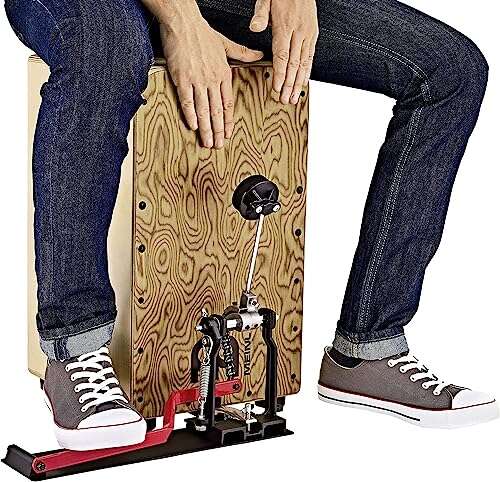
Direct Drive Cajon Pedal

This direct-drive cajon pedal offers a compact way to add foot control to a cajon or small percussion setup. Its direct link gives the footboard a clean response with little movement lost between your foot and the beater. That can help players who want to practice heel-toe motion without a large drum kit. The small format also suits home practice and portable playing.
I would not treat this as a full-size kick pedal replacement, but it has a clear use. Its direct feel can teach you to make small, controlled foot movements. The compact design may also feel natural for players who use a light touch. Before buying, confirm that its cajon-focused layout matches your playing position and beater needs.
Pros:
- Direct-drive response feels quick under the foot
- Compact design works well for cajon setups
- Useful for quiet heel-toe practice
- Simple layout is easy to understand
- Portable size suits travel and small stages
Cons:
- Not designed as a full-size acoustic kick pedal
- May provide less power than a standard bass drum pedal
- Limited fit for larger drum hardware setups
My Recommendation
I recommend this pedal for cajon players, light percussionists, and drummers who need a compact practice tool. It can help you learn the timing of heel-toe strokes, but it is not my first choice for loud rock, metal, or double-pedal work. For a portable setup, it offers useful value. For a complete drum kit, consider a full-size model below.
Hands Free Right-Foot Cajon Pedal

This right-foot cajon pedal gives percussion players hands-free bass control. It is aimed at cajon use, where space, portability, and simple setup matter. The right-foot layout lets you keep both hands active for claps, taps, shakers, or other percussion sounds. Its bag adds practical value for musicians who carry gear to lessons, rehearsals, or small shows.
For heel-toe practice, this pedal can work as a low-volume training option. Still, its feel will differ from a standard bass drum pedal because cajon pedals use a different playing position and target. I like it most for players who need rhythm support without a full kit. It makes less sense for a drummer seeking maximum beater power or detailed bass drum adjustment.
Pros:
- Supports hands-free cajon playing
- Right-foot layout feels familiar to many drummers
- Includes a carrying bag for easier travel
- Works well in compact performance spaces
- Can support quiet foot-technique practice
Cons:
- Designed for cajon use rather than a full kick drum
- May not offer the same power as a drum-set pedal
- Less suitable for high-volume heel-toe patterns
My Recommendation
This is best for cajon players, acoustic duos, street performers, and percussion students. I would choose it when portability matters more than maximum speed. It can introduce the basic heel-toe motion, but it is not the best bass drum pedal for heel toe on a standard drum kit. Its strongest value comes from its focused design and included bag.
TUOREN Bass Pedal Toe Stopper

This TUOREN product is a replacement toe stop for a bass drum pedal board. A toe stop gives the front of your foot a clear reference point during heel-toe playing. That small contact point can help prevent your foot from sliding forward during quick strokes. It may also make your pedal feel more familiar if the original part has worn out or gone missing.
This is an accessory, not a complete bass drum pedal. Fit is the key concern, so I strongly suggest checking dimensions, mounting points, and pedal compatibility before ordering. A well-fitted toe stop can improve confidence, especially when your heel rises during the second stroke. It cannot fix a weak spring, poor hinge, or unstable base by itself.
Pros:
- Provides a front-foot reference for heel-toe technique
- May reduce forward foot movement
- Useful for repairing a worn pedal
- Can improve comfort and playing consistency
- Offers a low-cost way to refresh existing hardware
Cons:
- It is not a complete bass drum pedal
- Compatibility must be checked before purchase
- Does not improve the pedal’s drive or spring system
My Recommendation
I recommend this part for a drummer whose pedal already works well but lacks a useful toe stop. It may help beginners keep their foot in place while learning heel-toe control. I would not buy it as a stand-alone answer to pedal speed. Used with a compatible pedal, it can offer strong value and a more secure foot position.
Single-Chain Bass Drum Pedal for Beginners

This single bass drum pedal uses a single-chain drive and targets both new and experienced drummers. A chain drive gives the footboard a familiar feel and can provide a useful mix of control and power. The simple design makes it approachable for a first kit. It also gives students a proper drum-set pedal instead of a cajon-style alternative.
For heel-toe playing, the main benefit is its straightforward response. You can start with moderate spring tension and a middle beater setting, then adjust as your ankle develops. Budget pedals may not feel as refined as premium models, so small movement or noise may appear over time. Even so, this type of pedal can be a sensible starting point for practice, school kits, and casual playing.
Pros:
- Beginner-friendly single-chain design
- Suitable for standard single-pedal practice
- Offers a familiar balance of power and control
- Usually easier to maintain than complex systems
- Can serve as an affordable first drum pedal
Cons:
- May feel less smooth than premium pedals
- Single-chain movement can show more flex
- Long-term durability may depend on use and care
My Recommendation
This is best for beginners, students, practice kits, and players on a tight budget. I would choose it when you need a real bass drum pedal to learn heel-toe basics without a large investment. It may not satisfy a touring pro, but it can build good foot control. As an entry-level option, it offers practical value if the price is right.
Heavy-Duty Single Chain Bass Pedal

This single kick pedal focuses on a heavy-duty footboard and chain drive. The wider, sturdier feel can help a player stay planted during strong heel-toe strokes. Chain drive adds a touch of give, which many rock and worship drummers enjoy. It is a useful choice for someone who wants more confidence than a very light beginner pedal can provide.
A solid footboard can make a major difference when your heel lands with force. I would set the spring so the pedal returns fast but does not pull your ankle upward. The pedal’s weight may help stability, though it could feel less nimble than a lighter direct-drive model. For players who value punch, support, and a grounded feel, this design is worth considering.
Pros:
- Heavy-duty footboard supports firm playing
- Chain drive provides a familiar, controlled feel
- Good choice for rock and louder styles
- Stable platform can reduce unwanted movement
- Suitable for players who prefer a solid pedal underfoot
Cons:
- May feel heavy for players who want a very fast pedal
- Chain drive can have more flex than direct drive
- Adjustment quality may vary by setup and use
My Recommendation
I recommend this model for rock drummers, new players moving up from a basic pedal, and anyone who likes a firm board. It can support heel-toe strokes with good stability and useful power. It is not the lightest choice, but that weight can feel reassuring. For budget-minded players, it may be a strong everyday pedal when available at a competitive price.
MCCKLE Chain Drive Bass Pedal

The MCCKLE single bass drum pedal combines a chain drive with an adjustable beater. That combination gives you two important tools for heel-toe work: predictable board movement and the ability to tune the stroke to your foot. Beater angle and height affect both impact and rebound. A useful adjustment range lets you find a setup that feels natural instead of forcing one fixed position.
I see this as a practical middle ground for home drummers and developing players. A chain pedal can hide small timing errors while you build control, yet it still gives enough response for quick patterns. Take time to tighten every lock and test the pedal at low volume. The best results come from careful setup, not from simply increasing spring tension.
Pros:
- Adjustable beater supports personalized setup
- Chain drive offers a familiar and forgiving response
- Good fit for home practice and developing players
- Can handle a range of basic drum styles
- Useful adjustment potential at a budget price
Cons:
- May require more setup time than a fixed pedal
- Chain movement may feel less immediate than direct drive
- Long-term performance depends on hardware care
My Recommendation
This pedal suits students and intermediate drummers who want an adjustable beater without paying premium prices. I would pick it for learning heel-toe patterns, trying different footboard settings, and building a personal setup. It may not have the polished feel of DW or Yamaha’s higher lines. Still, it can deliver useful control and solid value for regular home use.
DW 3000 Series Single Bass Pedal

The DW 3000 Series is a respected workhorse for players who want a dependable chain-drive pedal. Its design gives the footboard a smooth, familiar motion while maintaining a firm connection to the bass drum. DW pedals are known for useful adjustment options and a sturdy feel. That matters when you practice heel-toe patterns for long sessions.
I like this pedal as a bridge between beginner gear and professional hardware. It does not force you into an ultra-light response, so you can play soft notes and strong accents with control. The chain feel may be more comfortable for drummers who want a small amount of natural resistance. It also offers the confidence that comes from using a pedal built for regular rehearsal and stage work.
Pros:
- Reliable workhorse for practice, rehearsal, and gigs
- Smooth chain-drive feel suits many playing styles
- Strong platform helps keep the pedal stable
- Useful adjustments support heel-toe experimentation
- Good balance between price and long-term performance
Cons:
- Not as instantly direct as a direct-drive pedal
- May feel less aggressive for extreme speed players
- Costs more than basic entry-level pedals
My Recommendation
The DW 3000 is best for intermediate drummers, gigging beginners, and players who want dependable gear without reaching the top price tier. I consider it one of the safest chain-drive choices for heel-toe learning. It has enough control for quiet practice and enough strength for live use. Its value is especially clear if you want one pedal that can grow with your playing.
DW 2000 Series Single Bass Pedal

The DW 2000 Series gives beginners access to a recognized drum hardware line at a lower cost. It uses a straightforward single-pedal layout that feels easy to learn. A simple pedal can be helpful when your main goal is improving foot timing rather than adjusting many controls. It also makes a practical backup pedal for rehearsals and teaching spaces.
Heel-toe technique benefits from a board that feels predictable. The DW 2000 can provide that basic platform without adding needless complexity. It may not offer the same depth, speed, or refinement as the 3000 or 5000 Series. Yet a player with good technique can still make steady progress on it with relaxed motion and sensible spring tension.
Pros:
- Accessible option from a well-known drum hardware brand
- Simple layout helps new players focus on technique
- Useful for lessons, practice, and backup duty
- Single-pedal format works with most basic drum kits
- Usually easier to learn than a highly complex pedal
Cons:
- Fewer premium features than higher DW models
- May feel less refined during very fast heel-toe work
- Not aimed at demanding professional touring use
My Recommendation
I recommend the DW 2000 for beginners, school bands, casual players, and anyone building a first kit. It is a good learning platform when you want clear, repeatable motion. Players who already use advanced heel-toe patterns may want a stronger upgrade. For a basic and trusted entry point, it offers sensible value and broad availability.
Yamaha FP9D Direct Drive Pedal

The Yamaha FP9D is my top overall choice for players who want a direct-drive bass drum pedal. Direct drive connects the footboard and cam with a solid link, so your movement reaches the beater quickly. That clean transfer suits heel-toe playing because the board responds to small shifts in pressure. Yamaha also gives this series a premium feel and a wide range of setup control.
I especially like the FP9D for players who already understand the basic motion and want more speed. Its response can feel sharp, so beginners should start with a relaxed foot and moderate settings. A direct-drive pedal will not create technique by itself; it simply removes some delay from the system. With proper setup, it can feel like a fast bicycle compared with a heavier old pedal.
Pros:
- Very quick direct-drive response for heel-toe strokes
- Excellent control for fast and detailed playing
- Premium construction suits serious practice and gigs
- Broad adjustment range supports different foot styles
- Strong choice for players who want speed without chain flex
Cons:
- Higher price than entry-level chain pedals
- Direct response may feel demanding for new players
- Setup changes can take time to dial in
My Recommendation
The FP9D is best for intermediate and advanced drummers, metal players, session musicians, and anyone focused on fast heel-toe control. It is the best bass drum pedal for heel toe in this group when response, precision, and adjustment matter most. I would choose it for a player ready to refine technique rather than simply begin. Its premium cost is easier to justify if you practice often or perform regularly.
DW 5000 Accelerator Single Pedal
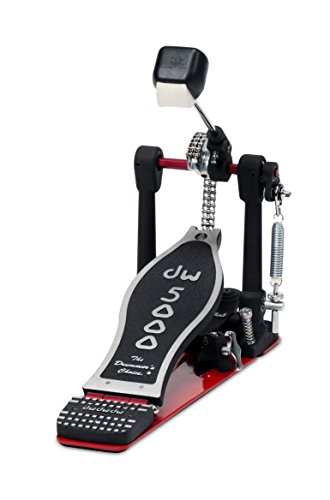
The DW 5000 Accelerator is a classic high-level chain-drive pedal with a strong reputation among working drummers. Its accelerator-style cam changes the relationship between footboard movement and beater movement. In simple terms, it helps the beater move with more drive as the stroke develops. That design can give heel-toe patterns strong attack while keeping the pedal familiar underfoot.
This pedal feels more forceful than delicate. I find it a strong fit for rock, metal, gospel, and players who want a powerful second stroke. It can also handle long rehearsals and demanding stages when maintained properly. The chain drive gives more cushion than direct drive, which may help drummers who want speed but dislike an overly sharp response.
Pros:
- Powerful accelerator cam supports strong bass drum attack
- Proven design suits rehearsal, recording, and stage use
- Chain feel gives speed with a little natural flex
- Stable construction supports forceful heel-toe playing
- Excellent choice for rock and heavy music
Cons:
- Premium price may exceed a beginner’s budget
- Can feel aggressive for soft jazz or low-volume work
- Heavier feel may not suit every fast-foot player
My Recommendation
I recommend the DW 5000 Accelerator for serious players who want power, speed, and a proven chain-drive feel. It suits gigging drummers, rock players, and musicians who need a dependable pedal night after night. It is not the cheapest option, but its build and response can reward years of use. If you prefer chain drive over direct drive, this is one of the strongest choices here.
Best For Comparison
| Best for | Why |
|---|---|
| Fast heel-toe technique | Yamaha FP9D offers quick direct-drive response and detailed adjustment. |
| Powerful rock and metal playing | DW 5000 Accelerator gives strong attack with a familiar chain feel. |
| Beginners and tight budgets | DW 2000 and the basic single-chain models provide simple, useful practice platforms. |
Heel-Toe Setup Tips That Actually Help
Even the best pedal can feel poor when the setup fights your foot. Start by placing the pedal so your ankle sits near the center of the footboard. Your toe should not hang far over the front. Your heel should have enough room to drop without hitting the floor or pedal frame.
Set the beater angle near the middle at first. A very steep beater angle may create power, but it can also make the second stroke harder to control. A very shallow angle may feel quick but lack punch. Make one change at a time and play the same pattern after each change.
Spring tension should feel lively, not stiff. Turn the adjustment in small steps. If your foot must fight the spring, back it off. If the beater fails to return before the next stroke, add a little tension.
The beater height also changes the balance of the pedal. A higher beater can produce more force but may require more foot effort. A lower beater can feel fast and light. Your bass drum head, playing volume, and music style should guide the final setting.
Practice heel-toe slowly. Start with two even notes. Keep the heel motion small. Let the toe finish the stroke instead of stomping through it. Think of the foot as a wave, not a hammer. Speed should come after even timing.
I also suggest recording your footwork. A pattern may feel fast but sound uneven. A phone recording can reveal gaps between the heel and toe strokes. Fix the gap at a slow speed, then build tempo by five beats per minute.
Direct Drive vs. Chain Drive for Heel-Toe Playing
Direct drive and chain drive can both work well. The better choice depends on the way your foot moves. Direct drive usually gives a more immediate response. It can feel crisp and fast. This makes it popular with players who use small motions and high tempos.
Chain drive often feels smoother and more forgiving. The small amount of flex can absorb rough movement. That can help a beginner learn without feeling every mistake. Many rock drummers also like the extra sense of weight and power.
A direct-drive pedal may expose poor control. That is not always bad. It can show you where your timing needs work. But if the pedal feels too sudden, you may tighten your ankle. Tension will slow you down and make long practice sessions harder.
Chain drive does not mean slow. A good chain pedal can play fast patterns with excellent control. The DW 5000 Accelerator proves that a chain design can produce strong speed and attack. The DW 3000 offers a more balanced feel for a wider range of players.
For a first pedal, I usually favor a smooth chain drive. For an experienced player who wants maximum response, I favor direct drive. That is why the Yamaha FP9D stands out as my top choice for the best bass drum pedal for heel toe.
Common Buying Mistakes
The first mistake is buying for speed alone. A very fast pedal cannot replace relaxed technique. If the footboard feels too sharp, you may play with excess tension. A moderate pedal that feels natural will often produce better music.
The second mistake is ignoring fit. Some pedals work better with certain bass drum hoops and drum sizes. Check the clamp range and available space around the hoop. A pedal that cannot sit flat will slide or twist.
The third mistake is setting the spring too tight. Many players believe more tension means more speed. In practice, too much tension can tire the ankle and reduce control. Adjust until the beater returns smoothly, then stop.
The fourth mistake is changing several settings at once. If you move the beater, spring, and footboard angle together, you will not know what helped. Change one part, test it, and take notes.
The fifth mistake is choosing a pedal without considering your music. A light direct-drive pedal may suit fast metal. A heavier chain pedal may better suit rock, blues, or worship. The right match makes the technique feel easier.
How I Judged These Pedals
I focused on the parts that affect real heel-toe use. I considered how the drive system transfers motion, how stable the base should be, and how easily a player can adjust the beater and spring. I also considered the likely user, since a beginner needs a different feel from a touring drummer.
I gave extra weight to control. Speed has value, but control creates clean notes. A pedal should let you play a soft first stroke and a strong second stroke without a fight.
I also looked at value for the 2026 market. Prices and stock can change, so I recommend checking the current Amazon listing before ordering. Product availability, seller status, warranty terms, and return rules can affect the final value.
For generic models, I used a careful standard. I did not assume that a low-cost pedal matches premium hardware. These pedals may work well for practice, but long-term durability can vary. Keep the chain clean, check screws, and lubricate moving points only as the maker allows.
Care and Maintenance
Wipe dust from the footboard and hinge after practice. Dirt can make the motion feel rough. A soft cloth often does enough for regular care.
Check the clamp before each show. A loose clamp can let the pedal move away from the hoop. Tighten it firmly, but do not force the thread.
Inspect the chain for bent links or unusual slack. A small amount of movement is normal. A damaged chain can change the pedal feel and create noise.
Check the beater lock often. A loose beater can change the stroke during a song. It can also damage the hoop if it shifts into a poor position.
Avoid heavy oil unless the manufacturer recommends it. Too much oil can collect dust. Use the care directions that come with the pedal, especially on premium models with special bearings.
Store the pedal in a dry place. If you travel, use a case or bag. A pedal can survive years of use, but careless transport can bend parts or damage the hinge.
FAQs Of best bass drum pedal for heel toe
What is the best bass drum pedal for heel toe?
The Yamaha FP9D is my top pick for fast and precise heel-toe playing. Its direct-drive system transfers foot movement quickly and gives advanced players strong control. Beginners may prefer the smoother learning curve of a chain-drive pedal such as the DW 3000.
Is direct drive better for heel-toe technique?
Direct drive is not automatically better, but it often feels faster and more direct. It can help experienced players make quick, small foot movements. New players may prefer chain drive because it offers a more forgiving feel.
Can I learn heel-toe on a cheap bass drum pedal?
Yes. You can learn the basic motion on an affordable single-chain pedal. Focus on even strokes, low tension, and relaxed ankle movement. Upgrade later if the pedal limits your speed, comfort, or control.
Should heel-toe use high spring tension?
Usually, no. High tension can make the pedal return fast, but it can also strain your ankle. Start with medium tension and adjust in small steps until the beater returns smoothly.
Does a long footboard help with heel-toe playing?
A long footboard can help because it gives your heel and toe more room to move. It is not essential, though. Good timing and relaxed motion matter more than board length.
Can a cajon pedal replace a bass drum pedal?
A cajon pedal can help with basic foot practice, but it is not a full replacement for a drum-set pedal. It may have a different beater position, target, and level of power. Use it for portable percussion or quiet practice rather than full kit performance.
How should I position the beater for heel-toe playing?
Start with a middle setting for beater height and angle. This gives a balanced mix of speed and power. Then make small changes based on your bass drum size, music style, and foot comfort.
Final Verdict: Which Should You Buy?
The Yamaha FP9D is the best bass drum pedal for heel toe if you want fast response, strong control, and premium adjustment. Choose the DW 5000 for powerful chain-drive punch, the DW 3000 for balanced value, or the DW 2000 for beginner practice.
The right pedal supports relaxed motion and clean timing. Set it carefully, practice slowly, and choose the feel that matches your music for better heel-toe results.

Senior Music Reviewer
Alex Carter is a seasoned music reviewer with over a decade of experience in the world of sound and instruments. Passionate about helping musicians and enthusiasts make informed choices, he brings sharp insights and in-depth knowledge to every review. From classical instruments to modern gear, Alex combines technical expertise with a love for music to deliver content that resonates with readers.
As a Senior Music Reviewer and expert author on Tuneluma.com, Alex is dedicated to sharing honest evaluations, practical advice, and thoughtful commentary to guide readers in their musical journey.