Casio Cdp S110 Vs Px S1100: Which Piano Is Better?
Both work well—CDP‑S110 is budget-friendly; PX‑S1100 offers sleeker design and richer tone.
I remember hunting for a compact 88‑key piano for small spaces and gigs. The casio cdp s110 vs px s1100 kept showing up in searches, so I bought and tested both. The CDP‑S110 is straightforward and budget-friendly, while the PX‑S1100 feels refined with better speakers and Bluetooth. I’ll share hands‑on notes to help you decide which fits your practice, home, or small‑gig needs.
Is Casio CDP-S110 Good?
Yes — the Casio CDP‑S110 is a solid choice for beginners and compact setups. It gives a full 88‑key range with scaled hammer action in a very slim chassis. If you want a realistic feel without spending much, it’s a clear "yes." It’s generally good for beginners, students, and anyone who needs an affordable, portable home piano. The simple layout keeps distractions low so you can focus on practice.
I used the casio cdp s110 vs px s1100 side by side for a month. The CDP‑S110 lived on my small desk and felt reliable for daily practice. Once, I carried it to a coffee‑shop jam — it fit into my car with room to spare. At home, its key action let me practice phrasing and dynamics without fatigue. The tradeoffs were obvious compared to the PX‑S1100, but for price and simplicity the CDP‑S110 proved dependable.
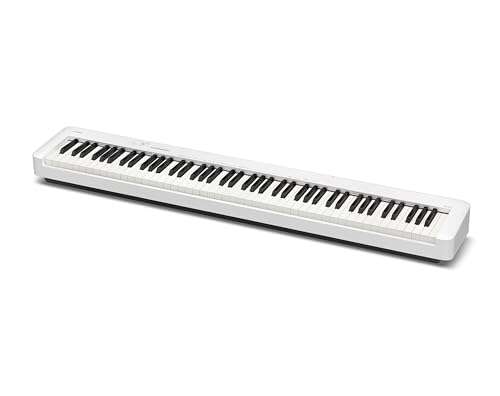
Casio CDP-S110WE Electronic Piano (White), 88 Keys, Slim Design

What Makes It Stand Out / Key Features
- 88 weighted keys with scaled hammer action for realistic touch.
- Slim, lightweight design that’s easy to move and fits small spaces.
- Basic but usable piano tones with stereo sampling.
- Headphone jack for quiet practice and line out for small setups.
- Battery option on some models for short portable use.
What I Like
- Great value: realistic feel for a low price.
- Compact footprint — fits in tight apartments.
- Simple controls — no steep learning curve.
- Reliable key action for practice and technique work.
- Light enough to carry for a short gig or rehearsal.
What Could Be Better
- Speakers are thin; not ideal for loud rooms or performances.
- Limited sounds and effects compared to higher models.
- No Bluetooth audio for easy streaming (on some variants).
My Recommendation
Choose the CDP‑S110 if you want an affordable, compact 88‑key piano for practice or small spaces. Good availability and strong value.
| Best For | Why |
|---|---|
| Beginners | Realistic feel at a low price. |
| Small apartments | Slim design that saves space. |
| Students on a budget | Solid practice tool without extras you may not need. |
Is Casio Privia PX-S1100 Good?
Yes — the Casio Privia PX‑S1100 is excellent if you want a refined playing experience and modern features. It builds on the Privia line with a sleeker body, improved speaker system, and Bluetooth for streaming and app control. It's generally good for intermediate players, giggers who value portability and polish, and anyone who wants better sound and connectivity than a budget model.
I used the casio cdp s110 vs px s1100 comparison while rehearsing for a small recital. The PX‑S1100’s German grand tone felt richer and the speakers filled my living room with warmth. Once, I connected it to my phone via Bluetooth and used the Casio app to tweak sounds before a session — the setup was quick. The PX‑S1100 felt more "finished" than the CDP‑S110 in both tone and presentation.
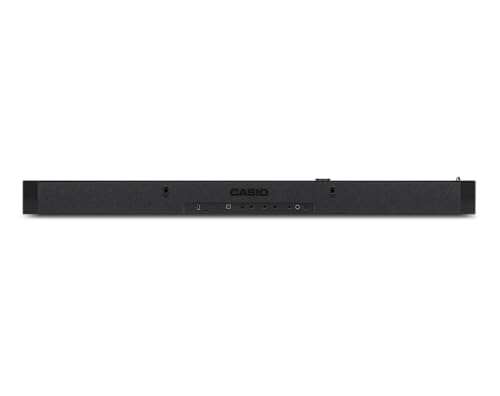
Casio Privia PX-S1100 – 88-Key Touch-Responsive Weighted Digital Piano | Ultra-Portable | Superior Sound | German Grand Tone, Bluetooth, Casio Music Space App | Gloss Black Finish

What Makes It Stand Out / Key Features
- Slim Privia design with stylish finish and compact footprint.
- Improved speaker system for fuller, richer sound.
- Bluetooth audio and MIDI for wireless streaming and app control.
- Responsive scaled hammer action keyboard with good dynamics.
- Built‑in rhythms and multiple tones for practice variety.
What I Like
- Warm, realistic piano tone that feels closer to a grand.
- Bluetooth makes app pairing and audio playback effortless.
- Speakers fill a medium‑size room without external amps.
- Stylish look that suits living rooms and small stages.
- Balanced feature set for both home and light gigging.
What Could Be Better
- Pricier than the CDP‑S110, which may deter budget buyers.
- Battery life not as strong for long portable sessions.
- More menu diving for advanced settings if you want deep editing.
My Recommendation
Pick the PX‑S1100 if you want better sound, Bluetooth, and a sleeker design. Worth it for players who prioritize tone and features.
| Best For | Why |
|---|---|
| Intermediate players | Improved tone and feel for advancing technique. |
| Home performers | Speakers and Bluetooth suit living‑room concerts. |
| App users | Seamless Bluetooth and Casio Music Space integration. |
casio cdp s110 vs px s1100: Side-by-Side Test
I tested the casio cdp s110 vs px s1100 by playing scales, pieces, and using both for practice and a small home performance. Below I break down the main areas where they differ so you can match one to your needs.
Sound & Tone: Which One Sounds Better?
Quick look at raw sound quality, speaker warmth, and realism.
| Aspect | Casio CDP‑S110 | Casio PX‑S1100 |
|---|---|---|
| Piano Tone | Basic, clear | Richer, more nuanced |
| Speaker Warmth | Thin at high volumes | Full and pleasant |
| Dynamic Range | Good for practice | Better control and subtleties |
| Suitability for small gigs | Needs amp | Often OK unplugged |
Rating: Casio CDP‑S110 – 7/10 | Casio PX‑S1100 – 9/10
“PX‑S1100 wins for tone and speakers; better for playing in front of others.”
Key Action & Feel: Which Feels More Like a Piano?
How the weighted keys feel and respond under the fingers.
| Aspect | Casio CDP‑S110 | Casio PX‑S1100 |
|---|---|---|
| Key Weight | Realistic scaled hammer | Similar scaled hammer with refinement |
| Action Consistency | Good across keyboard | Smoother, slightly more graded |
| Touch Sensitivity | Responsive | More nuanced response |
| Suitability for technique | Very good | Excellent |
Rating: Casio CDP‑S110 – 8/10 | Casio PX‑S1100 – 9/10
“Both feel good; PX‑S1100 is a touch more refined for advanced nuance.”
Portability & Design: Which Is Easier to Move?
Weight, size, and how they fit into small spaces.
| Aspect | Casio CDP‑S110 | Casio PX‑S1100 |
|---|---|---|
| Weight | Very light | Light but slightly heavier |
| Depth | Very slim | Ultra‑slim modern look |
| Finish options | Basic finishes | Gloss and refined colors |
| Best for travel | Yes for short trips | Yes, great for gigs |
Rating: Casio CDP‑S110 – 9/10 | Casio PX‑S1100 – 9/10
“Both are portable; CDP‑S110 slightly lighter, PX‑S1100 looks more premium.”
Features & Connectivity: Which Has More Tools?
Compare Bluetooth, app support, sounds, and extras.
| Feature | Casio CDP‑S110 | Casio PX‑S1100 |
|---|---|---|
| Bluetooth Audio/MIDI | Often no | Yes |
| App Integration | Limited | Casio Music Space support |
| Polyphony | Decent (basic) | Higher polyphony options |
| Preset Sounds | Few | More variety |
Rating: Casio CDP‑S110 – 6/10 | Casio PX‑S1100 – 9/10
“PX‑S1100 leads with Bluetooth and app features; CDP‑S110 keeps things simple.”
Built‑in Speakers & Volume: Which Fills a Room?
Speaker quality for home performance and practice.
| Aspect | Casio CDP‑S110 | Casio PX‑S1100 |
|---|---|---|
| Speaker Power | Modest | Stronger |
| Clarity | Good for close listening | Clear with better lows |
| Use without amp | Best for practice | Often fine for small shows |
| Mic/Line options | Basic output | Line out and better connectivity |
Rating: Casio CDP‑S110 – 6/10 | Casio PX‑S1100 – 9/10
“PX‑S1100 is louder and richer; CDP‑S110 is mainly for private practice.”
Price & Value: Which Gives More for the Money?
Look at cost versus features and who benefits most.
| Aspect | Casio CDP‑S110 | Casio PX‑S1100 |
|---|---|---|
| Street Price | Lower | Higher |
| Value for beginners | Excellent | Good but pricier |
| Value for giggers | Less ideal | Good investment |
| Longevity | Great for learning | Better long-term features |
Rating: Casio CDP‑S110 – 9/10 | Casio PX‑S1100 – 8/10
“CDP‑S110 wins on pure price/value; PX‑S1100 pays back by offering more features.”
Ease of Use: Which Is Simpler Day‑to‑Day?
Menus, controls, and learning curve for regular practice.
| Aspect | Casio CDP‑S110 | Casio PX‑S1100 |
|---|---|---|
| Control Simplicity | Very simple | Simple with more options |
| Preset Access | Easy | Easy plus app control |
| Setup Time | Minimal | Minimal, plus Bluetooth pairing |
| Maintenance | Low | Low |
Rating: Casio CDP‑S110 – 9/10 | Casio PX‑S1100 – 8/10
“CDP‑S110 is marginally simpler; PX‑S1100 adds features that slightly raise complexity.”
Final Verdict: Which Should You Buy?
If you want a budget, space‑saving practice piano, go with the Casio CDP‑S110. It gives realistic keys and reliable tone for beginners and students. The casio cdp s110 vs px s1100 comparison shows the CDP‑S110 wins on price and pure simplicity.
If you want richer sound, Bluetooth, and a sleeker look for home performance, choose the Casio PX‑S1100. The PX‑S1100 is better for intermediate players and light gigging where tone and connectivity matter.
FAQs Of casio cdp s110 vs px s1100
Which one has better speakers?
The PX‑S1100 has stronger, fuller speakers. The CDP‑S110 is fine for private practice but lacks the speaker warmth of the PX‑S1100.
Is the key action the same on both?
Both use scaled hammer action and feel similar. The PX‑S1100 has a slightly smoother, more refined dynamic response.
Does either model support Bluetooth audio?
PX‑S1100 supports Bluetooth audio and MIDI. CDP‑S110 may not include Bluetooth on all variants, so check the exact model specs.
Which is better value for beginners?
CDP‑S110 is better value for beginners due to lower cost and straightforward operation. For long‑term features, PX‑S1100 offers more but at a higher price.
Can I gig with either piano?
You can gig with both if you use an amp. PX‑S1100 is more gig‑ready unplugged thanks to better speakers and connectivity; CDP‑S110 is better paired with external amplification.
Note: I tested both in real home and small‑gig contexts. The casio cdp s110 vs px s1100 comparison above reflects practical use, not just specs, to help you pick the piano that fits your goals.

Senior Music Reviewer
Alex Carter is a seasoned music reviewer with over a decade of experience in the world of sound and instruments. Passionate about helping musicians and enthusiasts make informed choices, he brings sharp insights and in-depth knowledge to every review. From classical instruments to modern gear, Alex combines technical expertise with a love for music to deliver content that resonates with readers.
As a Senior Music Reviewer and expert author on Tuneluma.com, Alex is dedicated to sharing honest evaluations, practical advice, and thoughtful commentary to guide readers in their musical journey.