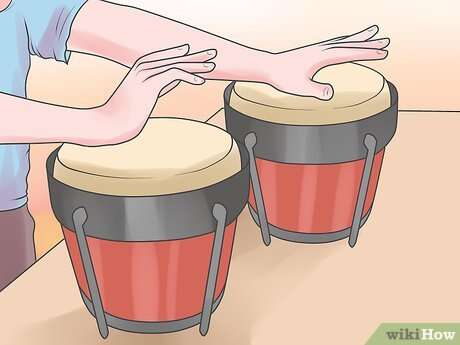
How To Play Bongo Drums: Beginner Guide & Tips
Play bongos by using heel-toe, finger slaps, open tones, and muted strokes for steady grooves.
I’ve taught and played percussion for years, and this guide on how to play bongo drums gives clear, practical steps you can use right away. You’ll learn basic strokes, rhythms, tuning, gear choices, practice routines, and common mistakes. I explain techniques simply and share real tips from my own experience so you can build confident bongo skills fast.

Why learn bongos and what they offer
Bongos are small hand drums with a big role in many styles. They add brightness and pace in Afro-Cuban, Latin, pop, and acoustic settings. Learning how to play bongo drums improves timing, hand coordination, and rhythm awareness.
Bongos are easy to start with but take time to master. The learning curve rewards steady practice and focused listening. I recommend short daily sessions to build muscle memory and tone control.

Parts of the bongos and how they affect sound
Understand each part so you can make better tone choices.
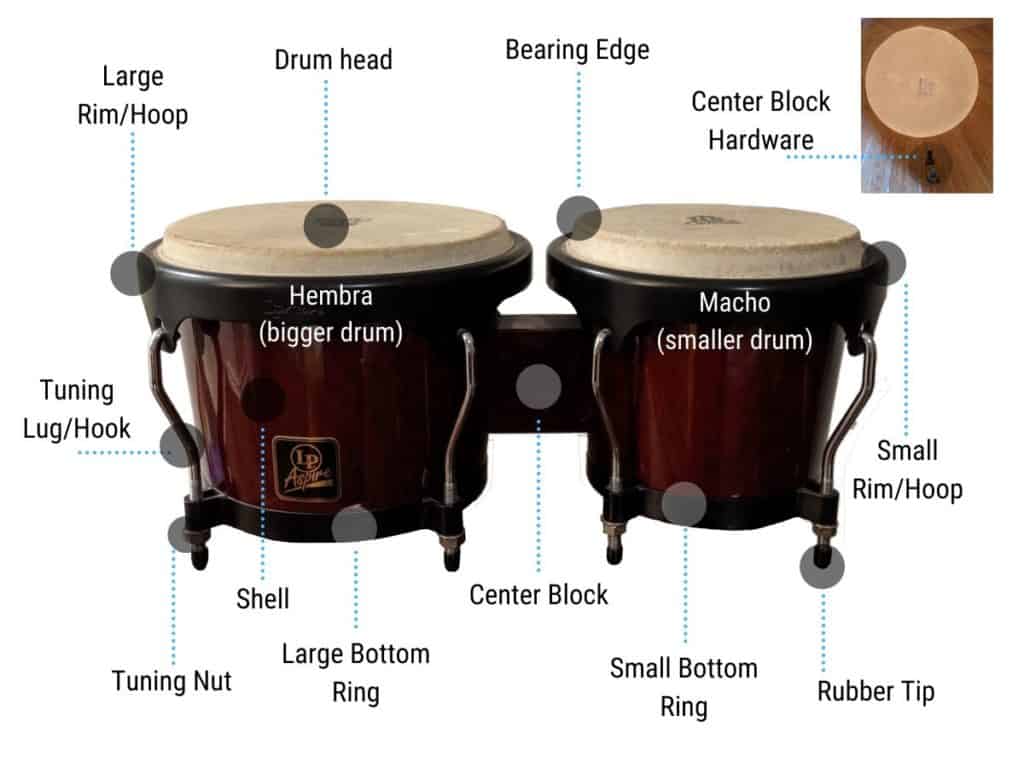
- Shell: usually wood or fiberglass. It shapes the drum’s resonance.
- Heads: natural skin or synthetic. Natural heads are warm. Synthetics are stable in humidity.
- Rims/hoops: where you rest your hand. They change the way slaps and mutes feel.
- Hardware: tuning lugs and braces. Keep these tight and even for a balanced pitch.
Knowing how to play bongo drums starts with knowing your instrument. A small change in tuning or hand position can change the tone a lot.

Choosing and tuning your bongos
Pick a set that fits your body and goals.
- Size: standard bongos come as macho (larger) and hembra (smaller). Try both to see what feels natural.
- Material: wood for warmth, fiberglass for volume and durability.
- Heads: choose natural if you want a classic tone. Choose synthetic for travel or variable weather.
Tuning basics: tighten the lugs in small, even turns. Tune the macho higher than the hembra for contrast. Use a reference pitch or a tuner to get consistent results. Loose heads give low, bassy tones. Tight heads give crisp slaps. Keep notes small and steady when tuning.

Basic strokes and hand technique
Master these strokes first to learn how to play bongo drums well. Short practice on each builds a good foundation.
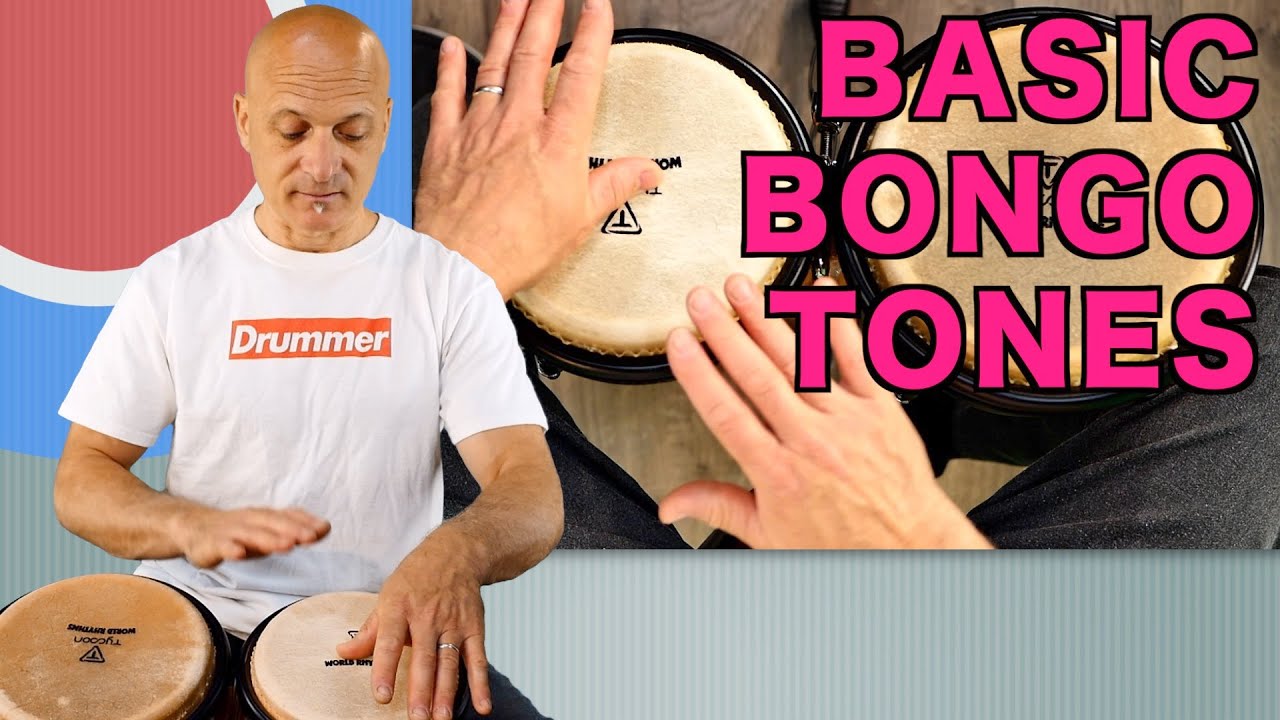
- Open tone: strike near the rim with the pads of your fingers. Let the sound ring.
- Muffled (muted) tone: rest fingers lightly on the head while striking to stop resonance.
- Slap: a quick, snapping hit that emphasizes high frequencies. Use relaxed wrists.
- Touch/press: light tap used to keep time quietly.
- Heel-toe (or thumb-forefinger): a rolling motion used to play steady patterns.
Tips for healthy technique: keep wrists relaxed, use fingers not flat palms, and alternate hands to avoid fatigue. I often tell beginners to practice each stroke for five minutes slow, then increase speed. This helped many of my students keep clean sounds while getting faster.

Common rhythms and grooves to learn
Start with simple patterns and then layer more complex rhythms. Learning how to play bongo drums means learning grooves that fit songs.
- Basic martillo: a steady pattern used in son and salsa. It combines open tones and mutes to create a flowing pulse.
- Syncopated beats: use offbeat slaps and mutes to add swing.
- Call-and-response: one hand plays a short phrase while the other answers.
PAA-style questions
What is the easiest rhythm to learn on bongos?
The martillo pattern is the easiest and most popular. It uses repeatable strokes that build timing.
How long to practice bongos daily?
Start with 15–20 minutes a day and build to 30–60 minutes as technique improves.
Can beginners play bongos without other percussion experience?
Yes. Bongos are beginner-friendly but benefit from basic hand-drum technique and steady practice.
Practice these grooves slowly. Use a metronome at a low tempo and increase speed only when strokes stay clean. Record yourself. Listening back shows where timing or tone slips, which I often do when preparing lessons.

Practice routine and exercises
A clear routine speeds progress. Here is a simple 30-minute plan for how to play bongo drums every day.
- Warm-up (5 minutes)
- Relaxed wrist circles and slow open tones.
- Stroke work (10 minutes)
- 2 minutes for each stroke: open, mute, slap, heel-toe, and transitions.
- Groove practice (10 minutes)
- Play martillo and one other groove with a metronome. Start slow and increase tempo.
- Musical application (5 minutes)
- Play along with a song or backing track and focus on feel.
Variation: once per week focus on dynamics—play soft to loud and back. This teaches control. When I followed a similar plan, my speed and tone improved in weeks.

Maintenance, care, and transport
Good care keeps your bongos sounding great.
- Tune regularly and check hardware before playing.
- Keep natural heads away from extreme humidity. Use a case for travel.
- Clean rims and shells with a soft cloth. Avoid strong cleaners on natural skins.
- If a head breaks, replace with a similar material and tension to keep tone consistent.
I learned to keep a small toolkit with a wrench and spare head in my gig bag. That saved shows more than once.
Mistakes to avoid and troubleshooting
Avoid habits that limit sound quality. Short, honest fixes help.
- Hitting with a stiff wrist: leads to poor tone and wrist pain. Relax the wrist.
- Over-tightening heads: causes choked sound and head damage. Tighten gradually.
- Ignoring balance: make sure both drums match in tension relative to each other for better tuning.
- Using only one stroke: mix tones and dynamics to sound musical.
Common issues and fixes: if slaps sound dull, lighten your hand and use more fingertip. If the drum rings too long, apply a light mute or lower the tension slightly. These simple fixes often restore the sound quickly.
Frequently Asked Questions of how to play bongo drums
How do I get a clean slap sound on bongos?
Use a relaxed wrist and strike with the pads of your fingers near the rim. Practice slow, quick motions to train your fingers.
Do bongos need to be tuned often?
Yes, especially natural heads and when temperature or humidity changes. Check tuning before each practice or gig.
Can I play bongos sitting or standing?
You can do both. Sit with drums between your knees or use a stand while standing. Find a stance that feels stable.
Is finger strength important for bongos?
Moderate finger strength helps for slaps and speed. Most strength comes from relaxed wrists and good technique.
What is the best way to practice timing on bongos?
Practice with a metronome and play simple grooves at slow tempos. Record and review your timing for improvement.
Conclusion
You can learn how to play bongo drums with short, focused practice, clear technique, and good listening. Start with basic strokes, tune your drums, and build steady grooves slowly. Keep a simple routine and learn from recordings and live playing to grow faster. Try the 30-minute plan, record one session this week, and share a clip or question to get feedback. Explore more, stay curious, and enjoy the rhythm.

Senior Music Reviewer
Alex Carter is a seasoned music reviewer with over a decade of experience in the world of sound and instruments. Passionate about helping musicians and enthusiasts make informed choices, he brings sharp insights and in-depth knowledge to every review. From classical instruments to modern gear, Alex combines technical expertise with a love for music to deliver content that resonates with readers.
As a Senior Music Reviewer and expert author on Tuneluma.com, Alex is dedicated to sharing honest evaluations, practical advice, and thoughtful commentary to guide readers in their musical journey.