What To Clean Guitar With: Safe Care Guide
Use a soft cloth, clean water, and guitar-safe polish to clean most guitar surfaces safely.
Knowing what to clean guitar with helps protect the finish, strings, fretboard, and hardware without causing dull spots or damage. The right method depends on your guitar’s finish and the part you are cleaning, so this guide explains safe products, simple steps, common mistakes, and proven maintenance habits.
What to Clean a Guitar With
The best answer to what to clean guitar with is simple: use soft microfiber cloths, a small amount of clean water, and products made for guitars. Most guitars do not need strong household cleaners. In fact, many common sprays can harm the finish or leave a sticky film.
Here are the basic supplies for safe guitar cleaning:
• Two or three soft microfiber cloths
• A clean, slightly damp cotton cloth
• Guitar-specific polish for the body
• Guitar-specific fretboard conditioner
• A soft toothbrush for tight spaces
• A dry cloth for buffing
• Fresh guitar strings
• A small bowl of lukewarm water
A microfiber cloth is the main tool. It lifts dust, skin oil, and light grime without scratching most finishes. Use one cloth for dry dusting and another for polish or water.
Avoid paper towels, rough rags, and old shirts with metal buttons or zippers. Tiny particles trapped in rough fabric can create fine scratches over time.

What to Clean Guitar Body With
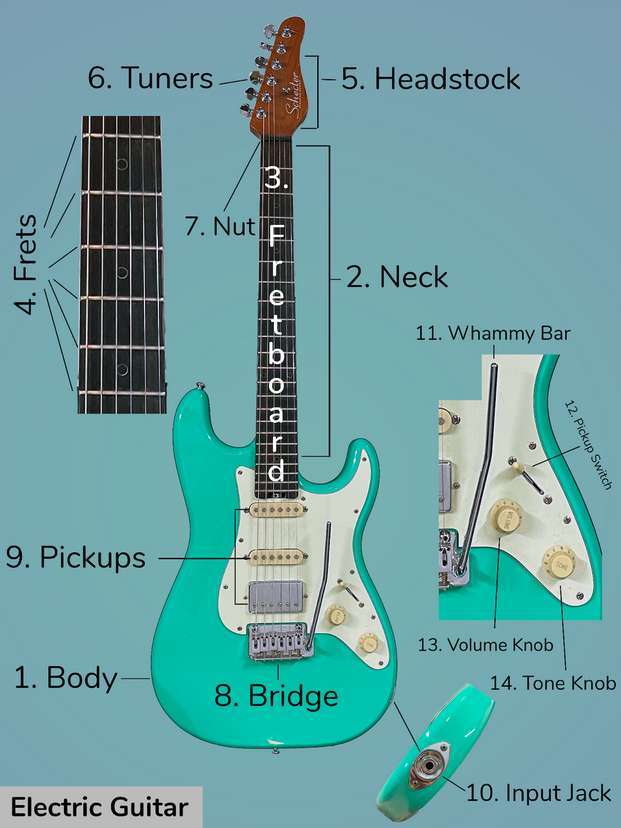
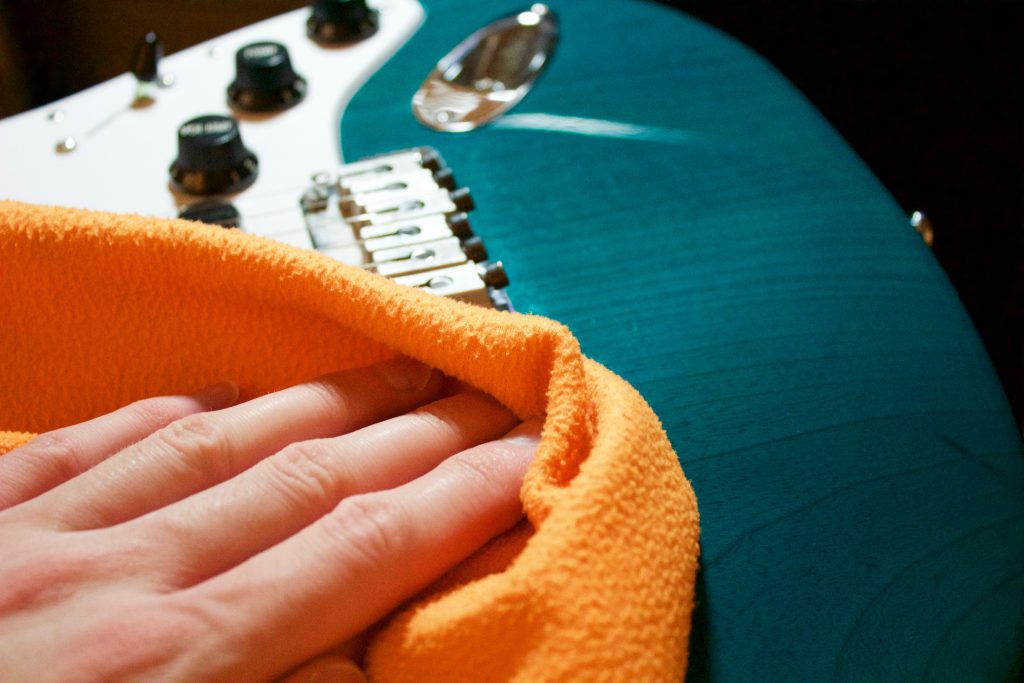
To clean a guitar body, start with a dry microfiber cloth. Wipe the top, back, sides, neck heel, and headstock with light pressure. This removes dust and loose dirt before you use any liquid.
For fingerprints or light marks, slightly dampen the cloth with water. Do not spray water directly on the guitar. The cloth should feel barely damp, not wet.
For a deeper clean, use a guitar polish that matches the finish. Guitar polishes are made to work with common finishes such as polyurethane and polyester. Apply a small amount to the cloth, not the instrument, then wipe in gentle circles.
Use this basic process:
- Remove the cable and place the guitar on a stable, padded surface.
- Wipe away loose dust with a dry microfiber cloth.
- Add a small amount of guitar-safe polish to a second cloth.
- Clean one small area at a time.
- Buff the surface with a clean, dry cloth.
- Check the body under bright light for streaks or leftover residue.
Do not use furniture polish, glass cleaner, disinfectant, or automotive wax. These products may contain silicone, ammonia, alcohol, solvents, or waxes that can react badly with a guitar finish.
What to Clean Guitar Strings With
The safest way to clean guitar strings is with a clean, dry microfiber cloth. Place the cloth under the strings, wrap it around them, and gently pull from the bridge toward the neck. Repeat this on the top and bottom of each string.
Wiping strings after every playing session removes sweat, skin oil, and dirt. This can help strings feel smoother and may extend their useful life. However, cleaning cannot restore strings that have lost their tone or developed deep corrosion.
String cleaner is optional. If you use one, choose a product designed for guitar strings and follow its label. Apply it to the cloth rather than spraying near the fretboard, pickups, or finish.
Replace strings when they sound dull, feel rough, show rust, or fail to stay in tune. Players with sweaty hands may need new strings more often than players with dry hands.
A useful habit is to wash and dry your hands before playing. This small step reduces the amount of oil and salt that reaches the strings.

What to Clean a Guitar Fretboard With
What to clean guitar fretboard with depends on the wood. Finished maple, unfinished rosewood, ebony, and pau ferro need different care.
For routine cleaning, remove the strings and wipe the fretboard with a dry or slightly damp cloth. This is often enough for light dust and normal playing residue.
Unfinished rosewood, ebony, and pau ferro fretboards may benefit from a very small amount of guitar fretboard conditioner. Use a product made for unfinished wood. Apply it sparingly, let it sit for the time listed on the label, and wipe away all excess.
Do not oil the fretboard every time you change strings. Most guitars need conditioning only occasionally, often once or twice a year. Too much oil can make the wood feel greasy and may collect dirt around the frets.
Finished maple fretboards usually need only a dry cloth or a slightly damp cloth. Avoid applying common wood oil to finished maple. The finish acts as a protective barrier, so oil cannot condition the wood in the same way.
Avoid lemon oil sold for household furniture. Some products use real lemon oil, while others contain mineral oil and fragrance. The label may not clearly explain how the product interacts with guitar wood or finish. A guitar-specific fretboard conditioner is the safer choice.

What to Clean Guitar Frets With
Clean guitar frets with a dry microfiber cloth and gentle pressure. If grime has built up along the fret edges, use a soft toothbrush or a dedicated fretboard brush.
For heavier tarnish, some guitar technicians use very fine polishing materials. These require care because abrasive material can scratch the fretboard or damage the finish. Protect the wood and use fret guards when needed.
A safe fret-cleaning routine includes these steps:
- Remove the strings.
- Cover or protect the fretboard if using any abrasive product.
- Rub each fret gently with a suitable fret-polishing tool.
- Wipe away metal dust with a clean microfiber cloth.
- Apply a small amount of fretboard conditioner only if the wood needs it.
- Install fresh strings and check the guitar’s playability.
Do not use steel wool near pickups unless you fully understand the risk. Small metal fibers can stick to magnetic pickups and create problems. If steel wool is used by an experienced technician, the pickups should be carefully covered first.
For most home maintenance, a dedicated fret polishing kit is safer than improvising with kitchen pads or household cleaners.

What to Clean Guitar Hardware With
Use a dry microfiber cloth to clean tuning machines, bridge parts, control plates, strap buttons, and other hardware. This removes sweat and dust without introducing moisture into small openings.
For light grime, put a tiny amount of water on the cloth. Wipe the hardware, then dry it at once. Keep water away from screws, pickup cavities, switches, and electronic openings.
Chrome, nickel, and gold hardware need different care. Gold plating is thin and can wear away from repeated rubbing or harsh polish. Clean gold hardware gently with a soft, dry cloth and avoid abrasive products.
Do not use metal polish on guitar hardware unless the product is confirmed safe for that specific metal. Some metal polishes are too aggressive and can remove plating or leave residue near the finish.
If a tuner feels stiff, do not pour oil into it without checking the manufacturer’s design. Many sealed tuners do not need user lubrication. A repair technician can identify whether the tuner needs service or replacement.

What to Clean Guitar Pickups and Electronics With
Clean guitar pickups with a dry, soft brush or microfiber cloth. Dust can collect around pickup poles, especially on guitars with open-coil humbuckers or single-coil pickups.
Use a soft toothbrush to remove dry dust from tight spaces. Work gently so the bristles do not catch on wires or scratch nearby surfaces.
For pots, switches, and output jacks, use only electronics cleaner made for musical instrument controls. The product should be designed for electrical contacts and should be used in small amounts. Turn off or unplug the amplifier before any electrical cleaning.
Never spray household cleaner into a pickup, switch, or jack. Do not flood the control cavity with liquid. If a control crackles, a technician may need to clean or replace the component.
A little dust is normal. Avoid turning a simple cleaning job into an electrical repair by using too much product.
What to Clean an Acoustic Guitar With
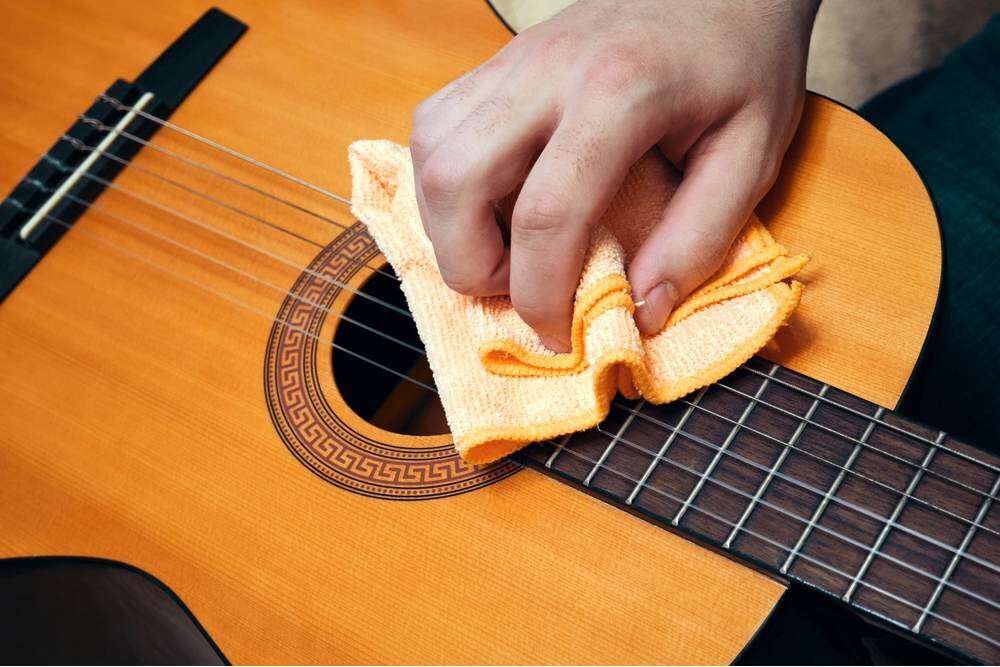
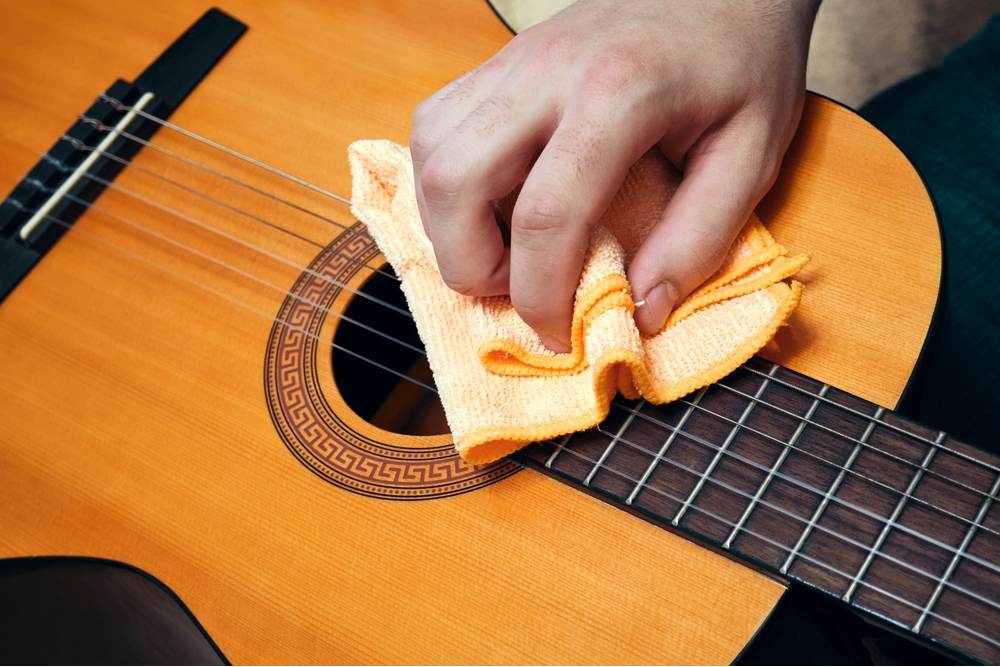
What to clean guitar with for an acoustic instrument is much like the method for an electric guitar, but the soundboard needs extra care. The top can be more sensitive to moisture, pressure, and temperature changes.
Use a dry microfiber cloth for routine dust. For fingerprints, use a barely damp cloth and dry the area right away. Keep liquid away from the soundhole, bridge, saddle, and unfinished wood edges.
Do not press hard on the soundboard. The top is designed to vibrate, and heavy pressure can stress the wood or bridge area.
For an acoustic guitar, pay attention to these areas:
• The bridge, where sweat and dirt can collect
• The soundhole edge, where dust may gather
• The pickguard, which can show fingerprints
• The bridge pins, which may trap grime
• The neck joint and heel, where hand oil often builds up
Do not insert wet cloths, sprays, or cleaning tools into the soundhole. If the inside needs cleaning, turn the guitar upside down carefully and allow loose dust to fall out. A repair professional should handle more serious interior work.

What Not to Clean a Guitar With
Many guitar-cleaning mistakes come from using products designed for other surfaces. A product that works on a kitchen table may damage a lacquer finish or soften old glue.
Do not clean your guitar with:
• Furniture polish
• Glass cleaner
• Household disinfectant
• Bleach
• Ammonia-based cleaner
• Acetone or nail polish remover
• Rubbing alcohol
• Automotive wax
• Abrasive kitchen sponges
• Paper towels with rough fibers
• Excessive water
• Household lemon oil
• Silicone-based sprays
Nitrocellulose lacquer finishes need special caution. These finishes can react with some plastics, rubber stands, guitar straps, and cleaning chemicals. If your guitar has a vintage finish or you are unsure about the finish type, use a dry cloth first and ask a qualified repair professional before applying polish.
Always test a new product on a hidden area when the manufacturer allows it. If the surface becomes cloudy, sticky, dull, or discolored, stop immediately and remove the product according to the label.

How Often Should You Clean a Guitar?
Clean your guitar lightly after every playing session. A quick wipe takes less than a minute and prevents sweat from sitting on the finish, strings, and hardware.
Perform a more complete cleaning when you change strings. This is the easiest time to access the fretboard, frets, bridge, and areas under the strings.