What Is The Easiest Song To Play On Guitar: Top Easy Picks
“A Horse with No Name” is often the easiest song to play on guitar because it uses only two simple chord shapes.
If you are asking what is the easiest song to play on guitar, start with a song that uses few chords, simple rhythm, and a steady beat. “A Horse with No Name” is a strong first choice, but songs such as “Three Little Birds” and “Knockin’ on Heaven’s Door” can also help beginners build skill without feeling overwhelmed. This guide explains the best options, why they work, and how to practice them with confidence.
What Is the Easiest Song to Play on Guitar?
For most beginners, “A Horse with No Name” by America is the easiest song to play on guitar. The song uses two repeating chord shapes, often written as Em and D6/9, depending on the arrangement.
The chord shapes are simple because you can keep your fingers close together. The song also has a slow, steady pattern. That gives new players time to change chords without rushing.
However, the easiest song to play on guitar depends on your guitar type, musical taste, finger strength, and comfort with rhythm. A song with only two chords may still feel hard if the chord shapes are unfamiliar.
Here are some popular beginner choices:
• “A Horse with No Name” by America: Two repeating chord shapes and a simple groove.
• “Three Little Birds” by Bob Marley: Three common chords and an easy reggae feel.
• “Knockin’ on Heaven’s Door” by Bob Dylan: Four basic chords with a slow rhythm.
• “Love Me Do” by The Beatles: A small chord set and a simple song structure.
• “Bad Moon Rising” by Creedence Clearwater Revival: Three easy chords and a steady strum.
For a true first song, choose one that makes you want to practice. Motivation matters as much as chord count.

Why “A Horse with No Name” Is So Easy
“A Horse with No Name” is often recommended because it repeats the same musical idea for much of the song. You do not need to learn many sections before you can play along.
The song also gives your fretting hand a break. You mainly practice moving between two shapes instead of learning a long list of chords. This makes it easier to focus on timing and clean notes.
A simple version may use these chord shapes:
• Em: Place your second finger on the fifth string, second fret, and your third finger on the fourth string, second fret.
• D6/9: Use a beginner-friendly shape that keeps several fingers on nearby strings and frets.
Chord names can vary between guitar books and online lessons. Some versions use different voicings, so check the chord diagram before practicing.
The song’s rhythm is also forgiving. You can begin with one slow downstroke per beat. Once that feels steady, add a light pattern such as:
-
Count “1, 2, 3, 4.”
-
Strum down on each count.
-
Keep your hand moving even when you do not hit the strings.
-
Slowly add extra upstrokes.
In my experience teaching new players, beginners often try to copy the full recording too soon. That creates tension. It is better to make a simple version sound clean before adding the original rhythm.
The Best Easy Guitar Songs for Beginners
The easiest song to play on guitar is not the same for every learner. Some players find chord changes easy but struggle with rhythm. Others can strum well but need more time to build finger strength.
These songs cover different beginner needs.
Three Little Birds
“Three Little Birds” is a good choice if you want to learn common open chords. Many beginner arrangements use A, D, and E.
The song has a relaxed reggae beat. Start with slow downstrokes, then add a gentle offbeat pattern. The key is to stay relaxed and avoid strumming every string with force.
This song helps you practice:
• Open chord shapes
• Chord changes
• Muted or lighter strums
• Playing with a steady pulse
Knockin’ on Heaven’s Door
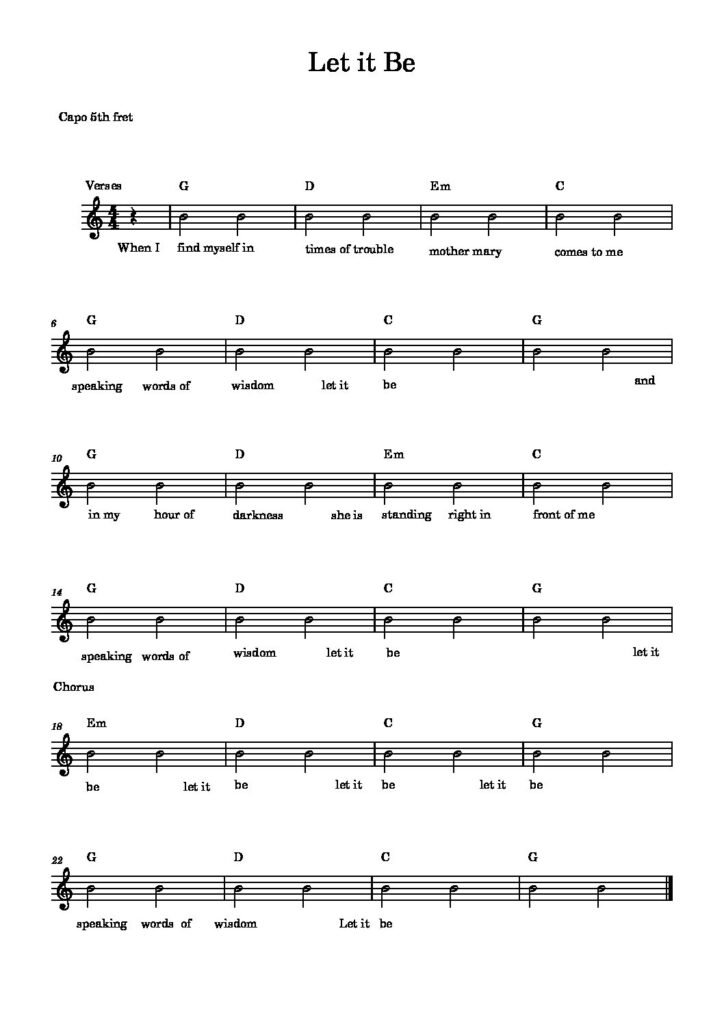
“Knockin’ on Heaven’s Door” is one of the best beginner guitar songs because its chord progression repeats. Many versions use G, D, Am, and C.
The song moves slowly enough for beginners to prepare each chord. It also teaches an important lesson: a song can sound complete even with a basic strumming pattern.
Use one downstroke per beat at first. Then try a pattern such as down, down, down, down. When your changes improve, use a more flowing pattern.
Love Me Do
“Love Me Do” is useful for beginners who want to play an early rock song. Beginner arrangements often center on G, C, and D.
The chord changes are common in many other songs. Learning them gives you a strong base for country, folk, pop, and rock music.
The main challenge is keeping the rhythm moving. Practice the chord changes without singing. Then add the melody or vocals once your hands feel more automatic.
Bad Moon Rising
“Bad Moon Rising” is a great option for players who want a fast, bright song. It uses a simple three-chord pattern in many beginner arrangements.
The song can feel harder because of its speed. Begin at half the recording speed. Accuracy matters more than matching the original tempo.
Horse with No Name
This song remains one of the easiest guitar songs for players who want the fewest chord changes. It is especially helpful for learning how to repeat a pattern without stopping.
Keep your strumming hand relaxed. Think of it like a pendulum. A smooth hand movement will help you keep time.

How to Choose the Easiest Guitar Song for You
The easiest song to play on guitar should match your current skill level. Do not choose only by the number of chords. Look at the full set of demands.
Consider these points:
• Chord count: Fewer chords usually make the first stage easier.
• Chord type: Open chords are often easier than barre chords.
• Chord changes: Some songs use easy chords but switch quickly.
• Rhythm: A slow pattern is usually easier than a fast one.
• Tuning: Standard tuning is best for most beginners.
• Song length: A short repeating song can feel more manageable.
• Personal interest: You will practice more often if you enjoy the song.
A two-chord song may be harder than a three-chord song if the two shapes feel awkward. This is why there is no single answer for every guitarist.
Try a short test. Pick three songs and spend five minutes on each. Notice which one lets you keep time, make clean sounds, and stay relaxed. That song may be the easiest song to play on guitar for you.

Beginner Chords You Should Learn First
Most easy guitar songs use a small group of open chords. These chords appear in thousands of folk, pop, country, and rock songs.
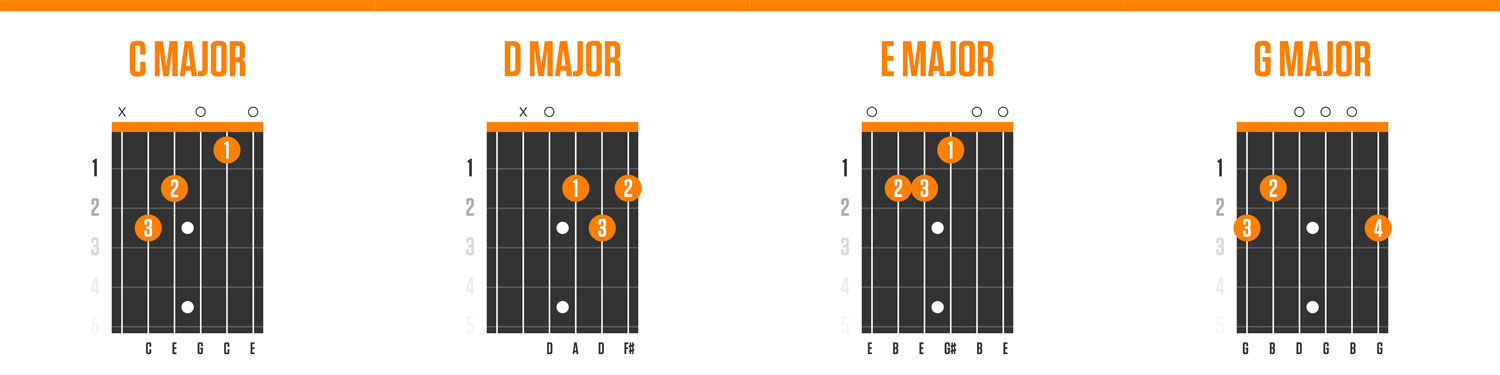
Start with these shapes:
• G major: A bright chord used in many popular songs.
• C major: A useful chord that improves finger control.
• D major: A compact shape that works well in slow songs.
• A major: A common chord with a strong, full sound.
• E minor: One of the easiest minor chords for beginners.
• A minor: A simple minor chord used in many ballads.
• E major: A basic chord that helps prepare you for other shapes.
Do not try to master all of them in one day. Learn two chords first. Practice moving between them without stopping. Then add another chord when the first changes feel natural.
A clean chord should produce clear notes. Pick each string one at a time. If one note buzzes, check your finger position and make sure your finger is not touching a nearby string.
Pressing harder does not always fix buzzing. Often, moving your fingertip closer to the fret improves the sound with less effort.

Easy Strumming Patterns for Your First Song
Many beginners believe the hardest part of what is the easiest song to play on guitar is learning the chords. In practice, rhythm often causes more trouble.
Start with the simplest possible pattern:
• Four slow downstrokes per measure.
• One downstroke on each beat.
• A pause between chord changes if needed.
Once you can keep time, try a common pattern:
• Down, down, up, up, down, up.
Count it as “1, 2, and, and, 4, and.” Do not worry about copying a recording perfectly at first.
Your strumming hand should keep moving like a clock pendulum. Even when you miss the strings, keep the motion going. This helps your rhythm stay even.
Practice with a metronome at a slow speed. Start around 50 to 60 beats per minute. Increase the speed only when you can play the pattern several times without stopping.
One mistake I often see is that players stop their strumming hand during every chord change. This causes the song to lose its pulse. Keep the hand moving, even if the chord change is not perfect yet.
A Simple Practice Plan
A short, focused practice session can help more than one long session filled with frustration. Aim for 15 to 20 minutes at first.
Use this plan:
-
Warm up for two minutes by playing open strings slowly.
-
Practice each chord shape for three minutes.
-
Switch between two chords for five minutes.
-
Strum the song’s pattern for five minutes.
-
Play along with a slow recording for three minutes.
-
End by repeating the hardest part once.
Use a timer if you tend to lose focus. Short sessions help your hands recover and make practice easier to repeat each day.
Record yourself once a week. You may notice progress that is hard to feel during daily practice. Listen for steady timing, clear chords, and fewer pauses.
Do not judge every mistake harshly. A wrong note is useful feedback. It shows you what to adjust next.

Common Beginner Mistakes to Avoid
Learning the easiest song to play on guitar can still feel difficult if you build poor habits. The good news is that most beginner problems have simple solutions.
Pressing Too Hard
Many new players squeeze the neck with too much force. This can make your hand tired and slow your chord changes.
Use only enough pressure to make the note clear. Keep your thumb behind the neck and relax your wrist.
Looking Only at the Fretting Hand
Your fretting hand matters, but your strumming hand controls the beat. Practice watching the rhythm of your strum instead of staring at every finger.
You can also practice chord changes with your eyes closed for a few seconds. This builds muscle memory.
Changing Chords Too Early
Do not rush to the next chord before the current one is finished. Let the last beat ring when the song allows it.
With practice, your hand will learn to prepare the next shape before the change.
Playing Too Fast
Speed hides mistakes. Slow practice makes your movements clear and controlled.
Start at a speed where you can play without tension. Add five beats per minute when the song feels stable.
Ignoring Tuning
A poorly tuned guitar makes every song sound wrong. Tune before each practice session.
A clip-on tuner, phone tuner, or electronic tuner can help. Standard tuning is E, A, D, G, B, and E from the thickest string to the thinnest.

How Long Does It Take to Learn an Easy Song?
Some beginners can play a simple song within a day. Others need several weeks. Both experiences are normal.
The time depends on your practice routine, guitar setup, finger strength, rhythm skills, and past music experience. A player who practices for 15 minutes each day may improve faster than someone who plays for one hour only once a week.
Your first goal should not be a perfect performance. Aim to:
• Form each chord correctly.
• Change chords without stopping for a few measures.
• Keep a steady beat.
• Play the song from start to finish.
• Recover calmly after a mistake.
If you can do these things, you are making real progress. Your first song is not a test. It is a bridge to the next song.

Acoustic Guitar or Electric Guitar: Which Is Easier?
Both acoustic and electric guitars can work well for beginners. The better choice depends on your comfort and the type of music you want to play.
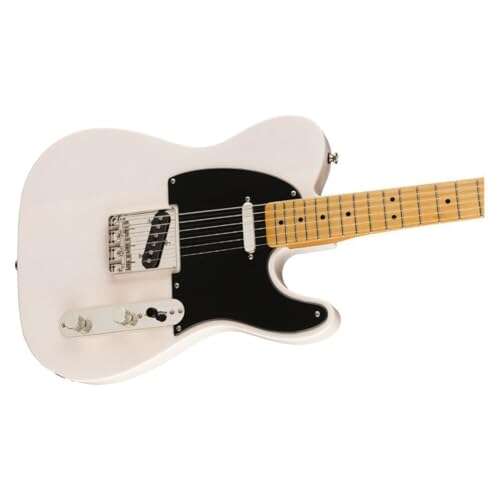
An electric guitar usually has lighter strings and a slimmer neck. This can make fretting easier. However, it often requires an amplifier, cable, and other equipment.
An acoustic guitar is simple to carry and use. It does not need an amplifier. Some acoustic guitars have thick strings and high action, which can make them harder to play.
“Action” means the height of the strings above the fretboard. High action can require extra finger pressure. If your guitar feels painful or difficult, ask a qualified guitar technician to inspect it.
The easiest song to play on guitar is easier when the instrument is set up well. A poor setup can make a beginner think they lack skill when the real problem is the guitar.
Can You Play Easy Songs Without Reading Music?
Yes. You can learn beginner guitar songs with chord charts, diagrams, tabs, or video lessons. Traditional music reading is useful, but it is not required to play simple songs.
Chord charts show which shapes to hold. Guitar tablature shows where to place your fingers on the fretboard. Rhythm notation explains when to play each note or strum.
Use reliable lessons that show correct finger placement and timing. Be careful with online chord charts because some may contain incorrect names or unusual versions.
It also helps to learn basic music terms. Understanding measures, beats, tempo, key, and chord progression will make future songs easier.
Frequently Asked Questions About What Is the Easiest Song to Play on Guitar
What is the easiest song to play on guitar for a complete beginner?
“A Horse with No Name” is often the easiest choice because it uses two repeating chord shapes. “Three Little Birds” and “Knockin’ on Heaven’s Door” are also good beginner options.
What is the easiest one-chord guitar song?
Many simple folk and children’s songs can use one chord with a steady rhythm. However, songs with two or three chords are often more useful because they teach chord changes early.
Is “Wonderwall” easy to play on guitar?
“Wonderwall” is popular with beginners, but the original chord shapes and rhythm can be challenging at first. A simplified version is easier and can still sound recognizable.
How many chords should a beginner learn first?
Start with two chords, then add common shapes such as G, C, D, E minor, A minor, A, and E. Learning these gradually gives you access to many easy guitar songs.
Can I learn guitar by playing songs?
Yes. Learning songs can improve chord changes, rhythm, memory, and motivation. Add short technique exercises so you also build skills that songs may not cover.
Should I use a pick for easy guitar songs?
A pick is helpful for steady strumming, but you can also use your thumb or fingers. Try both methods and choose the one that feels relaxed and produces a clear sound.
Conclusion
The easiest song to play on guitar is usually “A Horse with No Name” because it uses two repeating chord shapes and a simple rhythm. Still, the best first song is the one that fits your skill level and keeps you interested.
Begin with slow downstrokes, practice two chords at a time, and focus on steady rhythm instead of speed. Keep your guitar tuned, use a comfortable instrument, and practice for a few minutes every day.
Pick one song today and learn only the first chord change. Once that feels easy, add the next section. Explore more beginner guitar lessons, share your progress, and keep playing until the music feels like your own.

Senior Music Reviewer
Alex Carter is a seasoned music reviewer with over a decade of experience in the world of sound and instruments. Passionate about helping musicians and enthusiasts make informed choices, he brings sharp insights and in-depth knowledge to every review. From classical instruments to modern gear, Alex combines technical expertise with a love for music to deliver content that resonates with readers.
As a Senior Music Reviewer and expert author on Tuneluma.com, Alex is dedicated to sharing honest evaluations, practical advice, and thoughtful commentary to guide readers in their musical journey.