For most people in the United States, the best drum set for home practice is an electronic drum kit. It lets you practice with headphones, control the volume, use a metronome, and play at times when an acoustic kit would disturb family members or neighbors.
The best overall fit for many home players is the Roland TD-07DMK. It has a compact frame, mesh heads, useful practice tools, and a strong reputation for natural response. The Yamaha DTX6K-X is a better choice if pad feel and sound quality matter most. The Alesis Nitro Max Kit is a practical budget choice for beginners.
No kit is best for every home. Your room, budget, noise limits, playing level, and need for realistic cymbal and kick response should guide the choice.
Quick answer: Which home practice drum set should you buy?
Choose an electronic drum set if you need quiet practice, easy setup, and built-in learning tools. Pick an acoustic kit only if you have a suitable room and can manage high sound levels.
| Player or home situation | Best type | Strong starting choice | Main reason |
|---|---|---|---|
| Beginner on a budget | Electronic kit | Alesis Nitro Max Kit | Low entry cost and many built-in sounds |
| Serious home practice | Electronic kit | Roland TD-07DMK | Good response, mesh heads, and useful coaching tools |
| Player who values pad feel | Electronic kit | Yamaha DTX6K-X | Strong playing response and Yamaha sounds |
| Advanced player with space | Acoustic or premium electronic | Depends on room and goals | Acoustic feel may matter more than low volume |
| Apartment or shared-wall home | Electronic kit with headphones | Roland or Yamaha compact kit | Lowest practical sound level |
| Young player | Compact electronic kit | Alesis or Roland entry model | Adjustable volume and smaller footprint |
The model names above are examples, not guarantees of the best current price or package. Manufacturers can change bundles, firmware, and included accessories. Check the current product page before buying.

Acoustic or electronic: Which is better for home practice?
An electronic drum set is usually better for home practice because it reduces airborne noise and adds tools that help you practice with structure. An acoustic kit still provides the most direct natural response, but it is loud and needs more space.
Electronic drum sets
Electronic drums use rubber or mesh playing surfaces. Sensors detect each hit and send the signal to a sound module. You hear the selected drum sound through headphones, speakers, or both.
Their main benefits are:
- Much lower room volume than an acoustic kit
- Headphone practice
- Built-in metronomes
- Recording functions on many models
- Play-along songs or coaching features
- Easy sound changes
- Compact storage
- Simple connection to music devices on some kits
Electronic drums are not silent. The kick pedal can send impact through the floor. Rubber pads can also make sharp tapping sounds. In an apartment, the neighbor below may hear low thumps even when you use headphones.
Acoustic drum sets
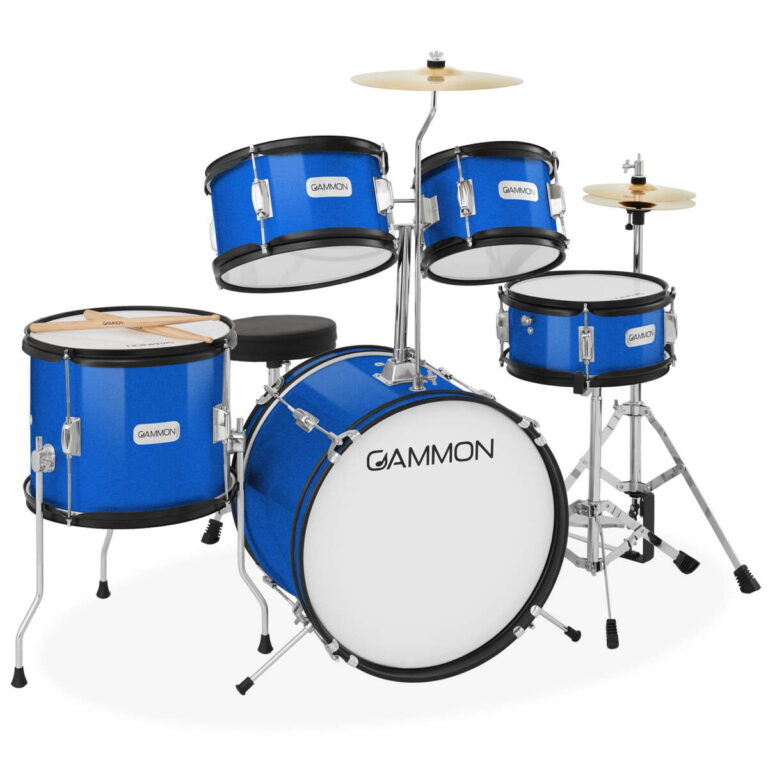
An acoustic drum set creates sound through vibrating drum heads and cymbals. It offers natural air movement, acoustic interaction, and a playing feel that many experienced drummers prefer.
Its limits at home are serious:
- A full kit can be extremely loud.
- Cymbals create sharp, high-frequency sound.
- The bass drum can send impact through walls and floors.
- Sound treatment can reduce noise but rarely makes an acoustic kit quiet.
- Practice mutes reduce volume but also change rebound and feel.
An acoustic kit can work in a detached home, basement, rehearsal room, or dedicated music room. Before buying one, check local noise rules, lease terms, and your relationship with nearby residents.
The key trade-off
Electronic drums control airborne sound well. They do not remove mechanical vibration. That is why a kit with headphones may still bother someone in the room below.
For shared housing, place the kit on a thick rubber isolation mat. If the problem continues, build a stable platform with dense rubber layers and a rigid top. Do not block vents or create an unstable platform under the pedal.

What should you look for in the best electronic drum set?
The most useful features are mesh heads, a stable frame, a separate kick tower, a responsive hi-hat, practical connections, and a module that supports your practice goals.
1. Mesh heads
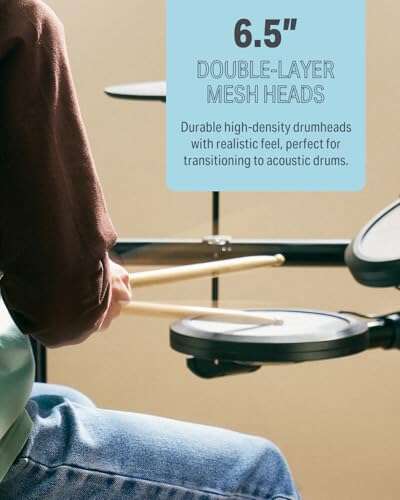
Mesh heads feel more like acoustic heads than hard rubber pads. They also tend to produce less sharp stick noise.
Mesh does not always mean better. A small mesh pad may still feel cramped. Check the diameter and adjustment range, not just the word “mesh.”
2. A separate kick tower
A real kick tower gives the bass drum pedal a more familiar feel. Some very small kits use a single trigger pad that does not accept a normal kick pedal.
A separate tower is useful when you want to build foot control. It also gives you more freedom to use the pedal style you prefer.
3. Hi-hat design
The hi-hat often separates a basic kit from a more realistic one.
Some electronic kits place the hi-hat trigger on a small pad. Others use a pad mounted on a stand with a moving controller. A stand-mounted hi-hat usually feels closer to an acoustic setup, but it needs more space and costs more.
If you plan to play funk, jazz, rock, or pop, check the hi-hat response before buying. Your right hand and foot work together there, so poor response can make practice less useful.
4. Cymbal size and movement
Larger cymbal pads can feel more natural. Swinging or movable cymbals may also improve the playing experience.
Look for:
- Separate ride, crash, and hi-hat pads
- Choke support where documented
- Enough playing area for your normal stroke
- Stable arms that do not move after each hit
- A ride pad with a usable bell zone, if you need one
A compact kit can still work well. The trade-off is that smaller pads require more accuracy.
5. Drum module
The module is the kit’s control center. It creates sounds and manages settings.
Useful features include:
- Metronome
- Tap tempo
- Coach exercises
- Recording
- USB audio or MIDI
- Auxiliary audio input
- Bluetooth audio, if included
- Adjustable pad sensitivity
- Adjustable threshold and crosstalk settings
- Multiple user kits
Bluetooth audio is convenient, but it does not always mean Bluetooth MIDI. Check the manual if you want to control a drum app or record into a device.
6. Frame stability
A low price is not a bargain if the rack shifts during play. Look for a frame with firm joints, adjustable feet, and enough width for your playing style.
Sit at the kit before you tighten every clamp. Place the snare, hi-hat, and toms where your arms fall naturally. A good setup can make a modest kit feel much better.
7. Room to grow
A beginner kit should not trap you in a narrow setup. Check whether the module has spare trigger inputs for another cymbal or tom.
Also check whether the package includes:
- Kick pedal
- Hi-hat pedal or stand
- Drum throne
- Drumsticks
- Power supply
- Headphones
- Audio cables
- Rack or stand
Many kits do not include every item you need. Budget for the missing parts.

Best drum sets for home practice by type
The right recommendation depends on what you value. The choices below are practical categories rather than a claim that one brand wins for every drummer.
Best overall for focused home practice: Roland TD-07DMK
The Roland TD-07DMK is a strong all-around option for a player who wants a compact electronic kit with mesh heads and useful practice functions.
It fits:
- Adult beginners
- Returning drummers
- Players in apartments or shared homes
- Students who need a metronome and recording tools
- Players who want a known upgrade path within electronic drums
Its main limitation is that compact kits can feel smaller than a full acoustic setup. The included configuration may also leave you wanting a more natural hi-hat or larger cymbal layout later.
Choose it when quiet practice, reliable response, and a compact footprint matter more than having a large number of pads.
Best for sound and playing response: Yamaha DTX6K-X
The Yamaha DTX6K-X suits players who care about expressive sounds and a more substantial electronic playing experience.
It may be a better fit for:
- Intermediate players
- Drummers who want strong built-in sounds
- Players who plan to record ideas
- Homes with room for a larger rack
- Users who prefer a more developed module
Its higher cost and larger footprint are the main trade-offs. A bigger kit also takes more time to position and may transmit more pedal vibration if it sits directly on a hard floor.
Best budget choice: Alesis Nitro Max Kit
The Alesis Nitro Max Kit is aimed at beginners who want a full electronic kit without moving into the higher price ranges.
It can make sense when you need:
- A first drum set
- Basic headphone practice
- A built-in metronome
- Multiple drum sounds
- A kit for general rock and pop practice
- A lower-cost way to test whether drumming becomes a long-term hobby
Budget kits often use smaller pads, lighter racks, or simpler hi-hat systems. Those limits do not stop learning, but they may become noticeable as your technique develops.
Best acoustic option for a quiet private room
If you can play at normal acoustic volume, a five-piece shell pack from a major drum maker can be a good practice tool. You will still need cymbals, stands, a pedal, a throne, and possibly hardware.
For home use, consider:
- Smaller shell sizes
- A controlled room with soft surfaces
- Low-volume cymbals
- Mesh heads or practice heads when needed
- A floor that can handle pedal vibration
- A clear agreement with family and neighbors
Do not buy an acoustic kit first and assume practice mutes will solve every noise problem. Test the room and the mute setup if possible.

How much space do you need for a home drum set?
A compact electronic kit may fit in a space about the size of a small desk area, but you need extra room for safe movement and pedal travel. Measure the full playing position, not only the rack.
Before buying, measure:
- The width of the rack.
- The depth from the rear rack to the front of the kick pedal.
- The height of cymbals and overhead arms.
- The space needed for a drum throne.
- The path to the power outlet.
- The room needed to sit down and leave safely.
Leave enough space to move your arms without hitting a wall, lamp, shelf, or monitor. A tight corner can force poor posture and make the kit less enjoyable.
For a small room, use a compact electronic kit with a narrow rack. Foldable racks can help, but frequent folding may loosen clamps. Mark your preferred positions before moving the kit.
A simple floor-noise plan
Use this order:
- Place the kit on a thick rubber mat.
- Keep the kick pedal away from a shared wall.
- Move the kit away from the room below’s likely bedroom or living area.
- Test the pedal while someone listens in the next room or downstairs.
- Add an isolation platform if impact noise remains.
Do not place heavy equipment on a weak shelf or unstable raised platform. A drummer should be able to strike the pedal without the entire kit moving.

How quiet are electronic drums in a real home?
Electronic drums are quieter than acoustic drums, but “silent” is the wrong word. The headphones remove most sound from the room, while the sticks and pedals still create physical noise.
The loudest parts are often:
- Kick pedal impact
- Hi-hat pedal movement
- Stick hits on rubber pads
- Rack vibration
- Loose cables tapping against the frame
Mesh heads may reduce stick noise, but they do not eliminate the kick thump. A direct-drive pedal can also feel and sound different from a chain-drive pedal.
If you live in an apartment, ask the property manager about quiet hours. A tenant may be responsible for repeated noise even if the instrument itself is marketed as quiet.
For hearing protection, keep headphone volume low enough that you can practice without discomfort or ringing afterward. The National Institute for Occupational Safety and Health provides background on sound exposure and recommended limits for loud environments. See the CDC/NIOSH noise and hearing loss resources for general guidance.

How much should you spend on a home practice drum set?
A useful budget includes more than the drum module and rack.
Entry-level budget
A beginner electronic kit may be enough for basic rhythm work, songs, and metronome practice. Add money for a throne, headphones, sticks, and a mat if they are not included.
Midrange budget
A midrange kit usually gives you better pad response, a stronger rack, more realistic cymbal control, and a module with deeper editing. This is often the sensible range for an adult who expects to practice for years.
Premium budget
Premium electronic kits may offer larger pads, better hi-hat mechanics, more powerful modules, and a closer acoustic layout. They are useful for serious players, recording, and teaching, but they still do not remove floor vibration.
A hypothetical budget might look like this:
| Item | Why you may need it |
|---|---|
| Electronic drum kit | Main instrument |
| Drum throne | Stable sitting position |
| Headphones | Private listening |
| Mat | Protects the floor and limits movement |
| Sticks | Playing tool |
| Kick pedal | Needed on some packages |
| Audio or USB cable | Recording or playback |
| Isolation material | Reduces pedal vibration |
Check the included parts before comparing prices. A cheaper kit may cost more after you add the missing pedal, throne, and headphones.

How should you set up an electronic drum set for practice?
Set the kit around your body, not around the rack.
- Set the throne height so your thighs slope slightly downward toward your knees.
- Place the kick pedal under your dominant foot.
- Put the snare between your knees and close to your natural hand position.
- Place the hi-hat where your non-dominant hand can reach without twisting.
- Keep toms low enough that your shoulders stay relaxed.
- Place cymbals within reach, but do not crowd the drum pads.
- Tighten every clamp after the playing position feels right.
- Adjust pad sensitivity and volume at a moderate level.
- Test the kit with a metronome before changing advanced settings.
A good setup should let you move from snare to toms without lifting your shoulders. Your elbows should not stay locked. If the kit shifts, fix the frame or mat before changing your technique.
A simple home practice plan
Use short, clear blocks:
- Five minutes of warm-ups
- Ten minutes with a slow metronome
- Ten minutes on one groove
- Five minutes on fills
- Five minutes listening back to a recording
Increase speed only when your strokes stay even. Fast practice can hide timing problems. Slow practice exposes them, like a bright light on a small crack.

Common mistakes when buying a home drum set
Buying by pad count alone
More pads do not guarantee better practice. A stable rack, good kick response, and a usable hi-hat may matter more than an extra tom.
Assuming headphones make the kit silent
Headphones control what you hear. They do not stop pedal impact or stick noise.
Ignoring the throne
A poor throne can cause discomfort and change your posture. It is part of the kit, not an optional decoration.
Choosing a kit that is too small for your goals
A compact kit can be ideal for a beginner. An experienced player may find small pads and a limited hi-hat system frustrating.
Skipping the manual
Electronic kits often need correct settings for sensitivity, threshold, velocity curves, and crosstalk. Read the setup section before judging the kit.
Practicing too loudly through headphones
A low room volume does not protect your hearing if the headphone level is excessive. Start low and raise it only as needed.

Frequently asked questions
Are electronic drums good for learning?
Yes. Electronic drums can teach timing, coordination, basic technique, and song structure. A teacher may later adjust your technique for acoustic drums, especially your dynamics, cymbal control, and pedal response.
Can you use an acoustic drum pedal on an electronic kit?
Often, yes, when the kit has a separate kick tower designed for a standard pedal. Check the manufacturer’s manual first. Some compact systems use a different trigger design or do not accept a regular pedal.
Are mesh heads worth the extra money?
Mesh heads are often worth it for home practice because they can feel more natural and produce less sharp stick noise. They are not automatically better if the pad is too small or the rack is unstable.
Can electronic drums damage hearing?
They can if you practice at unsafe volume levels. Headphones can make it easy to play louder than you realize. Keep volume moderate, take breaks, and stop if you notice pain, ringing, or muffled hearing.
Do I need a drum amp?
No. You can practice through headphones. An amp or powered monitor helps when you want other people to hear the kit, but it also increases room noise.
Final recommendation
For most US homes, start with an electronic kit rather than an acoustic set. The Roland TD-07DMK is a balanced choice for focused practice, the Yamaha DTX6K-X is stronger for players who want a more developed playing experience, and the Alesis Nitro Max Kit is a sensible entry point when cost matters most.
Before you buy, measure your room, confirm what the package includes, test the kick-pedal noise if possible, and check the current manufacturer specifications. The best home drum set is the one you can set up safely, play comfortably, and use often without creating a noise problem.

Senior Music Reviewer
Alex Carter is a seasoned music reviewer with over a decade of experience in the world of sound and instruments. Passionate about helping musicians and enthusiasts make informed choices, he brings sharp insights and in-depth knowledge to every review. From classical instruments to modern gear, Alex combines technical expertise with a love for music to deliver content that resonates with readers.
As a Senior Music Reviewer and expert author on Tuneluma.com, Alex is dedicated to sharing honest evaluations, practical advice, and thoughtful commentary to guide readers in their musical journey.