What Is The Most Expensive Piano In The World: Cost Revealed
The Heintzman Crystal Piano is widely reported as the most expensive piano ever sold in a public auction. It reportedly sold for about $3.22 million in 2008. The piano is known for its clear acrylic body, rare design, and appearance at the 2008 Beijing Olympic Games.
That answer needs one key qualification: there is no single global record book that tracks every private piano sale. Some custom pianos have higher estimated values, but their final prices were not made public. So, the Heintzman Crystal Piano is best described as the highest publicly reported piano sale, not an unquestionable record for every piano ever made.

The Heintzman Crystal Piano: The Most Expensive Publicly Sold Piano
The Heintzman Crystal Piano was made by Heintzman & Co., a Canadian piano maker. Its most striking feature is its transparent acrylic case. The clear body exposes much of the piano’s inner structure, including its soundboard, strings, and frame.
The piano became famous when pianist Lang Lang played it during the opening ceremony of the 2008 Beijing Olympic Games. That public appearance gave the instrument unusual global attention before its reported auction sale later that year.
Reports placed the sale price at around $3.22 million. The buyer was reported to be anonymous. Because private details about the sale were limited, the exact price and auction documentation should be treated as reported figures rather than a fully verified universal record.
Why the crystal piano costs so much
The price comes from several factors working together:
- Extreme rarity: Only a very small number of crystal or acrylic pianos have been made.
- Custom construction: The instrument required specialized design and fabrication.
- Visual appeal: Its transparent case makes it a display object as well as a musical instrument.
- Public history: Its connection to the Beijing Olympics greatly increased its cultural value.
- Collector demand: High-end buyers may value fame, scarcity, and ownership history more than normal piano performance.
A crystal case alone does not make a piano worth millions. The value depends on the maker, condition, provenance, design, publicity, and buyer interest.

Is the Heintzman Crystal Piano Really the World’s Most Expensive?
The safest answer is: it is widely reported as the most expensive piano sold at public auction, but the record is not completely standardized.
A piano can have several different “prices.” These terms are not interchangeable:
| Price type | What it means |
|---|---|
| Retail price | The listed price from a maker or dealer |
| Auction price | The amount paid at a public auction |
| Private-sale price | A negotiated price that may never be disclosed |
| Estimated value | An appraisal or insurance figure |
| Replacement cost | The cost to build or obtain a similar item |
| Cultural value | The value created by history, fame, or ownership |
This difference matters. A company may build a piano with a stated price of $1 million, while a famous historic piano may sell for more at auction. Another instrument may have a high insurance value but never sell at that amount.
For that reason, claims such as “the world’s most expensive piano” should always state which price is being measured and when the sale occurred.

Other Pianos That Have Sold or Been Valued for Millions
The Heintzman Crystal Piano is not the only piano linked to a multimillion-dollar price. Several historic and custom instruments have attracted very high valuations.


John Lennon’s Steinway Model Z
John Lennon bought a Steinway Model Z upright piano in the early 1970s. He used it while composing songs, including “Imagine.” The piano later sold at a 2000 auction for about £1.67 million, a figure commonly reported at the time as roughly $2.7 million to $2.8 million, depending on the exchange rate used.
Its value came mainly from provenance. This was not simply a rare piano model. It was an instrument closely tied to one of Lennon’s most famous songs and to a major period in music history.
“Pictures at an Exhibition” by Steinway & Sons
Steinway has created special art pianos with highly decorated cases. One well-known example is “Pictures at an Exhibition,” a Steinway grand piano decorated with artwork inspired by Modest Mussorgsky’s musical suite.
Reports have placed its value at approximately $2.5 million. Like the Heintzman piano, its value reflects design, limited production, craftsmanship, and artistic appeal rather than sound alone.
The Galaxy Piano
The Galaxy Piano is a luxury grand piano associated with an unusual futuristic design. Some reports have listed its price at more than $1 million. Its body uses a transparent or highly styled design, and it has been marketed as a statement piece for luxury interiors.
Unlike a famous historic piano, the Galaxy’s price is mainly connected to bespoke construction, materials, and design. A listed price is not the same as a confirmed auction result.
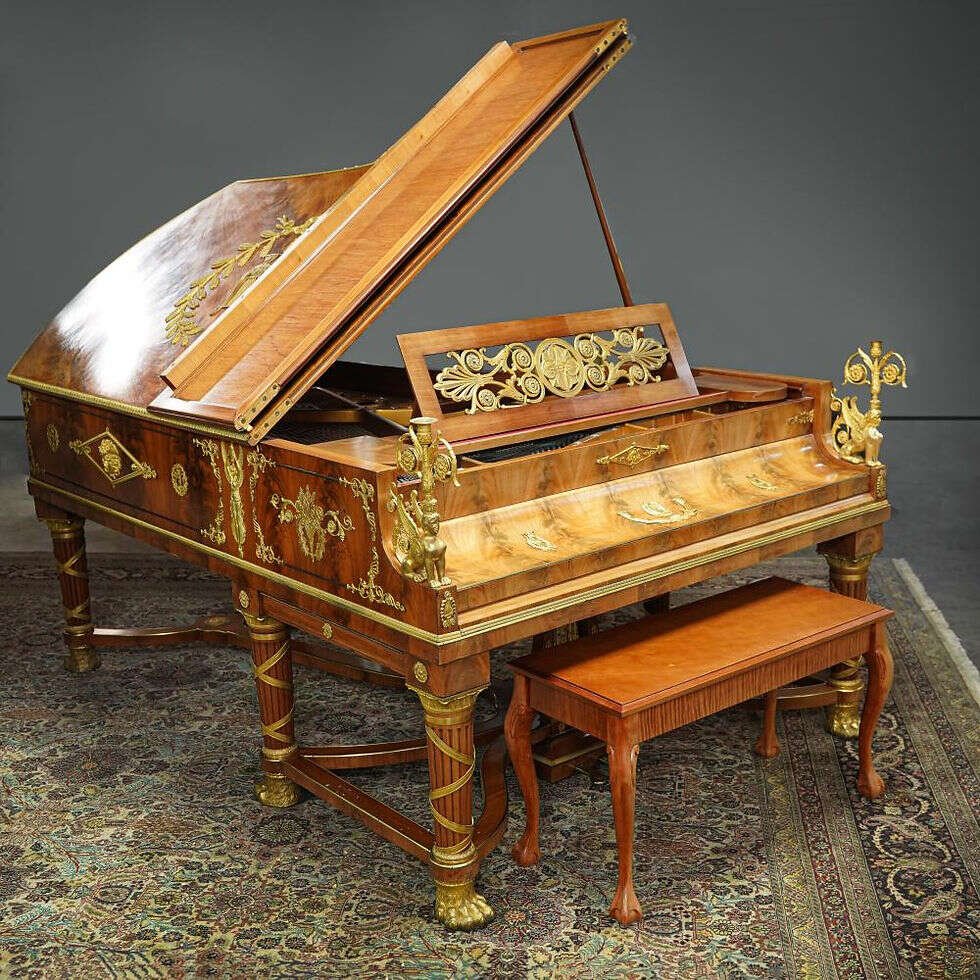
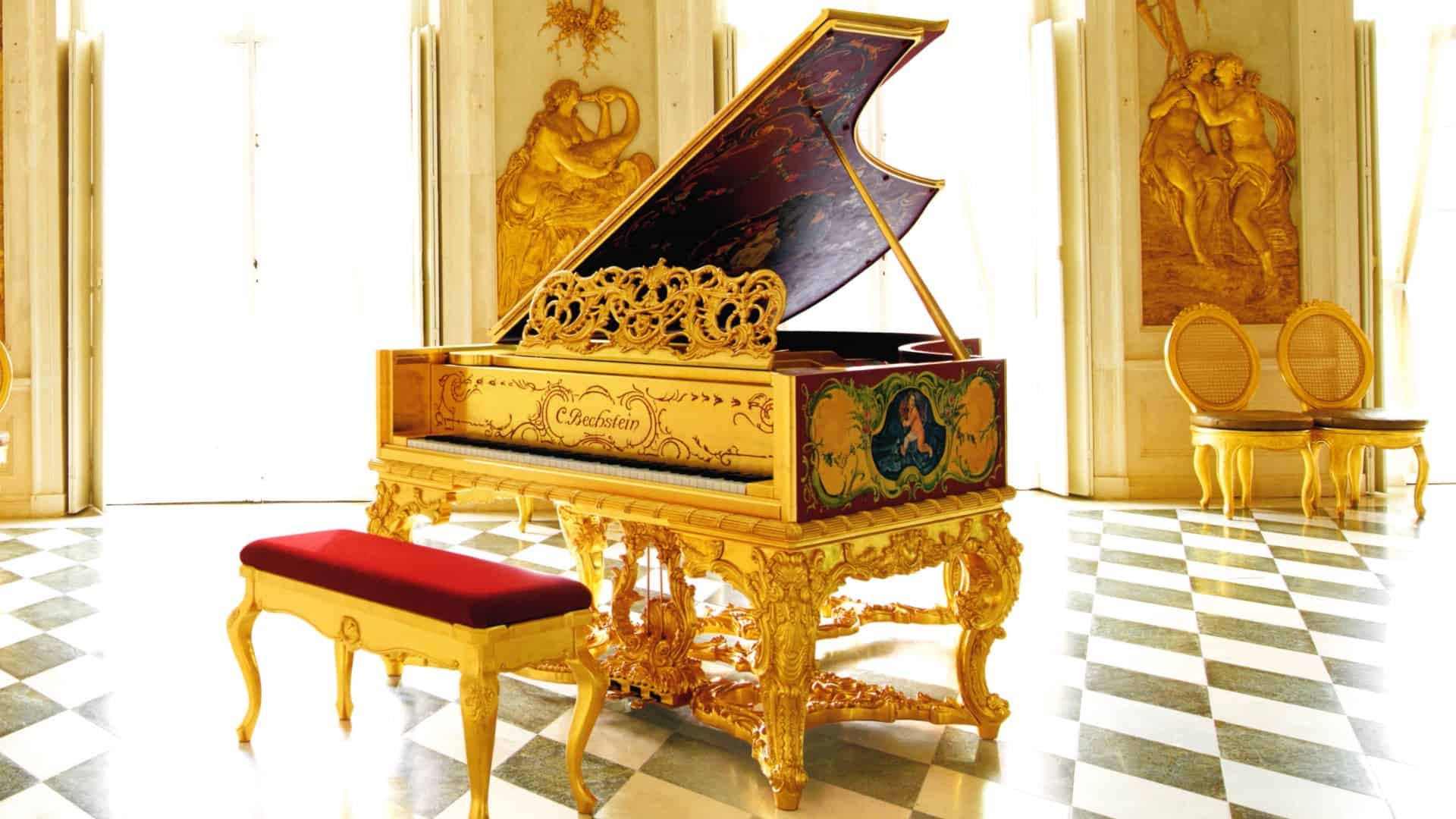
Gold and custom-made pianos
Luxury piano makers and specialist designers have produced instruments with:
- Gold-plated hardware
- Decorative stone or crystal details
- Custom artwork
- Rare woods
- Hand-painted cases
- Special lighting systems
- Unusual body shapes
- Bespoke interior and exterior finishes
These instruments can cost hundreds of thousands or more than $1 million. However, public evidence is often limited. A quoted asking price should not be presented as a confirmed sale.
Why Are Some Pianos Worth Millions?
The most expensive pianos are usually valuable for reasons beyond their musical function. A concert piano must sound and perform well, but a collector piano may also work as art, memorabilia, or a historic object.
1. Provenance
Provenance means the documented history of ownership and use. A piano owned by a major musician, composer, film star, or public figure may be worth far more than the same model with no known history.
Strong provenance can include:
- Original purchase records
- Receipts and photographs
- Letters or certificates
- A clear chain of ownership
- Documentation from a museum or estate
- Evidence that the musician used the piano to create important work
A famous name alone is not enough. Buyers and auction houses must still verify the connection.
2. Rarity
A standard production piano may have thousands of similar examples. A one-off concert piano may have only one.
Rarity becomes more valuable when the instrument also has good condition, reliable records, and strong demand. A rare piano with major damage or uncertain history may be worth much less than expected.


3. Design and materials
Some pianos are built as works of art. Their cases may use rare materials or complex decoration. The cost can include:
- Custom woodworking
- Hand-applied finishes
- Metalwork
- Inlay
- Engraving
- Acrylic or glass fabrication
- Artist commissions
- Specialized engineering
These features can raise production costs, but they do not automatically improve the instrument’s sound.
4. Cultural importance
A piano used at a major event or connected to a major cultural moment can gain value. The Heintzman Crystal Piano benefited from its Olympic appearance. Lennon’s Steinway benefited from its connection to “Imagine.”
This type of value is difficult to calculate. It depends on how strongly buyers connect the instrument with the event or artist.
5. Condition and playability
A valuable piano still needs careful inspection. Collectors may accept wear if it proves authenticity, but severe damage can reduce value.
Important condition factors include:
- Soundboard cracks
- Bridge damage
- String condition
- Pinblock stability
- Action wear
- Case restoration
- Water or fire damage
- Original parts
- Quality of past repairs
A piano can be historically important and still require a costly restoration.

Does the Most Expensive Piano Sound Better?
Not necessarily. A multimillion-dollar piano is not automatically the best-sounding piano for a concert hall, recording studio, or home.
Musical quality depends on many factors:
- The design of the instrument
- The quality of materials
- Regulation and voicing
- Room acoustics
- Climate control
- The pianist’s technique
- Personal tone preference
- Maintenance history
“Voicing” is the process of adjusting the piano’s hammers and related parts to shape its tone. “Regulation” involves adjusting the action so the keys and pedals respond correctly.
A modern concert grand from a respected maker may be a better working instrument than a famous art piano. A collector may want the most historic piano, while a concert pianist may choose the instrument with the best response and tone.
The highest price measures market value, not a universal ranking of sound quality.

How Much Does a Normal High-End Piano Cost?
The price of a high-end piano varies widely by size, maker, materials, location, and customization. In the United States, a new professional grand piano may cost tens of thousands of dollars, while larger concert grands and special-order instruments can cost substantially more.


A simple comparison looks like this:
| Piano category | Typical value pattern |
|---|---|
| Used upright piano | Often hundreds to several thousand dollars |
| New quality upright piano | Often several thousand to tens of thousands |
| Used grand piano | Ranges from several thousand to well over $100,000 |
| New professional grand | Often tens of thousands to over $200,000 |
| Concert grand | Commonly priced in the high five or six figures |
| Custom art piano | May reach hundreds of thousands or more |
| Historic celebrity piano | Can reach millions at auction |
These are broad market ranges, not fixed prices. A piano’s age, location, condition, brand, size, and service history can change its value substantially.
A buyer should also budget for delivery, tuning, climate control, repairs, insurance, and long-term maintenance. The purchase price is only part of the cost of owning a large acoustic piano.

How to Verify a Claim About the Most Expensive Piano
Before accepting a record claim, check five details.
-
Identify the exact piano.
The model name, maker, serial number, and year should be clear. -
Separate asking price from sale price.
A manufacturer’s listed price does not prove that someone paid it. -
Check the sale date and currency.
A price reported in dollars may be a conversion from pounds, euros, yuan, or another currency. -
Look for a primary or near-primary record.
Useful evidence may come from the auction house, the maker, a museum, or a reputable news report quoting the sale. -
Check whether the sale was public.
Private transactions may be real, but they are harder to verify independently.
A strong article or auction record should explain the evidence. It should not simply repeat “the most expensive piano in the world” without naming the sale and its conditions.

Common Mistakes in Comparing Piano Prices
Mistaking a luxury design for a record sale
A piano may be advertised at $1 million without ever selling for that amount. Always distinguish a price tag from a completed transaction.
Comparing historic prices without adjusting context
A sale from 2000 and a sale from 2008 occurred under different currency and market conditions. Exchange rates also change. A direct dollar comparison may not show the full economic difference.
Assuming the most expensive piano is the best for playing
Luxury finishes, fame, and rarity can dominate the price. They do not guarantee the best touch, tone, or reliability.


Ignoring restoration costs
A historic piano may require specialist restoration. Parts, labor, shipping, climate control, and insurance can add a significant amount to the ownership cost.
Treating every online claim as verified
Many websites repeat the same figures without naming the auction, buyer, date, or source. Repetition is not independent proof.

Frequently Asked Questions
What is the most expensive piano in the world?
The Heintzman Crystal Piano is widely reported as the most expensive piano sold at public auction. Its reported 2008 sale price was about $3.22 million.
Who played the Heintzman Crystal Piano?
Pianist Lang Lang played the Heintzman Crystal Piano during the opening ceremony of the 2008 Beijing Olympic Games.
Is the Heintzman Crystal Piano still in use?
Public information about its current ownership and use is limited. The reported buyer was anonymous, so its present location and condition are not fully documented in widely available sources.
What is the most expensive Steinway piano?
The answer depends on whether the comparison uses a public sale, a listed price, or an estimated value. John Lennon’s Steinway Model Z sold for about £1.67 million in 2000, while custom Steinway art pianos have been associated with multimillion-dollar values.
Are crystal pianos good for professional concerts?
They can be playable, but appearance does not determine concert quality. Professional use depends on the piano’s design, condition, voicing, regulation, projection, and the pianist’s preference.
Final Answer
The Heintzman Crystal Piano is the strongest answer to the question “What is the most expensive piano in the world?” It reportedly sold for approximately $3.22 million at a 2008 public auction.
Still, the claim needs careful wording. Private piano sales are often confidential, and some custom instruments have very high asking prices without a published sale record. The most accurate description is that the Heintzman Crystal Piano is widely reported as the most expensive piano sold publicly, while John Lennon’s Steinway and several custom art pianos rank among the other best-known multimillion-dollar instruments.
For any new record claim, verify the exact model, sale date, currency, auction source, and whether the figure represents a completed sale rather than an estimate.

Senior Music Reviewer
Alex Carter is a seasoned music reviewer with over a decade of experience in the world of sound and instruments. Passionate about helping musicians and enthusiasts make informed choices, he brings sharp insights and in-depth knowledge to every review. From classical instruments to modern gear, Alex combines technical expertise with a love for music to deliver content that resonates with readers.
As a Senior Music Reviewer and expert author on Tuneluma.com, Alex is dedicated to sharing honest evaluations, practical advice, and thoughtful commentary to guide readers in their musical journey.