For most beginners in the United States, the best drum set is a complete five-piece acoustic kit with full-size hardware, cymbals, and a 20-inch bass drum. The Pearl Roadshow is a strong starting point for many new players because it is sold as a complete kit and is easier to use than a shell pack.
That said, there is no single best drum set for every U.S. beginner. An electronic drum set may be the better choice for an apartment, shared home, or late-night practice. A junior kit may fit a young child better than a full-size kit. A used drum set can also offer more value than a new entry-level model.
The right choice depends on four things:
- Where you will practice
- Your budget
- Your body size and age
- Whether you need an acoustic or electronic kit

Quick answer: Which beginner drum set should you buy?
Choose a complete acoustic drum set if you want the traditional feel and have a suitable practice space. Choose a mesh-head electronic kit if noise, neighbors, or limited space are major concerns.
| Beginner need | Best type | Example models |
|---|---|---|
| Best general starting point | Complete acoustic kit | Pearl Roadshow, Ludwig Accent Drive |
| Quiet home practice | Electronic kit with mesh heads | Roland TD-07 series, Alesis Nitro Max |
| Better long-term acoustic value | Mid-level shell pack plus hardware | Yamaha Stage Custom Birch, Tama Superstar Classic |
| Young child | Junior acoustic kit | Ludwig Questlove Pocket Kit |
| Lowest total cost | Quality used kit | Used Pearl, Tama, Yamaha, Ludwig, or Gretsch kit |
The most useful rule is simple: buy the best complete kit that fits your room and lets you practice often. A cheaper kit that sits unused is a poor value. A modest kit that you play four times a week can take you much farther.
What should a beginner look for in a drum set?
A beginner drum set should have usable hardware, standard-size drums, replaceable heads, and enough parts to start playing right away. A low price alone does not make a kit a good choice.
Choose a complete kit when possible
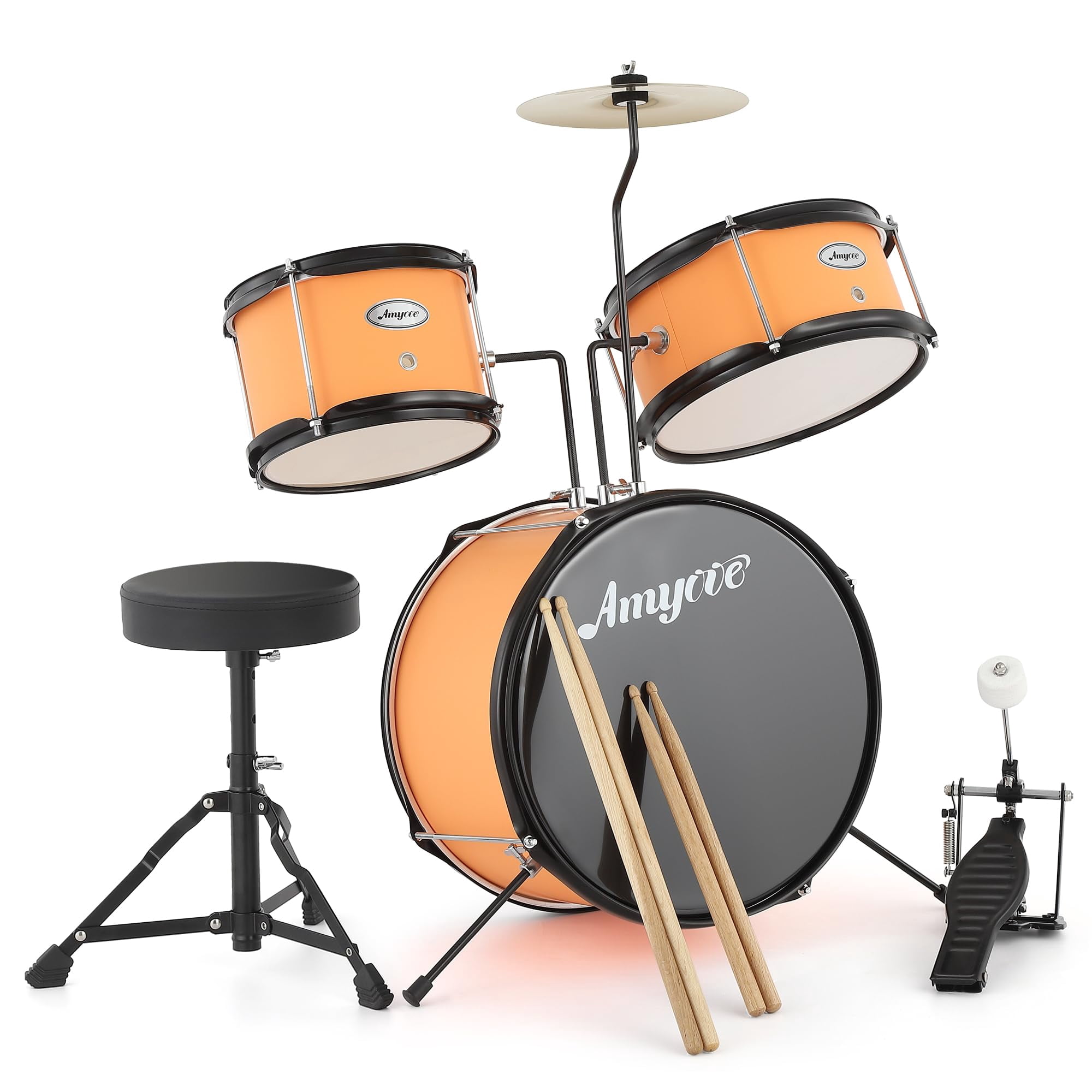
A complete beginner kit usually includes:
- Bass drum
- Bass drum pedal
- Snare drum
- Snare stand
- One or more mounted toms
- Floor tom
- Hi-hat cymbals and stand
- Crash or ride cymbal
- Cymbal stands
- Drum throne
- Drumsticks
Check the box contents before buying. Some products called “drum sets” are only shell packs. A shell pack may include the drums but leave out the cymbals, stands, pedal, and throne. Those extra parts can add a large amount to the final cost.
Look for standard drum sizes
A common adult beginner setup has:
- 20-inch bass drum
- 14-inch snare drum
- 10-inch and 12-inch rack toms
- 14-inch or 16-inch floor tom
These sizes are common in the United States and are easy to upgrade. Replacement heads, stands, cases, and cymbals are widely available.
A 22-inch bass drum can also work well for an adult. A 20-inch drum is often easier to control and fits better in a small room. A 16-inch or 18-inch bass drum may suit a smaller player.
Check the hardware, not only the drums
Hardware supports the kit and affects how stable it feels. Look for:
- Double-braced stands, if available
- Adjustable throne height
- A bass drum pedal with smooth movement
- Secure wing nuts and clamps
- Rubber feet that grip the floor
- A hi-hat stand that does not wobble
Very light hardware can work for gentle practice, but it may move during stronger playing. Stable hardware also helps a new player build good habits.
Consider the drum shells
Entry-level acoustic kits often use poplar, basswood, or similar woods. These materials can produce a useful beginner sound. Birch and maple shells are common in more advanced kits, but shell wood alone does not determine whether a drum set is good.
A well-built entry-level kit with fresh heads and careful tuning can sound better than a more expensive kit that is poorly tuned.
Do not overlook the throne
A drum throne is not a minor accessory. It supports your hips and back while your feet operate the pedals. A throne that is too low, too high, or unstable can make playing uncomfortable.
Sit so your thighs slope slightly downward toward your knees. Keep your back relaxed. If you feel pain, stop and adjust your position rather than trying to play through it.

Best acoustic drum sets for beginners
The following models are useful examples rather than universal winners. Versions, included parts, colors, and bundles can change. Confirm the exact package from the manufacturer or retailer before buying.
Pearl Roadshow: best complete acoustic kit for many beginners
The Pearl Roadshow is a practical first kit because it is commonly sold with the main drums, hardware, cymbals, throne, and pedal. That reduces the risk of buying a shell pack and then discovering that several essential parts are missing.
It is a good fit for:
- Adult beginners
- Teenagers
- Players who want a ready-to-play package
- Buyers who prefer a well-known replacement-parts ecosystem
Its limits are typical of entry-level kits. The included cymbals and heads are made to keep the package affordable, so many players eventually replace them. The kit also needs tuning and setup before it reaches its best sound.
Best use: A first acoustic kit when you want one box with most of what you need.
Ludwig Accent Drive: a simple entry-level alternative
The Ludwig Accent Drive is another complete beginner-oriented acoustic set. Ludwig is a familiar U.S. drum brand, and the kit is designed for players who want a traditional five-piece layout without assembling a custom package.
It may suit a beginner who:
- Wants a full acoustic setup
- Likes Ludwig’s product support and brand history
- Needs common drum sizes and basic hardware
As with most bundled kits, inspect the included cymbals and stands. Packages may differ by retailer and by product generation.
Best use: A straightforward starter kit from an established drum maker.
Yamaha Stage Custom Birch: best upgrade path, but not always a complete kit
The Yamaha Stage Custom Birch is often a better long-term acoustic investment than a very low-cost starter kit. Yamaha documents its birch shells, sturdy construction, and standard configuration. The line is widely used by students, performers, and working drummers.
However, many Stage Custom packages are shell packs. You may need to buy:
- Cymbals
- Cymbal stands
- Hi-hat stand
- Snare stand
- Bass drum pedal
- Throne
That makes the total cost higher than the drum-shell price suggests.
Best use: A beginner who has a larger budget, wants to keep the kit for years, or is willing to select hardware and cymbals separately.
Tama Imperialstar: a complete kit with room to grow
The Tama Imperialstar is a full-size acoustic line that usually includes a broad hardware package, depending on the exact configuration. It offers a traditional five-piece arrangement and a bass drum pedal designed for regular practice.
It may be a strong fit for:
- Older teens and adults
- Players who want full-size drums
- Beginners who plan to join a band or school music program
As always, verify the exact cymbal and hardware bundle. Retail listings can use similar names for different packages.
Best use: A full-size starter kit for a serious beginner who wants more than the lowest-cost option.
Ludwig Questlove Pocket Kit: best for young children
A young child should not have to stretch to reach the pedals, snare, or cymbals. The Ludwig Questlove Pocket Kit is a compact junior set aimed at children rather than full-size adult players.
A smaller kit can help a child:
- Reach the playing surfaces with less strain
- Learn basic coordination
- Build confidence
- Practice without sitting behind oversized drums
It will not offer the same projection or playing area as an adult kit. It is also not the best long-term choice for a tall teenager or adult.
Best use: A young beginner who needs smaller drums and shorter hardware.

Best electronic drum sets for beginners
Electronic drums are often the best beginner option for U.S. homes where acoustic volume is a problem. They still make sound through headphones or a monitor, but the impact of the kick pedal and the movement of the sticks can still travel through floors and walls.
Alesis Nitro Max: an affordable electronic starting point
The Alesis Nitro Max is an entry-level electronic kit with practice features and a compact frame. It may appeal to beginners who want:
- Headphone practice
- Built-in drum sounds
- A smaller footprint
- Guided practice tools and play-along functions
Electronic features can change between product versions. Check whether the exact model includes the pads, pedal, rack, power supply, and connections you need.
Its main limitation is feel. Low-cost electronic pads may not respond like acoustic drums, especially on the kick and cymbals. They can still teach timing, coordination, and basic technique.
Roland TD-07 series: a stronger electronic practice platform
The Roland TD-07 series is designed for players who want a more refined electronic setup. Depending on the model, it may offer mesh heads, detailed sound editing, Bluetooth features, and a more natural playing response than basic rubber-pad kits.
It may be worth considering when:
- You practice often with headphones
- You want more realistic pad response
- You plan to keep the kit for several years
- You value better control over sounds and practice tools
The exact pad layout differs across TD-07 models. Some versions include a larger snare or additional features. Compare the full specifications rather than choosing only by the series name.
Electronic drums are quieter, not silent
Headphones reduce airborne sound, but they do not remove mechanical noise. A kick tower can send low-frequency vibration into a floor. Rubber pads can also make sharp tapping sounds.
To reduce disturbance:
- Place the kit on a thick drum mat
- Add an isolation platform if floor vibration is severe
- Avoid direct contact with shared walls
- Use a soft beater if the manufacturer allows it
- Keep headphone volume at a safe level
- Ask neighbors or household members when noise is most noticeable
For hearing safety, the National Institute for Occupational Safety and Health recommends limiting exposure to loud sound. The CDC’s hearing protection guidance explains why loud sound over time can cause hearing damage. Use hearing protection during loud acoustic practice, and keep electronic headphone levels moderate.

Acoustic vs. electronic drums: which is better for you?
The best format depends on the problem you need the kit to solve.
| Factor | Acoustic drums | Electronic drums |
|---|---|---|
| Natural playing feel | Strong | Varies by model |
| Practice volume | Loud | Lower, but not silent |
| Headphone use | No, without extra equipment | Yes |
| Setup space | Often larger | Often more compact |
| Maintenance | Tuning and head changes | Electronics and pad wear |
| Band rehearsal | Usually easy to use | May need amplification |
| Sound variety | One acoustic voice | Many built-in sounds |
| Beginner cost | Complete kits can be affordable | Good mesh kits can cost more |
Choose acoustic drums when sound, feel, and live playing matter most. Choose electronic drums when practice access matters most.
A beginner who can practice an electronic kit every day may progress faster than a beginner with an acoustic kit who can play only once a week. Practice time is often more important than the category printed on the box.

How much should a beginner spend?
A realistic budget includes more than the drum shells. Use the total setup cost when comparing options.
Lower-cost acoustic setup
A low-cost new acoustic package may include:
- Complete drum set
- Basic hardware
- Entry-level cymbals
- Throne and pedal
You may still need drumsticks, a rug or mat, a metronome, and replacement heads later. The included cymbals may sound harsh, but they can work while you learn.
Mid-range acoustic setup
A mid-range setup may use better shells and hardware, but it may not include cymbals or stands. Add those costs before comparing it with a complete beginner kit.
A shell pack priced at $700 is not necessarily cheaper than a complete kit priced at $900 if the shell pack needs $300 or more in missing parts.
Electronic setup
An electronic kit may also require:
- Headphones
- A drum throne
- A drum mat
- A monitor or amplifier for room listening
- A replacement kick beater, depending on the system
Do not assume that every electronic kit includes a throne or headphones.
Used drums can offer better value
The used U.S. market can be a smart place to shop. Established brands often hold up well when they have been stored indoors and treated properly.
Before buying used drums, check:
- Cracks around bearing edges
- Bent or missing tension rods
- Rust that prevents adjustment
- Warped hoops
- Damaged cymbal edges
- Loose hardware joints
- A bass drum pedal with excessive play
- Electronic pads that fail to trigger
- Missing power supplies or proprietary cables
A small amount of dirt is usually less serious than a cracked shell, damaged bearing edge, or missing electronic module. If you cannot inspect the kit in person, ask for clear photos and a demonstration video.

How to set up a beginner drum set correctly
A correct setup helps you play with less strain and makes the kit easier to control.
- Place the bass drum first. Aim the front head toward the room. Extend the spurs so the drum does not slide.
- Set the throne height. Keep your hips slightly higher than your knees or level with them.
- Position the snare. Place it between your knees. Keep it high enough that your thighs do not touch the rim.
- Set the hi-hat. Put it close to the snare so your left hand does not reach far.
- Adjust the toms. Angle them only as much as needed. A steep angle can force awkward wrist movement.
- Place the cymbals. Keep them within reach without raising your shoulders.
- Check the pedals. Your feet should rest naturally, with no need to twist your ankles.
- Tighten every stand. Make sure the kit stays in place during normal playing.
Use a drum rug or mat on hard floors. It helps keep the bass drum and pedal from moving. It can also protect the floor from scratches.
Tune the drums before judging the sound
New kits often sound poor because the heads are not tuned. Tune each tension rod in small, even steps. Tap near the edge of the head and aim for a similar pitch around the drum.
The batter head is the head you strike. The resonant head faces away from you. Both affect the drum’s tone and response.
If tuning feels confusing, ask a teacher or drum shop for help. One short lesson can prevent weeks of frustration.
Common beginner buying mistakes
Buying the cheapest kit without checking the hardware
A very low price may reflect thin stands, weak pedals, poor drumheads, or missing components. Compare the full package, not just the number of drums.
Buying a shell pack by accident
A shell pack may look like a complete drum set in a photo. Read the included-parts list. Confirm whether cymbals, stands, pedal, and throne are included.
Choosing cymbals by size alone
A larger cymbal is not automatically better. Entry-level cymbals can be loud and harsh regardless of diameter. If possible, listen to the exact cymbal line before buying.
Using a chair instead of a drum throne
A chair may be too low or too soft. It can restrict hip movement and make balance harder. A stable throne is part of the playing system.
Buying a full-size kit for a small child
A child who cannot reach the pedals or cymbals may develop poor posture. Measure the player and consider a junior kit.
Ignoring room acoustics
Acoustic drums can be extremely loud in a small room. Rugs, curtains, and soft furnishings can reduce reflections, but they do not make drums quiet. Never rely on household materials as hearing protection.
Assuming electronic drums need no maintenance
Electronic kits still need care. Check cables, tighten rack joints, clean pads as directed, and keep liquids away from the module. Follow the manufacturer’s manual for firmware, power, and replacement parts.

A simple decision guide
Use this order when choosing your first kit:
- Choose the practice format. Pick acoustic if you can manage the volume. Pick electronic if headphones and lower room volume are essential.
- Choose the player size. Full-size kits suit most adults and older teens. Junior kits fit smaller children.
- Set the complete budget. Include the throne, sticks, headphones, rug, and missing hardware.
- Prioritize a complete package. A ready-to-play kit is often easier for a first purchase.
- Check replacement parts. Common sizes and major brands make future repairs easier.
- Buy from a seller with a clear return policy. This matters if a drum arrives damaged or a pad does not trigger correctly.
- Plan for instruction. A teacher, school program, or structured online course can help you avoid poor technique.
For many U.S. adults, this leads to a clear choice: start with a Pearl Roadshow or similar complete acoustic kit if noise is manageable. Choose a Roland TD-07 or Alesis Nitro Max electronic kit if quiet practice matters more than acoustic feel. Consider a Yamaha Stage Custom Birch or Tama Imperialstar when you can spend more and want a kit that can remain useful as your playing improves.

Frequently asked questions
Is a five-piece drum set enough for a beginner?
Yes. A five-piece kit usually includes a bass drum, snare, two rack toms, and a floor tom. With hi-hats and one crash or ride cymbal, it covers the setup used for many lessons, songs, and beginner band parts.
Should a beginner buy acoustic or electronic drums?
Buy acoustic drums if you have a suitable room and want the most direct traditional playing experience. Buy electronic drums if practice volume, headphones, or limited space is the main concern. Neither choice guarantees silent practice or faster progress.
Are cheap beginner drum sets worth buying?
Some are. A low-cost kit can be useful if it has stable hardware, standard sizes, and all required parts. Avoid kits with missing hardware, nonstandard components, weak pedals, or shells that cannot hold tension.
What size drum set is best for an adult beginner?
A 20-inch or 22-inch bass drum with a 14-inch snare and standard-size toms works well for many adults. Your room and body size matter more than a fixed rule.
Do I need a drum teacher?
You can learn basic patterns without a teacher, but instruction can help with posture, grip, timing, tuning, and practice structure. Even a few lessons can correct habits that are difficult to change later.
How often should a beginner replace drumheads?
There is no fixed schedule. Replace a head when it is dented, cracked, stretched unevenly, or no longer holds a stable tone. A heavily used snare head may need replacement sooner than a tom head.
Final recommendation
The best drum set for most beginners is a complete, full-size acoustic kit from a reliable brand, such as the Pearl Roadshow, Ludwig Accent Drive, or a comparable package. It should include the hardware, pedal, cymbals, and throne needed to play immediately.
If your home cannot handle acoustic volume, choose an electronic kit instead. If the player is a young child, choose a junior kit. Above all, match the drum set to the space and the player—not just the price or brand name.
Before you buy, write down the full contents of the package, measure your practice area, and confirm that the player can reach every part of the kit comfortably. That simple check prevents most beginner buying mistakes.
Sources for product and safety details
- Pearl Drums
- Ludwig Drums
- Yamaha Drums
- Tama Drums
- Roland V-Drums
- Alesis Drums
- CDC/NIOSH: Noise and Hearing Loss

Senior Music Reviewer
Alex Carter is a seasoned music reviewer with over a decade of experience in the world of sound and instruments. Passionate about helping musicians and enthusiasts make informed choices, he brings sharp insights and in-depth knowledge to every review. From classical instruments to modern gear, Alex combines technical expertise with a love for music to deliver content that resonates with readers.
As a Senior Music Reviewer and expert author on Tuneluma.com, Alex is dedicated to sharing honest evaluations, practical advice, and thoughtful commentary to guide readers in their musical journey.