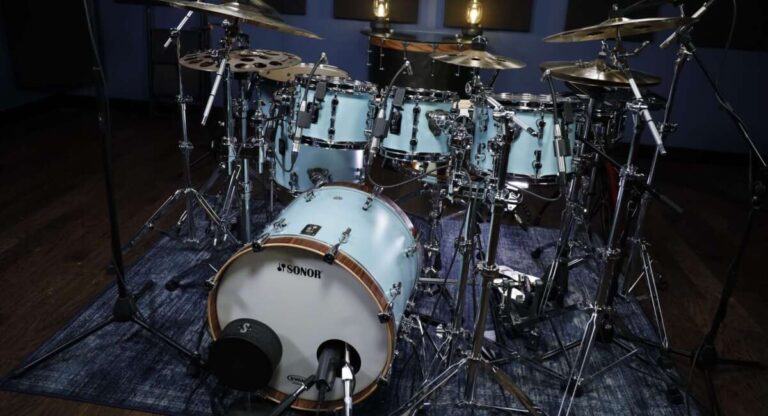
A good starter drum set is complete, stable, easy to tune, and large enough to support real progress. For most new drummers in the United States, that means a five-piece acoustic kit with solid hardware, two cymbals, a drum throne, and a bass drum pedal. A compact electronic kit may be better for an apartment, shared home, or quiet practice space.
The best choice depends on four things: your budget, room, noise limits, and long-term goals. A very cheap kit may look like a bargain, but weak hardware and poor drum heads can make learning harder. A good beginner kit should feel like a clear path forward, not a toy you must replace in a few months.

Key Takeaways
- A five-piece acoustic drum set is the standard starting point for many beginners.
- A complete kit should include drums, hardware, cymbals, a throne, and a bass drum pedal.
- For apartments, an electronic drum set with headphones may be the more useful choice.
- Strong stands and a stable throne matter almost as much as the drums.
- Used drums can offer better value, but inspect the shells, rims, pedals, and hardware first.
- Budget for new heads, a drum key, sticks, and hearing protection.
- The right starter set should fit the player, the room, and the way they plan to practice.
What Makes a Drum Set Good for a Beginner?
A good beginner drum set makes basic skills easy to practice. It should stay in place, hold its settings, and produce a sound that encourages regular playing.


Look for these core traits:
| Feature | Why it matters |
|---|---|
| Stable hardware | Stands should not wobble during normal playing. |
| Good bass drum pedal | The pedal controls timing and foot technique. |
| Sound drum shells | Solid shells give the kit room to grow with the player. |
| Usable cymbals | Thin, harsh cymbals can make practice unpleasant. |
| Adjustable throne | The player needs safe and balanced posture. |
| Replaceable heads | New heads can improve the sound without replacing the kit. |
| Standard sizes | Common sizes make parts and upgrades easier to find. |
A starter set does not need rare wood, premium finishes, or a large number of drums. It needs a useful layout and dependable parts.
The phrase “drum set” often means only the drums and some hardware. The phrase “complete drum set” may include more parts, but sellers do not always include the same items. Read the package list before buying.
A basic acoustic package may include:
- Bass drum
- Bass drum pedal
- Snare drum
- One or more rack toms
- One floor tom
- Hi-hat cymbals and stand
- Crash or ride cymbal
- Cymbal stands
- Snare stand
- Drum throne
- Drumsticks
Some kits include only the shell pack. A shell pack usually contains the drums but not the cymbals, stands, throne, or pedal. This can make a low price look better than it is.

Acoustic or Electronic: Which Starter Drum Set Is Better?
An acoustic set is better for players who want the feel, sound, and response of traditional drums. An electronic set is better when volume control matters most.
Choose an acoustic drum set when:
- You have a room where normal drum volume is allowed.
- You want to play with other musicians.
- You want to learn traditional drum and cymbal response.
- You can use rugs, pads, or other methods to reduce movement and noise.
- You do not need to practice late at night.
Acoustic drums offer natural rebound and a full sound. They also teach the player to control volume with touch. The trade-off is noise. Even careful playing can travel through floors, walls, and ceilings.
Choose an electronic drum set when:
- You live in an apartment or condominium.
- You share walls with neighbors.
- You need headphone practice.
- You want built-in metronomes, sounds, or practice tracks.
- You have limited floor space.
Electronic drums are quieter, but they are not silent. The kick pad and pedal can send impact noise through a floor. A thick isolation mat can help, but it may not remove all vibration.
Electronic kits also vary in feel. Some use rubber pads, while others use mesh heads. Mesh heads often feel more like acoustic heads, but the playing experience still depends on the model and module.
| Need | Better starting point |
|---|---|
| Loud, natural sound | Acoustic set |
| Apartment practice | Electronic set |
| Playing with a school or band | Acoustic set |
| Headphone use | Electronic set |
| Lowest purchase cost | Often used acoustic set |
| Built-in practice tools | Electronic set |
| Traditional cymbal feel | Acoustic set |
Neither type is automatically best. The room often decides before the player does.


Use hearing protection around loud acoustic drums. The National Institute for Occupational Safety and Health and the Occupational Safety and Health Administration both treat loud sound exposure as a hearing risk. The safe choice is to use suitable hearing protection and keep practice time reasonable.

What Size Drum Set Should a Beginner Buy?
A standard five-piece kit works well for many teens and adults. Younger players may need a smaller kit so they can reach the pedals and cymbals without poor posture.
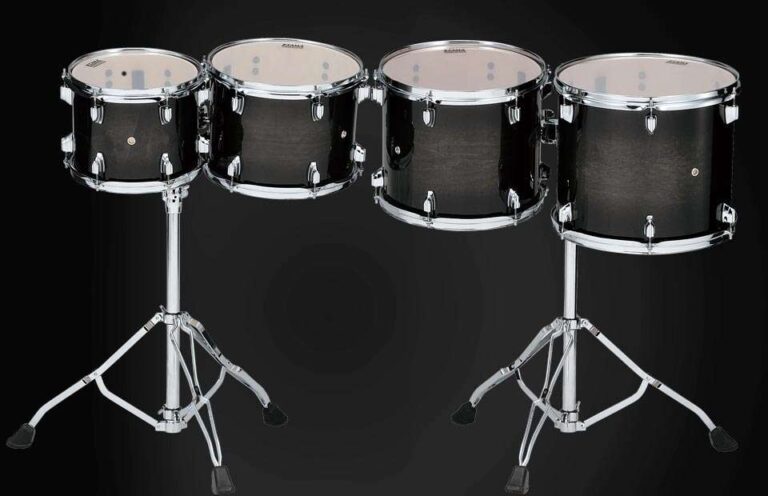
A common five-piece layout has:
- 22-inch bass drum
- 14-inch snare drum
- 12-inch and 13-inch rack toms
- 16-inch floor tom
Sizes vary by brand. Many modern beginner kits use a 20-inch bass drum with smaller toms. That setup can feel easier to manage and may fit smaller rooms.
Common size choices
| Player or room | Useful starting size |
|---|---|
| Young child | Junior kit with smaller drums |
| Older child or smaller teen | Compact kit with a 20-inch bass drum |
| Teen or adult | Standard five-piece kit |
| Small practice room | Compact or shallow-shell kit |
| Tall adult | Standard kit with a properly adjusted throne |
Do not choose only by the player’s height. Check the full playing position. The drummer should sit high enough that the hips are slightly above the knees. Both feet should reach the pedals without stretching. The snare should sit near the player’s thighs, with enough room for natural arm movement.
A very small kit can work well for a child, but it may become cramped as the player grows. A full-size kit may last longer, but it can be hard for a young player to control.

How Much Should You Spend on a Starter Drum Set?
A sensible beginner budget includes more than the drums. Plan for the kit, accessories, setup items, and possible replacement heads.
A useful budget plan looks like this:
| Budget level | What to expect |
|---|---|
| Very low-cost new kit | Basic parts, weaker cymbals, limited hardware |
| Mid-range beginner kit | Better hardware and a more useful long-term setup |
| Used professional or intermediate kit | Strong value if the condition is good |
| Entry-level electronic kit | Quiet practice, but possible limits in pad feel and module features |
Prices change by brand, package, retailer, and season. For that reason, compare the complete cost, not just the advertised kit price.
Add money for:
- Drum throne
- Bass drum pedal, if not included
- Cymbals, if not included
- Drumsticks
- Drum key
- Tuning tool or tuner
- Practice pad
- Rug or isolation mat
- Replacement drum heads
- Hearing protection
A low-cost kit with poor cymbals and a weak throne can cost more after upgrades. A used kit from a respected series may provide better value, but only if the drums and hardware are in good condition.
A simple comparison can help. Suppose Kit A costs $500 but needs a throne, pedal, and cymbals. Suppose Kit B costs $700 and includes all three. Kit B may be the lower-cost choice after the full setup is counted.
Do not spend the entire budget on drum shells. A stable throne and reliable pedal affect technique every minute you play.


Which Starter Drum Set Brands Are Worth Considering?
Several established brands make beginner and intermediate kits. The brand alone does not prove that a set is good, so compare the exact package and condition.
Common lines that buyers may encounter in the United States include:
- Ludwig Accent
- Pearl Roadshow
- Tama Imperialstar
- Yamaha Stage Custom
- Gretsch Energy
- Mapex Mars or Tornado series
- PDP by DW kits
- Ludwig Breakbeats for compact setups
- Roland and Yamaha electronic kits
- Alesis electronic kits
These lines do not all serve the same buyer. Some are basic complete kits. Others are more advanced shell packs that need separate cymbals and hardware.
For a first acoustic kit, focus on:
- Whether the package includes cymbals and hardware.
- The condition of the drum heads.
- The quality of the bass drum pedal.
- The strength of the stands.
- The availability of replacement parts.
- Whether the drum sizes fit the player.
For a first electronic kit, check:
- Whether the module has the sounds and practice tools you need.
- Whether the pads have the right connection type.
- Whether the kit includes a kick tower or only a small trigger pad.
- Whether a separate pedal is required.
- Whether the rack folds or fits the practice space.
- Whether the warranty applies in the United States.
A product name is a starting point, not a final answer. Package contents can change between sellers and regions.
Is a Used Drum Set a Good Choice for a Beginner?
A used drum set can be an excellent choice because drums often hold their value better than low-cost new kits. A used set also lets a beginner buy better shells and hardware for the same budget.
Inspect the kit before paying.
Check the shells
Look for cracks, splits, deep dents, and loose seams. Small scratches are usually cosmetic. A cracked shell can be costly to repair and may affect the drum’s sound.
Check the bearing edges
The bearing edge is the part of the shell where the drum head sits. It should look smooth and even. Place the drum head on the shell without tightening it. It should sit flat.
Check the hoops and lugs
Make sure the metal hoops are not badly bent. Turn each tension rod. It should move without binding. Check that the lugs are firmly attached to the shell.
Check the hardware
Open and close each stand. Look for missing wing nuts, stripped threads, rust, and loose joints. A stand that slowly collapses during play will be frustrating and unsafe.
Check the pedals
The bass drum pedal should move smoothly. The chain, strap, spring, footboard, and beater should all work. A damaged pedal may need replacement.
Check the cymbals
Small surface marks may be normal. Avoid cymbals with cracks that reach the edge, deep keyhole wear, or large bends.


Ask the seller for the exact list of included parts. Count every stand, pedal, cymbal, and drum before taking the kit home.
What Accessories Does a Beginner Drummer Need?
A few small items make a major difference in comfort and progress.
Drumsticks
Start with a common size such as 5A for general practice. Smaller hands may prefer a lighter stick. The right choice should feel balanced, not heavy.
Drum throne
A proper drum throne supports the hips and allows free movement. Avoid using a chair that is too low or unstable.
Drum key
A drum key adjusts tension rods and helps with basic setup. Keep one in the drum bag.
Practice pad
A practice pad supports quiet work on timing, grip, rudiments, and control. It cannot replace a full kit, but it makes practice easier in shared homes.
Rug or isolation mat
An acoustic kit can slide on a smooth floor. A rug helps keep the bass drum and hi-hat in place. For electronic drums, an isolation mat may reduce impact noise.
Metronome
A metronome builds steady time. A phone app can work, but a dedicated metronome may be easier to control during practice.
Hearing protection
Use musician’s earplugs or other suitable hearing protection around loud drums. Foam earplugs may reduce sound but can also change the balance of what you hear. Choose protection that lets you hear safely and clearly.
How Should a Beginner Set Up a Drum Set?
Set up the kit so the player can reach every part without twisting or stretching.
- Place the bass drum in front of the throne.
- Attach the bass drum pedal.
- Set the throne so the hips sit slightly above the knees.
- Place the snare between the knees.
- Position the hi-hat pedal beside the bass drum pedal.
- Set the rack toms low enough for relaxed strokes.
- Place the floor tom beside the dominant hand.
- Set the cymbals within reach, but not so low that the sticks hit the rims.
- Tighten all stands and pedals.
- Play slowly and adjust any part that causes strain.
Keep the elbows relaxed. The sticks should travel toward the drums instead of forcing the shoulders upward.
The kit is set up well when the drummer can move from snare to toms and cymbals without leaning far forward. If the player keeps hitting rims, moving the drum slightly may solve the issue before changing technique.
Common Starter Drum Set Mistakes
The most common mistake is buying by piece count. More drums do not make a better beginner kit.
Avoid these errors:
- Buying a shell pack without noticing that cymbals are not included.
- Choosing a kit only because it has a bright finish.
- Using a cheap chair instead of a stable throne.
- Ignoring the bass drum pedal.
- Buying very thin or cracked used cymbals.
- Placing cymbals too high.
- Skipping hearing protection.
- Assuming electronic drums make no noise.
- Buying a junior kit for an adult.
- Buying a full-size kit that a child cannot reach.
- Spending the whole budget on the shell pack.
- Failing to check whether parts can be replaced.
Another mistake is tuning every drum too tightly. Drum heads need even tension, but excessive tension can damage parts and make the drum sound thin. Beginners can learn basic tuning from the manufacturer’s instructions or a qualified drum teacher.


If a drum sounds bad, do not assume the shell is defective. A worn head, uneven tension, loose hardware, or poor playing position may be the cause.
A Simple Starter Drum Set Buying Checklist
Before you buy, answer these questions:
Room and noise
- Can the room handle acoustic drum volume?
- Are there neighbors below, above, or beside you?
- Do you need to practice with headphones?
- Is there enough space for the full setup?
Player
- Can the drummer reach the pedals?
- Is the throne stable and adjustable?
- Do the drum sizes fit the player’s body?
- Will the player likely outgrow a junior kit soon?
Package
- Are cymbals included?
- Is the bass drum pedal included?
- Is the throne included?
- Are all stands included?
- Are the drum heads in usable condition?
Quality
- Do the shells have cracks?
- Do the hoops sit evenly?
- Do all tension rods turn?
- Do the pedals and stands work?
- Are the cymbals free from major cracks?
Future use
- Can you replace the heads and hardware?
- Can you add a ride cymbal later?
- Can you resell the kit if the player changes direction?
- Will the kit work for lessons, school band, or playing with others?
If the answer is yes across these groups, the set is likely a sound starting point.
Frequently Asked Questions
Is a five-piece drum set enough for a beginner?
Yes. A five-piece kit gives a beginner the main parts used in many lessons and songs: bass drum, snare, two toms, and a floor tom. You can add cymbals or percussion later.
Are cheap drum sets bad?
Not always. A low-cost kit can work if the hardware is stable and the drums are in good condition. The cheapest kits often have weak pedals, poor cymbals, and heads that need early replacement.
Should a beginner buy acoustic or electronic drums?
Choose acoustic drums when natural sound and traditional feel matter most. Choose electronic drums when volume, headphones, and practice features matter more.
What drum set is best for a child?
A child needs a kit that allows safe reach to the pedals and cymbals. A junior kit may fit a young child, while a compact full-size kit may last longer for an older child. Adjustability matters more than the brand name.
Can a beginner learn on a used drum set?
Yes. Used drums can offer strong value. Inspect the shells, bearing edges, hoops, lugs, pedals, stands, and cymbals before buying.
Do drum sets come with sticks?
Some complete packages include sticks, but many do not. Treat sticks as a separate purchase unless the listing clearly says they are included.
Conclusion: The Best Starter Drum Set Is the One You Will Practice
For many beginners in the United States, a complete five-piece acoustic kit is the best first drum set when space and noise allow it. A reliable throne, pedal, stands, and cymbals matter as much as the drums themselves.
For an apartment or shared home, an electronic kit with headphones may be the wiser choice. For a child, choose a setup that fits now but does not become cramped too soon. For a tight budget, inspect used kits from established brands and count the complete cost.
The next step is simple: measure the practice space, set a total budget, decide between acoustic and electronic, and compare complete packages rather than drum shells alone.

Senior Music Reviewer
Alex Carter is a seasoned music reviewer with over a decade of experience in the world of sound and instruments. Passionate about helping musicians and enthusiasts make informed choices, he brings sharp insights and in-depth knowledge to every review. From classical instruments to modern gear, Alex combines technical expertise with a love for music to deliver content that resonates with readers.
As a Senior Music Reviewer and expert author on Tuneluma.com, Alex is dedicated to sharing honest evaluations, practical advice, and thoughtful commentary to guide readers in their musical journey.