There is no single total, but pianists commonly study 12 major, 36 minor, and many other named scales.
The answer to how many piano scales are there depends on what you count as a scale. Music theory includes major and minor scales, church modes, pentatonic patterns, blues scales, chromatic scales, whole-tone scales, and more. This guide explains the main groups, shows how the numbers work, and helps you choose which piano scales to learn first.
How many piano scales are there?
There is no final, universal number of piano scales. The piano has 12 different pitch classes in an octave, but those notes can be arranged into many scale patterns.
If you count only the most common Western scales, you get these basic numbers:
• 12 major scales
• 12 natural minor scales
• 12 harmonic minor scales
• 12 melodic minor scales
• 12 chromatic scales, one from each starting note
• 7 church modes in every key
• Several pentatonic, blues, whole-tone, and diminished scale forms
This means the answer to how many piano scales are there can be 12, 24, 48, or hundreds, depending on the system used. A beginner’s scale book may list a short set of essential scales, while an advanced theory book may include many less common scales from jazz, folk, classical, and world music.
A useful way to think about this is to compare scales with recipes. The piano gives you the same 12 basic notes within an octave, but each scale uses a different pattern. Change the pattern, and you create a new musical color.
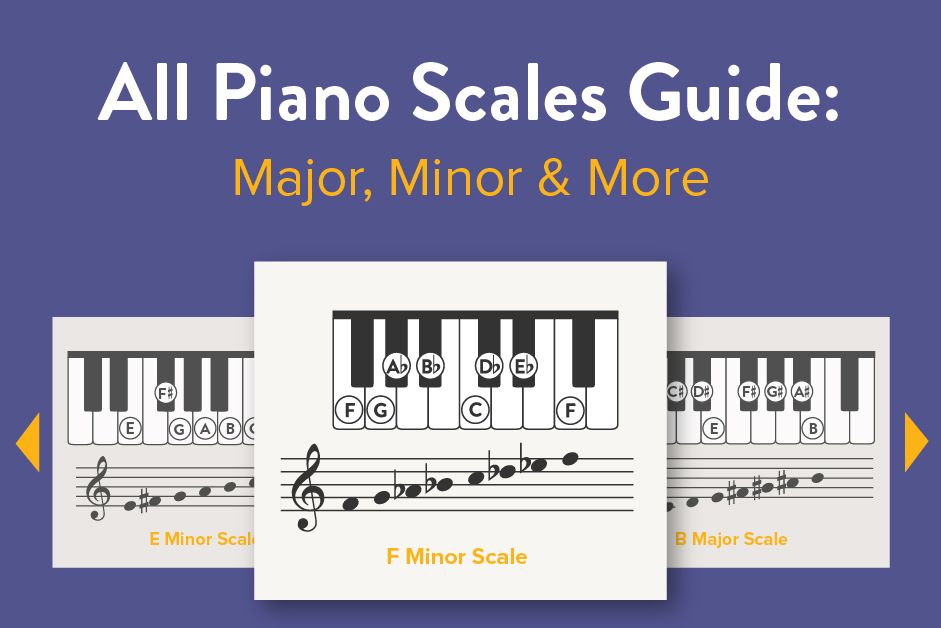
The 12 major scales
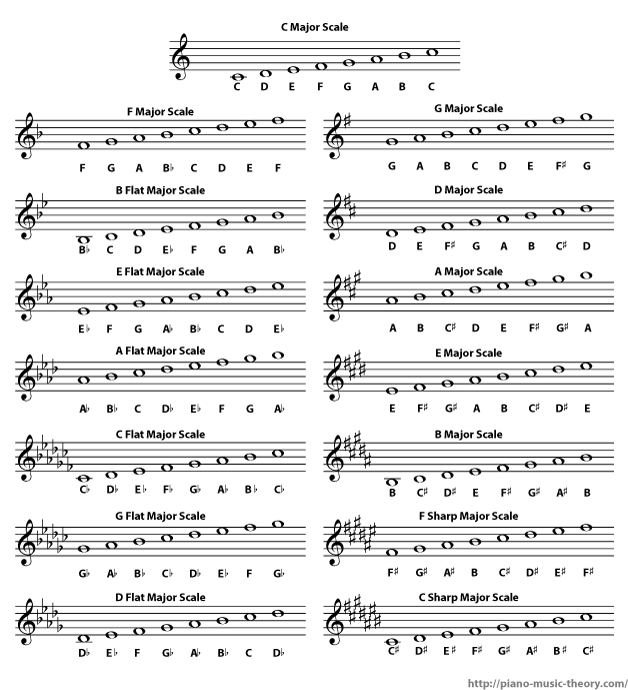
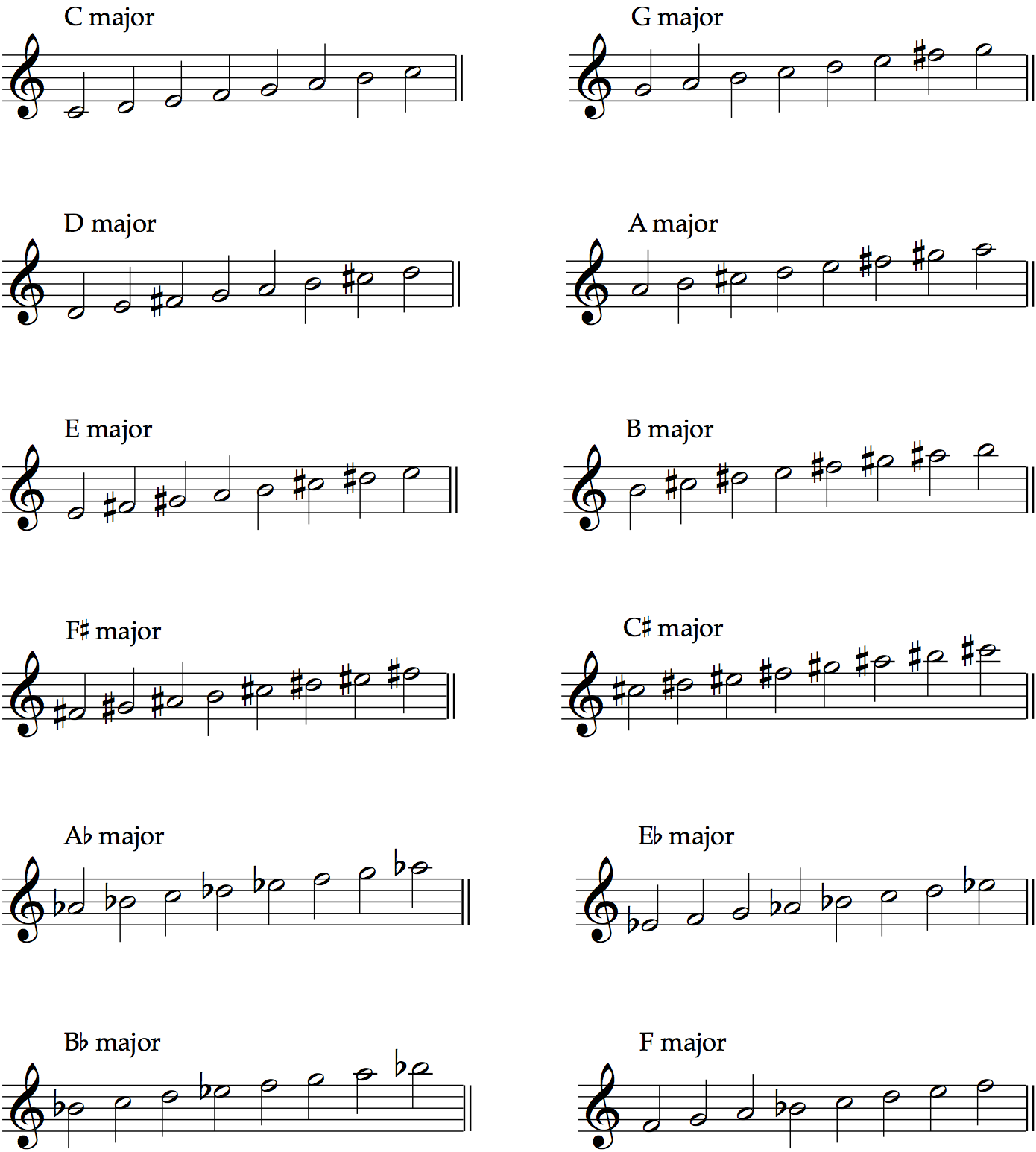
The 12 major scales are the most important starting point for many pianists. Each major scale uses all seven letter names, but the notes change according to the key.
The 12 major scales are:
• C major: C, D, E, F, G, A, B
• G major: G, A, B, C, D, E, F♯
• D major: D, E, F♯, G, A, B, C♯
• A major: A, B, C♯, D, E, F♯, G♯
• E major: E, F♯, G♯, A, B, C♯, D♯
• B major: B, C♯, D♯, E, F♯, G♯, A♯
• F♯ major: F♯, G♯, A♯, B, C♯, D♯, E♯
• D♭ major: D♭, E♭, F, G♭, A♭, B♭, C
• A♭ major: A♭, B♭, C, D♭, E♭, F, G
• E♭ major: E♭, F, G, A♭, B♭, C, D
• B♭ major: B♭, C, D, E♭, F, G, A
• F major: F, G, A, B♭, C, D, E
All major scales follow the same whole-step and half-step pattern:
Whole, whole, half, whole, whole, whole, half.
On the piano, a whole step skips one key. A half step moves to the very next key, whether it is white or black. Learning this pattern helps you understand every major key instead of memorizing 12 unrelated groups of notes.
The major scale also creates the foundation for chords, melodies, key signatures, and scale degrees. For example, the C major scale has no sharps or flats, while G major has one sharp: F♯.
How many minor piano scales are there?
There are 12 natural minor scales, 12 harmonic minor scales, and 12 melodic minor scales. If you count these three common forms, there are 36 minor scales.
The three main minor scale types are different in sound and use.
Natural minor scales
The natural minor scale follows this pattern:
Whole, half, whole, whole, half, whole, whole.
A natural minor is related to a major scale that starts on its sixth note. For example, A natural minor uses the same white keys as C major:
A, B, C, D, E, F, G.
The sound is often described as dark, calm, serious, or reflective. However, musical mood depends on tempo, harmony, rhythm, and performance. A minor key is not always sad.
Harmonic minor scales
The harmonic minor scale raises the seventh note of the natural minor scale by one half step. A natural minor becomes:
A, B, C, D, E, F, G♯.
This raised seventh creates a stronger pull back to the first note. It also produces a distinctive gap between the sixth and seventh notes. Composers often use harmonic minor in classical music, film music, metal, and dramatic melodies.
Melodic minor scales
In traditional theory, the melodic minor scale raises the sixth and seventh notes when moving upward. When moving downward, it usually returns to the natural minor form.
A melodic minor looks like this in A:
Ascending: A, B, C, D, E, F♯, G♯, A
Descending: A, G, F, E, D, C, B, A
Jazz musicians often use a different approach. They usually play the raised sixth and seventh notes in both directions. This difference explains why some piano scale books show more than one version of melodic minor.

Why the number changes from one piano book to another
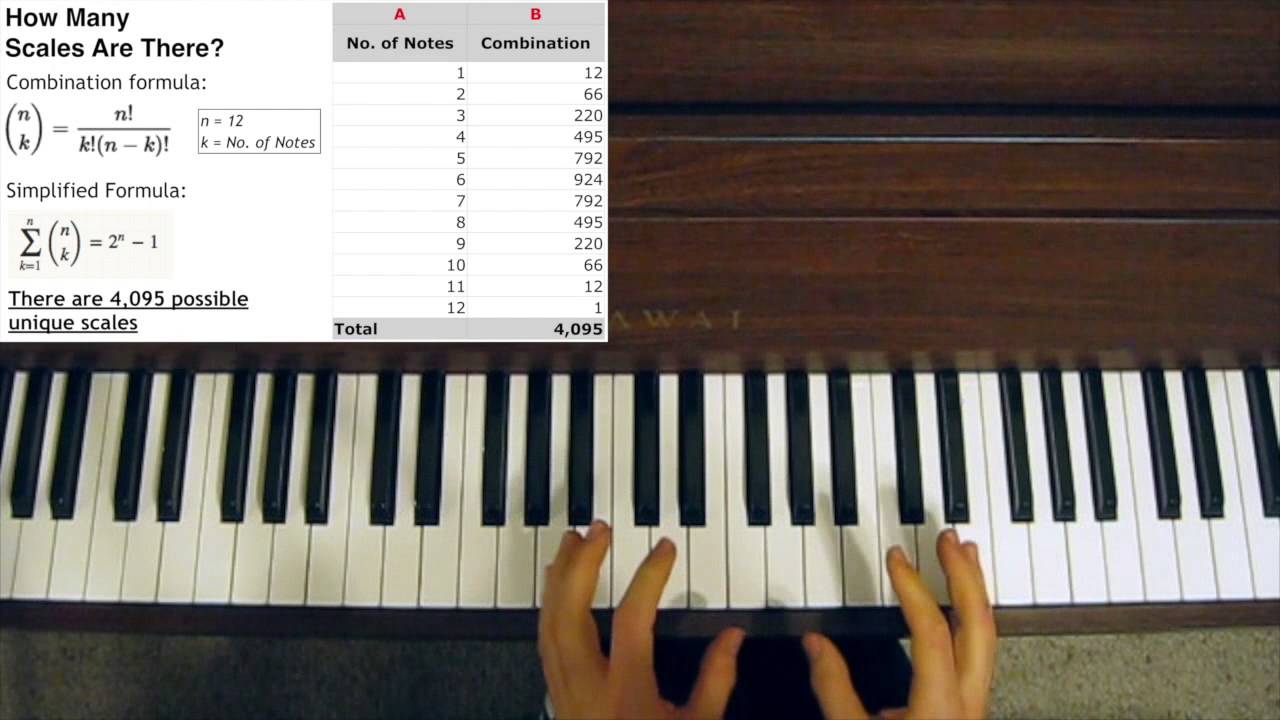
The answer to how many piano scales are there changes because authors use different counting rules. Some count only unique note patterns, while others count every key and every starting note.
For example, a book may treat C major and A natural minor as separate scales because they have different tonal centers. Another book may group them together because they use the same seven white keys.
The count can also change because of enharmonic spelling. C♯ major and D♭ major sound the same on an equally tuned piano, but they are written with different note names and key signatures.
This creates two ways to count:
• By sound: C♯ major and D♭ major may be treated as the same pitch pattern.
• By spelling: C♯ major and D♭ major are different theoretical keys.
For practical piano study, both views matter. Your ear hears pitch, but your eyes read musical spelling. Good pianists learn to understand both.
Common piano scale families
The piano scale world includes much more than major and minor. Each family has its own pattern, sound, and musical purpose.
Chromatic scale
The chromatic scale uses all 12 notes in the octave. It moves only by half steps.
Starting from C, it is:
C, C♯, D, D♯, E, F, F♯, G, G♯, A, A♯, B, C.
Because every key is used, there are 12 possible starting notes. Some musicians count the chromatic scale as one scale pattern. Others count 12 transposed versions.
Pentatonic scales
A pentatonic scale has five notes. The two most common types are major pentatonic and minor pentatonic.
C major pentatonic is:
C, D, E, G, A.
A minor pentatonic is:
A, C, D, E, G.
Pentatonic scales appear in folk music, pop, rock, blues, gospel, country, and many traditional music systems. They are useful for improvisation because they avoid some strong clashes between notes.
Blues scales
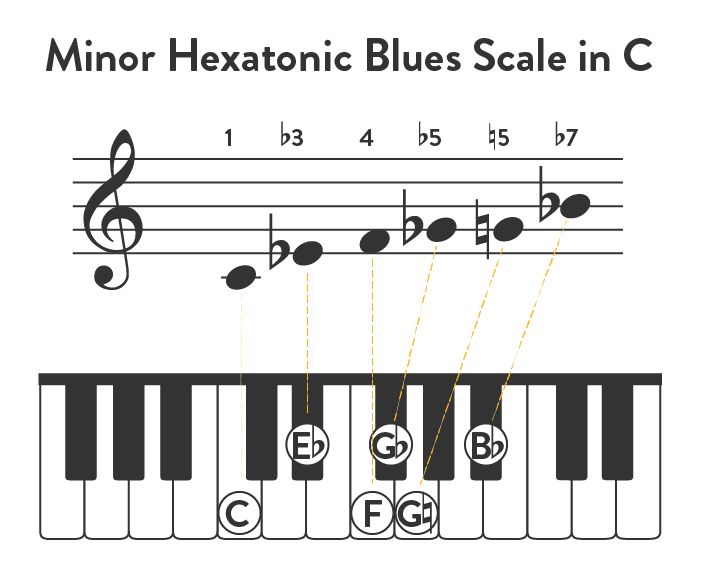
The minor blues scale adds a flattened fifth to the minor pentatonic scale.
A blues scale is:
A, C, D, E♭, E, G.
The E♭ is often called the blue note. It creates tension between the perfect fourth and perfect fifth. Blues scales are common in jazz, rock, gospel, and popular music.
Whole-tone scales
A whole-tone scale uses only whole steps. Because an octave contains six whole steps, there are two main whole-tone collections.
A whole-tone scale beginning on C is:
C, D, E, F♯, G♯, A♯.
This scale has a floating, dreamlike sound. Impressionist composers and jazz players often use it over augmented chords.
Diminished scales
Diminished scales alternate whole steps and half steps. There are two common forms:
• Whole-half diminished
• Half-whole diminished
These scales contain eight notes per octave. They are often used with diminished seventh chords and dominant seventh chords in jazz and classical harmony.
Bebop scales
Bebop scales add a passing note to a basic seven-note scale. The added note helps chord tones fall on strong beats during an eighth-note line.
Common types include:
• Bebop dominant scale
• Bebop major scale
• Bebop minor scale
These are especially useful for jazz improvisation, but they are not always included in beginner piano scale lists.
The seven modes in every key
The seven modes come from the major scale. Each mode begins on a different degree of the same parent scale.
The seven traditional modes are:
• Ionian: the major scale
• Dorian: a minor scale with a raised sixth
• Phrygian: a minor scale with a lowered second
• Lydian: a major scale with a raised fourth
• Mixolydian: a major scale with a lowered seventh
• Aeolian: the natural minor scale
• Locrian: a minor scale with a lowered second and lowered fifth
Using the notes of C major, the modes are:
• C Ionian: C to C
• D Dorian: D to D
• E Phrygian: E to E
• F Lydian: F to F
• G Mixolydian: G to G
• A Aeolian: A to A
• B Locrian: B to B
If you transpose all seven modes into 12 keys, you get 84 mode-key combinations. This is one reason the answer to how many piano scales are there can become very large.
Modes are not simply “major scales starting on different notes.” Each mode has its own tonal center. If D is the home note, D Dorian sounds different from C major, even though both use the same white keys.
How many scales should a beginner learn?
A beginner does not need to learn every possible scale. A strong first goal is to learn all 12 major scales, then add natural, harmonic, and melodic minor scales.
A practical learning order is:
- Learn C major and understand its finger pattern.
- Add G, D, A, and F major.
- Learn the remaining major scales in groups.
- Study the related natural minor scales.
- Add harmonic and melodic minor forms.
- Explore chromatic, pentatonic, and blues scales.
- Study modes when you begin improvising or analyzing harmony.
Many teachers use the circle of fifths to organize the major keys. Moving clockwise adds sharps, while moving counterclockwise adds flats. This method turns scale practice into a clear map rather than a pile of facts.
For most players, the first important target is 12 major scales and 12 natural minor scales. That gives you a strong base for reading music, building chords, transposing songs, and improvising.
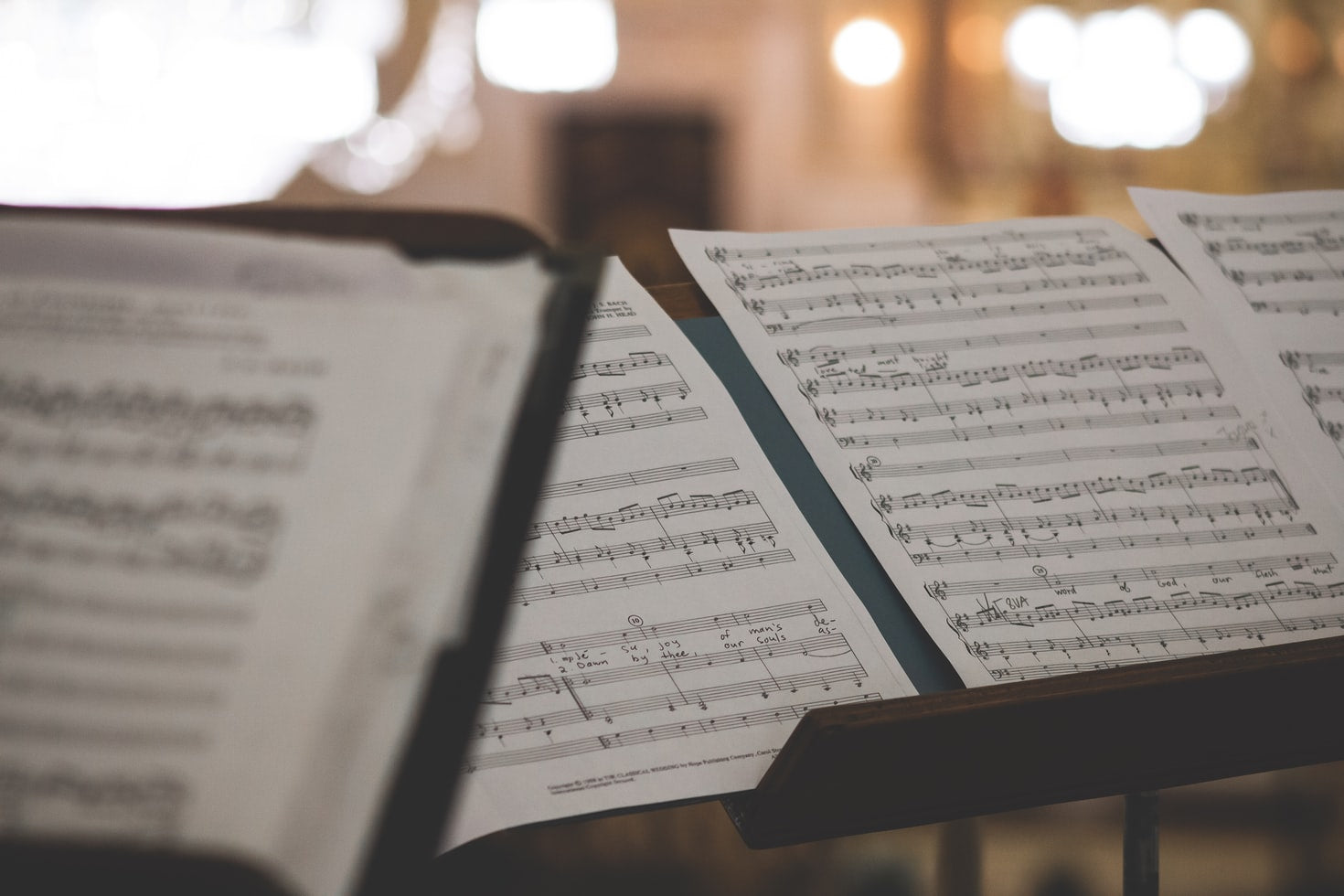
Piano scale fingerings and practice tips
Correct fingering helps scales feel smooth and even. The standard major-scale fingering often uses the thumb under the hand after the third or fourth finger.
For the right hand, C major uses:
1, 2, 3, 1, 2, 3, 4, 5
For the left hand, C major uses:
5, 4, 3, 2, 1, 3, 2, 1
Fingerings change in some keys, so do not force one pattern onto every scale. Use a trusted piano method or teacher, especially for scales with many black keys.
A simple practice plan is:
• Start slowly with a metronome.
• Play one octave with relaxed shoulders.
• Keep the thumb quiet and close to the keys.
• Listen for even volume between fingers.
• Practice hands separately before combining them.
• Increase speed only when the notes remain clear.
• Practice in contrary motion after parallel motion feels secure.
A common mistake is to treat scales as a speed test. Scales are more useful when they build control, key awareness, rhythm, and tone. Ten focused minutes can teach more than a rushed half hour.
A useful practice cycle is to play a scale slowly, play its tonic triad, then create a short melody using only its notes. This connects technical work with real music.

What scales are used in different styles?
Different styles favor different scale types. Classical players often focus on major, minor, chromatic, whole-tone, and diminished scales. Jazz musicians commonly use modes, melodic minor, bebop, blues, and pentatonic scales.
Pop and rock players often rely on major, natural minor, minor pentatonic, and blues scales. Gospel and soul music may combine major and minor pentatonic sounds with chromatic passing notes.
Here are simple examples:
• Pop melody: C major or C major pentatonic
• Blues solo: A minor pentatonic or A blues scale
• Jazz dominant chord: Mixolydian or altered melodic minor ideas
• Dramatic classical passage: harmonic minor or diminished patterns
• Dreamlike film music: whole-tone or Lydian sounds
The best scale is not always the most complex one. A three-note idea from a major scale can sound more musical than a fast run through an advanced scale.
Common mistakes when counting piano scales
When people ask how many piano scales are there, they often mix together scales, keys, modes, and arpeggios. These are related, but they are not the same thing.
Avoid these common errors:
• Counting every octave as a new scale
• Treating a chord arpeggio as a scale
• Assuming enharmonic keys always count as different sounds
• Forgetting that melodic minor has different classical and jazz uses
• Believing a longer list automatically means better musicianship
• Practicing speed before learning correct fingering
• Memorizing notes without understanding the scale pattern
A scale is an ordered set of notes. A key is a tonal system centered on one note. A mode is a scale pattern with a particular tonal center. An arpeggio plays chord notes one at a time rather than moving through every scale degree.
Keeping these terms separate makes music theory much easier to understand.
A clear way to count piano scales
If you need a simple, useful answer, use three levels of counting.
Basic count
For traditional beginner study:
• 12 major scales
• 12 natural minor scales
• 12 harmonic minor scales
• 12 melodic minor scales
That gives 48 commonly studied major and minor scale forms.
Expanded count
Add:
• 12 chromatic starting points
• 84 mode-key combinations
• Major and minor pentatonic scales in 12 keys
• Blues scales in 12 keys
• Whole-tone and diminished patterns
The total quickly rises beyond 100 combinations, depending on whether duplicate pitch collections are counted once or in every key.
Complete theoretical count
If you include jazz scales, synthetic scales, regional music systems, altered scales, symmetrical scales, and unusual note collections, there is no practical final number. Music theory can create and name many patterns.
So, how many piano scales are there? There are 12 major scales, 36 common minor forms, and countless additional scales when modes and specialized patterns are included.
How to choose the right scales for your goals
Your musical goal should guide your scale practice. A classical student may need a broad set of major and minor scales. A songwriter may gain more from major, minor, pentatonic, and blues scales.
Use this guide:
• For sight-reading: study major and minor scales.
• For improvisation: study pentatonic, blues, and mode patterns.
• For jazz: add melodic minor, bebop, diminished, and altered scales.
• For composition: explore modes, whole-tone, and symmetrical scales.
• For chord knowledge: connect each scale to its triads and seventh chords.
• For technique: practice scales with a metronome and varied rhythms.
Do not feel behind if you have not learned every scale. A pianist who understands 12 major scales deeply often has a stronger foundation than someone who has memorized a long list without control.
Frequently asked questions about how many piano scales are there
Are there 12 or 24 piano scales?
There are 12 major scales and 12 natural minor scales, so many beginner guides say there are 24 basic piano scales. If harmonic and melodic minor forms are included, the count becomes 48 major and minor scale forms.
How many major scales are there on piano?
There are 12 major scales in the standard Western equal-tempered system. Each one begins on a different pitch class and uses a distinct key signature or enharmonic spelling.
How many minor scales are there?
There are 12 natural minor scales, 12 harmonic minor scales, and 12 melodic minor scales. That gives 36 commonly taught minor scale forms.
Is the chromatic scale one scale or 12 scales?
The chromatic scale is one pattern because it uses all 12 notes by half step. It can also be practiced from each of the 12 starting notes, so some books describe 12 transposed versions.
Are modes the same as scales?
Modes are scale patterns with their own tonal centers. The seven common modes come from the major scale, but each mode has a different interval pattern and musical character.
Do black keys create separate scales?
Black keys do not create a separate category of scales. They are notes used within many scales, including major, minor, pentatonic, blues, chromatic, and modal scales.
Which piano scales should I learn first?
Start with the 12 major scales, then learn their related natural minor scales. Add harmonic minor, melodic minor, pentatonic, and blues scales as your playing and musical goals develop.
Conclusion
The answer to how many piano scales are there depends on how you count them. The clearest starting point is 12 major scales, 12 natural minor scales, 12 harmonic minor scales, and 12 melodic minor scales. Once you add modes, chromatic patterns, pentatonic scales, blues scales, diminished scales, and jazz forms, the number becomes much larger.
You do not need to master every scale at once. Begin with one key, learn its pattern and fingering, connect it to chords, and use it in a short melody. Then move through the circle of fifths and build your collection with steady practice. Explore more piano theory resources, and share which scale you are learning next.

Senior Music Reviewer
Alex Carter is a seasoned music reviewer with over a decade of experience in the world of sound and instruments. Passionate about helping musicians and enthusiasts make informed choices, he brings sharp insights and in-depth knowledge to every review. From classical instruments to modern gear, Alex combines technical expertise with a love for music to deliver content that resonates with readers.
As a Senior Music Reviewer and expert author on Tuneluma.com, Alex is dedicated to sharing honest evaluations, practical advice, and thoughtful commentary to guide readers in their musical journey.