How Do You Clean A Piano: Easy Safe Cleaning Guide
Clean a piano with a soft cloth, gentle products, and no excess moisture near the keys or inner parts.
Knowing how do you clean a piano helps protect its finish, keys, pedals, and sound for years. A piano is both a delicate musical instrument and a piece of furniture, so it needs more care than a quick spray and wipe. This guide explains safe cleaning methods for upright and grand pianos, common mistakes to avoid, and when to call a piano technician.

Why Regular Piano Cleaning Matters
Dust, skin oil, food crumbs, and moisture can build up on a piano over time. Dirt may dull the finish, stain the keys, and work into small gaps around the action. In humid rooms, dust can also mix with moisture and become harder to remove.
Learning how do you clean a piano properly can help preserve its appearance and protect its working parts. It may also make the instrument more pleasant to play. Clean keys feel better under your fingers, while a clean cabinet keeps the piano looking cared for.
A clean piano does not need to look perfect. Small marks are part of normal use. The goal is to remove dirt without scratching the finish, swelling the wood, or damaging the key surfaces.

What You Need Before Cleaning a Piano
Gather your supplies before you begin. This prevents you from leaving the piano while it is wet or reaching for an unsafe product.
You will need:
• Two or three soft microfiber cloths
• A clean, dry cotton cloth
• Distilled water
• A small bowl
• Mild dish soap, used only when needed
• A soft, clean brush for dust
• A vacuum with a soft brush attachment, used carefully around the exterior
• Cotton swabs for small areas
• A clean towel for drying
Avoid paper towels, rough sponges, furniture polish, ammonia, bleach, alcohol, and glass cleaner. These products may scratch, cloud, dry out, or weaken the finish.
Before using any product, check the piano manufacturer’s care instructions. Older pianos may have fragile shellac, lacquer, varnish, or hand rubbed finishes. If you do not know the finish, use a dry microfiber cloth first.

How Do You Clean a Piano Safely?
The safest method is slow and gentle. Work from the top down, use very little moisture, and clean one small area at a time.
Step 1: Prepare the Room
Close windows if outdoor dust is blowing in. Keep drinks, plants, and food away from the piano. Wash and dry your hands before touching the keys or finish.
If the piano sits near a heater, radiator, vent, or sunny window, take extra care. Heat and rapid changes in humidity can affect wood, glue, strings, and tuning stability.
Step 2: Remove Loose Dust
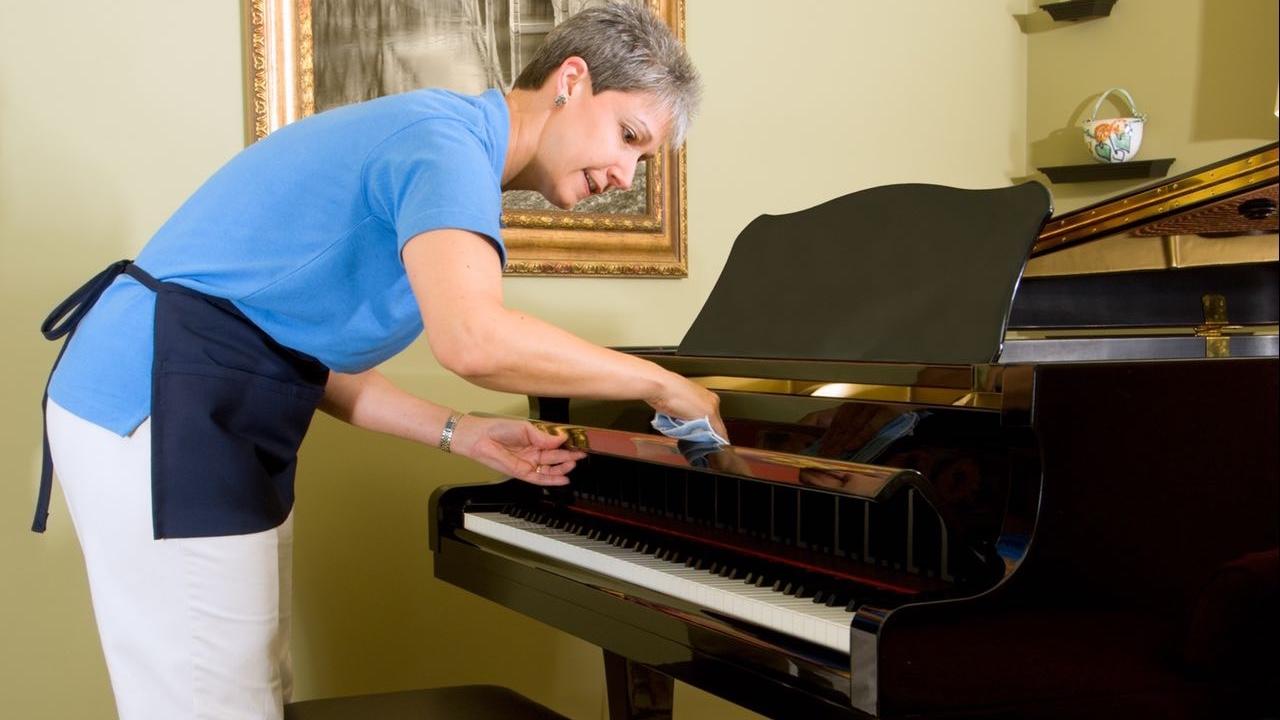
Use a dry microfiber cloth to lift dust from the lid, fallboard, music desk, legs, and other outer surfaces. Do not press hard. Let the cloth collect the dust instead of pushing it across the finish.
For carved trim or narrow spaces, use a soft artist’s brush. If you use a vacuum, keep the nozzle away from the finish and never vacuum inside the piano unless a trained technician directs you.
Step 3: Wipe the Exterior
Lightly dampen a microfiber cloth with distilled water. The cloth should feel barely moist, not wet. Wipe in straight, gentle strokes, then dry the area with a second cloth.
Never spray cleaner directly onto the piano. Liquid can run into seams, hinges, key gaps, and the action. This is one of the most important rules when learning how do you clean a piano.
Step 4: Polish Only When Appropriate
Some piano finishes benefit from a product made specifically for that finish. Others can become cloudy or streaked with polish. If you use piano polish, apply a small amount to the cloth, not the piano, and test it in a hidden spot first.
High gloss finishes show fingerprints and fine marks easily. Matte and satin finishes can develop shiny patches if rubbed too much. In both cases, less product and less pressure are safer.
How Do You Clean Piano Keys?
Piano keys need special care because moisture can seep between them. The cleaning method depends on whether the keys are plastic, acrylic, ivory, or another material.
Cleaning Modern Plastic or Acrylic Keys
Use a clean, soft cloth that is slightly damp with distilled water. Wipe each key from back to front, then dry it at once. Clean white and black keys with separate sections of the cloth so dark residue does not spread.
For sticky grime, add one small drop of mild dish soap to a bowl of water. Dip the cloth, wring it very well, and wipe the key. Follow with a cloth dampened with plain distilled water, then dry the key fully.
Do not pour water onto the keys. Do not allow a wet cloth to sit on them. Moisture can swell wooden key parts and cause keys to stick.
Cleaning Ivory Keys
Many older pianos have ivory keytops. Ivory is porous and can crack, yellow, or separate from the key beneath it. Use a dry, soft cloth first, and avoid soaking or strong cleaners.
Ivory keys benefit from moderate daylight, which may help prevent uneven yellowing. Do not place the piano in direct, intense sun, since heat can damage the case and finish. If ivory is chipped, loose, or badly discolored, ask a piano technician for advice.
Cleaning Black Keys
Black keys may be made from wood, plastic, ebony, or another material. Use a dry or barely damp cloth and gentle pressure. Avoid rubbing with baking soda, toothpaste, abrasive pads, or household scrubbers.
When considering how do you clean a piano, remember that the keys are not like a kitchen counter. They need a light touch and fast drying.

How Do You Clean the Piano Cabinet and Finish?
The cabinet should be cleaned according to its finish. A glossy polyester finish, a satin finish, and an older lacquer finish do not respond in the same way.
High Gloss Finishes
High gloss surfaces reveal dust, fingerprints, and fine scratches. Use a clean microfiber cloth with light pressure. Do not use a circular scrubbing motion, since it can spread residue and create visible swirls.
For deeper marks, stop wiping and identify the material first. A piano technician or refinishing professional can recommend a safe product. Trying to remove a scratch with household polish may make the area worse.
Satin and Matte Finishes
Satin finishes have a soft, low shine. Too much rubbing may create a bright spot that does not match the surrounding surface. Dust lightly, wipe only where needed, and avoid wax unless the manufacturer approves it.
Older or Valuable Pianos
An antique piano may have shellac, varnish, worn lacquer, or a finish with historic value. Do not test a new cleaner on a visible area. Cleaning may remove a thin layer of finish or alter the patina.
For valuable, rare, or heavily damaged instruments, consult a piano conservator or qualified technician. Gentle dust removal is usually safe, but restoration is a separate task.

How Do You Clean Piano Pedals and Hardware?
Piano pedals collect fingerprints, skin oil, and tarnish. Wipe them with a dry microfiber cloth first. If needed, use a barely damp cloth and dry the pedals right away.
Do not use metal polish unless the manufacturer or a piano professional confirms that it is suitable. Some pedals have a protective coating. Abrasive polish can remove that coating and leave uneven marks.
Clean hinges and small metal parts with a dry cotton swab or soft brush. Keep liquid away from screws, joints, and the inside of the cabinet. A small amount of moisture in the wrong place can lead to rust or staining.

How Do You Clean the Inside of a Piano?
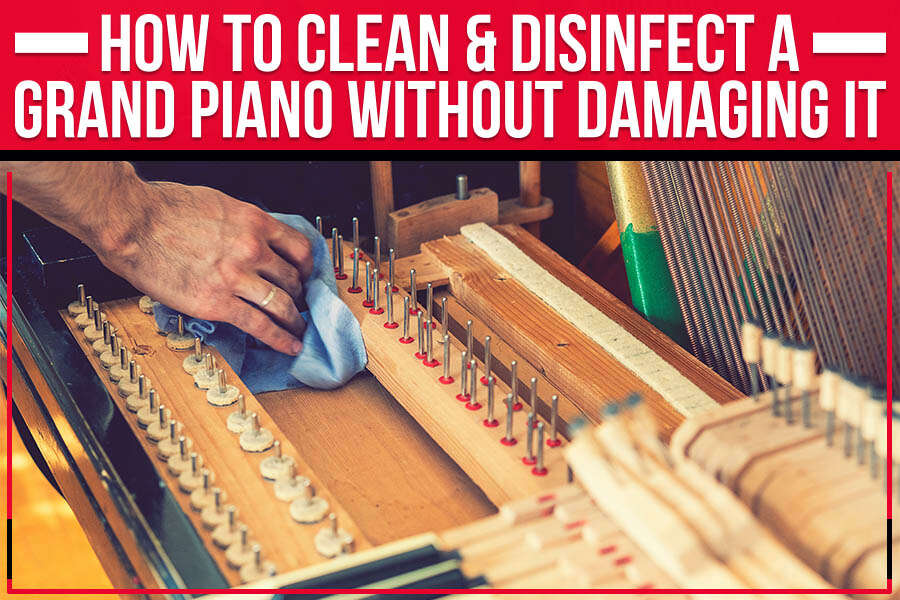
The inside of a piano should usually be cleaned by a qualified piano technician. An upright contains strings, dampers, hammers, springs, and other parts that can be damaged or moved out of position.
A grand piano also has delicate action parts beneath the keyboard. Vacuuming, wiping, or brushing inside may disturb the regulation. A vacuum nozzle can pull loose felt, and a cloth can catch on strings or delicate mechanisms.
You may gently dust the underside of an open lid if the area is easy to reach and far from the action. Do not touch strings, hammers, dampers, or tuning pins. If you see cobwebs, mold, insects, heavy dust, or spilled liquid inside, close the piano and call a technician.
Professional interior cleaning may be needed during a scheduled service visit. A technician can remove dust safely, inspect for pests, and check whether moisture or corrosion has caused damage.

How Do You Clean a Piano After a Spill?
Act quickly, but do not panic. Blot the liquid with a clean, dry towel. Do not rub the spill into the keys, and do not use a hair dryer or heat source.
If liquid reached the gaps between keys, the fallboard, the action, or the interior, contact a piano technician. Even a small amount of water can swell wood or affect glue. Sugary drinks are especially troublesome because they leave a sticky residue.
Keep the piano closed and allow a professional to inspect it. Tuning alone may not solve the problem if the spill has affected moving parts.

Piano Cleaning Mistakes to Avoid
Many cleaning problems happen because people use products meant for other surfaces. A piano may look sturdy, but its finish and inner parts are sensitive.
Avoid these mistakes:
• Spraying cleaner directly on the piano
• Using furniture polish without checking the finish
• Soaking a cloth or letting water sit on the keys
• Scrubbing marks with toothpaste, baking soda, or abrasive pads
• Cleaning inside the piano with a household vacuum
• Touching strings or tuning pins
• Using alcohol or disinfectant on unknown key materials
• Placing the piano in direct sun to dry a damp area
• Moving an upright piano alone
• Ignoring mold, insects, rust, or a liquid spill
During periods of illness, many owners ask about disinfecting piano keys. The safest approach depends on the key material and the product label. Use a product approved for that surface, apply it to a cloth rather than the keys, and never allow liquid to enter the gaps.
How Often Should You Clean a Piano?
Dust the exterior every one to two weeks if the piano is used often or sits in a dusty room. Wipe the keys every few weeks, or whenever they feel oily or look marked.
A deeper exterior cleaning may be useful every few months. The exact schedule depends on pets, children, smoking, cooking, open windows, and local air quality.
Cleaning does not replace tuning. Most acoustic pianos need regular tuning, often about once or twice a year, though climate and use can change that schedule. Cleaning protects the instrument’s surfaces, while tuning keeps the pitch and musical response stable.
Humidity also matters. Many piano professionals recommend keeping indoor humidity reasonably stable, often near 42% to 50%. Extreme changes can affect wood and tuning, so a room hygrometer can be helpful.
A Simple Piano Cleaning Routine
Use this routine when you want a safe, repeatable process.
-
Wash and dry your hands.
-
Remove books, decorations, and other items from the piano.
-
Dust the cabinet with a dry microfiber cloth.
-
Brush dust from corners and trim with a soft brush.
-
Wipe the keys with a barely damp cloth.
-
Dry the keys and cabinet with a clean cloth.
-
Wipe the pedals and hardware without polishing aggressively.
-
Check for spills, loose keytops, mold, insects, or finish damage.
-
Close the piano and store your cleaning cloths away from household chemicals.
This method answers how do you clean a piano without making the process risky. It also makes cleaning easier because you handle small amounts of dust before they become stubborn grime.
When to Call a Piano Technician
Some signs point to a service problem rather than a cleaning problem. Contact a qualified technician if you notice:
• Keys that stick, wobble, or fail to return
• A strong musty smell
• Mold inside or around the piano
• Rust on strings or hardware
• A spill near the action
• Loose ivory or plastic keytops
• Cracked wood or separating joints
• Heavy dust inside the instrument
• A piano that has not been serviced for many years
A technician can clean the interior, regulate the action, repair keytops, and assess moisture damage. For a valuable piano, professional care is often cheaper than repairing damage caused by an unsafe cleaning attempt.
One lesson I often share with piano owners is that prevention beats rescue. A soft cloth, stable room humidity, and sensible placement can prevent many problems before they become expensive.
How Do You Clean a Piano: Frequently Asked Questions
Can I use Windex on a piano?
No. Glass cleaner may contain ingredients that damage or cloud the finish, and it can run into seams or key gaps. Use a dry or barely damp microfiber cloth unless the piano maker recommends a specific product.
Can I use rubbing alcohol to disinfect piano keys?
Do not use rubbing alcohol unless the manufacturer specifically approves it for your key material. Alcohol may damage some finishes, plastics, and older key surfaces. A piano professional can suggest a safer option for your instrument.
How do you clean piano keys without damaging them?
Use a soft cloth that is barely damp with distilled water, wipe each key gently, and dry it at once. Keep moisture away from the gaps, and use a separate cloth for dark keys if residue is present.
Should I clean the strings inside my piano?
No. Strings, tuning pins, hammers, and dampers are delicate. Interior cleaning should normally be handled by a qualified piano technician.
How often should piano keys be cleaned?
Wipe the keys every few weeks or whenever they feel oily or show marks. Homes with children, pets, smokers, or heavy dust may need more frequent cleaning.
Can I use furniture polish on a piano?
Only use furniture polish if it is approved for the piano’s specific finish. Many household polishes can leave residue, cause streaks, or alter a satin or antique finish.
What should I do if I spill water on my piano?
Blot the spill at once with a dry towel and avoid heat. If liquid entered the key gaps or interior, contact a piano technician for an inspection.
Conclusion
Learning how do you clean a piano is mostly about using less force, less water, and better judgment. Dust the cabinet gently, clean modern keys with a barely damp cloth, protect ivory, and keep household chemicals away from the finish. Leave strings, action parts, tuning pins, and serious spills to a qualified technician.
Start with a simple microfiber cloth and a careful routine today. Your piano will stay cleaner, safer, and more enjoyable to play. For more piano care guidance, explore related maintenance resources or share your cleaning questions in the comments.

Senior Music Reviewer
Alex Carter is a seasoned music reviewer with over a decade of experience in the world of sound and instruments. Passionate about helping musicians and enthusiasts make informed choices, he brings sharp insights and in-depth knowledge to every review. From classical instruments to modern gear, Alex combines technical expertise with a love for music to deliver content that resonates with readers.
As a Senior Music Reviewer and expert author on Tuneluma.com, Alex is dedicated to sharing honest evaluations, practical advice, and thoughtful commentary to guide readers in their musical journey.