How Much Do Keyboard Pianos Cost: Price Guide
Most keyboard pianos cost $100 to $3,000, while premium digital pianos can exceed $5,000.
If you are asking how much do keyboard pianos cost, the honest answer depends on the instrument’s keys, sound engine, speakers, features, and brand. This guide breaks down each price range, explains what you get for your money, and shares practical tips to help you buy with confidence.
How Much Do Keyboard Pianos Cost by Price Range?
The price of a keyboard piano can vary as much as the price of a basic bicycle and a professional touring bike. Both can move you forward, but their parts, comfort, and performance are very different.
Here is a simple breakdown of typical US prices:
| Keyboard piano type | Typical price | Best for |
|---|---|---|
| Basic portable keyboard | $50 to $150 | Beginners, children, casual use |
| Entry-level keyboard piano | $150 to $400 | New piano students and home practice |
| Mid-range digital piano | $400 to $1,000 | Serious learners and families |
| Advanced digital piano | $1,000 to $2,500 | Experienced players and performers |
| Premium home digital piano | $2,500 to $5,000 or more | Pianists seeking a realistic piano feel |
| Professional stage piano | $1,500 to $4,000 or more | Performers, studios, and touring musicians |
These prices usually cover the instrument only. A stand, bench, sustain pedal, headphones, music rest, and protective case may cost extra.
When people search for how much do keyboard pianos cost, they often compare a simple keyboard with a digital piano. That can lead to confusion. A basic keyboard may have 61 lightweight keys, while a digital piano often has 88 weighted keys designed to feel more like an acoustic piano.
What Affects the Price of a Keyboard Piano?
Several design choices have a direct effect on the cost. Understanding them makes it easier to compare models without paying for features you will never use.
Number and type of keys
A low-cost keyboard may have 49, 61, or 76 keys. These instruments are light and easy to carry, but they may not cover the full range used in classical piano music.
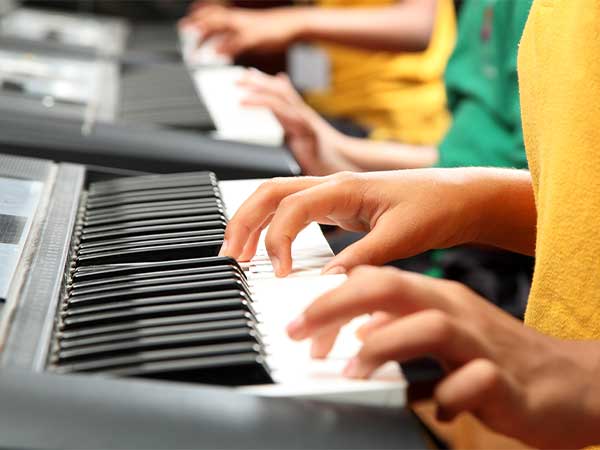
Most full-size digital pianos have 88 keys. The best models use weighted hammer-action keys. This system copies the heavier touch of an acoustic piano in the low register and the lighter touch in the high register.
Touch sensitivity
Touch sensitivity lets the keyboard respond to how hard you press a key. A soft press creates a quiet note, while a firm press creates a louder note.
This feature is important for learning proper piano technique. Very cheap keyboards may have fixed volume, which can make them feel more like electronic toys than musical instruments.
Key action
Key action describes how the keys move and respond under your fingers. Common types include:
• Non-weighted action: Light and quick, often found on basic keyboards.
• Semi-weighted action: Offers more resistance but does not fully copy an acoustic piano.
• Weighted action: Adds resistance for a more piano-like feel.
• Hammer action: Uses a mechanical system to imitate the hammers inside an acoustic piano.
Weighted hammer action often raises the price, but it is one of the most valuable upgrades for serious students.
Sound quality
A keyboard piano may include dozens or thousands of sounds. Yet the number of sounds does not always show quality.
A good digital piano focuses on realistic piano samples, natural decay, clear bass, and smooth changes between soft and loud notes. A cheap model may list hundreds of sounds but offer only a basic piano tone.
Speakers and amplification
Built-in speakers affect both volume and tone. Small speakers may sound thin or weak, especially in the lower notes.
More expensive instruments often include stronger speakers, separate amplifiers, and better cabinet design. These features matter if you want to fill a room without connecting external speakers.
Connectivity
USB, MIDI, Bluetooth, and audio outputs can increase an instrument’s usefulness. These connections let you:
• Record music on a computer or phone.
• Use piano learning apps.
• Connect headphones or external speakers.
• Control virtual instruments.
• Play along with backing tracks.
Connectivity may not matter to a beginner, but it can extend the life of the instrument as your skills grow.
Brand and warranty
Established brands often charge more because they invest in research, quality control, customer support, and long-term parts availability. A warranty also adds value.
Still, a famous logo does not automatically make every model the best choice. Compare the action, sound, warranty, and user reviews rather than choosing by brand alone.
Keyboard Piano Prices for Beginners
A beginner can start with a useful instrument for about $150 to $500. This range usually offers touch-sensitive keys, basic lesson features, a sustain pedal input, and several instrument sounds.
For a child taking weekly lessons, I usually recommend avoiding the very cheapest keyboard unless the budget is extremely tight. A model with 61 touch-sensitive keys can work for early practice, but an 88-key weighted digital piano is a better long-term choice.
A basic beginner setup may include:
• Keyboard piano: $150 to $400
• X-style stand: $25 to $60
• Sustain pedal: $15 to $40
• Bench: $40 to $100
• Headphones: $20 to $100
That puts the total beginner setup near $250 to $700. You can reduce the cost by buying a package that includes a stand, bench, and pedal.
One mistake buyers often make is focusing only on the number of sounds. A learner usually benefits more from good keys and a convincing piano tone than from 500 extra sounds.
If you are still wondering how much do keyboard pianos cost for a beginner, plan on spending about $250 to $600 for a reliable setup that will support several years of learning.
Mid-Range Digital Piano Costs
Mid-range digital pianos usually cost between $400 and $1,000. This is often the best value range for home players, adult learners, and students who want an instrument they will not outgrow quickly.
These instruments commonly offer:
• 88 weighted keys
• Touch-sensitive piano sounds
• Three or more pedal functions
• Headphone support
• USB or MIDI connectivity
• Built-in metronome and recording tools
• Better speakers than entry-level models
Some models include graded hammer action. This means the lower keys feel heavier than the higher keys, just as they do on an acoustic piano.
At this price level, the difference between models can be subtle. One piano may have a warmer sound, while another may have a brighter tone. One action may feel firm and heavy, while another may feel light and fast.
If possible, play the instrument before buying it. Your hands are the final judge. Reviews can explain features, but they cannot fully describe how a key feels under your fingers.
For many households, a $600 to $900 digital piano offers the strongest balance of price, sound, features, and durability.

Advanced and Premium Digital Piano Costs
Advanced digital pianos cost about $1,000 to $2,500. Premium home models can cost $2,500 to $5,000 or more.