Is A Bass Guitar A Guitar: The Real Answer
Yes, a bass guitar is a guitar, but it is built to create lower notes and support the rhythm.
The question “is a bass guitar a guitar” has a clear answer, yet the details matter. A bass guitar shares the same basic family, fretboard layout, and playing methods as an electric guitar. However, its longer neck, thicker strings, larger scale, and low tuning give it a special role in music. This guide explains the differences, similarities, history, sound, and best uses of both instruments.
Is a bass guitar a guitar?
Yes, a bass guitar is a type of guitar. It belongs to the stringed instrument family and uses frets, pickups, a bridge, and a neck much like an electric guitar.
The main difference is its musical range and job in a band. A standard bass guitar usually has four strings tuned E, A, D, and G. These notes are one octave lower than the lowest four strings on a standard guitar.
So, when someone asks, “is a bass guitar a guitar,” the most accurate answer is this: it is a guitar designed for the bass register.
A bass guitar often plays single notes instead of full chords. It connects the drums and the harmony instruments. You can think of it as the bridge between rhythm and melody.
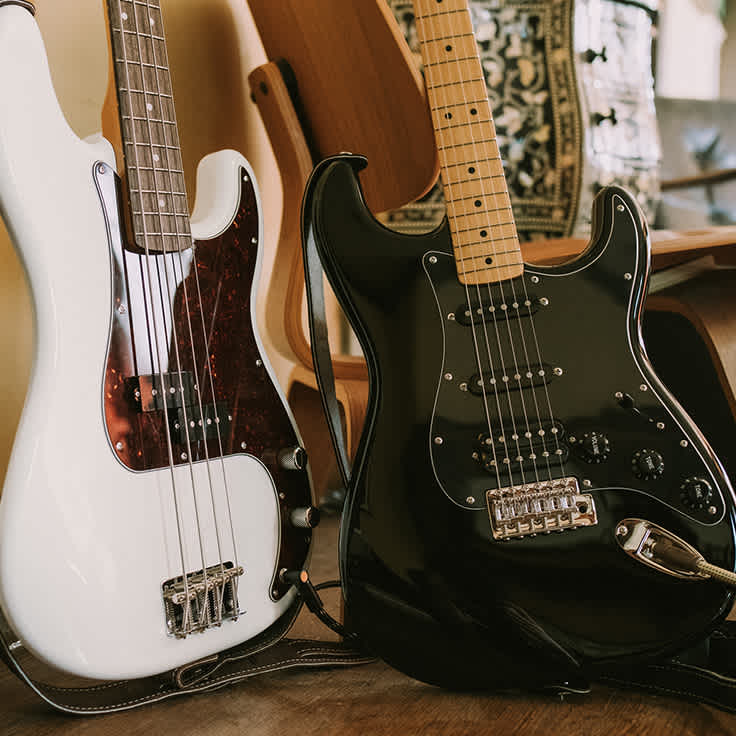
How a bass guitar differs from a regular guitar
A bass guitar and a regular guitar may look similar at first. Both can have a solid body, a long neck, frets, tuning pegs, and electronic pickups. Yet several design choices make them different instruments.
Number of strings
Most electric guitars have six strings. A standard bass guitar has four strings.
Some basses have five or six strings. These models add lower or higher notes for players who need a wider range. Still, the four string bass remains the most common design.
String thickness
Bass strings are much thicker than guitar strings. They need more mass to produce deep notes.
Thicker strings also need more finger strength. This does not mean bass is harder than guitar. It means the physical demands are different.
Scale length
Scale length is the distance from the nut to the bridge. A common electric guitar scale length is about 24.75 to 25.5 inches. A common full scale bass is about 34 inches.
The longer scale gives bass strings enough tension. It also creates wider spaces between frets. Players with smaller hands may prefer a short scale bass, which often measures around 30 inches.
Tuning
A standard guitar is tuned E, A, D, G, B, and E. A standard four string bass is tuned E, A, D, and G.
The bass uses the same notes as the lowest four guitar strings, but one octave lower. This makes it easy for guitar players to understand basic note patterns on bass.
Sound and role
A guitar often plays chords, riffs, solos, and melodies. A bass guitar usually supports the chord changes and works closely with the drummer.
This role is not less important. A strong bass line can make a simple song feel powerful. A weak bass line can make the whole band sound thin.
Why is a bass guitar called a guitar?
The bass guitar developed from the same instrument family as the guitar. Its construction follows many guitar ideas, including frets, a neck, a body, and plucked strings.
Before the electric bass became popular, many bands used the upright bass. The upright bass was large, hard to transport, and difficult to amplify in loud rooms.
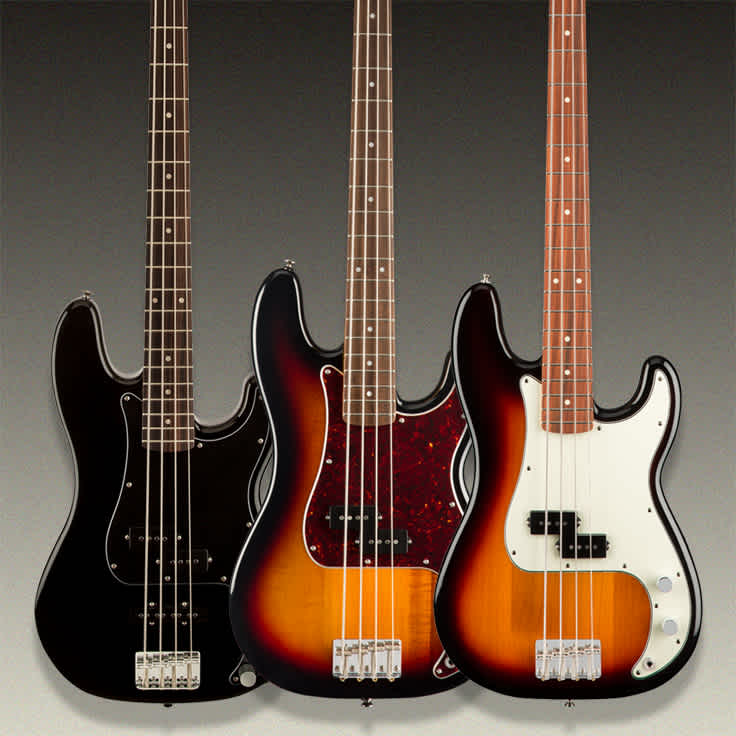
In the 1950s, electric bass designs became more practical for touring musicians. The Fender Precision Bass was one of the most influential early models. It gave players a portable instrument with frets and a clear amplified sound.
The name “bass guitar” helped people understand the instrument’s purpose. It was a guitar shaped and played in many familiar ways, but it served the low end of the band.
This history also explains why the answer to “is a bass guitar a guitar” can seem confusing. A bass guitar is both related to the guitar and different enough to have its own technique and musical role.
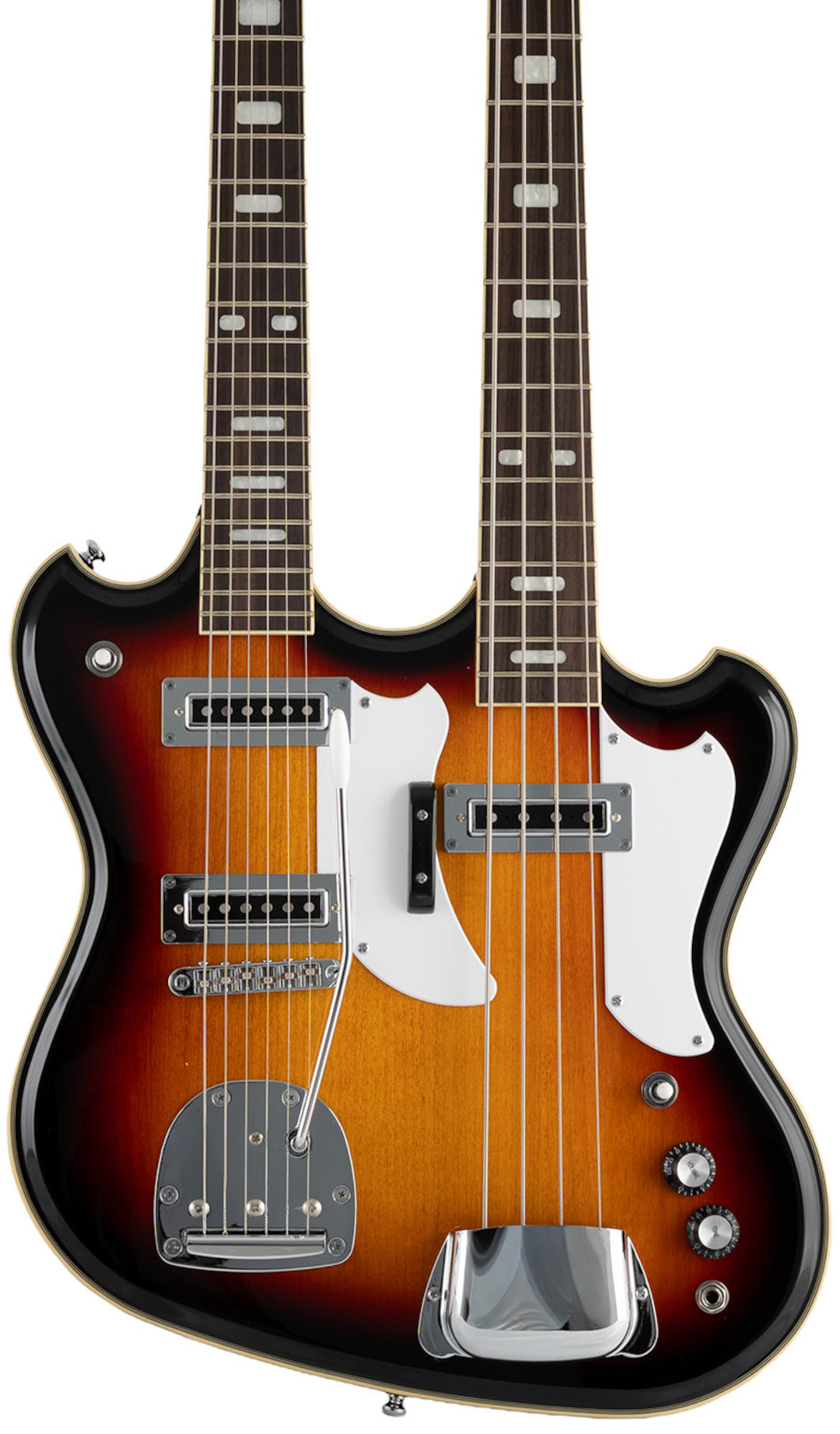
How a bass guitar works
A bass guitar creates sound when its strings vibrate. On an electric bass, magnetic pickups detect those vibrations and send an electrical signal to an amplifier.
The player controls the pitch by pressing a string against a fret. Moving toward the bridge raises the pitch. Plucking harder can increase volume and add more attack, although the amplifier also affects the final sound.
Important parts include:
• Body: Holds the bridge, pickups, controls, and neck joint.
• Neck: Supports the fretboard and gives the strings their playing length.
• Fretboard: Contains metal frets that divide the notes.
• Pickups: Convert string vibration into an electrical signal.
• Bridge: Anchors the strings and helps control intonation.
• Tuning machines: Adjust the pitch of each string.
A bass amplifier is also designed for low frequencies. Using a small guitar amplifier with a bass can damage the speaker if you play loudly. For safe practice, use a bass amp, a headphone amp, or a device made for both instruments.

Can you play guitar on a bass guitar?
You can play many guitar ideas on a bass guitar, but they may not sound the same. Scales, arpeggios, riffs, and single note melodies transfer well.
Full guitar chords are less practical on bass. The strings are wider, the neck is longer, and the low frequencies can make large chords sound muddy.
A bass player often uses these techniques:
• Fingerstyle: Pluck the strings with the index and middle fingers.
• Pick playing: Use a guitar pick for a sharp and steady attack.
• Slap and pop: Strike the string with the thumb and pull it with another finger.
• Palm muting: Rest the picking hand lightly near the bridge to reduce sustain.
• Slides: Move between notes while keeping the string ringing.
• Harmonics: Touch the string lightly at selected points to create clear, bell-like tones.
When I compare beginner practice on guitar and bass, one lesson stands out: bass rewards timing more than speed. A simple line played perfectly with the drummer often sounds better than a difficult line played without a steady pulse.

Can you play bass guitar on a regular guitar?
You can play bass lines on a regular guitar, but the notes will not reach the same low range. A guitar can imitate some bass parts, especially when played through an octave pedal or digital effect.
A standard guitar is not a true replacement for a bass guitar. Its strings are shorter and thinner, and its pickups and amplifier are voiced for higher frequencies.
You can use a guitar for bass practice when:
• You are learning note names.
• You are practicing rhythm and timing.
• You are studying a bass line before buying a bass.
• You are using an octave effect.
• You are writing music in a quiet setting.
However, a guitar played without an octave effect may leave a band’s low end empty. In a full mix, the difference becomes easy to hear.
Is bass guitar easier than guitar?
Neither instrument is simply easier. Each has skills that take time to develop.
Bass guitar may feel easier at first because many songs use one note at a time. A beginner can learn a basic bass line without learning complex chords. The wider strings can also make individual notes feel clear.
Bass becomes challenging when you focus on timing, muting, tone, and movement across the neck. A bass player must often lock in with the drummer while supporting the song’s harmony.