How Do You Play Scales On A Guitar: Easy Guide
Play guitar scales by learning one pattern, using alternate picking, and practicing slowly with a steady rhythm.
Learning how do you play scales on a guitar is less about racing across the fretboard and more about building control, timing, and musical awareness. With the right hand position, a simple fingering system, and a clear practice plan, scales become useful tools for solos, songwriting, improvisation, and chord knowledge.

What Are Guitar Scales?
A guitar scale is a group of notes arranged in a specific order. Each scale has a sound and a musical purpose. For example, the major scale often sounds bright and open, while the natural minor scale usually feels darker or more serious.
Scales help you understand the fretboard. They also show you which notes work well over chords and songs. Think of a scale as a map. Chords are places on the map, and scales show you the roads that connect them.
When people ask, “How do you play scales on a guitar?” they often mean two things:
- Which notes should I play?
- Which fingers and strings should I use?
The answer depends on the scale, the key, and the position on the neck. Beginners should start with one-octave patterns before learning wider two-octave shapes.
How Do You Play Scales on a Guitar?
Start with a tuned guitar, choose one scale, and learn its notes in a small fretboard position. The A minor pentatonic scale is one of the best starting points because it uses five notes and appears in rock, blues, country, and pop music.
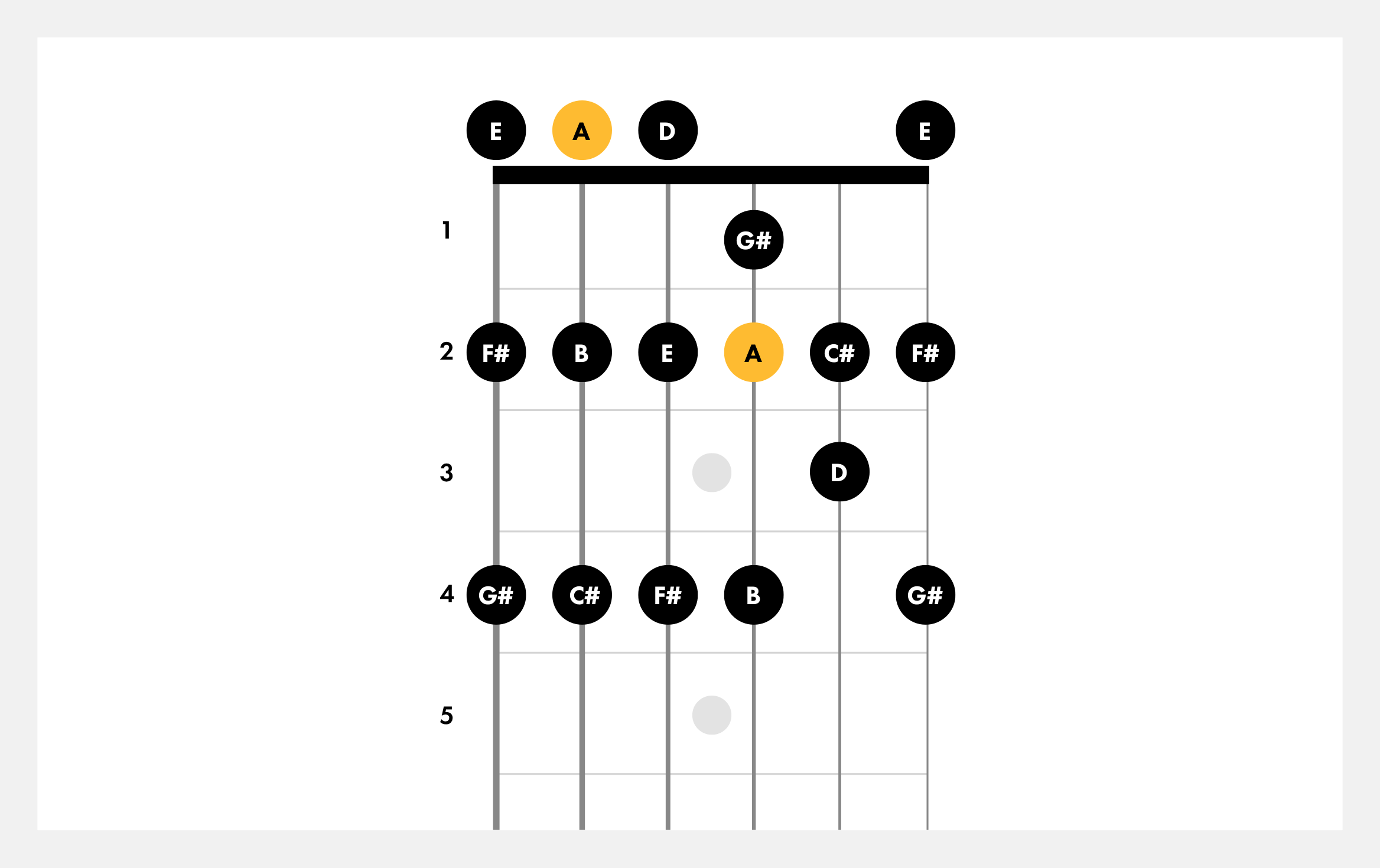
Here is the common A minor pentatonic pattern at the fifth fret:
e|----------------5--8--|
B|------------5--8------|
G|--------5--7----------|
D|----5--7--------------|
A|5--7------------------|
E|5--8------------------|
The numbers show fret positions. Play from the low sixth string toward the high first string. Then play the same notes backward to return to the starting note.
Use one finger for each fret when possible:
- Index finger: fifth fret
- Ring finger: seventh fret
- Little finger: eighth fret
Keep your thumb behind the neck. Your fingers should stay close to the strings instead of lifting high into the air. This small movement saves time and reduces tension.
When learning how do you play scales on a guitar, do not focus only on the left hand. Your picking hand matters just as much. Use a downstroke on the first note, then alternate between downstrokes and upstrokes.

How to Play the Major Scale on Guitar
The major scale contains seven different notes. Its pattern is based on this whole-step and half-step formula:
- Whole step
- Whole step
- Half step
- Whole step
- Whole step
- Whole step
- Half step
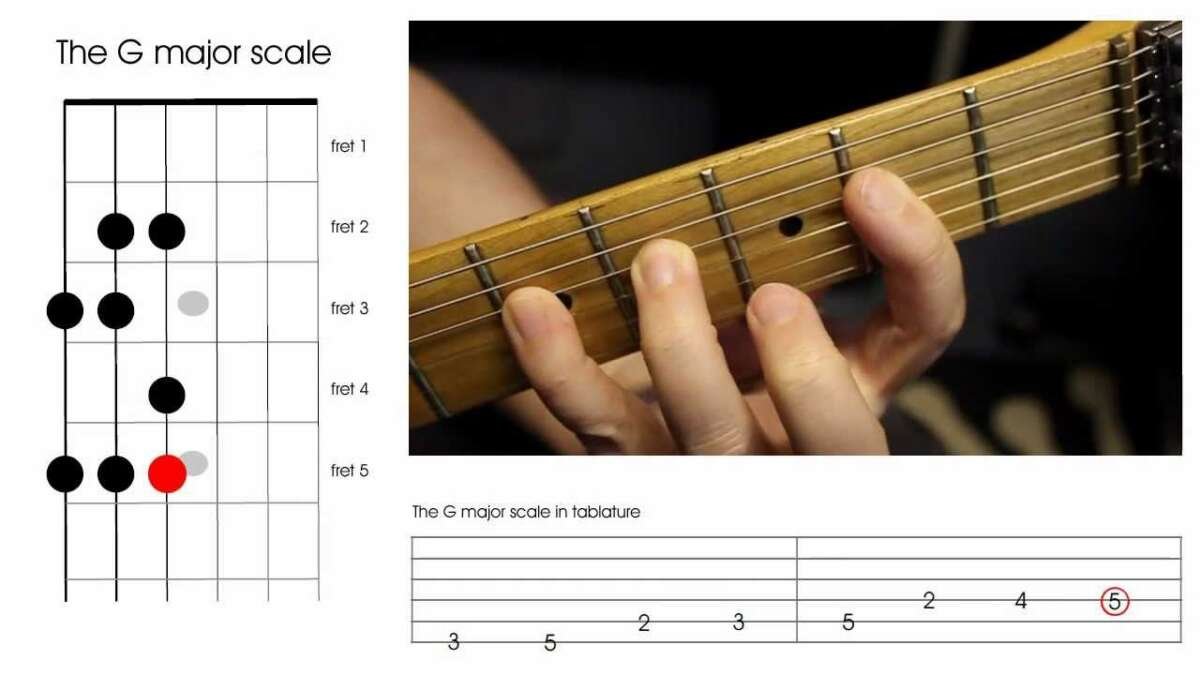
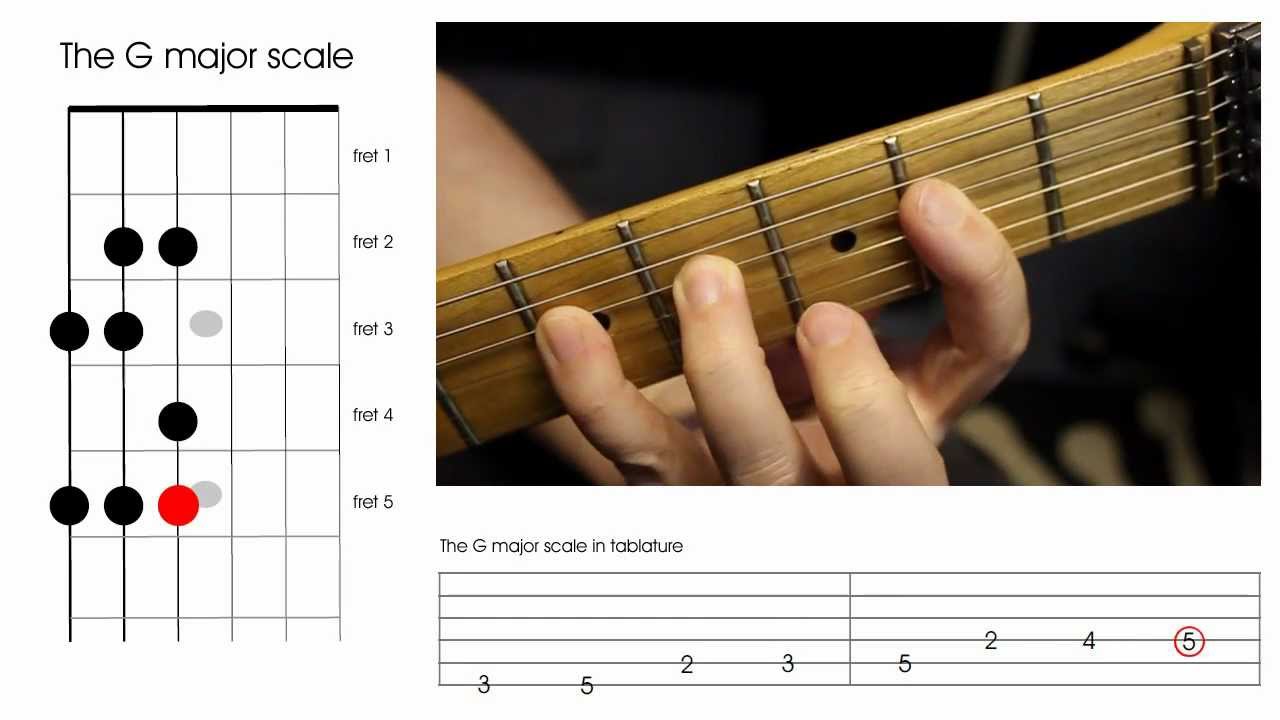
On guitar, a half step equals one fret. A whole step equals two frets. The G major scale, for example, contains the notes G, A, B, C, D, E, and F-sharp.
A simple one-octave G major scale can be played like this:
e|--------------------|
B|--------------------|
G|--------------------|
D|------------4--5----|
A|------2--3--5-------|
E|3--5----------------|
This example is compact and useful for learning how notes connect across strings. Play each note clearly. Let one note ring only until the next note sounds, unless you are practicing a legato style.
For better control, practice the scale in three ways:
- Play it from the lowest note to the highest note.
- Play it backward from the highest note to the lowest note.
- Play it in groups of three or four notes.
Grouping notes helps your brain recognize shapes instead of treating every note as a separate task. This is one of the fastest ways to make a scale feel natural.

How to Play the Minor Pentatonic Scale
The minor pentatonic scale is one of the most useful guitar scales. It has five notes and avoids the two notes that can create strong tension in a full minor scale. That makes it easy to use over many blues, rock, and pop progressions.
The most common shape begins on the sixth string. In the key of A minor, it starts at the fifth fret. Move the same shape to another fret, and you change the key.
For example:
- Fifth fret: A minor pentatonic
- Seventh fret: B minor pentatonic
- Eighth fret: C minor pentatonic
- Tenth fret: D minor pentatonic
The root note is the note that gives the scale its name. In the standard fifth-position shape, the root notes appear on the sixth and first strings at the same fret.
To make the scale sound musical, do more than play it up and down. Try these exercises:
- Stop on the root note.
- Bend the seventh fret on the third string.
- Repeat short three-note phrases.
- Add slides between the fifth and seventh frets.
- Play along with a slow blues backing track.
A common mistake is to memorize the shape without learning where the root notes are. Shape memory is useful, but note awareness gives you control.

How Do You Play Scales on a Guitar With Proper Technique?
Good technique makes scale practice easier and safer. Begin with relaxed shoulders and a straight wrist. Do not squeeze the neck harder than needed to produce a clean sound.
Place your fingertip close to the fret. Press behind the metal fret, not directly on top of it. If the note buzzes, adjust your finger position before adding more pressure.
Your picking motion should come from a small movement in the wrist. Avoid making large motions from your elbow. Large movements use more energy and make fast playing harder.
Follow this basic technique checklist:
- Keep the thumb near the center of the neck.
- Curve each fretting finger.
- Keep unused fingers near the strings.
- Pick near the sound hole on an acoustic guitar.
- Pick between the bridge and neck pickup on an electric guitar.
- Relax your hand after every short exercise.
When I help players correct scale technique, I often see the same issue: they practice faster than they can play cleanly. Speed hides mistakes during practice but reveals them during performance. Slow playing is not a punishment. It is how accuracy is built.

How Do You Use Alternate Picking?
Alternate picking means switching between downstrokes and upstrokes. A basic pattern looks like this:
Down, up, down, up, down, up
Start with a downstroke on the first note. Continue the pattern even when you change strings. This creates a steady motion and prepares you for faster scale runs.
Practice alternate picking with a metronome. Set it to 60 beats per minute and play one note per click. When every note sounds even, play two notes per click. Increase the speed by only a few beats at a time.
Do not raise the tempo if your hand becomes tense or your notes become unclear. Return to the last comfortable speed. A clean scale at 80 beats per minute is more valuable than a messy scale at 140.
You can also practice with different rhythmic patterns:
- Long note, short note
- Short note, long note
- Groups of three
- Groups of four
- Accent every fourth note
These patterns improve timing and make basic scales sound more like real guitar phrases.
How Do You Practice Guitar Scales?
A short, focused practice routine works better than a long session with no plan. You do not need to practice scales for an hour each day. Ten to fifteen careful minutes can produce strong results when you practice often.
Use this simple routine:
- Tune the guitar.
- Warm up with open-string picking.
- Play one scale slowly.
- Play the scale backward.
- Practice with a metronome.
- Create a short musical phrase.
- End by playing the scale freely.
Spend several days on one scale before adding another. Learning five shapes in one afternoon may feel productive, but weak memory often follows. Strong players usually build their fretboard knowledge in small layers.
Try saying the note names as you play. This may slow you down at first, but it links the physical shape to real musical knowledge. You will eventually know both the pattern and the notes.
Record yourself once a week. Listen for uneven timing, buzzing strings, missed notes, and unnecessary tension. A recording can reveal problems that are easy to miss while you are concentrating on your fingers.

Common Guitar Scale Mistakes
Many players struggle with scales because they practice the wrong way, not because scales are too difficult. A few small changes can make practice much more effective.
Playing too fast
Fast practice often creates sloppy string changes and uneven notes. Begin at a speed where you can play every note clearly.
Ignoring rhythm
A scale is music, not a finger exercise. Practice with a metronome or drum loop so your timing develops with your technique.
Using too much pressure
Extra pressure tires your hand and may cause pain. Use only enough pressure to create a clean note.
Learning shapes without roots
A shape tells you where to put your fingers. Root notes tell you how the scale fits the song. Learn both.
Practicing only upward
Playing up the scale is easier than returning down. Always practice both directions.
Skipping string changes
Many players can play notes on one string but lose control when crossing strings. Practice slow, deliberate string changes.
Avoiding musical use
If you only play scales from the lowest note to the highest note, they may feel boring. Use bends, slides, rests, repeated notes, and short phrases.
The most important lesson is simple: scales should serve music. Use them to build solos, melodies, and better knowledge of the fretboard.

How Do You Connect Scale Shapes?
Most guitar scales have several connected patterns across the neck. The five positions of the minor pentatonic scale are a useful example. Each position shares notes with the next one.
Start by learning one position well. Then find the same scale’s notes directly above and below it. Notice where the patterns overlap. These shared notes act like bridges between shapes.
You can connect patterns with this exercise:
- Play the first position for two notes.
- Move to the next position.
- Continue across the neck.
- Reverse the path back to the starting position.
Do not rush to memorize all five positions. First learn where the root notes appear in each shape. Then learn how the notes connect.
Three-note-per-string major scale patterns are also useful for players who want to play faster or cover more of the neck. They can feel wider than basic box patterns, so practice them slowly and keep your fretting hand relaxed.
How Do You Make Scales Sound Musical?
Scales become expressive when you change how you play them. Dynamics, rhythm, articulation, and space all matter.
Try playing the same scale with different techniques:
- Hammer-ons
- Pull-offs
- Slides
- Bends
- Vibrato
- Palm muting
- Staccato notes
- Sustained notes
You can also limit yourself to three or four notes. Great guitar solos often come from a small idea that is repeated and developed. More notes do not always create better music.
Play a scale over a backing track in the same key. Start with simple phrases. Leave space between phrases and listen to how each note interacts with the chord.
A helpful rule is to finish phrases on a root note, especially when you are learning. Later, experiment with the third, fifth, and seventh notes of the scale. These notes help you target the sound of the chord underneath.
How Do You Play Scales on a Guitar in Different Keys?
To play a scale in another key, move its movable pattern to a new fret. For the minor pentatonic scale, the root on the sixth string determines the key.
The notes on the sixth string include:
- Fifth fret: A
- Seventh fret: B
- Eighth fret: C
- Tenth fret: D
- Twelfth fret: E
If you move the A minor pentatonic shape from the fifth fret to the seventh fret, it becomes B minor pentatonic. The finger pattern stays the same, but every note moves higher.
This is one reason guitar scales are powerful. A single shape can work in all twelve keys. However, the sound changes because the pitch changes, so learn to identify the root note rather than relying only on fret numbers.
Use a tuner while checking unfamiliar notes. Standard tuning is E, A, D, G, B, E from the lowest string to the highest. Alternate tunings change the relationship between strings, so familiar scale shapes may need adjustment.
Frequently Asked Questions About How Do You Play Scales on a Guitar
How long should I practice guitar scales each day?
Start with 10 to 15 focused minutes. Practice slowly, use a metronome, and stop if your hands feel pain or strong tension.
What is the best guitar scale for a beginner?
The A minor pentatonic scale is an excellent first choice. It has five notes, uses a simple shape, and works well in blues, rock, and many popular styles.
Should I use a pick or my fingers to play scales?
Both methods are useful. A pick helps develop alternate picking, while fingerstyle playing improves independence and works well for classical, folk, and hybrid guitar.
Do I need to memorize every guitar scale shape?
No. Learn one or two useful shapes first, along with their root notes. Add more patterns when you can use the first ones comfortably in real music.
Why do my guitar scales sound uneven?
Uneven scales usually come from inconsistent picking, weak string changes, or practicing too quickly. Lower the tempo and check that each note has a similar volume and length.
Can guitar scales help me improvise solos?
Yes. Scales show you which notes are likely to fit a key or chord progression. Good improvisation also requires rhythm, phrasing, bends, pauses, and careful listening.
How do I know which scale to use over a song?
Find the song’s key and chord progression first. Major pentatonic scales often suit bright major songs, while minor pentatonic scales commonly fit blues and rock progressions.
Conclusion
Learning how do you play scales on a guitar starts with one clear pattern, slow practice, accurate picking, and relaxed technique. Begin with the minor pentatonic scale, learn where its root notes are, and use a metronome to build clean timing.
Do not treat scales as boring drills. Turn them into melodies with bends, slides, rhythm changes, and short phrases. Practice one small idea today, record your progress, and explore another scale when the first one feels comfortable. Share your favorite scale exercise or continue learning through more guitar lessons and fretboard guides.

Senior Music Reviewer
Alex Carter is a seasoned music reviewer with over a decade of experience in the world of sound and instruments. Passionate about helping musicians and enthusiasts make informed choices, he brings sharp insights and in-depth knowledge to every review. From classical instruments to modern gear, Alex combines technical expertise with a love for music to deliver content that resonates with readers.
As a Senior Music Reviewer and expert author on Tuneluma.com, Alex is dedicated to sharing honest evaluations, practical advice, and thoughtful commentary to guide readers in their musical journey.