How Wide Is An Upright Piano: Standard Sizes Guide
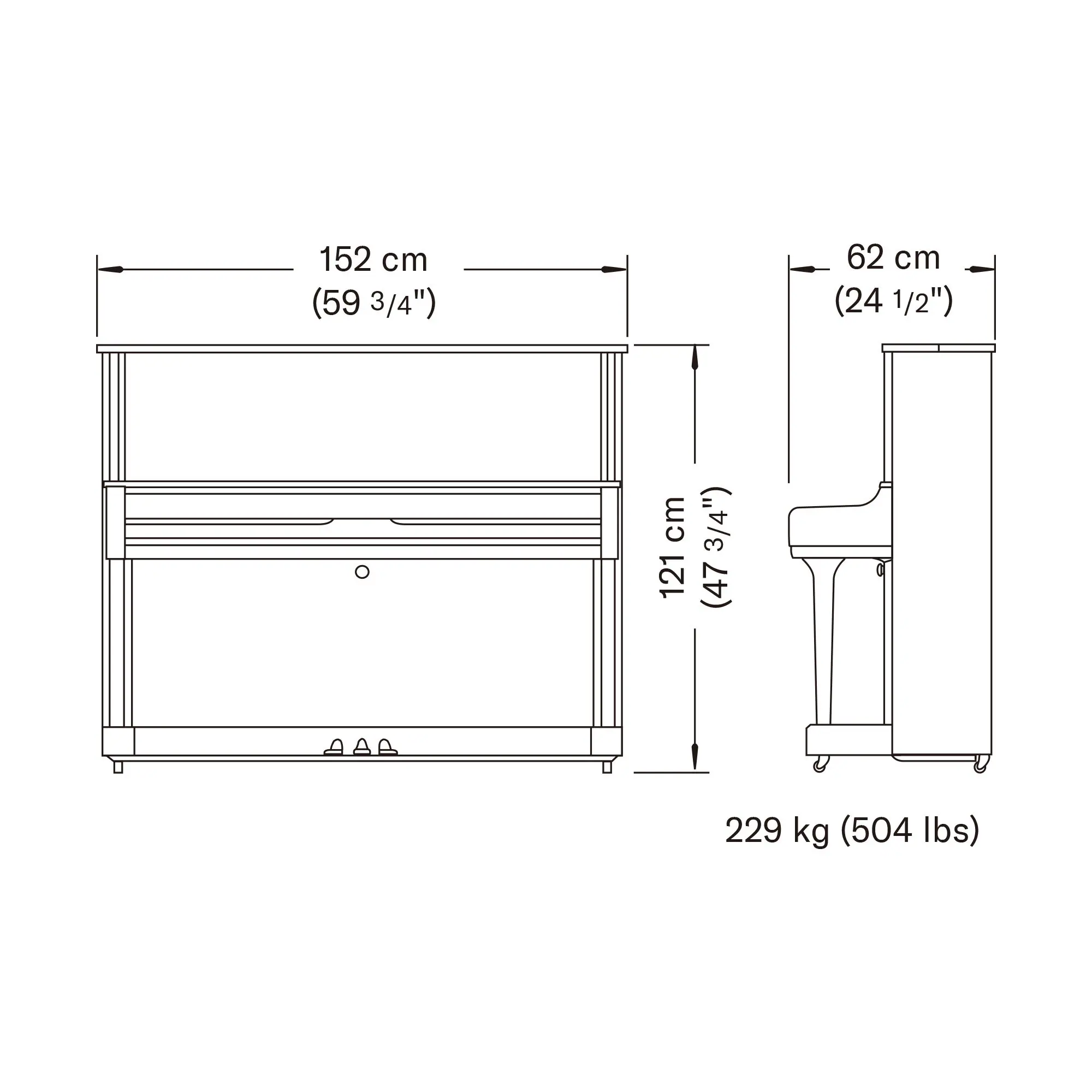
Most upright pianos are 58 to 60 inches wide, though some models measure slightly less or more.
Knowing how wide is an upright piano helps you plan a safe spot, check door access, and avoid costly moving surprises. After measuring many piano spaces and seeing common fit mistakes, I can say that the listed width is only the starting point. You also need to account for trim, casters, music desks, doorways, and room acoustics.

How wide is an upright piano?
A standard upright piano is usually 58 to 60 inches wide. That equals about 4 feet 10 inches to 5 feet across.
Most upright pianos have a similar width because the keyboard must hold 88 keys. The case can change in height and depth, but the keyboard width stays fairly consistent.
Here are common upright piano width ranges:
• Small spinet piano: About 54 to 58 inches wide
• Console piano: About 56 to 59 inches wide
• Studio upright piano: About 58 to 61 inches wide
• Professional upright piano: About 59 to 63 inches wide
• Older or unusual upright piano: About 55 to 65 inches wide
The exact answer to how wide is an upright piano depends on the brand, model, age, and case design. A compact piano may be a few inches narrower than a full-size studio upright.
When planning a room, use the manufacturer’s listed measurement if possible. If you do not have the model number, measure the widest fixed part of the piano from left to right.

Standard upright piano dimensions
Width is only one part of an upright piano’s size. Height and depth also affect placement, sound, moving, and room balance.
Typical dimensions include:
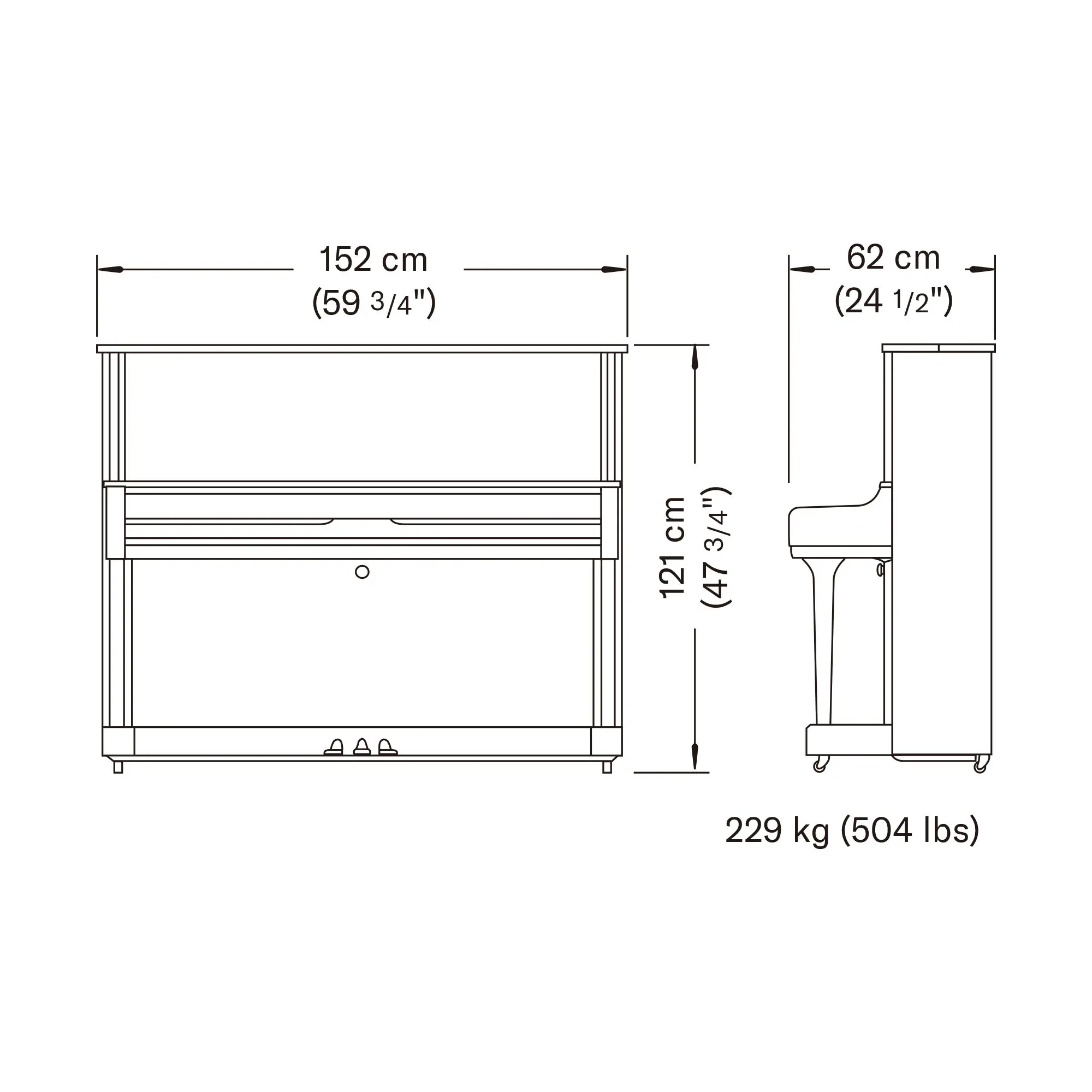
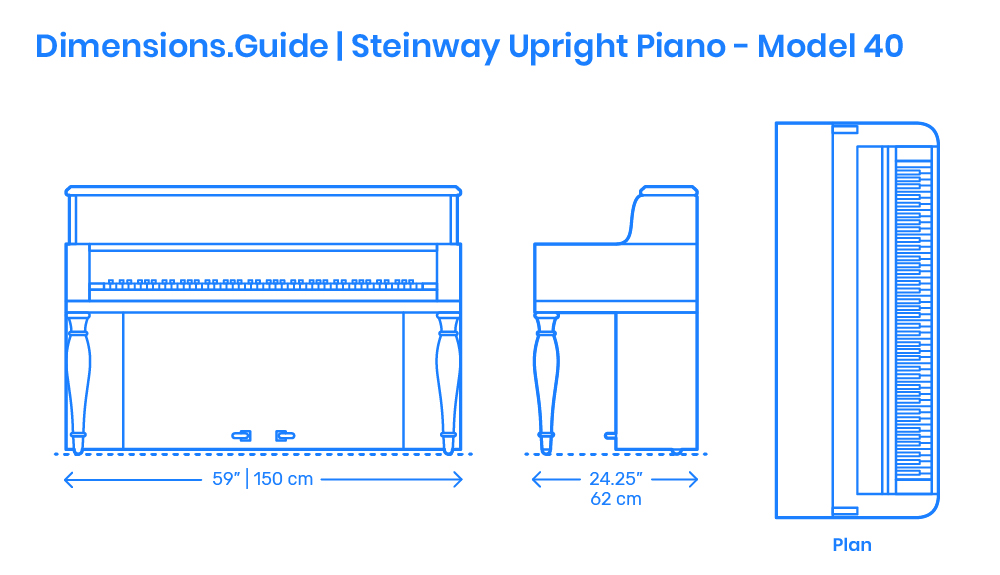
• Width: 58 to 60 inches
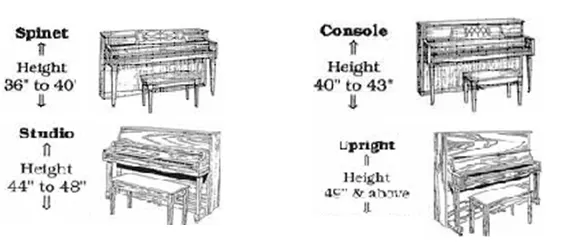
• Height: 36 to 52 inches
• Depth: 20 to 28 inches
• Weight: About 300 to 800 pounds
A small spinet may stand around 36 to 40 inches high. A tall professional upright may reach 48 to 52 inches. Taller models often produce a fuller sound because they have longer strings and a larger soundboard.
Depth usually measures from the front of the keys to the back of the cabinet. Some pianos have a deep music desk or protruding lid, so the usable space may be greater than the basic cabinet depth.
The answer to how wide is an upright piano does not tell you how much floor space it needs. A piano that is 60 inches wide and 24 inches deep still needs room for a bench, a player, and safe movement around it.
Upright piano width by piano type
Spinet piano
A spinet is one of the smallest upright piano styles. It often measures about 54 to 58 inches wide and stands around 36 to 40 inches tall.
Spinets are popular in apartments and small homes. Their smaller size can save space, but they may have a lighter tone and less powerful bass than larger upright pianos.
Console piano
A console piano commonly measures 56 to 59 inches wide. It is often about 40 to 44 inches tall.
Console pianos are a common choice for homes because they balance sound, size, and cost. If someone asks how wide is an upright piano for a typical living room model, a console is often close to 58 inches.
Studio upright piano
A studio upright usually measures 58 to 61 inches wide. Its height often ranges from 44 to 48 inches.
Studio pianos have a stronger tone and more durable action than many smaller models. They are common in teaching studios, churches, schools, and serious home practice rooms.
Professional upright piano
A professional upright may be 59 to 63 inches wide and 48 to 52 inches tall. Some older designs may be wider.
These pianos often have longer strings, a larger soundboard, and more powerful bass. Their size can make them excellent for performance, but they need careful planning before delivery.

Why upright pianos are usually about five feet wide
An upright piano needs enough horizontal space for its keyboard. A full keyboard has 88 keys, including white and black keys arranged across a fixed musical range.
The keys themselves are not five feet wide. The extra space comes from the key frame, side blocks, action parts, cabinet walls, and design clearance.
A piano keyboard is usually about 48 to 49 inches wide. The full cabinet must be wider to protect the keyboard and support the internal structure.
This is why the answer to how wide is an upright piano is often close to five feet, even when the piano looks narrow from the front.
Some digital pianos have a much slimmer cabinet because they do not need large acoustic parts. An acoustic upright, however, needs space for strings, hammers, dampers, bridges, and a soundboard.

How to measure an upright piano correctly
Measuring an upright piano takes only a few minutes, but accuracy matters. Do not rely only on a product listing or a quick visual estimate.
Follow these steps:
-
Close the keyboard cover if the piano has one.
-
Measure from the farthest left point to the farthest right point.
-
Include side panels, hinges, decorative trim, and fixed hardware.
-
Measure the piano at its widest point.
-
Measure the depth from the front edge to the back panel.
-
Measure the height from the floor to the highest fixed point.
-
Record the measurements in both inches and centimeters if movers are involved.
For most homes, the key measurement is the clear wall width. If your wall is 65 inches wide and the piano is 60 inches wide, you have only 2.5 inches on each side.
That may be enough for placement, but it leaves little room for trim, curtains, electrical outlets, or future moving. I recommend allowing at least 3 to 6 inches of extra wall width when possible.

How much space does an upright piano need?
A piano may be 60 inches wide, but it needs more than a 60-inch space. You should also plan for the bench, the player’s legs, airflow, and access for tuning.
A practical room allowance is:
• Piano width: 58 to 63 inches
• Piano depth: 24 to 30 inches
• Front sitting space: 36 to 48 inches
• Side clearance: At least 2 to 6 inches on each side
• Tuning access: Enough space for a technician to reach the top and back
A bench usually sits about 18 to 24 inches in front of the piano. A player needs additional legroom beneath the keyboard.
Avoid placing an upright piano tightly against a heater, radiator, fireplace, or exterior wall with strong temperature changes. Heat and moisture can damage wood, affect tuning, and shorten the life of the instrument.
The answer to how wide is an upright piano helps with the wall, but room planning should consider the entire playing area.
Upright piano doorway and hallway clearance
Many delivery problems happen because people measure the room but not the route. A piano may fit perfectly against a wall and still fail to pass through the front door.
Measure these areas before scheduling delivery:
• Front door opening
• Interior door openings
• Hallway width
• Stairway width
• Ceiling height near turns
• Elevator doors, if applicable
• Tight corners and landings
Measure the clear opening, not just the door slab. Remove the door from its hinges if a professional mover recommends it.
Most upright pianos are moved standing upright or slightly tilted. The movers may need extra clearance for padding, a piano board, or a dolly.
A common mistake is assuming that a 60-inch-wide piano must pass through a 60-inch-wide doorway front first. It often passes through sideways, but the piano’s depth and height then become important.
Professional piano movers can assess turns and stairs more safely than general household movers. Upright pianos are heavy, top-heavy, and difficult to control on slopes.

Does piano height change its width?
Piano height usually has little effect on width. A 40-inch console and a 48-inch studio piano may both be close to 58 or 60 inches wide.
The main difference is often the internal design. Taller uprights can have longer strings and a larger soundboard, which may improve tone and volume.
Still, height can affect delivery. A tall piano may be harder to tilt, fit under low ceilings, or move around a stair landing.
When comparing how wide is an upright piano across several models, do not assume the tallest one is also the widest. Check the model’s full specifications.
Upright piano versus other piano sizes
Comparing piano types makes the width question easier to understand.
Upright piano
An upright piano is usually 58 to 60 inches wide. It stores its strings and soundboard vertically, which saves floor space.
Baby grand piano
A baby grand is often about 55 to 62 inches wide at the keyboard end. Its length commonly ranges from 4 feet 11 inches to 5 feet 6 inches.
Although some baby grands have a similar keyboard width, they occupy more floor area because the body extends outward.
Digital piano
A digital piano may be 50 to 58 inches wide. It is often much shallower and lighter than an acoustic upright.
Digital models are easier to move and place in small rooms. They do not, however, create sound through acoustic strings and a traditional soundboard.
Full grand piano
A full grand piano is usually about 58 to 60 inches wide at the keyboard. Its length may range from 6 feet to more than 9 feet.
This comparison shows why the answer to how wide is an upright piano can seem surprising. Several piano types have similar keyboard widths, but their depth and overall footprint differ greatly.
Tips for placing an upright piano in a room
The best location protects the piano and supports comfortable playing.
Use these practical tips:
• Place the piano on a firm, level floor.
• Keep it away from direct sunlight.
• Avoid heating vents, fireplaces, and radiators.
• Do not place it beside a frequently opened exterior door.
• Leave enough space to open the top for tuning and maintenance.
• Keep the bench centered with the keyboard.
• Use a rug only if it does not block casters or create an uneven base.
• Check that nearby shelves and wall art cannot fall onto the piano.
An inside wall is often a good choice because it has fewer temperature swings. Modern homes vary, though, so indoor humidity matters more than the wall itself.
Most acoustic pianos perform best in a stable environment. Many piano technicians recommend keeping indoor relative humidity near 40% to 50%, although the ideal range can vary by climate and building conditions.
Common mistakes when measuring an upright piano
The most common mistake is measuring only the keyboard area. The cabinet may extend several inches beyond the keys on both sides.
Other errors include:
• Measuring the wall but not the delivery path
• Forgetting baseboards and door trim
• Ignoring the piano bench
• Assuming the listed width includes every protruding part
• Measuring an open keyboard cover instead of the closed instrument
• Forgetting stair turns and ceiling height
• Leaving no room for future tuning access
I once saw a piano fit the destination wall perfectly but fail at a narrow hallway turn. The solution required removing a door and using a more experienced moving crew. That experience reinforced a simple lesson: measure the route before you buy or schedule delivery.
If you are buying a used piano, ask the seller for the exact model number and measurements. Listings often round a 59-inch piano to “about five feet.”
Can an upright piano fit in a small apartment?
Yes, an upright piano can fit in many apartments. A compact spinet or console may work well if the room has a suitable wall and a safe delivery route.
Before buying, measure the following:
-
The available wall width
-
The piano’s full width and depth
-
The distance from the piano to the opposite wall
-
Door and elevator openings
-
Stairway and hallway turns
-
The location of heaters and windows
A room does not need to be large, but it must allow the pianist to sit comfortably. A crowded piano corner can make practice feel tiring and may create bumps around the instrument.
For apartment living, also check floor loading rules, building policies, elevator limits, and delivery hours. An upright piano can weigh several hundred pounds.
How to choose the right upright piano width
Choose the width based on the instrument’s sound, your room, and the delivery route. Do not choose only by the smallest number.
A useful decision process is:
-
Measure the available wall and delivery path.
-
Decide whether you need a compact, console, studio, or professional upright.
-
Compare exact manufacturer dimensions.
-
Check the piano’s weight and service history.
-
Leave space for the bench and maintenance.
-
Have a qualified technician inspect a used piano before purchase.
A slightly taller studio piano may offer a richer sound than a compact spinet without taking much more wall width. The best choice depends on your playing goals and room limits.
If space is extremely tight, a digital piano may be more practical. If tone, touch, and acoustic resonance matter most, a well-maintained upright can be a rewarding long-term choice.
Frequently Asked Questions About How Wide Is an Upright Piano
How wide is a standard upright piano?
A standard upright piano is usually 58 to 60 inches wide. Some compact models are closer to 54 inches, while larger professional uprights may reach 63 inches or more.
How wide is an upright piano with 88 keys?
An 88-key upright piano is commonly about 58 to 60 inches wide. The keyboard itself is narrower than the full cabinet because the case includes side panels and structural parts.
Can an upright piano fit through a 30-inch door?
It may fit through a 30-inch door if it is moved carefully and positioned correctly. The door opening, piano depth, padding, turns, and hallway clearance must all be checked by experienced movers.
How much wall space should I leave for an upright piano?
Plan for at least the piano’s full width plus several inches of extra space on each side. For a 60-inch upright, a wall area of about 66 to 72 inches is more comfortable.
Are taller upright pianos wider?
Not always. Taller uprights are often similar in width to shorter models, although some professional designs may be slightly wider.
How wide is an upright piano in centimeters?
A 58-inch piano is about 147 centimeters wide, while a 60-inch piano is about 152 centimeters wide. Always convert the exact manufacturer measurement when planning a tight space.
Does an upright piano need space behind it?
Yes, it needs some clearance from the wall for airflow, tuning access, and protection. The exact gap depends on the piano and the technician’s advice, but the instrument should not be forced tightly against the wall.
Conclusion
Most upright pianos are 58 to 60 inches wide, but compact, studio, professional, and older models can vary. The full planning picture also includes height, depth, bench space, doorways, stairs, temperature, and access for tuning.
Measure the piano itself and the entire delivery route before buying. When you know how wide is an upright piano and allow a little extra room, you can choose a model that fits safely and sounds its best. Compare exact specifications, consult a piano technician or professional mover, and share your measurements with the seller before arranging delivery.

Senior Music Reviewer
Alex Carter is a seasoned music reviewer with over a decade of experience in the world of sound and instruments. Passionate about helping musicians and enthusiasts make informed choices, he brings sharp insights and in-depth knowledge to every review. From classical instruments to modern gear, Alex combines technical expertise with a love for music to deliver content that resonates with readers.
As a Senior Music Reviewer and expert author on Tuneluma.com, Alex is dedicated to sharing honest evaluations, practical advice, and thoughtful commentary to guide readers in their musical journey.