What Do Guitar Pedals Do: Effects Explained
Guitar pedals change your guitar’s sound by adding effects such as distortion, delay, reverb, and modulation.
If you have ever heard a clean guitar become gritty, spacious, or almost vocal, you have heard the work of guitar pedals. Understanding what do guitar pedals do helps you choose the right effects, build a useful pedalboard, and avoid wasting money on sounds you may never use.
What Do Guitar Pedals Do?
Guitar pedals are small electronic devices that change an audio signal. Your guitar sends an electrical signal to the pedal, the pedal processes it, and the changed signal travels to your amplifier.
In simple terms, a pedal acts like a sound-shaping tool. It can make your tone louder, softer, brighter, darker, dirtier, wider, or more spacious.
The answer to what do guitar pedals do depends on the type of pedal. Some pedals create new sounds, while others control volume, remove noise, tune your guitar, or make your playing feel more expressive.
Most pedals include three basic parts:
• Input jack: This receives the signal from your guitar.
• Circuit: This changes or controls the signal.
• Output jack: This sends the processed signal to your amp or another pedal.
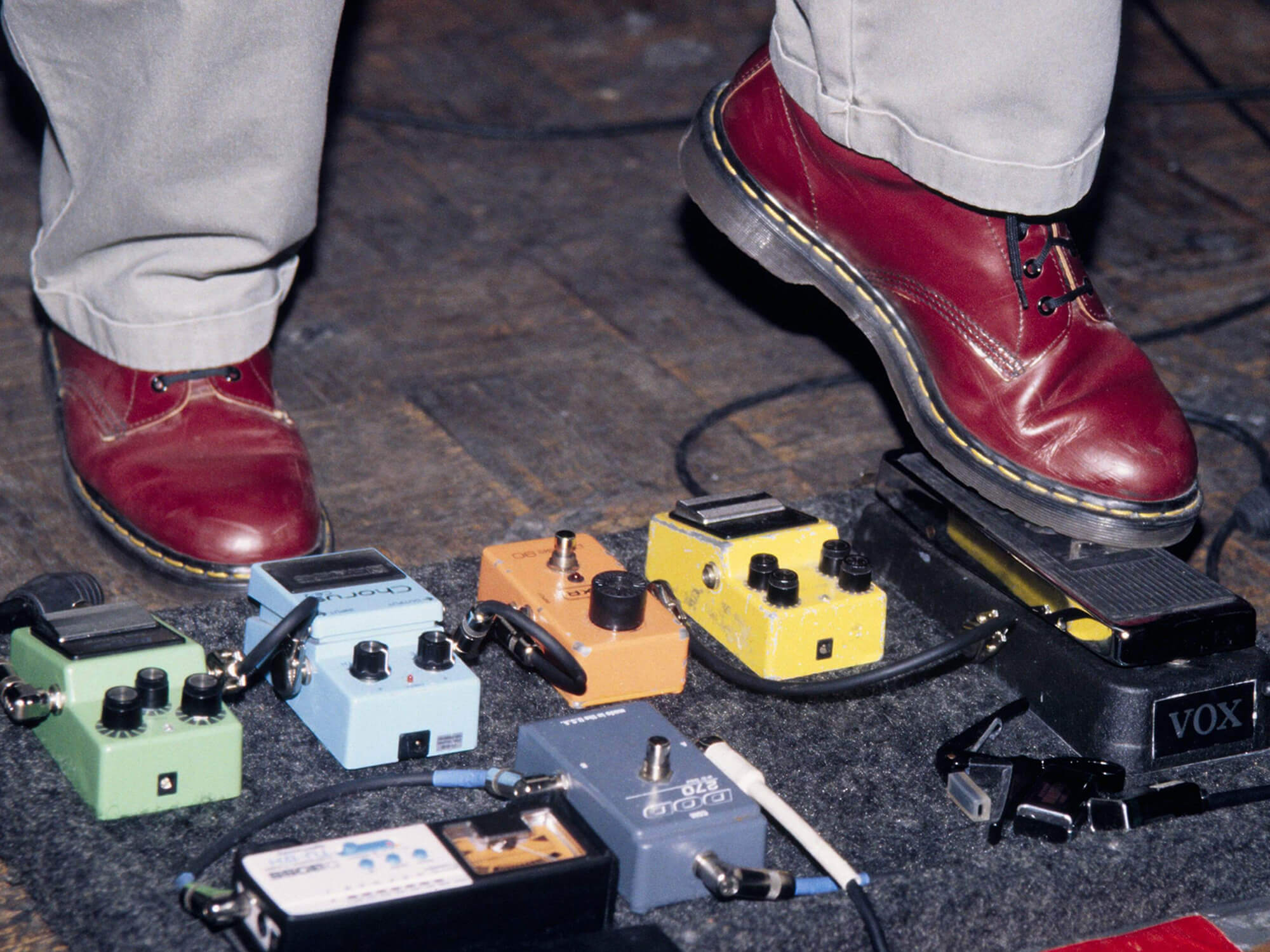
Many pedals also include footswitches, knobs, LEDs, and power connections. You press the footswitch to turn the effect on or off while you play.
A pedal does not replace your guitar or amplifier. Instead, it works between them. Think of it as a camera filter. The camera still takes the picture, but the filter changes the mood, color, and character.
How Guitar Pedals Process Your Signal
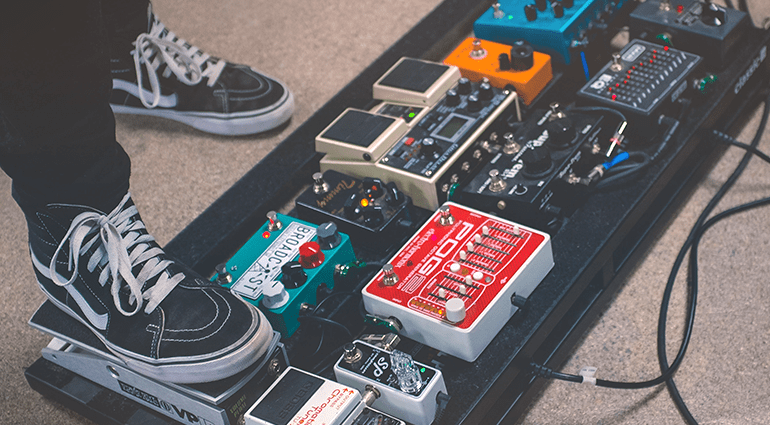
To understand what do guitar pedals do, it helps to follow the signal path. The signal starts at your guitar’s pickups, which sense the movement of the strings and convert it into electricity.
That signal then moves through your instrument cable and enters the first pedal. The pedal changes the signal based on its circuit and control settings. The output travels to the next pedal, if you have one, and finally reaches the amplifier.
Most modern guitar pedals use one of two main approaches:
• Analog processing: The pedal changes the signal through physical electronic components such as transistors, diodes, capacitors, and operational amplifiers.
• Digital processing: The pedal converts the signal into digital data, processes it with software, and converts it back into an audio signal.
Analog pedals often have a direct, organic response. Digital pedals can offer many sounds, presets, stereo outputs, and complex effects in one unit. Neither approach is automatically better. The best choice depends on the sound, features, and playing style you want.
The pedal’s controls adjust specific parts of the signal. A distortion pedal may have gain, tone, and volume controls. A delay pedal may offer time, feedback, and level controls. Learning what each control does is more useful than simply copying someone else’s settings.
One important technical detail is gain staging. If one pedal sends a very strong signal into the next pedal, the second pedal may distort or compress it. This can sound exciting, or it can create unwanted noise and harshness.
Main Types of Guitar Pedals
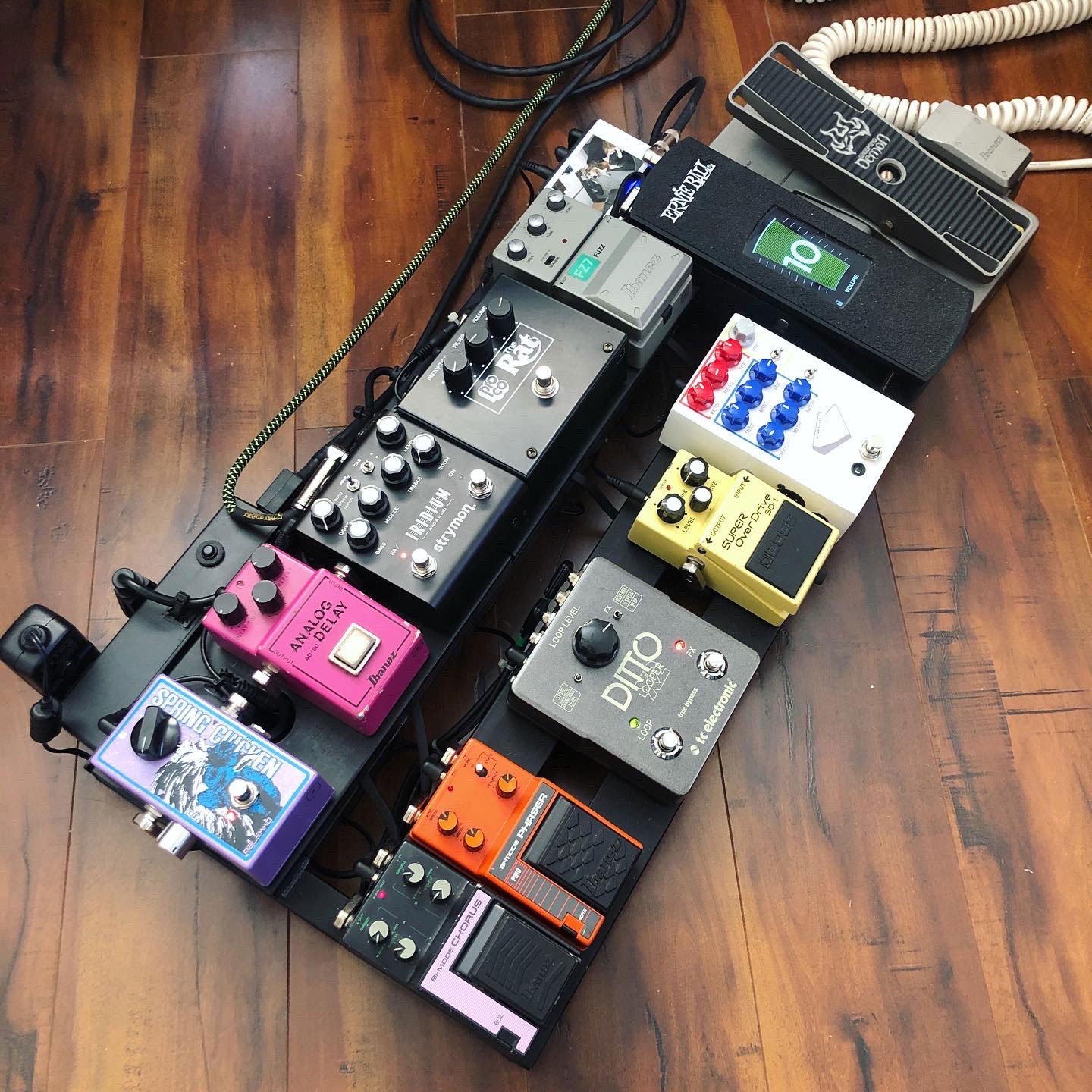
The most useful way to learn what do guitar pedals do is to study the main effect families. Each family solves a different musical problem.
Tuner pedals
A tuner pedal checks the pitch of each string. It usually mutes your signal while tuning, so the audience does not hear the process.
A reliable tuner is often the first pedal worth buying. Even the best effects sound wrong when the guitar is out of tune.
Overdrive pedals
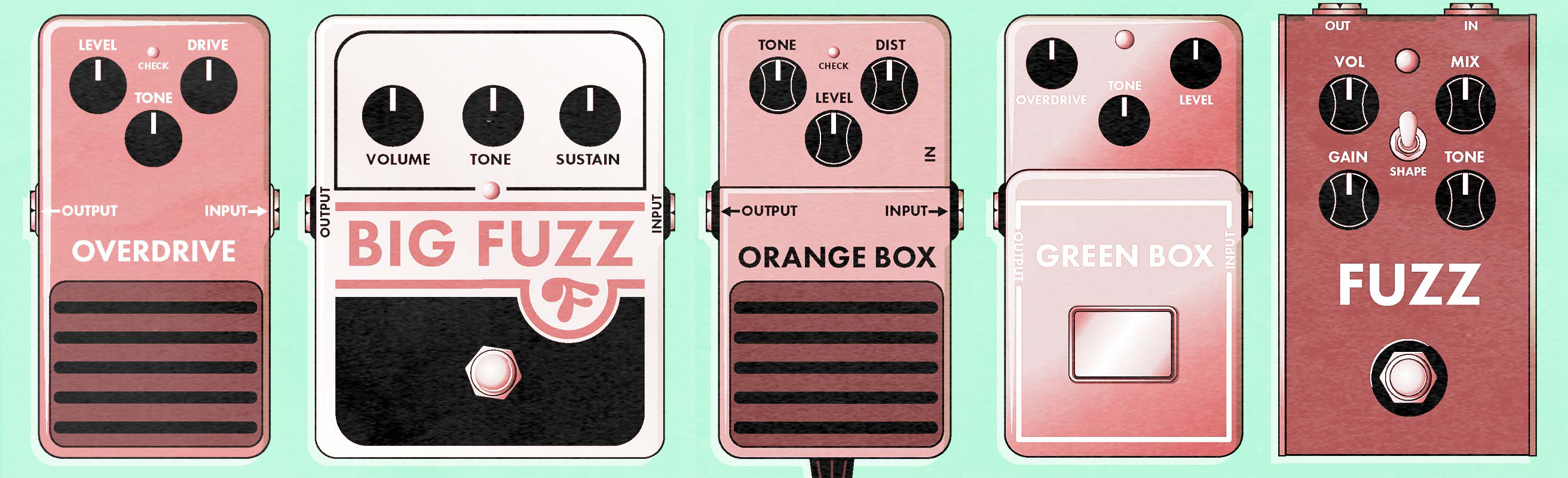
Overdrive pedals create a warm, mild form of distortion. They imitate the sound of an amplifier being pushed hard.
Players use overdrive to add grit, sustain, and touch sensitivity. Playing softly may produce a cleaner tone, while playing harder creates more breakup.
Distortion pedals
Distortion pedals create more gain and a thicker sound than most overdrive pedals. They are common in hard rock, punk, metal, and many modern styles.
Distortion can add sustain and power, but too much gain may hide mistakes and reduce note clarity. A lower gain setting often sounds more professional than turning the gain all the way up.
Fuzz pedals
Fuzz pedals create a rough, compressed, and highly saturated sound. Their tone can range from warm and woolly to sharp and broken.
Fuzz is strongly linked with psychedelic rock, garage rock, blues rock, and vintage tones. Many fuzz pedals react strongly to your guitar’s volume knob and pickup choice.
Equalizer pedals
An equalizer, or EQ pedal, changes the level of selected frequency ranges. You can boost bass, cut harsh treble, or add midrange so your guitar stands out in a full band.
EQ pedals are useful for fixing tone problems. For example, cutting a small amount of muddy low midrange may make your sound clearer without changing the basic character of your amp.
Compressor pedals
A compressor reduces the difference between loud and soft notes. It can make clean playing sound smoother and more even.
Compressors are useful for funk, country, pop, worship, and clean rhythm guitar. They can also add sustain, but heavy compression may make your playing feel less dynamic.
Chorus, flanger, and phaser pedals
These are modulation effects. They create movement by changing or duplicating parts of your signal over time.
• Chorus creates a wide, shimmering sound.
• Flanger produces a sweeping, jet-like effect.
• Phaser creates a smooth, swirling movement.
These pedals can add color to clean tones and create dramatic textures with distorted sounds.
Delay pedals
A delay pedal repeats your guitar signal after a set amount of time. You can create a short slapback echo, rhythmic repeats, or long ambient trails.
Common delay controls include:
• Time: Sets the gap between repeats.
• Feedback: Controls how many repeats you hear.
• Mix or level: Sets the volume of the repeated signal.
Delay can make a simple guitar part sound larger. However, too many repeats can make fast playing unclear.
Reverb pedals
Reverb creates the sense of space around your guitar. It can imitate a room, hall, spring tank, plate, or large ambient environment.
Many amplifiers already include reverb. A reverb pedal is still useful when you need different room sounds, longer trails, or more control.
Volume and boost pedals
A boost pedal raises the signal level or changes its frequency balance. Players often use a boost for solos or to push an amplifier into natural overdrive.
A volume pedal allows foot control over loudness. It can create smooth swells and control the guitar’s level without touching the instrument’s volume knob.
Noise gate pedals
A noise gate reduces unwanted noise when you are not playing. It is especially helpful with high-gain distortion, single-coil pickups, long cables, and crowded pedalboards.
A gate set too aggressively can cut off sustain or the natural start of a note. Use the lowest setting that solves the problem.
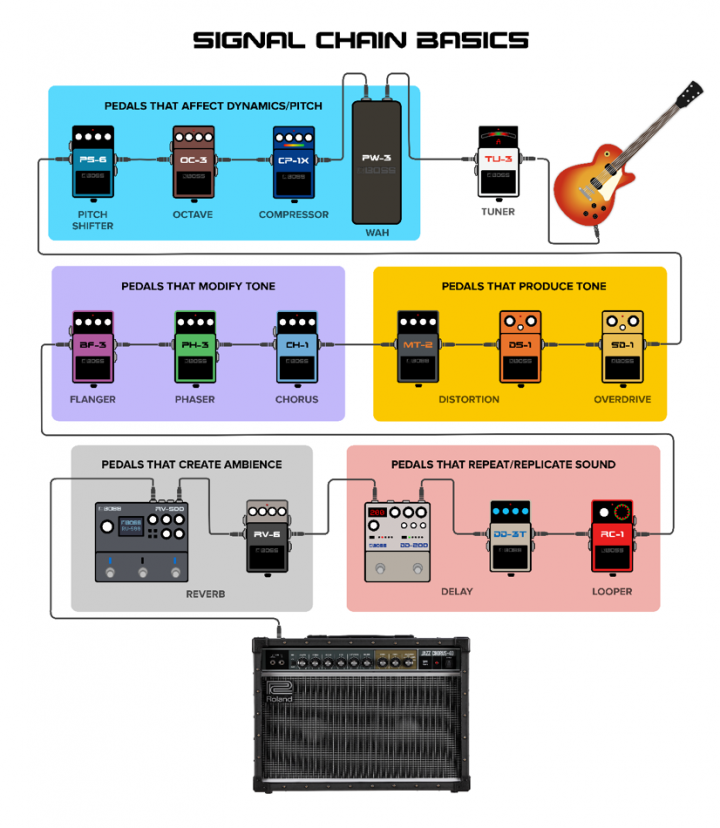
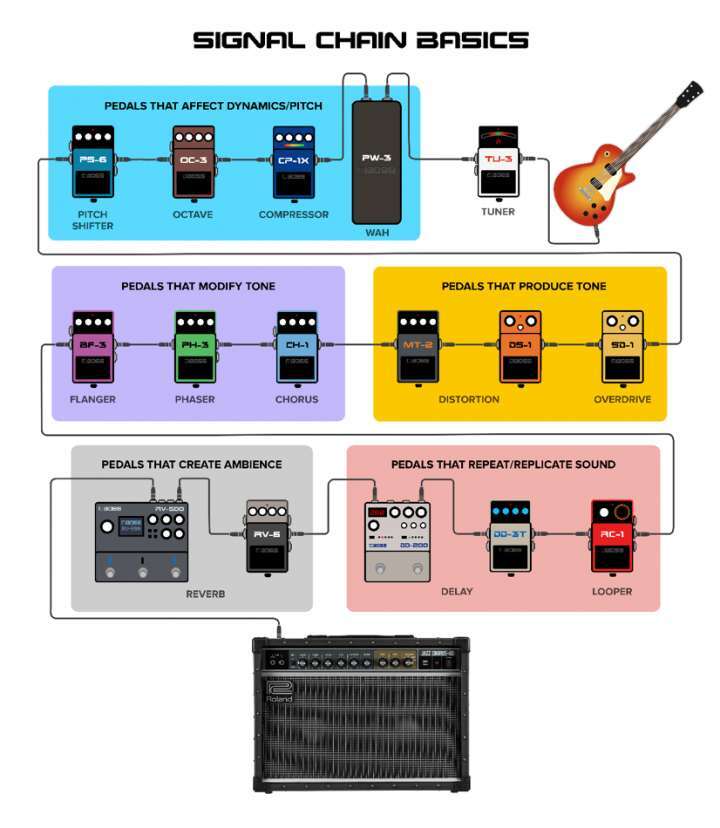
What Do Guitar Pedals Do in a Signal Chain?
Pedal order changes how effects interact. There is no single correct order, but some arrangements work well in many setups.
A common signal chain looks like this:
-
Guitar
-
Tuner
-
Wah or filter
-
Compressor
-
Overdrive, distortion, or fuzz
-
Equalizer
-
Modulation effects
-
Delay
-
Reverb
-
Amplifier
This order is a starting point, not a strict rule. Moving a pedal can create a completely different result.
For example, placing a wah before distortion often creates a focused, vocal sound. Placing it after distortion can make the sweep more intense and aggressive.
Delay and reverb usually sound clearer near the end of the chain. This allows the repeats and space to affect the already shaped guitar tone.
Many amplifiers have an effects loop. An effects loop places certain pedals after the amp’s preamp section but before its power amp section. Time-based effects such as delay and reverb often sound cleaner there, especially when the amp is creating heavy preamp distortion.
Some players place modulation effects in the effects loop as well. Others prefer them in front of the amp for a more blended sound. Experimenting is the best way to learn what do guitar pedals do in your particular setup.
Why Guitarists Use Pedals
Guitar pedals give players more control over tone and expression. They can help one guitar cover several musical roles during a song.
A clean verse may use compression and light chorus. A chorus section may add overdrive. A solo may use a boost, delay, and reverb. With a few carefully chosen pedals, one instrument can move through several moods.
Pedals also help guitarists match different styles:
• Blues: Low gain overdrive, boost, tremolo, and spring-style reverb.
• Rock: Overdrive, distortion, delay, and modulation.
• Metal: High-gain distortion, noise gate, EQ, and delay.
• Country: Compression, slapback delay, tremolo, and clean boost.
• Funk: Compressor, envelope filter, wah, and light chorus.
• Ambient music: Delay, reverb, shimmer, volume swells, and loopers.
A pedal can also solve a practical stage problem. An EQ pedal may help you cut through a loud band. A boost may give your solo more presence. A tuner can mute the signal between songs.
In my experience, the most useful pedalboards are not always the largest. A small board with a tuner, one drive, a delay, and a reverb can cover a surprising number of gigs. Many beginners buy several effects before learning how their amp, pickups, and playing style already shape the sound.
Limitations and Common Problems
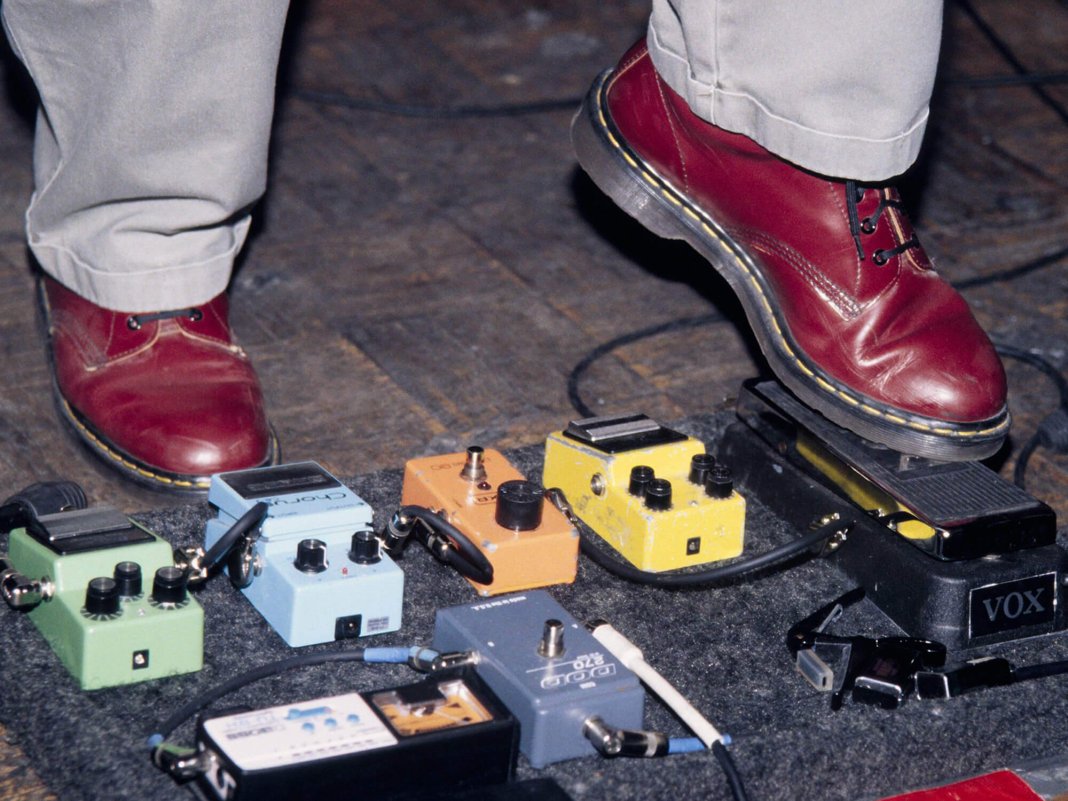
Although guitar pedals offer many benefits, they are not magic devices. A pedal cannot fix every problem in your playing, guitar, amplifier, or room.
Too many effects can reduce clarity. This is especially common when players use high gain, heavy compression, long delay times, and strong reverb at once. Each effect may sound impressive alone but become muddy when combined.
Common pedal problems include:
• Excess noise: This may come from poor cables, weak power supplies, high gain, or noisy pickups.
• Volume jumps: A boost or overdrive may become much louder when switched on.
• Tone loss: Long cables and some bypass circuits can reduce high frequencies.
• Weak batteries: Low battery power can make certain pedals sound thin or unstable.
• Power problems: Incorrect voltage or polarity can damage a pedal.
• Signal clipping: A strong signal can overload a pedal or amplifier input.
One mistake I often see is changing several knobs at once. When the sound improves or gets worse, the player does not know why. Adjust one control at a time, and listen for a clear change.
Another mistake is buying a pedal because a famous guitarist uses it. The same pedal can sound different through another guitar, amp, room, and set of hands. Use artist gear as a starting point, not as a guarantee.
How to Choose Your First Guitar Pedals
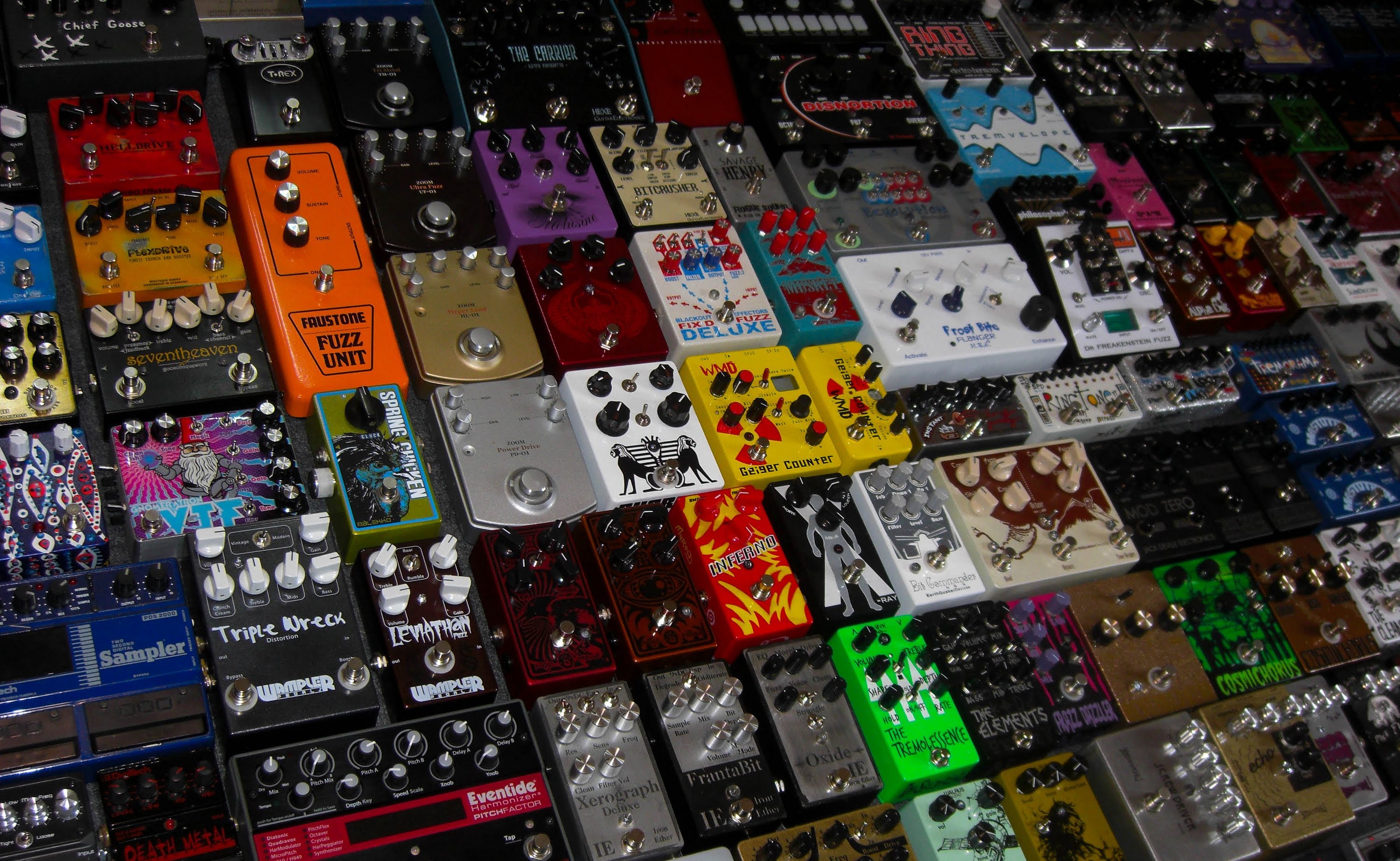
Start with your musical goals. Ask what sound is missing from your current setup instead of asking which pedal is most popular.
If your amp already has strong distortion, a delay or reverb pedal may add more value than another distortion box. If your amp is clean, an overdrive or distortion pedal may be the best first step.
A practical first pedalboard might include:
-
Tuner for accurate tuning and silent muting.
-
Overdrive for grit and added sustain.
-
Delay for space and rhythmic repeats.
-
Reverb for natural depth.
This setup is not a rule. A country player may choose compression before overdrive. A metal player may need a noise gate and EQ. A funk player may prefer a compressor and wah.
Before buying, check the following details:
• Power requirements and polarity.
• True bypass or buffered bypass design.
• Mono or stereo input and output options.
• Available control range.
• Pedal size and board space.
• Warranty and return policy.
Try the pedal with your own guitar and amplifier when possible. Shop demonstrations can be useful, but microphones, recording software, and studio processing may change the sound you hear.
Used pedals can offer excellent value. Check the footswitch, jacks, knobs, battery compartment, and power connection. Avoid a damaged power supply unless you understand the repair cost and safety risk.
How to Set Up and Use Guitar Pedals
Use short, reliable patch cables between pedals. Keep power cables organized and use an isolated power supply when possible. Shared low-quality power supplies can create hum, especially with digital pedals.
Begin with every pedal turned off. Set your amplifier to a sound you already like. Then activate one pedal and adjust only its main controls.
A simple method is:
-
Set the effect level close to your normal volume.
-
Choose a moderate amount of effect.
-
Play both chords and single notes.
-
Compare the effect on and off.
-
Adjust one control at a time.
-
Test the sound at rehearsal volume.
Playing quietly in a bedroom can hide problems. A tone that sounds huge alone may disappear in a band. Conversely, a tone that seems thin alone may sit perfectly beside drums, bass, and vocals.
Keep a small notebook or use photos of your settings. This helps you recreate sounds for rehearsals and performances. It also teaches you how each control affects the signal.
When learning what do guitar pedals do, use your guitar’s volume and tone knobs as well. Rolling back the volume can clean up many overdrive pedals. Lowering the tone knob can soften a bright fuzz or distortion sound.
Analog and Digital Guitar Pedals
Analog pedals process the signal with electronic circuits. Many players like their immediate response and natural interaction with guitar volume controls.
Digital pedals use processors to model effects or create sounds that are difficult to build with simple analog circuits. They may include presets, tap tempo, stereo effects, USB connections, and several effect types in one unit.
Digital does not mean poor quality. Modern digital pedals can sound highly realistic and offer excellent control. Analog does not automatically mean better, either. Circuit design, build quality, settings, and the rest of the signal chain matter more than the label alone.
Modeling pedals and multi-effects units take the digital approach further. One unit may include amplifiers, cabinets, delays, reverbs, modulation, tuners, loopers, and preset storage.
A multi-effects unit can be a smart choice for beginners, traveling musicians, and players who need many sounds. Individual pedals may be better for players who enjoy simple controls, hands-on adjustment, and gradual board building.
The best solution is the one that helps you play more and adjust less. A complicated rig can be inspiring, but it can also distract you from the music.
Do Guitar Pedals Change Your Tone?
Yes, guitar pedals can change your tone in major or subtle ways. The result depends on the effect, its settings, the pedal order, and the equipment around it.
A compressor may make your tone feel smoother without sounding obviously different. A fuzz pedal may transform the entire character of your guitar. A buffer may preserve high frequencies across a long cable run.
Pedals can also change how your amplifier responds. A boost may push the amp’s input harder. An overdrive may add its own clipping before the amp creates more distortion.
Your pickups matter too. Humbuckers usually send a stronger, thicker signal than many single-coil pickups. A pedal set for a low-output single coil may sound much more saturated with a hot humbucker.
Room acoustics also affect your judgment. Reverb may sound perfect in a dry room but become excessive in a reflective space. Always check your tone where you plan to practice or perform.
Frequently Asked Questions About What Do Guitar Pedals Do
Do guitar pedals make a guitar sound better?
Guitar pedals can make a guitar sound more useful for a specific style, but they do not automatically make it better. A good pedal enhances the player’s goal, while too much effect can hide the natural tone and reduce clarity.
Do I need pedals to play electric guitar?
No, you can play electric guitar with only a guitar and amplifier. Pedals are optional tools that add effects, control, and variety.
What pedal should a beginner buy first?
A tuner is a practical first choice because accurate tuning improves every sound. If your guitar is already well tuned, choose an overdrive, delay, or reverb based on the music you want to play.
Should distortion go before or after delay?
Distortion usually goes before delay because the repeats then reflect the shaped guitar tone. Putting distortion after delay creates a more unusual sound and can make the repeats less clear.
Can guitar pedals damage an amplifier?
A normal guitar pedal will not damage a standard amplifier when connected correctly. The main risks come from using the wrong power supply, forcing unsuitable connections, or sending an extreme signal into poorly matched equipment.
Why is my pedal making a humming sound?
Hum may come from a poor power supply, ground loops, noisy cables, single-coil pickups, or nearby electrical devices. Test one pedal at a time, move away from possible interference, and use a suitable isolated power supply.
Can I use guitar pedals with a bass?
Many guitar pedals work well with bass, but some reduce low frequencies or respond differently to the stronger bass signal. Look for pedals designed to preserve low end when that range is important to your sound.
Conclusion
Guitar pedals change, shape, and control your guitar signal. Overdrive and distortion add gain, modulation creates movement, delay and reverb add space, while tuners, compressors, EQs, boosts, and noise gates solve practical performance needs.
The answer to what do guitar pedals do becomes clearer when you test one effect at a time. Start with your musical goal, learn your signal chain, use moderate settings, and judge every pedal with your own guitar and amplifier.
Build your board slowly and let your ears guide you. Try a few simple settings at rehearsal volume, record the results, and explore trusted pedal demos before buying.

Senior Music Reviewer
Alex Carter is a seasoned music reviewer with over a decade of experience in the world of sound and instruments. Passionate about helping musicians and enthusiasts make informed choices, he brings sharp insights and in-depth knowledge to every review. From classical instruments to modern gear, Alex combines technical expertise with a love for music to deliver content that resonates with readers.
As a Senior Music Reviewer and expert author on Tuneluma.com, Alex is dedicated to sharing honest evaluations, practical advice, and thoughtful commentary to guide readers in their musical journey.