How Do You Play A G Chord On Guitar: Easy Guide
To play a G chord on guitar, place your fingers on the third, second, and third frets, then strum all six strings.
Learning how do you play a G chord on guitar is a key step for almost every beginner. The open G major chord sounds bright, full, and powerful, and it appears in thousands of songs. With the right finger placement, clean pressure, and steady practice, you can make this chord feel natural rather than difficult.
What Is a G Chord on Guitar?
A G chord is a G major chord. It contains three main notes: G, B, and D. These notes repeat across the guitar strings to create a full, rich sound.
In standard tuning, the most common open G chord uses all six strings. The strings are tuned from the lowest pitch to the highest pitch as follows:
• 6th string: E
• 5th string: A
• 4th string: D
• 3rd string: G
• 2nd string: B
• 1st string: E
The open G major chord is popular because it does not require a barre. You press only a few strings while allowing other strings to ring open. This makes it one of the first important chords for new guitar players.
When people ask how do you play a G chord on guitar, they usually mean this open position. It is the best version to learn first because it builds finger strength and helps you practice moving between common chords.
How Do You Play a G Chord on Guitar?
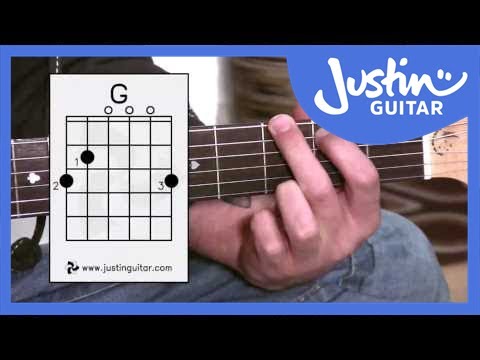
Follow these steps to play the standard open G major chord:
- Place your middle finger on the 6th string, 3rd fret.
- Place your index finger on the 5th string, 2nd fret.
- Leave the 4th string open.
- Leave the 3rd string open.
- Place your ring finger on the 2nd string, 3rd fret.
- Place your pinky finger on the 1st string, 3rd fret.
- Strum all six strings from the low E string to the high E string.
The chord shape looks like this:
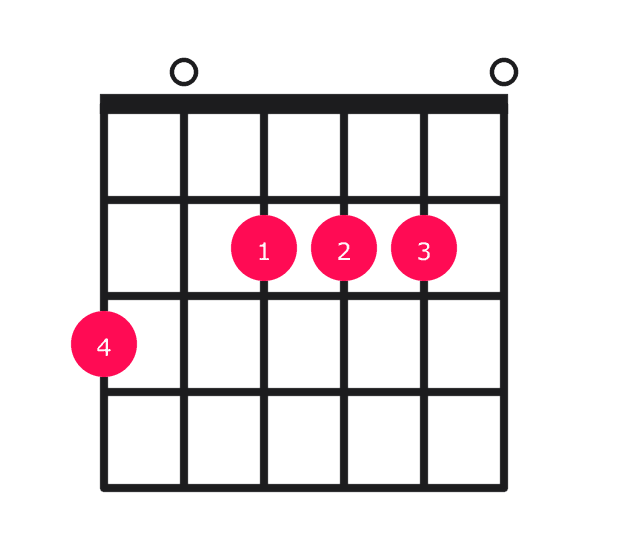
G major: 3 2 0 0 3 3
Strings: E A D G B E
Fingers: 3 2 0 0 4 4
The numbers show the fret used on each string. A zero means that you play the string open. The finger numbers are:
• 1: index finger
• 2: middle finger
• 3: ring finger
• 4: pinky finger
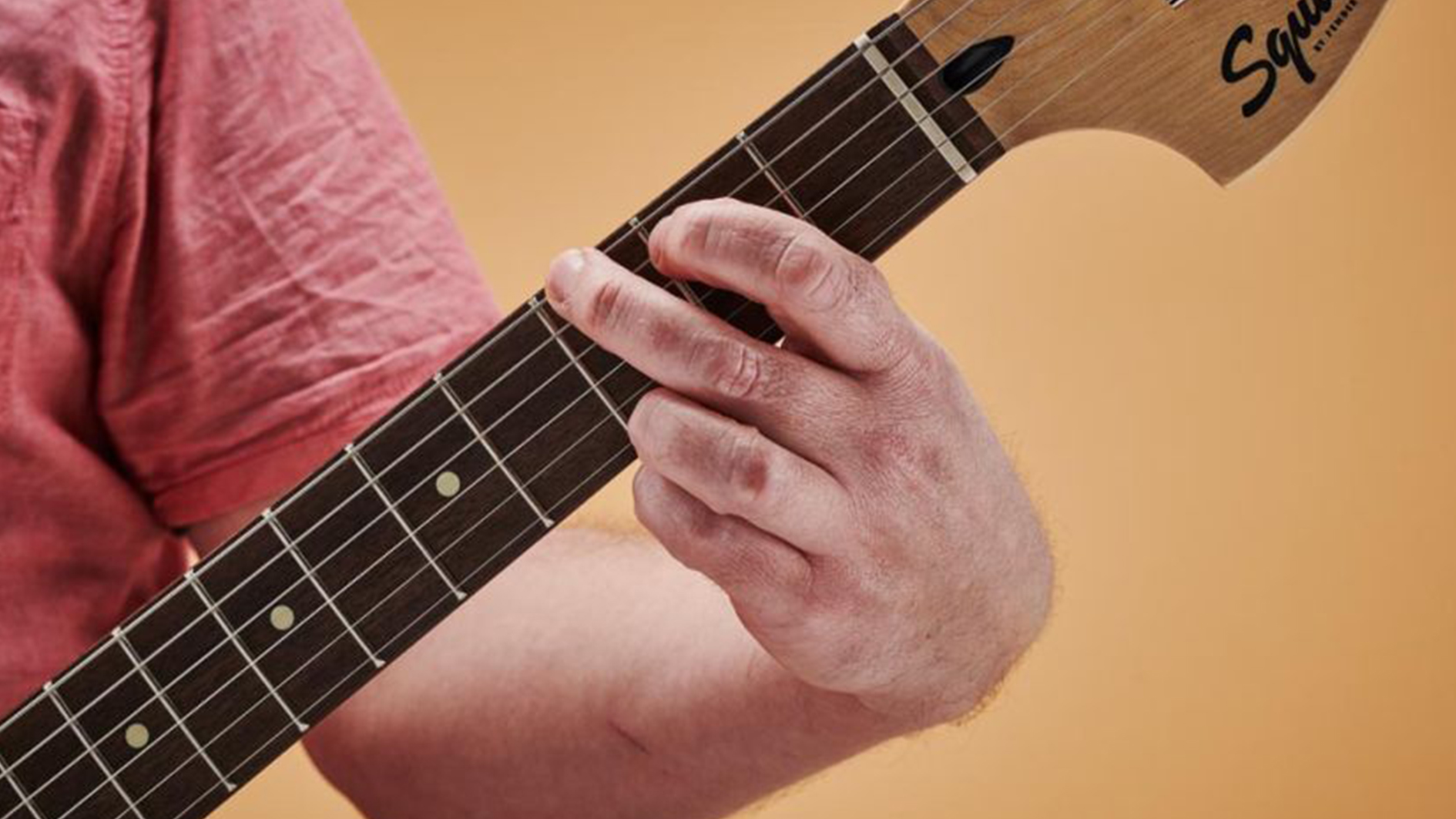
Keep your thumb behind the guitar neck. Your fingers should curve over the strings, almost like you are holding a small ball. This position helps you avoid touching nearby strings by accident.
If you are still wondering how do you play a G chord on guitar, focus on one goal at a time. First, form the shape. Then check each string. Finally, strum slowly.

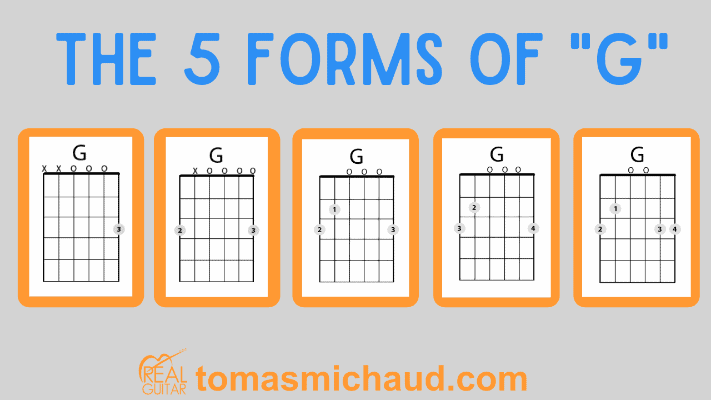
How to Read a G Chord Diagram
A chord diagram is a simple map of the guitar neck. It helps you see where each finger belongs.
Most chord diagrams show six vertical lines. These lines represent the six guitar strings. The left side usually represents the low E string, while the right side represents the high E string.
Horizontal lines represent frets. A black dot shows where to place a finger. An open circle means you play the string without pressing it. An X means you should not play that string.
For an open G chord, you will see:
• A dot on the 6th string at the 3rd fret
• A dot on the 5th string at the 2nd fret
• Open markers on the 4th and 3rd strings
• Dots on the 2nd and 1st strings at the 3rd fret
The first fret is often shown near the top of the diagram. If a diagram begins above the first fret, it will usually include a fret number on the side.
Understanding chord diagrams makes it easier to learn C, D, Em, and other chords. It also helps you compare different G chord shapes.

A Beginner-Friendly G Chord Variation
Some beginners find it hard to use the ring finger and pinky together. A simpler G chord variation can help you start playing sooner.
Try this shape:
G major variation: 3 2 0 0 0 3
Fingers: 3 2 0 0 0 4
Place your fingers here:
• Ring finger on the 6th string, 3rd fret
• Middle finger on the 5th string, 2nd fret
• Pinky finger on the 1st string, 3rd fret
• Leave the middle four strings open
This version still produces a clear G major sound. However, it has a slightly different note arrangement from the full standard shape.
The variation is useful when moving between G and Cadd9. Many beginner songs use this smooth movement. Later, you can learn the full G shape and choose the version that fits the song.
When learning how do you play a G chord on guitar, do not feel pressured to use one shape only. Different shapes have different sounds and different levels of comfort.

How to Make the G Chord Sound Clean
A correct finger shape does not always create a clean chord right away. Buzzing, muted strings, and weak notes are normal during the first few practice sessions.
Use these checks:
• Place each fingertip close to the fret, but not directly on top of it.
• Keep your fingers curved.
• Relax your wrist and thumb.
• Press only as hard as needed.
• Keep your palm away from the lower strings.
• Strum each string one at a time to find muted notes.
If a string sounds dull, check whether another finger is touching it. Even a small amount of contact can stop the string from ringing.
A common mistake is pressing too hard. Extra pressure can tire your hand and pull the string slightly out of tune. Try using less force, then add pressure only when the note needs it.
Your guitar also affects the result. High action, old strings, or poor setup can make fretting harder. If the chord feels painful even with good technique, ask a qualified guitar technician to inspect the instrument.

Common Mistakes When Playing a G Chord
Many new guitarists struggle with the same few problems. Fixing them early can save weeks of frustration.
Muting the open strings
Your index finger may lean against the open D or G string. Keep the finger joints relaxed and check each open string before strumming.
Using flat fingers
Flat fingers often touch nearby strings. Use the tips of your fingers instead. Imagine your hand is making a loose claw shape.
Missing the high E string
Some players place the ring finger on the 2nd string but forget the 1st string. The high E string is part of the full G chord, so keep the pinky on the 1st string at the 3rd fret.
Strumming too hard
Hard strumming can hide mistakes and create a rough sound. Start with gentle downstrokes. Increase your volume only after every string rings clearly.
Looking away too soon
It takes time to form the chord without watching your hand. Practice slowly while looking at the neck, then gradually test yourself without looking.
These small corrections answer much of the difficulty behind how do you play a G chord on guitar. Clean technique matters more than speed.
Practicing the G Chord Step by Step
Short, focused practice works better than one long session. Try this simple routine:
- Form the G chord and hold it for five seconds.
- Pick each string slowly.
- Fix any muted or buzzing note.
- Release your hand.
- Repeat the shape ten times.
- Strum four slow downstrokes.
- Rest for a minute.
Next, practice changing between G and another easy chord. G works well with:
• C major
• D major
• Em
• A minor
• Cadd9
Start with four beats of G, followed by four beats of C. Use only downstrokes. Keep the tempo slow enough that you can change without stopping.
A useful exercise is the “one-minute change.” Set a timer and count how many clean changes you can make between G and C. Do not rush. A clean change is more valuable than a fast, messy one.
In my beginner lessons, I often see players improve quickly when they stop repeating mistakes at full speed. Slow practice gives your hands a clear pattern to remember.
G Chord Strumming Patterns
Once the chord sounds clean, add simple rhythm patterns. Begin with four steady downstrokes:
1 2 3 4
D D D D
Here, D means a downstroke. Keep your hand moving at a steady pace, even when you do not strum.
Then try:
1 and 2 and 3 and 4 and
D   D U   D   D U
Here, U means an upstroke. Count aloud if needed. Your strumming hand should act like a pendulum.
Do not focus on complex patterns too early. Rhythm comes from steady movement, not from playing many strokes. A simple pattern played evenly will sound better than a difficult pattern played with stops.
You can also practice muted strums. Lightly rest your fretting hand on the strings and strum the rhythm. This lets you work on timing without worrying about chord changes.
Songs That Use the G Chord
The G chord appears in many beginner-friendly progressions. Common combinations include:
• G, C, and D
• G, D, Em, and C
• G, Em, C, and D
• G, Cadd9, and D
These progressions appear in folk, country, pop, rock, and worship music. They are useful because they help you practice both chord changes and rhythm.
Rather than trying to play an entire song at once, isolate a short section. Loop four measures until your chord changes feel steady. Then add the song’s rhythm and slowly increase the tempo.
Always check the song’s tuning and chord arrangement. Some guitar tabs use alternate tunings or simplified chord names. A G chord may also appear as G5, G7, Gsus4, or Gadd9, and each version has a different sound.
G Major Chord Variations
After learning the open G chord, explore these related shapes.
G7
A G7 chord adds a seventh note and creates a bluesy, tense sound. One common open shape is:
G7: 3 2 0 0 0 1
Place your index finger on the high E string, 1st fret. This shape is useful in blues, country, and classic rock.
G5
A G5 power chord uses the root and fifth notes. It has a strong sound but does not clearly identify the chord as major or minor.
A common shape is:
G5: 3 5 5 x x x
Play the 6th string at the 3rd fret and the 5th and 4th strings at the 5th fret. Do not play the remaining strings.
G barre chord
A movable G major barre chord uses an E-shape form at the 3rd fret. It requires your index finger to press several strings at once.
This shape is useful, but it may feel difficult at first. Learn the open G chord before moving to barre chords. Strong basics make the transition much easier.
Acoustic and Electric Guitar Tips
The G chord works on both acoustic and electric guitar. The technique is almost the same, but the instrument can change how the chord feels.
Acoustic guitars often require more finger pressure, especially if they have heavy strings or high action. Electric guitars usually have lighter strings and lower action, so beginners may find fretting easier.
On an acoustic guitar, use a relaxed strum and let the open strings ring. On an electric guitar, control unwanted noise with both hands. Your picking hand can lightly mute strings above the chord, while your fretting hand can stop unused strings from ringing.
Your choice of pick also matters. A thin pick may feel softer for strumming. A medium pick offers more control for both rhythm and single-note playing.
The best setup is the one that lets you practice without pain. Soreness is normal when building strength, but sharp pain is a signal to stop and adjust your technique.
How Long Does It Take to Learn a G Chord?
Many beginners can form a basic G chord within a few practice sessions. Making every string ring clearly may take longer.
Your progress depends on practice time, hand comfort, guitar setup, and previous musical experience. Five to ten minutes of daily practice can be more effective than one long session each week.
Use these signs to measure progress:
• You can form the shape without checking every finger.
• Each string rings clearly.
• You can strum four beats without stopping.
• You can change from G to another chord smoothly.
• You can keep a steady rhythm while singing or listening.
Do not compare your progress with another player. Chord changes can feel awkward because your hands are learning a new motor skill. Consistent practice gives your brain time to build that movement.
Frequently Asked Questions About How Do You Play a G Chord on Guitar
What fingers do you use for an open G chord?
For the common open G chord, use your middle finger on the 6th string, 3rd fret, and index finger on the 5th string, 2nd fret. Use your ring finger and pinky on the 2nd and 1st strings at the 3rd fret.
Do you strum all six strings for a G chord?
Yes, the standard open G major chord uses all six strings. The 4th and 3rd strings remain open, while the other strings are fretted.
Why does my G chord sound muted?
A muted sound usually means one finger is touching a nearby string. Pick each string separately, curve your fingers more, and move them closer to the fret.
Can I play a G chord without using my pinky?
Yes, you can use a beginner variation with the shape 3 2 0 0 0 3. The full open G shape with the pinky often sounds fuller and makes some chord changes easier.
Is the G chord hard for beginners?
The G chord can feel challenging because it stretches across the guitar neck. Start slowly, use light pressure, and practice moving between G and one other chord.
What chords go well with G major?
C, D, Em, and Cadd9 are common partners for G major. Practicing these combinations helps you build useful chord progressions for many songs.
Should I learn the open G chord or a barre chord first?
Learn the open G chord first. It requires less strength and gives you a practical shape for songs before you move to the more demanding G barre chord.
Conclusion
Learning how do you play a G chord on guitar starts with a simple shape: 3 2 0 0 3 3 from the low E string to the high E string. Place your fingers carefully, let the open strings ring, and check each note before strumming.
Practice the chord in short sessions, then connect it with C, D, Em, or Cadd9. Do not worry if the shape feels awkward at first. With steady practice, your fingers will remember the movement and your G chord will become a reliable part of your playing.
Pick up your guitar today, practice ten clean G chords, and then try a simple song progression. Explore more beginner chord guides, and share your progress with another guitarist.

Senior Music Reviewer
Alex Carter is a seasoned music reviewer with over a decade of experience in the world of sound and instruments. Passionate about helping musicians and enthusiasts make informed choices, he brings sharp insights and in-depth knowledge to every review. From classical instruments to modern gear, Alex combines technical expertise with a love for music to deliver content that resonates with readers.
As a Senior Music Reviewer and expert author on Tuneluma.com, Alex is dedicated to sharing honest evaluations, practical advice, and thoughtful commentary to guide readers in their musical journey.