Can You Bring A Guitar On A Plane: Airline Rules & Tips
Yes, you can bring a guitar on a plane, either as a carry-on, checked bag, or purchased cabin seat.
Knowing how to bring a guitar on a plane can save you money, stress, and damage to your instrument. Airline size limits, cabin space, security rules, and guitar case quality all matter. This guide explains the safest options, what US regulations say, and how to prepare before you reach the airport.
Can You Bring a Guitar on a Plane?
Yes, most airlines allow guitars on flights. You may usually transport one in one of three ways:
• As a carry-on item in the overhead bin
• As checked baggage in a hard case
• In a purchased passenger seat beside you
The best choice depends on the guitar’s size, the airline’s policy, and available cabin space. A small travel guitar may fit more easily than a full-size acoustic guitar, while a hard-shell electric guitar case may be too large for some overhead bins.
In the United States, federal law generally requires airlines to accept musical instruments as carry-on or checked baggage when space and safety rules allow. The guitar must fit in an approved storage area, or you may buy a seat for it.
However, this does not mean every guitar will fit in every cabin. Airlines can apply size, weight, and booking rules. Always check your airline’s current policy before your trip.

How to Bring a Guitar on a Plane as a Carry-On
Bringing a guitar into the cabin is often the safest option. You keep control of the instrument and reduce the risk of rough handling, lost luggage, or damage from baggage equipment.
A guitar may count as your carry-on item. Some airlines may let you bring a small personal item as well, but the guitar can replace your standard carry-on bag. This depends on the airline and the available storage space.
Before you travel, check these points:
• The guitar should be inside a case or gig bag.
• The case must fit in the overhead compartment or another approved storage area.
• The instrument must not block an aisle, exit, or safety area.
• The guitar should not exceed the airline’s carry-on size or weight limits.
• You may need to board early to find overhead space.
A soft gig bag is easier to carry and may fit into tight spaces. A hard case offers much better protection, especially for a valuable vintage guitar. For air travel, a strong case with a firm neck support and secure latches is usually the safer choice.
A useful rule is to measure the complete packed guitar. Do not measure only the instrument. Include the case, handles, wheels, pockets, and exterior fittings.
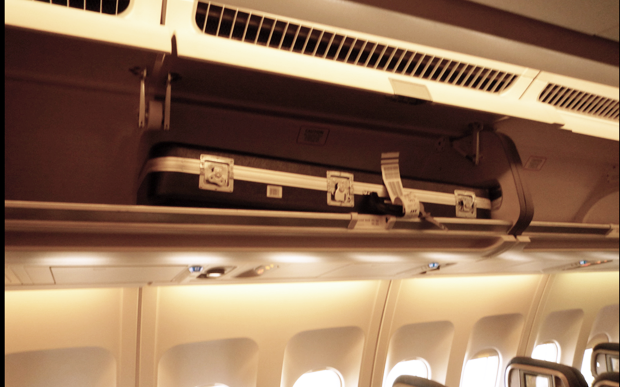
Can a Guitar Fit in an Overhead Bin?
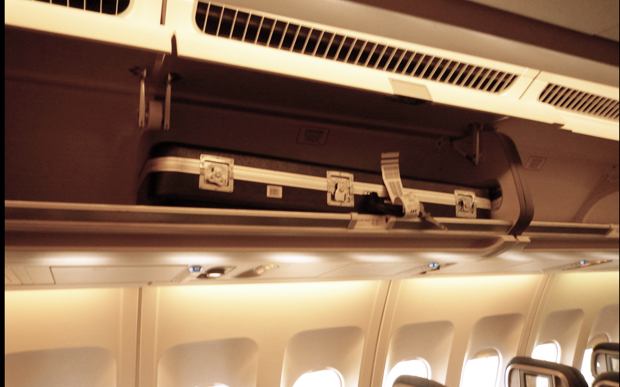
Many standard guitars can fit in an overhead bin, but this is never guaranteed. A full-size guitar case is often longer than the published carry-on limit, even when it can physically fit in some aircraft bins.
Aircraft types also make a difference. A guitar may fit in the larger overhead bins on a wide-body plane but not in the smaller bins on a regional jet. Smaller commuter aircraft often have limited space and may require gate-checking.
To improve your chances:
- Choose a flight with a larger aircraft when possible.
- Avoid busy travel periods, such as holiday weekends.
- Check in online and arrive early.
- Ask the gate agent about cabin storage before boarding.
- Board when your group is called.
- Place the guitar carefully in the bin without forcing it.
Never push a guitar case into a compartment that is too small. Pressure can bend the neck, crack the case, or damage tuning hardware.
Some travelers place the guitar vertically in the overhead bin. Others lay it flat, depending on the bin design. Follow crew instructions, and make sure the case is stable before the bin door closes.

Can You Buy a Seat for Your Guitar?
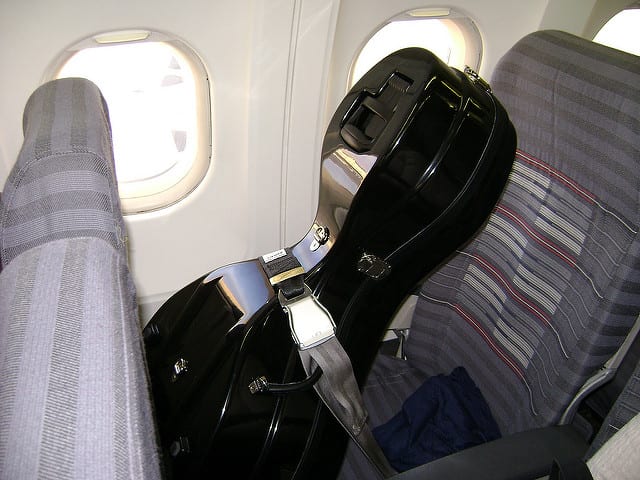
Yes, buying an extra seat is one of the most secure ways to bring a guitar on a plane. This option is useful for expensive, fragile, oversized, or unusual instruments that cannot fit safely in the overhead compartment.
The guitar must usually be secured in an approved seat belt or restraint system. It cannot block an emergency exit or extend into the aisle. The airline may also require advance notice and specific booking details.
When booking an extra seat, contact the airline directly. Ask about:
• The correct name format for the instrument’s reservation
• Maximum size and weight limits
• Approved seat placement
• Restraint requirements
• Check-in procedures
• Whether the guitar may travel in a hard case or must be removed from it
Buying a seat can cost more than checking the guitar. Still, it may be worth the price for a rare, expensive, or irreplaceable instrument. Think of it like giving your guitar its own ticket and safety belt.
Do not assume that a second ticket automatically guarantees approval. Airline rules differ, so written confirmation or a clear note in the booking can prevent confusion at the airport.

Can You Check a Guitar as Baggage?
You can usually check a guitar, but this option carries more risk. Checked baggage may be moved by conveyor belts, loaded into cargo holds, and handled by several airport workers.
If you must check the guitar, use a strong, airline-quality hard case. A thin gig bag offers little protection against impact, compression, or temperature changes.
Before checking your guitar:
• Loosen the strings slightly to reduce neck tension during temperature changes.
• Add padding around the headstock and neck.
• Prevent the instrument from moving inside the case.
• Remove tuners, capos, pedals, and other loose items.
• Lock or secure the case if the airline permits it.
• Photograph the guitar and case before handing it over.
• Record the serial number and keep proof of ownership.
Do not loosen the strings until they become completely slack. A small reduction in tension is usually enough. Excessive loosening can allow parts to move inside the case.
Many experienced musicians use a hard case with thick interior padding and a suspended neck support. This design helps keep the guitar away from the outer walls of the case.
If your guitar is valuable, check whether your travel insurance or homeowner’s insurance covers musical instruments. Airline liability limits may not cover the full replacement value.

How to Protect a Guitar During Air Travel
The guitar case is your main defense. A good case should fit the instrument closely without pressing against the body or neck.
For extra protection, place soft clothing around empty spaces. Avoid hard objects near the guitar’s finish. A folded shirt can help reduce movement, but it should not press heavily on the soundboard.
Pay special attention to the headstock. It is one of the most vulnerable parts of many guitars. Add soft padding beneath the headstock so it does not rest directly on the case floor.
You should also protect the guitar from sudden temperature changes. Cold cargo holds and warm airport ramps can affect wood, glue, finish, and tuning stability. Let the guitar reach room temperature before opening the case after a cold flight.
Here is a simple protection checklist:
• Use a fitted hard case for checked travel.
• Support the neck and headstock.
• Add light padding, not heavy pressure.
• Loosen the strings slightly.
• Keep a humidity pack with the guitar when appropriate.
• Mark the case with your name and contact details.
• Carry valuable accessories in your personal bag.
From the travel guidance and airline policies I have reviewed, one lesson appears again and again: poor case protection causes more trouble than the flight itself. A strong case is often the best money you can spend before a music trip.

Guitar Airline Rules in the United States
US airline rules are shaped by federal requirements, but each airline still sets its own procedures. The Federal Aviation Administration recognizes musical instruments as special carry-on items under applicable conditions.
In general, an airline must allow a small musical instrument in the cabin when it can be safely stored. If the instrument is too large for the cabin, the airline may allow it as checked baggage or permit you to buy a seat.
The US Department of Transportation has also explained rules for transporting musical instruments. These rules do not guarantee that a guitar can occupy an overhead bin when the bin is full. Safety and available space still control the final decision.
Policies may vary in these areas:
• Carry-on dimensions
• Weight limits
• Oversized baggage fees
• Extra-seat purchases
• Gate-check procedures
• Regional aircraft restrictions
• International connections
The Transportation Security Administration generally allows guitars through airport security, but officers may inspect the instrument or case. Security staff have the final say during screening.
Airline policies can change. Check the airline’s official website and contact the carrier if your guitar is expensive, oversized, or traveling on multiple airlines.

What Happens at Airport Security?
A guitar case may need to pass through the standard security checkpoint. You may be asked to remove the guitar from its case so officers can inspect it.
Allow extra time. Do not place the guitar on the conveyor belt until security staff tell you to do so. Keep all small accessories together, since picks, tuners, batteries, and tools can become separated during screening.
The TSA may permit most guitar accessories, but sharp tools and certain equipment can face restrictions. For example, a multi-tool, large wire cutter, or other sharp object may need to go in checked baggage.
A smooth security process usually looks like this:
- Tell the officer that you are traveling with a musical instrument.
- Follow instructions about opening or removing the guitar.
- Keep the case near you at all times.
- Check every pocket before leaving the screening area.
- Repack the instrument carefully before walking away.
Security rules can differ at international airports. Check the rules for every country on your route, not only your departure airport.
Should You Loosen Guitar Strings Before Flying?
Many players loosen the strings slightly before air travel, especially when checking the instrument. This can reduce stress on the neck and bridge during temperature changes.