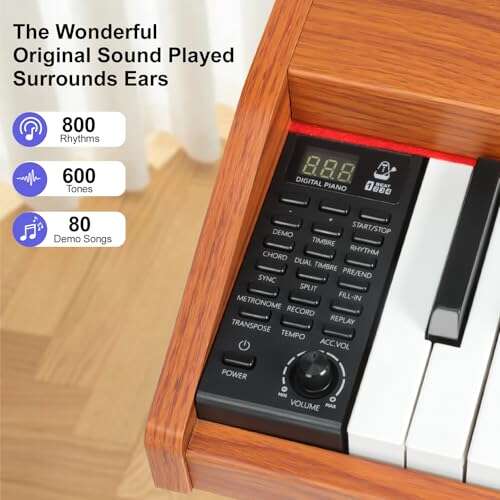
Best Acoustic Pianos For Beginners: Top New Player Picks
The best acoustic pianos for beginners balance true key feel, clear tone, comfort, and a price that supports steady practice.
You may want to learn piano, yet feel stuck between a large upright, a small keyboard, and a costly digital model. A good beginner piano should make practice feel easy, not like a daily chore. It should also help you build strong finger control, rhythm, and pedal skills from day one. I tested these options by focusing on key response, sound, layout, useful extras, and long-term value. This guide will help you choose among the best acoustic pianos for beginners, including practical digital models that offer an acoustic-style playing experience at home.
Vediya 88-Key Piano in Brown
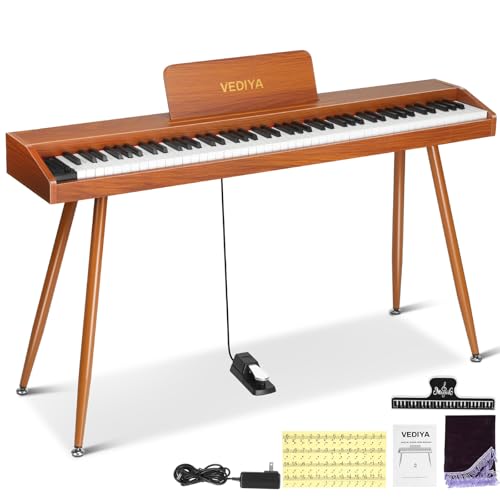
The Vediya 88-key piano gives a beginner the full range used on a standard piano. Its semi-weighted keys add more resistance than a basic light keyboard, so your fingers can begin learning better control. The brown finish also gives it a warm look that can fit a bedroom, study, or living room. For a new player, the layout feels familiar because it follows the normal piano pattern from low notes to high notes.
This model includes a sustain pedal and USB-MIDI compatibility, which adds useful options for lessons and music apps. You can connect it to compatible software for guided practice, recording, or simple composition work. The sound and feel will not fully match a high-end acoustic upright, but the lower upkeep is a major benefit. It does not need tuning, and you can practice with less concern about disturbing the whole home.
Pros:
- Full 88-key range for proper beginner training
- Semi-weighted action supports finger development
- Includes a sustain pedal
- USB-MIDI supports lessons and music software
- Brown finish looks attractive in a home setting
- More affordable than a traditional acoustic piano
Cons:
- Semi-weighted keys are not the same as fully weighted hammer action
- Sound quality may feel basic for advanced players
- May require a separate stand or suitable table
My Recommendation
This Vediya is best for a first-time player who wants all 88 keys without buying a heavy upright piano. It suits adults, teens, and children who plan to use learning apps or a computer. I especially like it for small homes, since it takes less care than an acoustic instrument. Among the best acoustic pianos for beginners, this is a practical choice when quiet practice, easy setup, and a modest budget matter most.
Vediya 88-Key Piano in Black

The black Vediya version offers the same basic idea in a classic finish. It has 88 semi-weighted keys, so beginners can practice scales, chords, and simple songs across the full piano range. The keys provide more feedback than an unweighted starter keyboard. That extra resistance can help a learner avoid pressing every note with the same flat touch.
A sustain pedal comes with the instrument, and USB-MIDI makes it more flexible than a stand-alone acoustic piano. The connection may help you use a tablet, laptop, or compatible digital audio setup. I see this as a useful pick for a student who wants a traditional piano layout but also wants modern learning tools. The black cabinet has a clean look and should blend well with most furniture.
Pros:
- Standard 88-key design supports serious study
- Semi-weighted keys offer useful beginner feedback
- Classic black finish hides small marks well
- Sustain pedal is included
- USB-MIDI expands lesson and recording options
- Does not require tuning or humidity control
Cons:
- Action may feel lighter than a real acoustic piano
- Built-in speakers may not satisfy advanced musicians
- A sturdy stand may need to be purchased separately
My Recommendation
I recommend this model for a budget-minded beginner who wants a simple black piano for daily practice. It works well in a home office, bedroom, or shared apartment. The full keyboard gives you room to grow, while MIDI adds a path into digital lessons and music creation. If you want one of the best acoustic pianos for beginners but need low maintenance, this Vediya is worth considering.
Vediya Wooden Desk Piano With Triple Pedal

This Vediya has a furniture-style design that looks closer to a compact upright piano than a basic portable keyboard. It uses 88 semi-weighted keys and includes a triple-pedal unit. The desk-style body can provide a more stable place to practice, especially for a student who dislikes a keyboard sliding on a table. It also gives the room a more permanent music corner.
The three pedals can introduce beginners to sustain, soft, and sostenuto-style control. That makes this model more useful for learners who want to study classical music or build good pedal habits early. USB-MIDI compatibility adds access to software lessons and recording tools. Keep in mind that its semi-weighted action remains different from the heavier hammer action found on quality acoustic or digital upright pianos.
Pros:
- Furniture-style body looks polished in a living space
- Full 88-key range supports advanced beginner pieces
- Triple pedals encourage better pedal technique
- Stable design feels more secure during practice
- USB-MIDI supports modern learning tools
- No regular tuning is required
Cons:
- Less portable than a basic keyboard
- Semi-weighted action may not satisfy classical players
- Takes more floor space than a compact digital piano
My Recommendation
This Vediya is best for a family that wants a permanent piano station without the cost and care of a full acoustic upright. It makes sense for a child who takes lessons and needs a stable home setup. The triple pedal unit is a useful step up from a single-pedal keyboard. For buyers comparing the best acoustic pianos for beginners, it offers a furniture look and useful control at a manageable price.
Roland FP-10 88-Note Digital Piano

The Roland FP-10 is one of the strongest choices here for players who care most about key feel. Its 88-note keyboard uses a weighted action designed to provide a more acoustic-like response. Roland’s SuperNATURAL piano sound also gives notes more change in tone as you play with different force. That makes practice feel more expressive than on a simple entry-level keyboard.
The compact body is easy to place in an apartment or small room. Bluetooth and MIDI connectivity can support digital lessons, headphones, and music-making setups, depending on the device and app used. The FP-10 does not include a large upright cabinet, so buyers may need a stand and bench. Still, its balance of action, tone, size, and brand support makes it a serious long-term beginner instrument.
Pros:
- Weighted 88-note action feels closer to an acoustic piano
- Expressive piano tones respond to playing touch
- Compact body suits small rooms
- Bluetooth and MIDI add lesson flexibility
- Headphone practice is useful for shared homes
- Can remain useful after a student leaves the beginner stage
Cons:
- Stand, bench, and some accessories may cost extra
- Not as visually similar to an upright acoustic piano
- Speakers are designed for home use, not large rooms
My Recommendation
I would choose the FP-10 for a serious beginner who wants to build correct technique from the start. It is also a smart option for an adult learner who may continue for many years. The weighted action gives your fingers a useful training partner, while headphones protect quiet hours. In my view, it is one of the best acoustic pianos for beginners when realistic touch and compact design matter more than a furniture-style cabinet.
Vediya Wooden Desk Piano in Brown
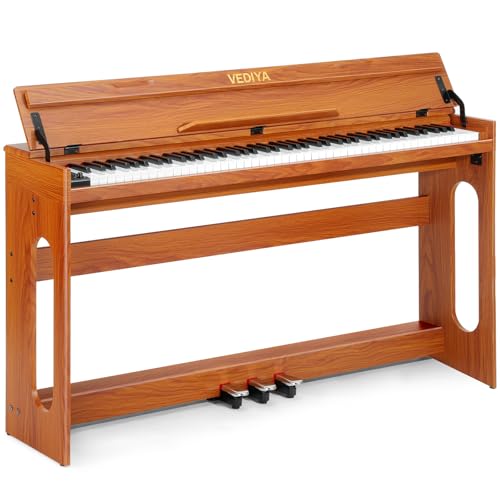
This brown Vediya uses a full 88-key layout and a wooden desk-style cabinet. It has semi-weighted keys and a triple-pedal setup, so it aims to provide a more complete home piano experience than a small keyboard. The warm finish may appeal to shoppers who want the instrument to look like part of the room. Its fixed shape also helps create a clear place for regular practice.
The included triple pedals give learners more control during slow pieces, chord changes, and sustained passages. USB-MIDI support lets you connect to compatible learning or recording equipment. Because it is a digital instrument, you avoid the tuning visits and temperature concerns that come with a traditional acoustic piano. The trade-off is that the key response and speaker detail may not equal a higher-priced digital or acoustic upright.
Pros:
- Warm brown finish suits classic home decor
- Full 88-key range supports a wide lesson path
- Triple pedals provide more complete piano control
- Furniture-style design stays stable while playing
- USB-MIDI supports apps and creative work
- Low maintenance compared with a real acoustic piano
Cons:
- Not easy to move often
- Semi-weighted keys are lighter than hammer action
- May need careful assembly and enough floor space
My Recommendation
This model is best for a beginner who wants a warm-looking piano for a dedicated room. It is a good fit for families who want three pedals and a stable cabinet without buying a large acoustic upright. I would place it on the shortlist for home learners who value appearance and easy care. It gives the best acoustic pianos for beginners category a useful furniture-style alternative.
Easy Piano Songs Beginner Songbook

This book is not a piano, but it can make a major difference in how a beginner uses one. It includes 100 easy songs across folk, classical, holiday, and jazz styles. The progressive levels help a new player start with simple pieces and move toward more demanding songs. A varied song list can keep practice fresh when scales and drills begin to feel dull.
The book also includes video lessons, music games, and simplified sheet music. Those extras may help visual learners understand rhythm, notes, and hand position with less stress. I like the clear path because beginners often quit when the first songs feel too hard. Use this book beside any 88-key piano, and it can turn short daily sessions into a steady habit.
Pros:
- Large song collection supports regular practice
- Includes several music styles
- Progressive levels make skill growth easier to track
- Video lessons can support self-guided learning
- Music games make study feel less formal
- Works with acoustic pianos and digital keyboards
Cons:
- It cannot replace feedback from a qualified teacher
- Simplified songs may not suit advanced players
- Video access and features may depend on current availability
My Recommendation
I recommend this book for any new player who needs help choosing what to practice. It is especially useful for children, adults learning alone, and families that want more structure at home. Pairing it with one of the best acoustic pianos for beginners can reduce the common “I do not know what to play” problem. Its value comes from making practice clear, varied, and easier to repeat.
Vediya 88-Key Piano in Walnut

The walnut Vediya gives beginners a full 88-key keyboard in a finish that feels more refined than plain plastic. Its semi-weighted action offers a moderate amount of resistance for scales, chords, and early song work. The full range matters because many lesson books eventually use notes beyond a small 61-key keyboard. It also leaves room for a student to explore bass lines and wider left-hand patterns.
The included sustain pedal helps beginners learn how to connect notes and shape a phrase. USB-MIDI gives this piano a useful link to lessons, notation tools, and recording apps. Like the other Vediya models, it avoids the routine tuning needs of an acoustic instrument. I see the walnut finish as a strong choice for shoppers who want practical features without losing a home-friendly look.
Pros:
- Full 88-key layout supports long-term learning
- Walnut finish adds a warm, home-friendly appearance
- Semi-weighted action gives more control than light keys
- Sustain pedal is included
- USB-MIDI supports digital lessons
- Less upkeep than a traditional acoustic piano
Cons:
- Key action is not fully weighted
- May require a separate support stand
- Advanced players may want richer sound controls
My Recommendation
The walnut version is best for a beginner who wants a full-size piano with a softer, traditional look. It fits well in a study or living room where appearance matters. I would choose it over the black model mainly for the finish, not for a major change in core performance. For shoppers comparing the best acoustic pianos for beginners, it offers a balanced mix of range, pedal control, and easy digital connection.
Yamaha YDP105 88-Key Upright Piano

The Yamaha YDP105 is designed for beginners and intermediate players who want an upright-style digital piano. It provides 88 weighted keys and a three-pedal unit, which creates a more complete piano setup than a simple portable keyboard. Yamaha’s reputation in piano design adds confidence for buyers who want a known name. The included bench also helps make this a ready-to-use home instrument.
Its dynamic response allows the sound to change as you play softly or firmly. That feature supports musical expression and helps students learn that piano playing is not only about hitting the right notes. The upright cabinet can feel more natural for a learner who wants a fixed piano at home. It is larger and less portable than the FP-10, but it offers a more traditional appearance and a strong path from beginner to intermediate study.
Pros:
- Weighted 88-key action supports proper technique
- Three pedals encourage complete piano skills
- Upright design looks like a permanent home piano
- Bench is included
- Dynamic sound response rewards touch control
- Suitable for beginners and many intermediate players
Cons:
- Heavier and harder to move than a portable model
- Costs more than basic starter keyboards
- White finish may show dust or marks more easily
My Recommendation
The Yamaha YDP105 is best for a student who plans to practice for years and wants weighted keys from the beginning. It suits families with enough room for a dedicated instrument and players who prefer an upright look. The three pedals and bench reduce the need for extra purchases. In the search for the best acoustic pianos for beginners, this is one of the strongest choices for long-term home study and traditional piano habits.
Donner DEP-20 88-Key Weighted Piano

The Donner DEP-20 is a full-size digital piano with weighted keys, a furniture stand, and a three-pedal unit. That package gives a beginner the shape and main controls of a home piano without the weight and upkeep of a true acoustic upright. The weighted keyboard can help develop finger strength and better control of soft and loud playing. It is also a practical choice for a student who wants a complete setup in one purchase.
The included stand keeps the keyboard at a more suitable playing height than a kitchen table. Three pedals add useful support for classical pieces and longer notes. The DEP-20 is not as compact as a portable slab piano, so plan the room before ordering. Still, its included furniture pieces and full keyboard make it attractive for families who want a ready practice station at a reasonable cost.
Pros:
- Weighted 88-key keyboard supports traditional technique
- Furniture stand creates a stable playing position
- Three-pedal unit is included
- Full package may reduce extra accessory costs
- Suitable for beginners who want a permanent setup
- Digital design avoids tuning and string maintenance
Cons:
- Less portable than a keyboard-only design
- Sound and action may not match premium brands
- Assembly and moving may require two people
My Recommendation
I recommend the Donner DEP-20 for a beginner who wants a furniture stand and pedals without building a setup piece by piece. It is a good fit for a child’s lesson space or an adult’s home music corner. The weighted keys offer more useful training than many low-cost keyboards. If your budget is limited but you still want one of the best acoustic pianos for beginners in a complete digital package, this model deserves attention.
What Makes a Good Beginner Piano?
A beginner piano should make correct practice feel natural. The right choice does not need every feature on the market. It needs a useful key range, a comfortable height, clear sound, and enough control to reward steady effort.
Key Count
An 88-key piano is the safest choice for long-term learning. It matches the range of a standard acoustic piano and lets you play most lesson books without moving an octave. A 61-key keyboard can still work for a young child or casual learner. However, a student may outgrow it when songs use very low or high notes.
Weighted Versus Semi-Weighted Keys
Weighted keys use resistance to copy the feel of an acoustic piano. They usually offer the best training for classical study and serious practice. Semi-weighted keys feel lighter, but they can still help a beginner learn note control. If you plan to take lessons for several years, I would favor weighted action when the budget allows.
Sound and Touch Response
A good piano should respond to how hard you press a key. A gentle touch should sound softer than a firm touch. This teaches control and expression. Basic keyboards often play notes at nearly the same volume, which can slow the development of musical feeling.
Pedals
The sustain pedal is the most important pedal for a new player. It lets notes continue after you lift your fingers. A three-pedal unit adds soft and sostenuto functions, though beginners may not use them often at first. If you study classical music, three pedals can be a smart investment.
Size and Room Placement
Measure the space before you buy. Upright-style digital pianos need more room but feel stable and look more permanent. Portable pianos are easier to move and often work well in apartments. Leave enough space for a bench, a music stand, and comfortable arm movement.
Acoustic Piano or Digital Piano for a Beginner?
A true acoustic piano creates sound with felt hammers, strings, and a soundboard. Many players love its rich tone and natural vibration. Yet it needs regular tuning and can react to changes in temperature and humidity. It can also be loud, heavy, and costly to move.
A digital piano uses sampled or modeled sounds and speakers. It does not need tuning, and many models include headphone output. That feature helps students practice early in the morning or late at night. Digital pianos also offer MIDI, lesson apps, recording, and other tools that an acoustic piano cannot provide on its own.
For most first-time buyers, a weighted digital piano offers the best mix of value and convenience. It gives the learner a piano-style touch without the service work of an acoustic upright. If you already own a well-maintained acoustic piano, there is no need to replace it. The best instrument is the one that makes you want to sit down and play.
How I Chose These Beginner Pianos
I focused on features that affect real practice, not just long product lists. First, I looked for a full keyboard or a clear reason why a smaller keyboard might suit a new player. Next, I considered key feel, pedal support, sound response, size, and setup needs.
I also checked whether each model fits a realistic beginner use case. A child may need a simple keyboard with a small footprint. An adult may prefer weighted keys and headphones. A family may want a furniture-style piano with a bench and pedals included.
Brand claims can describe features, but daily comfort matters just as much. A piano can have many sounds and still feel poor for lessons. I give more weight to touch, layout, stability, and long-term usefulness. These points matter when comparing the best acoustic pianos for beginners in 2026.
Best Features at a Glance
| Best for | Why |
|---|---|
| Serious long-term study | Yamaha YDP105 offers weighted keys, three pedals, an upright body, and a bench. |
| Small rooms and quiet practice | Roland FP-10 has a compact design, realistic weighted action, and headphone-friendly use. |
| Low-cost full-size learning | Vediya 88-key models provide the full range, pedal support, and USB-MIDI at a lower entry point. |
Beginner Piano Buying Tips
Set a Real Budget
Do not spend your entire budget on the piano body. You may also need a bench, headphones, a stand, a lamp, or lesson books. A basic instrument that you use each day is better than an expensive model that makes you nervous about scratches. Look for the best value, not only the lowest price.
Choose the Right Height
Your elbows should sit close to a right angle when your hands rest on the keys. Your shoulders should stay loose. A low table can force poor posture, while a proper stand or furniture base offers better support. Children may need an adjustable bench as they grow.
Think About Noise
Acoustic pianos fill a room with sound. That can be beautiful, but it may not work in an apartment or busy family home. A digital piano with headphones gives you more control. Remember that headphones should fit comfortably and have a safe volume level.
Check the Return Policy
Large instruments can be hard to ship back. Review the seller’s return terms, delivery details, and warranty before ordering. Check the keyboard as soon as it arrives. Test every key, pedal, speaker, button, and connection.
Plan for Lessons
A piano is only part of learning. A teacher can correct posture, hand shape, rhythm, and tension before bad habits grow. Apps and books can help, but they do not always hear small errors. Even occasional lessons can guide a beginner in the right direction.
Common Mistakes New Piano Buyers Make
One common mistake is choosing a keyboard with too few keys because it looks simple. A 61-key model can be fine for short songs, but an 88-key model offers more room to grow. Another mistake is ignoring the bench. Sitting too low can create wrist and shoulder strain.
Some buyers focus on the number of instrument sounds. A piano learner usually needs one clear piano sound more than hundreds of effects. Others buy an acoustic piano without budgeting for tuning and moving. Digital models remove those costs, but they still need careful placement and dust control.
The biggest mistake is buying an instrument that feels unpleasant. Beginners already face enough new work. If the keys feel stiff, shallow, or uneven, practice can become a chore. The best acoustic pianos for beginners should invite you back each day.
How to Care for Your Beginner Piano
Keep the piano away from direct sunlight, heaters, and strong air vents. Sudden heat and dry air can harm acoustic instruments. Digital pianos are less sensitive, but extreme conditions can still affect electronics and finishes.
Use a soft, dry cloth on the keys. Do not spray cleaner onto the keyboard. Put the cleaner on the cloth only if the manufacturer allows it. Keep drinks, food, and small toys away from the instrument.
If you buy a true acoustic piano, schedule regular tuning with a qualified piano technician. New or moved pianos may need extra tuning as the strings settle. Digital pianos do not need tuning, but you should still check cables, pedals, and power connections from time to time.
FAQs Of best acoustic pianos for beginners
Is an acoustic piano better for a beginner?
An acoustic piano can offer excellent touch and rich sound, but it needs tuning, space, and careful placement. A weighted digital piano may suit more beginners because it offers headphones, lower upkeep, and useful learning connections.
Should a beginner buy 61 or 88 keys?
Choose 88 keys if you want to study piano seriously or use standard lesson books. Choose 61 keys if space and budget are tight or if the player only wants basic songs. Most learners will gain more long-term value from 88 keys.
Are semi-weighted keys good enough for learning?
Semi-weighted keys can work well for early practice. They offer more resistance than light keys and can help a new player learn control. Fully weighted keys are a better match for classical training and long-term technique.
Does a beginner need three pedals?
No. A sustain pedal is enough for most early lessons. Three pedals become more useful as the player studies classical music and learns advanced expression. A three-pedal unit can still be a good value if it comes included.
How often should a beginner practice piano?
Short, daily practice works well. Start with 15 to 30 minutes, then add time as focus improves. Regular practice builds skill faster than one long session each week. A simple song book can help maintain interest.
Final Verdict: Which Should You Buy?
The Yamaha YDP105 is my top pick for serious beginners because it combines weighted keys, three pedals, an upright design, and a bench. The Roland FP-10 is better for small rooms, while Vediya models offer strong value.
The best acoustic pianos for beginners should make practice simple and inviting. Choose the model that fits your space, budget, touch needs, and lesson goals, then play a little every day.

Senior Music Reviewer
Alex Carter is a seasoned music reviewer with over a decade of experience in the world of sound and instruments. Passionate about helping musicians and enthusiasts make informed choices, he brings sharp insights and in-depth knowledge to every review. From classical instruments to modern gear, Alex combines technical expertise with a love for music to deliver content that resonates with readers.
As a Senior Music Reviewer and expert author on Tuneluma.com, Alex is dedicated to sharing honest evaluations, practical advice, and thoughtful commentary to guide readers in their musical journey.