What Do The Three Piano Pedals Do: A Simple Guide
The three piano pedals control sustain, tone color, and selective note holding for greater musical expression.
Learning what do the three piano pedals do can change the way you play. The right pedal lets sound ring, the left pedal softens or colors it, and the middle pedal may hold selected notes or reduce volume, depending on the piano. This guide explains the mechanics, uses, limits, and practical techniques behind each pedal so you can use them with confidence.
What Do the Three Piano Pedals Do?
Most acoustic pianos have three foot pedals:
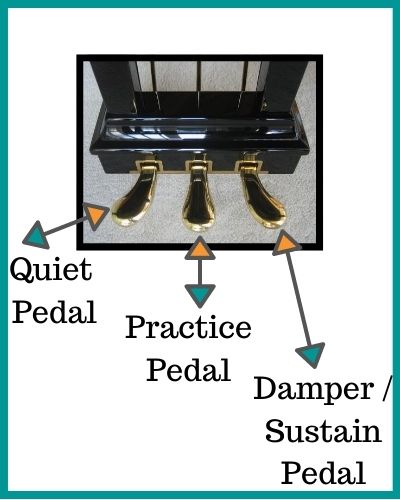
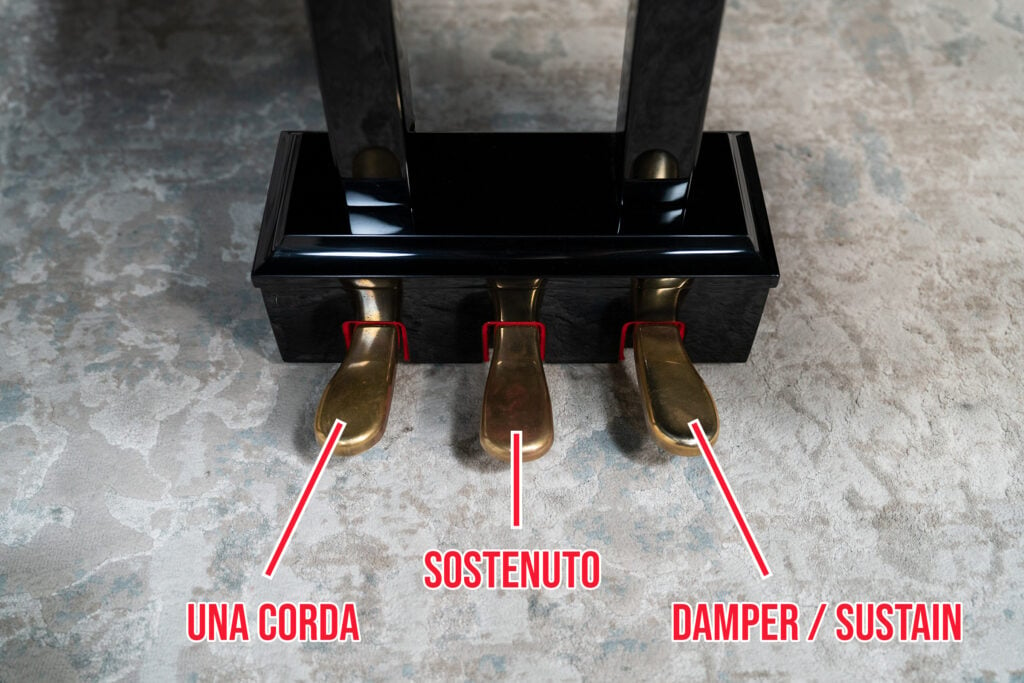
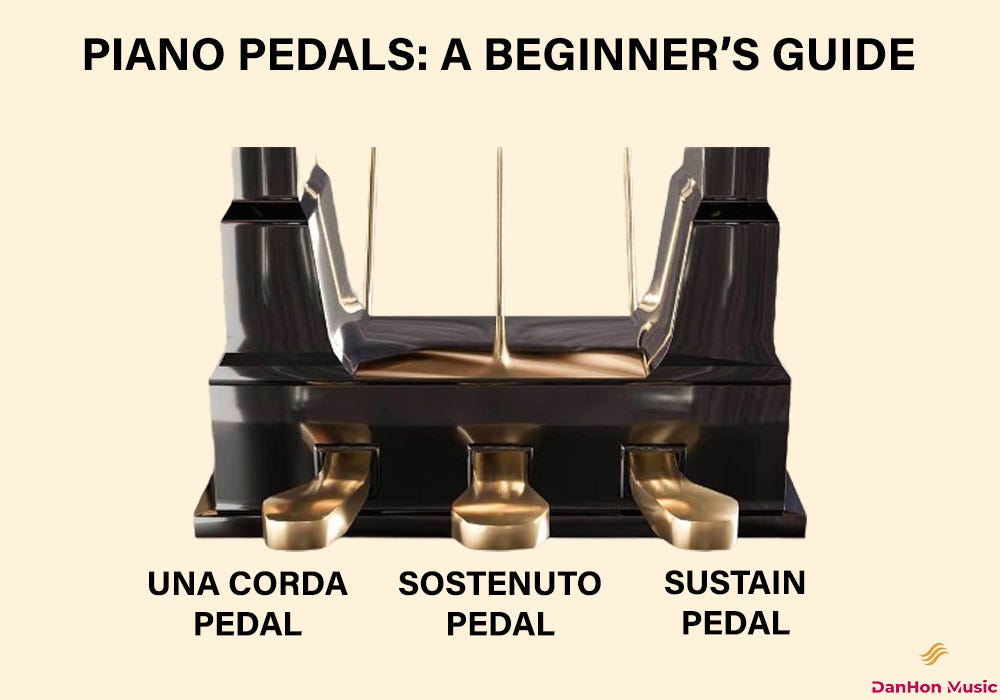
• The right pedal is the sustain, or damper, pedal. It allows notes to keep ringing after you lift your fingers.
• The middle pedal is usually the sostenuto pedal on grand pianos. It sustains only the notes held when you press it.
• The left pedal is the soft, or una corda, pedal. It changes the tone and often lowers the volume.
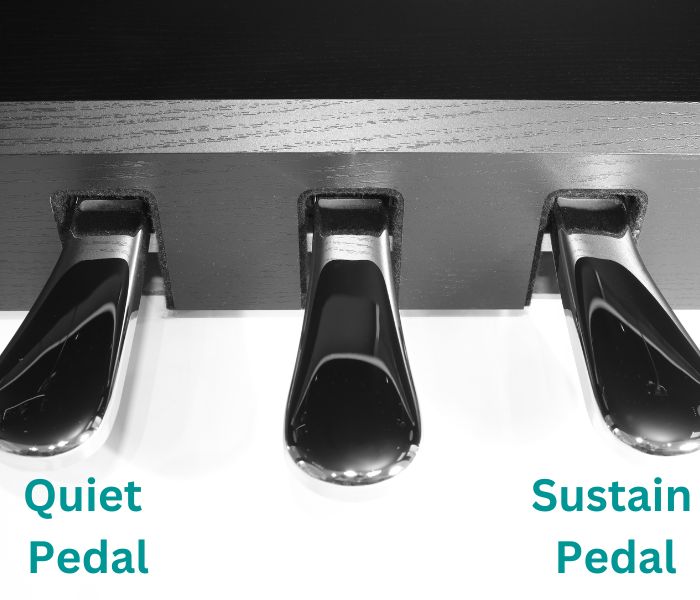
The exact design can vary. Many upright pianos use a practice pedal in the middle instead of a true sostenuto pedal. That pedal places felt between the hammers and strings, making the piano much quieter.
So, when someone asks what do the three piano pedals do, the safest answer is: they shape sustain, tone, volume, and note control. Always check the piano’s manual if the middle pedal behaves differently.

The Right Pedal: Sustain and Damper Control
The right pedal is the one most piano players use. It is also called the damper pedal or sustain pedal.
When you press a piano key, a felt damper lifts away from the string. The string vibrates and creates sound. When you release the key, the damper falls back onto the string and stops the vibration.
Pressing the right pedal keeps many dampers raised. This lets the strings continue to vibrate after you release the keys. It also allows other strings to vibrate through sympathetic resonance, creating a fuller sound.
Common uses of the sustain pedal
The sustain pedal can help you:
• Connect notes that your fingers cannot physically hold together.
• Make chords sound rich and full.
• Add warmth to slow melodies.
• Create resonance in large concert spaces.
• Support legato playing across wide intervals.
For example, a pianist may play a low C chord, press the sustain pedal, and then move the hand to a higher chord. The first chord continues to ring while the second chord begins.
How to pedal without making mud
The sustain pedal is powerful, but it can quickly make music unclear. The most common mistake is holding it down through every chord.
A better method is called changing, or clearing, the pedal:
-
Play the first chord.
-
Press the sustain pedal.
-
Play the next chord.
-
Lift the pedal briefly.
-
Press it again at once.
This keeps the harmony connected while clearing the old sound. The motion should be quick and smooth, almost like wiping a window.
A useful rule is to change the pedal when the harmony changes. If the chord changes but the pedal stays down, unrelated notes may blend together.
Half-pedaling and partial pedal use
Many modern acoustic and digital pianos respond to partial pedal movement. This is called half-pedaling or half-damping.
Instead of lifting every damper fully, you press the pedal only partway. This produces less sustain and can give you more control. It is useful in delicate music, fast passages, and pieces with frequent harmony changes.
Not every piano responds in the same way. Digital pianos may simulate half-pedaling through sensors, while older upright pianos may offer little or no response between pedal positions.
A practical sustain pedal exercise
Play four slow chords in a row. Change the pedal after each chord. Listen for unwanted notes.
Then repeat the exercise without the pedal. Notice how dry the music sounds. Finally, use the pedal again, but lift it slightly earlier. This teaches your foot to listen rather than simply press.
In my own practice, I found that beginners often watch their hands but ignore their feet. The ear is a better guide. If the harmony sounds cloudy, the pedal is probably staying down too long.
The Left Pedal: Soft Pedal and Una Corda
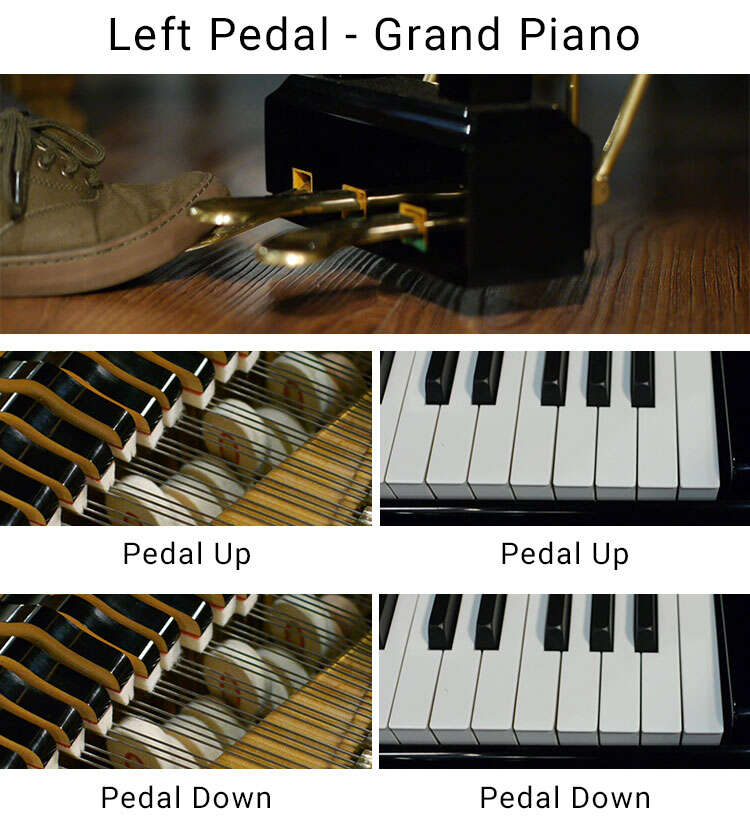
The left pedal is commonly called the soft pedal. On a grand piano, it is known as the una corda pedal, which means “one string” in Italian.
On a grand piano, pressing the left pedal shifts the entire keyboard action slightly to one side. The hammers then strike fewer strings for many notes. This reduces volume and changes the tone.
The effect is not simply “quieter.” The sound can also become softer, rounder, and more intimate. The change in tone is often more important than the change in loudness.
How the left pedal works on upright pianos
An upright piano usually cannot shift its action from side to side in the same way. Instead, pressing the left pedal moves the hammers closer to the strings.
Because the hammers travel a shorter distance, they strike with less force. This often makes the sound quieter, but the tonal change may be less varied than on a grand piano.
This difference explains why the answer to what do the three piano pedals do depends partly on the type of piano. The pedal names may be the same, but the mechanism and sound can differ.
When to use the soft pedal
The left pedal can work well when you want to:
• Play a quiet passage with a gentle tone.
• Create contrast between two sections.
• Practice late at night on an acoustic piano.
• Reduce the force needed during a soft dynamic.
• Give a melody a distant or dreamlike quality.
The soft pedal should not replace good control of your fingers. A pianist should still learn to play quietly without depending on the pedal.
A common mistake with the left pedal
Some players press the soft pedal whenever they see a quiet marking. That can flatten the sound and remove useful color.
Try playing the same phrase quietly without the pedal. Then play it with the pedal. Ask yourself which version better matches the mood. In many pieces, the soft pedal is an artistic choice, not an automatic command.

The Middle Pedal: Sostenuto or Practice Pedal?
The middle pedal causes the most confusion when learning what do the three piano pedals do. On a full-sized grand piano, it is usually the sostenuto pedal. On many upright pianos, it may be a practice pedal or a bass sustain pedal.
How the sostenuto pedal works
The sostenuto pedal holds only the notes that are already pressed when you engage it.
Use this sequence:
-
Play one or more notes.
-
Press the middle pedal while holding those notes.
-
Release your fingers.
-
Play other notes without releasing the sustained notes.
The selected notes continue to ring, while later notes behave normally. This makes the sostenuto pedal different from the sustain pedal, which usually affects nearly all undamped strings.
Musical uses for sostenuto
The sostenuto pedal is helpful when you want to:
• Hold a deep bass note under moving chords.
• Sustain an open fifth while playing a melody.
• Create a drone effect.
• Keep long notes ringing without blurring faster notes.
• Perform modern piano music with layered textures.
For example, you might hold a low octave with the sostenuto pedal while playing a clear, moving pattern above it. The bass remains present, but the upper notes do not all blend together.
Why many upright pianos do not have true sostenuto
A real sostenuto system is complex and expensive to build. It requires a mechanism that can catch and hold selected dampers. Many upright pianos use the middle pedal for a simpler purpose.
Common middle pedal designs include:
• Practice pedal: A strip of felt moves between the hammers and strings. Some models lock in place.
• Bass sustain pedal: Only the lower strings continue to ring.
• Tone-control pedal: The function varies by manufacturer.
If your middle pedal makes the piano much quieter, it is probably a practice pedal. If it sustains only low notes, it may be a bass sustain system.
The Three Piano Pedals on Different Piano Types
The answer to what do the three piano pedals do is not identical for every instrument. Piano design, age, brand, and size all matter.
Concert grand piano
A concert grand normally has:
• Right pedal: Sustain or damper pedal.
• Middle pedal: Sostenuto pedal.
• Left pedal: Una corda pedal.
These pedals give advanced players detailed control over resonance, color, and texture.
Upright piano
An upright piano often has:
• Right pedal: Sustain pedal.
• Middle pedal: Practice pedal or bass sustain pedal.
• Left pedal: Soft pedal that moves the hammers closer to the strings.
Some high-end upright pianos do include a true sostenuto pedal, but it is less common.
Digital piano
Digital pianos may copy the layout of an acoustic piano. Their pedals can trigger recorded or modeled sounds through electronic sensors.
Many digital pianos support:
• Sustain pedal effects.
• Half-pedaling.
• Sostenuto functions.
• Soft pedal tone changes.
However, the quality of the effect depends on the instrument. A basic digital keyboard may only recognize the sustain pedal as on or off. A more advanced model may detect several levels of pedal pressure.
Electronic keyboards
Some keyboards include only a sustain input. Others offer a three-pedal unit as an optional accessory. Before buying one, check whether the keyboard supports continuous sustain, half-pedaling, and sostenuto control.
How to Use the Three Piano Pedals Together
Knowing what do the three piano pedals do is only the first step. The real skill is using them at the right time and with the right amount of pressure.
Coordinate your hands and feet
Your foot should respond to the music, not move randomly. Start by practicing each pedal alone. Then combine one pedal with a simple scale or chord pattern.
Keep your heel on the floor when possible. This gives your ankle control and reduces tension. Move from the ankle instead of lifting your whole leg.
Read pedal markings carefully
Sheet music may show pedal marks with different symbols. Common markings include:
• Ped.: Press the sustain pedal.
• Asterisk or release mark: Lift the pedal.
• Bracket lines: Show how long the pedal should remain down.
• Una corda: Use the left pedal.
• Tre corde: Release the left pedal.
Not every edition uses the same symbols. If markings are unclear, listen to a trusted recording and study the musical harmony.
Match the pedal to the harmony
A simple guideline is:
• Use sustain for connection and resonance.
• Use the soft pedal for color and gentle tone.
• Use sostenuto for selected long notes under moving music.
The pedal should support the musical idea. It should never hide uneven playing or wrong notes.
Practice with exaggerated movements
When learning, press and release the pedals more slowly than you would in performance. Feel the exact moment when the sound changes.
Then practice with less movement. Small pedal changes often create better control than deep, forceful presses.
Common Piano Pedal Mistakes to Avoid
Even experienced players can improve their pedal technique. These mistakes appear often in lessons and rehearsals.
Holding the sustain pedal too long
This creates a thick cloud of sound. It is especially noticeable in low registers, where strings vibrate for a long time.
Fix it by changing the pedal with each harmony. Also try lifting it before a chord change, then pressing it again after the new chord begins.
Pressing the pedal before the note
If you press the sustain pedal too early, unwanted sounds may ring. In many passages, play the note first and press the pedal immediately after.
This method is often called syncopated pedaling. It helps connect chords while keeping the change clean.
Using the soft pedal as a volume switch
The left pedal changes tone, not just loudness. Develop soft finger control as well.
Think of the soft pedal as changing the color of the sound. Your fingers still shape the musical line.
Expecting every middle pedal to be sostenuto
Never assume the middle pedal has the same purpose on every piano. Test it with a low note, a high note, and a chord.
If only the selected notes continue, it is likely sostenuto. If the piano becomes quiet, it is likely a practice pedal.
Creating foot tension
A tense ankle can cause uneven pedaling and fatigue. Keep the foot relaxed and avoid pressing with excessive force.
In my teaching experience, many players improve quickly when they practice pedal changes without playing. Simply press, release, and repeat while keeping the ankle loose.
A Simple Practice Plan for Better Pedaling
Use this short routine several times a week.
-
Play a C major chord and press the sustain pedal. Release both hands, then lift the pedal. Listen to the sound fade.
-
Play four chords, changing the pedal after each chord. Keep the sound clear.
-
Play a slow melody without pedal. Add the pedal only where you need connection.
-
Test the middle pedal. Hold a chord, press the pedal, release the chord, and play new notes.
-
Play a soft phrase with and without the left pedal. Compare volume, tone, and mood.
-
Record yourself from a short distance. Pedal problems are often easier to hear in a recording than at the keyboard.
This routine takes about ten minutes. It builds control without overwhelming a new player.
Why Pedals Matter in Piano Music
Piano pedals are more than foot switches. They help a pianist shape time, space, color, and emotion.
The sustain pedal can make a simple chord progression sound broad and warm. The soft pedal can make a melody feel private and close. The sostenuto pedal can separate a deep foundation from quick movement above it.
Still, pedals cannot fix poor rhythm, weak finger control, or unclear phrasing. They are like lighting in a theater: important, but only useful when the actors know their lines.
Understanding what do the three piano pedals do also helps you interpret the instructions of composers. Pedal markings appear in works by composers such as Beethoven, Chopin, Debussy, Ravel, and many modern writers, though each composer may expect a different sound and degree of freedom.
Frequently Asked Questions About What Do the Three Piano Pedals Do
What does the right piano pedal do?
The right pedal lifts the dampers from the strings, allowing notes to continue ringing after you release the keys. It is called the sustain or damper pedal and is the most commonly used piano pedal.
What does the left piano pedal do?
The left pedal changes the piano’s volume and tone. On a grand piano, it shifts the action so the hammers strike fewer strings; on an upright, it usually moves the hammers closer to the strings.
What does the middle piano pedal do?
On most grand pianos, the middle pedal is sostenuto. It sustains only the notes held when you press the pedal, but many upright pianos use the middle pedal as a practice mute or bass sustain pedal.
Can you play piano without using the pedals?
Yes. Beginners should first learn accurate notes, rhythm, fingering, and phrasing without relying on pedals. Pedals add resonance and color, but strong playing should remain clear without them.
When should I press the sustain pedal?
Press the sustain pedal after or just as you play a note or chord, then change it when the harmony changes. Lift it often enough to prevent old notes from blending into a muddy sound.
Why does my sustain pedal make the music sound messy?
The pedal may be held too long, changed too late, or pressed before the correct chord. Practice short pedal changes and listen for clean harmony after every chord shift.
Do digital piano pedals work like acoustic piano pedals?
Some digital pianos closely model acoustic pedal behavior, including half-pedaling and sostenuto. Basic keyboards may offer only simple on-and-off sustain, so check the instrument’s specifications.
Conclusion
The three piano pedals control different parts of piano expression. The right pedal sustains sound, the left pedal changes tone and volume, and the middle pedal may sustain selected notes or provide a quieter practice mode.
The clearest answer to what do the three piano pedals do is simple: they help you connect notes, shape tone, and control resonance. Begin with slow exercises, listen closely, and learn how your own piano responds.
Practice one pedal at a time, then combine them with simple music. Explore more piano technique guides, share your questions, and keep listening as you play. Your feet can become as expressive as your hands.

Senior Music Reviewer
Alex Carter is a seasoned music reviewer with over a decade of experience in the world of sound and instruments. Passionate about helping musicians and enthusiasts make informed choices, he brings sharp insights and in-depth knowledge to every review. From classical instruments to modern gear, Alex combines technical expertise with a love for music to deliver content that resonates with readers.
As a Senior Music Reviewer and expert author on Tuneluma.com, Alex is dedicated to sharing honest evaluations, practical advice, and thoughtful commentary to guide readers in their musical journey.