When Was Electric Guitar Invented: A Brief History
The electric guitar was invented in the early 1930s, with the first practical model appearing around 1931.
The story of when the electric guitar was invented is more complex than one date. Early inventors, musicians, and instrument makers solved different problems before the modern electric guitar took shape. This guide explains the key dates, people, designs, and breakthroughs that turned a quiet hollow-body instrument into one of the most powerful sounds in modern music.
When Was the Electric Guitar Invented?
The first practical electric guitar appeared around 1931. It was created by George Beauchamp with help from Adolph Rickenbacker and other workers at the company that later became Rickenbacker.
Their instrument used an electromagnetic pickup. This pickup changed the movement of the strings into an electrical signal. An amplifier then made that signal louder.
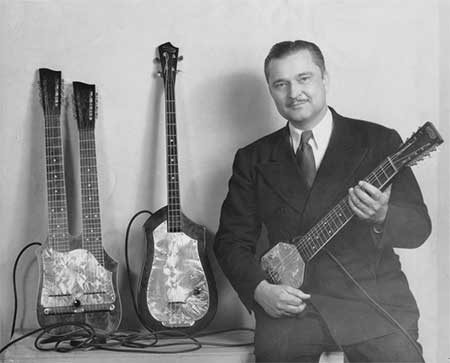
The early instrument had a metal body shaped like a frying pan. Because of this unusual shape, musicians often call it the “Frying Pan” guitar. It was a lap steel guitar, not a standard Spanish-style guitar.
So, when was the electric guitar invented? The most useful answer is 1931, although the invention developed through several earlier experiments.
The first electric guitar was not made for rock music. It was built mainly for Hawaiian and steel guitar players. These musicians needed more volume because their instruments could be hard to hear beside brass, drums, and other loud instruments.
Why Did Musicians Need an Electric Guitar?
Before amplification, guitarists had a serious volume problem. A guitar could sound rich in a small room, but it often disappeared in a large dance hall or band.
Big bands made this problem worse. Trumpets, trombones, saxophones, and drums could easily cover the sound of an acoustic guitar. Guitar players needed a way to compete without simply hitting the strings harder.
The electric guitar solved this problem by separating sound production into three steps:
• The strings vibrate.
• The pickup turns those vibrations into an electrical signal.
• The amplifier increases the signal and sends it to a speaker.
This process was a major change. Instead of relying only on the wooden body to create volume, the guitar could now use electricity as part of its voice.
When was the electric guitar invented? It was invented when these needs, ideas, and technologies came together. The exact year matters, but the reason behind the invention matters too.

The Early History of Electric Guitar Development
The path to the electric guitar began before 1931. Inventors had already been exploring microphones, telephone technology, magnetic devices, and electrical amplification.
In the 1920s, some musicians and instrument makers tried attaching early pickups to acoustic instruments. These attempts were often weak, noisy, or difficult to control. Still, they showed that string vibration could be converted into an electrical signal.
George Beauchamp played an important role in solving the technical problem. He worked on a magnetic pickup that used coils and magnets. The design detected the vibration of steel strings and sent that signal to an amplifier.
Beauchamp worked with Adolph Rickenbacker, who helped build the metal instrument body. The result was a simple but important instrument that could produce a much louder sound than an ordinary acoustic guitar.
Important early milestones include:
• The 1920s: Experiments with electric pickups and amplified string instruments increased.
• Around 1931: Beauchamp and Rickenbacker developed the Frying Pan lap steel guitar.
• 1932: Early Rickenbacker electric instruments entered the market.
• 1936: Gibson introduced the ES-150, one of the first widely successful electric Spanish-style guitars.
• The 1940s: Musicians such as Les Paul explored solid-body guitar designs and recording techniques.
• The 1950s: Fender and Gibson helped define the modern solid-body electric guitar.
These dates explain why a single answer to when was the electric guitar invented can be misleading. The first working model came before the first popular commercial guitar.

Who Invented the Electric Guitar?
George Beauchamp is often credited as the main inventor of the electric guitar pickup. He developed the electromagnetic system that made electric amplification practical for guitar.
Adolph Rickenbacker helped turn the idea into a usable instrument. His company produced the metal-bodied lap steel guitar that became one of the first commercial electric guitars.
Other people also shaped the instrument’s development. Musicians and inventors tested different pickups, body shapes, strings, amplifiers, and wiring systems. Their work helped move the guitar from a technical experiment to a dependable stage instrument.
It is more accurate to describe the electric guitar as a team invention. Beauchamp created key pickup technology, Rickenbacker helped manufacture the instrument, and later builders improved the design.
When was the electric guitar invented by one person? There is no perfect answer. The early electric guitar came from several connected inventions rather than one isolated moment.

The First Electric Guitar: The Frying Pan
The Frying Pan was one of the earliest practical electric guitars. Its official name is often given as the Rickenbacker Electro A-25.
The guitar had a long neck and a small circular metal body. Players placed it across their laps and used a steel bar to change the pitch. This playing style was common in Hawaiian music.
The metal body was not just a visual choice. It helped the instrument remain stable and durable. The electromagnetic pickup sat under the strings and detected their movement.
The Frying Pan had a limited role at first. It was not shaped like the electric guitars used by modern rock players. However, its design proved that an amplified string instrument could work on stage.
That proof was crucial. Once musicians heard a guitar hold its place in a loud band, electric guitar design began to move quickly.
When Did the First Spanish-Style Electric Guitar Appear?
The first widely recognized electric Spanish-style guitar appeared in the mid-1930s. Gibson introduced the ES-150 in 1936.
Unlike the Frying Pan, the ES-150 looked more like a traditional acoustic guitar. It had a hollow wooden body and a neck designed for normal guitar playing. It also used a magnetic pickup to increase its volume.
The ES-150 became closely linked with jazz guitarist Charlie Christian. His clear, single-note lines helped show what an amplified guitar could do. The guitar was no longer only a rhythm instrument in the background.
The ES-150 was still not a solid-body guitar. Its hollow body could vibrate and create feedback at high volume. Feedback happens when sound from the amplifier causes the guitar’s body and strings to vibrate again.
This limitation encouraged builders to create stronger and more controlled designs.
:max_bytes(150000):strip_icc()/GettyImages-186459142-5c251e3946e0fb0001d607a4.jpg)
How the Electric Guitar Became a Solid-Body Instrument
Solid-body electric guitars became popular because they reduced feedback and offered a new sound. Instead of using a large hollow chamber to increase acoustic volume, these guitars relied mainly on pickups and amplifiers.
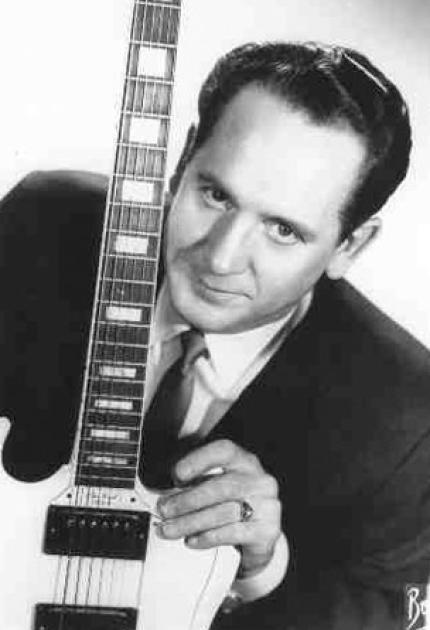
Les Paul built early solid-body experiments, including his famous “Log” guitar around 1940. The design was simple and unusual, but it showed that a solid piece of wood could support a powerful amplified sound.
In the 1950s, Fender released the Telecaster and Stratocaster. Gibson released the Les Paul model during the same decade. These instruments helped establish the basic shapes and features that remain popular today.
Solid-body guitars offered several benefits:
• They could be played at high volume with less feedback.
• They were durable and easier to produce in large numbers.
• They allowed longer sustain.
• They worked well with effects such as distortion, tremolo, and reverb.
• They supported new styles, including blues, rock and roll, surf music, and later heavy metal.
When was the electric guitar invented for rock music? It was not invented specifically for rock. However, its earlier development made rock guitar possible.

What Made the Electric Guitar Different From an Acoustic Guitar?
An acoustic guitar creates sound mainly through its vibrating strings and hollow wooden body. The body moves air and makes the sound louder.
An electric guitar creates a signal through its pickup. The amplifier and speaker do most of the work of making that signal audible.
The main parts include:
• Pickups: These detect string vibration and create an electrical signal.
• Volume and tone controls: These shape the strength and brightness of the sound.
• Bridge: This supports the strings and affects tuning, sustain, and playing feel.
• Amplifier: This increases and shapes the electrical signal.
• Speaker: This turns the signal back into sound.
This design gives the electric guitar more control over tone. A player can use a clean sound for jazz, a bright sound for country, or an overdriven sound for blues and rock.
The instrument became more than a louder acoustic guitar. It became a flexible sound machine.
Why Is the Invention Date Still Debated?
The date is debated because “electric guitar” can mean several different things.
Some people mean the first instrument with an electric pickup. Others mean the first commercially sold electric guitar. Some mean the first hollow-body Spanish guitar, while others mean the first solid-body guitar.
The answer also changes depending on how much credit goes to earlier experiments. Musicians had tried electrical amplification before the Frying Pan. Yet those early attempts did not always create a practical, reliable product.
A helpful timeline is:
-
Early 1920s: Inventors tested pickups and amplification.
-
Around 1931: The Frying Pan became a practical electric instrument.
-
1932: Early commercial Rickenbacker models appeared.
-
1936: Gibson introduced the ES-150.
-
Around 1940: Les Paul developed important solid-body experiments.
-
1950s: Fender and Gibson popularized modern electric guitar designs.
This timeline gives a fuller answer to when was the electric guitar invented without forcing the story into one date.
The Impact of the Electric Guitar on Music
The electric guitar changed music because it gave guitarists a stronger voice. Players could perform melodies, solos, and sustained notes that were difficult to hear on an acoustic guitar.
Jazz musicians used amplification to play clear single-note lines. Blues musicians used bends, vibrato, and overdrive to create emotional sounds. Rock musicians later pushed volume, distortion, and feedback even further.
The electric guitar also changed songwriting and band structure. Guitarists could take a more visible role instead of playing only rhythm chords. The instrument became central to many popular music styles.
Its influence reached far beyond music. The shape of an electric guitar became a cultural symbol. A guitar could represent freedom, youth, rebellion, craft, or personal identity.
In practical terms, the electric guitar gave players more choices. That may be its greatest achievement.
Common Mistakes When Researching the Electric Guitar
Many articles give one date without explaining the history. That can make the subject seem simpler than it really is.
Here are common mistakes to avoid:
• Saying the electric guitar was invented in the 1950s: The modern solid-body guitar became popular then, but electric guitars existed decades earlier.
• Giving credit to only one person: Beauchamp was vital, but Rickenbacker and later builders also mattered.
• Calling the Frying Pan a modern rock guitar: It was an early lap steel guitar with a very different playing style.
• Confusing invention with popularity: The first working design and the first widely popular model were not the same instrument.
• Ignoring the amplifier: The electric guitar is part of a larger system that includes pickups, cables, amplifiers, and speakers.
When explaining when was the electric guitar invented, always define which stage of development you mean.
A Practical Way to Understand the Timeline
If you are new to guitar history, compare the main instruments in order. This makes the story easier to remember.
-
Acoustic guitar: The body creates most of the volume.
-
Early amplified instrument: A pickup adds electrical power to a stringed instrument.
-
Frying Pan: A practical electric lap steel guitar appears around 1931.
-
Gibson ES-150: A Spanish-style electric guitar reaches players in 1936.
-
Solid-body prototypes: Builders reduce feedback and improve sustain.
-
Fender and Gibson models: The modern electric guitar becomes widely popular in the 1950s.
This approach also helps explain why the sound of a 1930s electric guitar differs from a 1950s rock guitar. The technology was still changing rapidly.
A useful lesson for players is that the guitar, amplifier, and pickup work as one system. Changing any one of them can change the final sound.
Frequently Asked Questions About When Was the Electric Guitar Invented
When was the electric guitar invented?
The first practical electric guitar appeared around 1931. George Beauchamp and Adolph Rickenbacker developed an early model known as the Frying Pan.
Who invented the first electric guitar?
George Beauchamp developed the key electromagnetic pickup design. Adolph Rickenbacker helped build and manufacture the early instrument, so both names are strongly linked to its invention.
What was the first electric guitar called?
One of the first commercial electric guitars was the Rickenbacker Electro A-25. It is commonly called the Frying Pan because of its small, round metal body.
When did electric guitars become popular?
Electric guitars became more popular during the 1930s and expanded rapidly in the 1950s. Jazz, blues, country, and rock musicians all helped bring the instrument to a wider audience.
Was the first electric guitar a solid-body guitar?
The earliest practical electric guitar was a metal-bodied lap steel instrument. Solid-body electric guitars became more influential later, especially during the 1940s and 1950s.
Why was the electric guitar invented?
The electric guitar was invented to make the instrument louder in large bands and performance spaces. Amplification also gave musicians more control over tone, sustain, and musical expression.
Conclusion
The clearest answer to when was the electric guitar invented is around 1931, when George Beauchamp and Adolph Rickenbacker developed the practical Frying Pan electric guitar. Earlier experiments helped prepare the way, while the Gibson ES-150 and later solid-body guitars made the instrument widely useful.
The electric guitar was not created in one perfect moment. It grew through many small improvements in pickups, amplifiers, materials, and playing styles. If you want to understand its sound, explore the early Frying Pan, the Gibson ES-150, and the first Fender and Gibson solid-body models. Share your favorite electric guitar era or keep learning about the musicians who shaped its history.

Senior Music Reviewer
Alex Carter is a seasoned music reviewer with over a decade of experience in the world of sound and instruments. Passionate about helping musicians and enthusiasts make informed choices, he brings sharp insights and in-depth knowledge to every review. From classical instruments to modern gear, Alex combines technical expertise with a love for music to deliver content that resonates with readers.
As a Senior Music Reviewer and expert author on Tuneluma.com, Alex is dedicated to sharing honest evaluations, practical advice, and thoughtful commentary to guide readers in their musical journey.