What A Wonderful World Piano Sheet Music: Best 2026 Guide
What a wonderful world piano sheet music is available in various difficulty levels, ranging from simple arrangements for beginners to complex, professional jazz transcriptions.
I have spent many years teaching students how to capture the gentle, hopeful spirit of this Louis Armstrong classic. Whether you are picking up the keys for the first time or aiming to add a polished, jazzy flair to your repertoire, choosing the right what a wonderful world piano sheet music is the first step. The right arrangement turns a simple practice session into an emotional performance. In this guide I share clear advice, practical tips, and real classroom experience. I will help you select, read, and perform this iconic tune with confidence.
Understanding the Structure of the Composition
The beauty of this song lies in its simplicity. High-quality what a wonderful world piano sheet music shows a repetitive but elegant harmonic plan. That repetition helps learners. The verse follows a classic pop-ballad layout. This lets the melody breathe and soar over the chords.
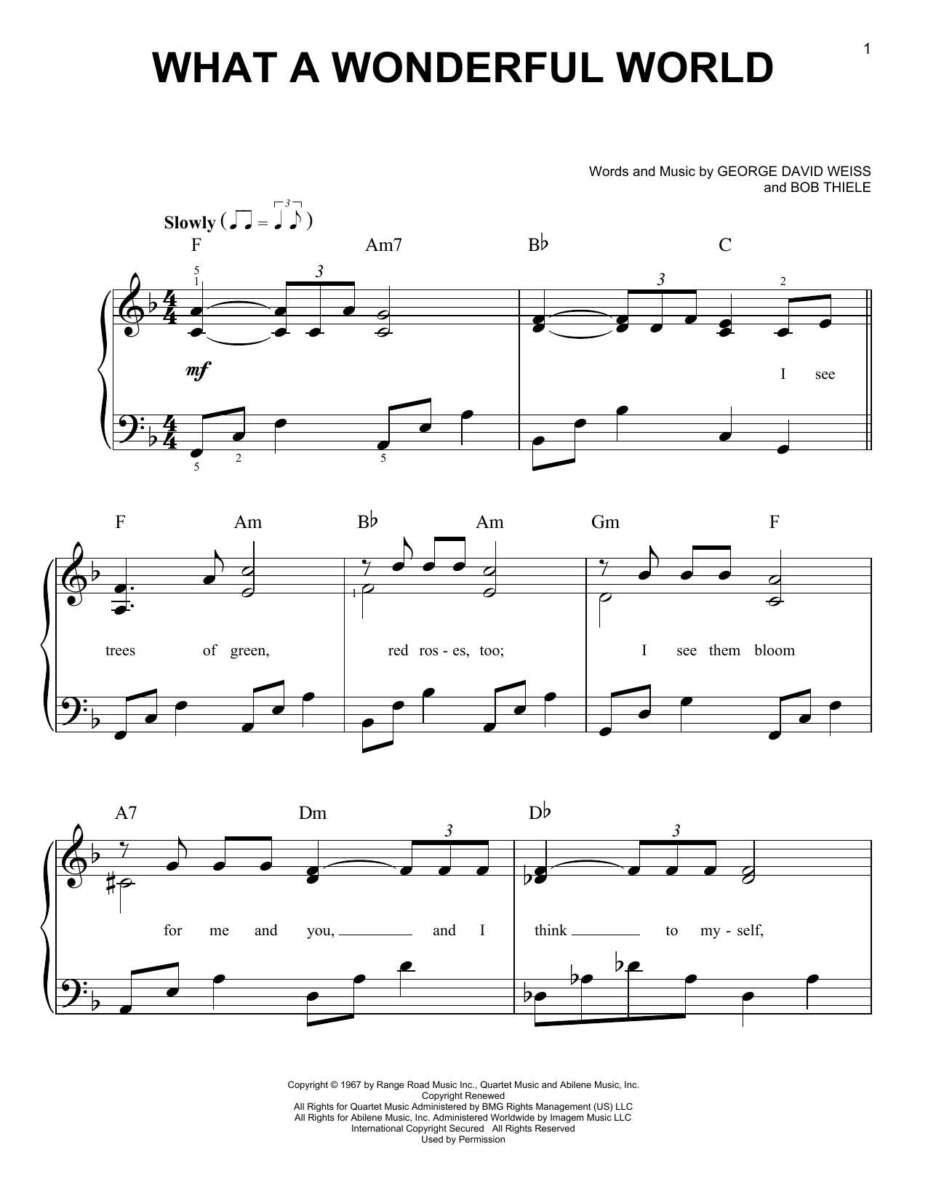
The song was written by Bob Thiele and George David Weiss and made famous by Louis Armstrong. Most published piano arrangements use F Major or G Major. These keys feel comfortable under the hands for many players. You will also find transposed versions in C Major for easier reading.
If an arrangement looks dense, check for a lead sheet. A lead sheet gives the melody and chord symbols only. That format lets you improvise your own left-hand accompaniment and voicings. Lead sheets work well for pianists who like to add personal harmonies or short fills.
Rhythm matters here. The tune has a gentle swing feel. Do not play it like a strict march. Aim for a light, swaying pulse. If you use digital what a wonderful world piano sheet music, listen to the original recording while you follow the notes. That will help you lock in the swooping tempo and phrasing.
Tip from my lessons: clap the rhythm first, then hum the melody. Short, focused practice like this builds a natural feel faster than slow scale drills.
Choosing the Right Arrangement for Your Skill Level
Not all what a wonderful world piano sheet music editions are equal. Pick a version that matches your current skills and goals. Here is a quick breakdown by level.
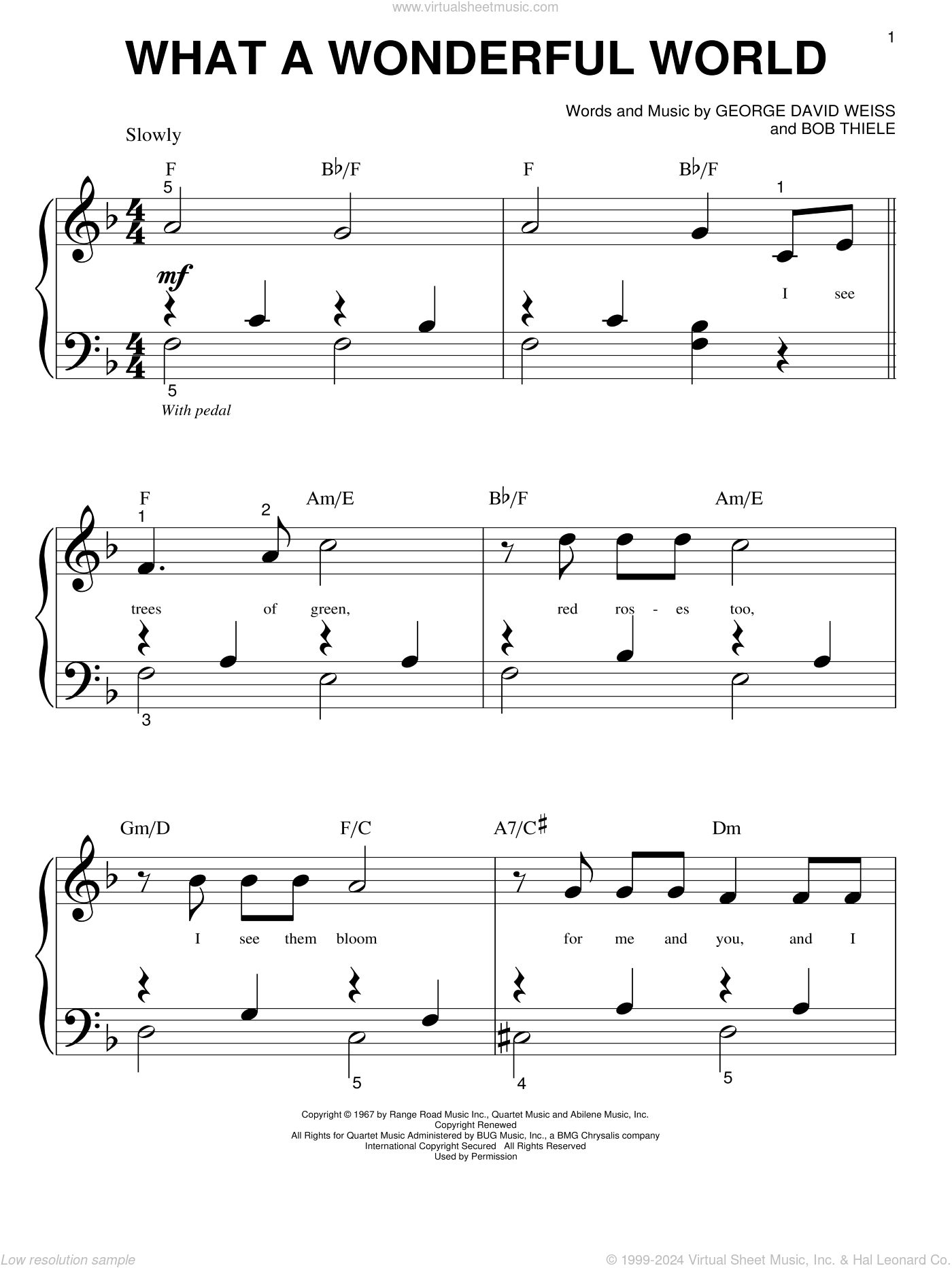
Beginners should look for large noteheads and simplified left-hand patterns. These versions use basic triads or single-note bass lines. They remove tricky polyrhythms and fast chord changes. This reduces frustration and keeps practice rewarding.
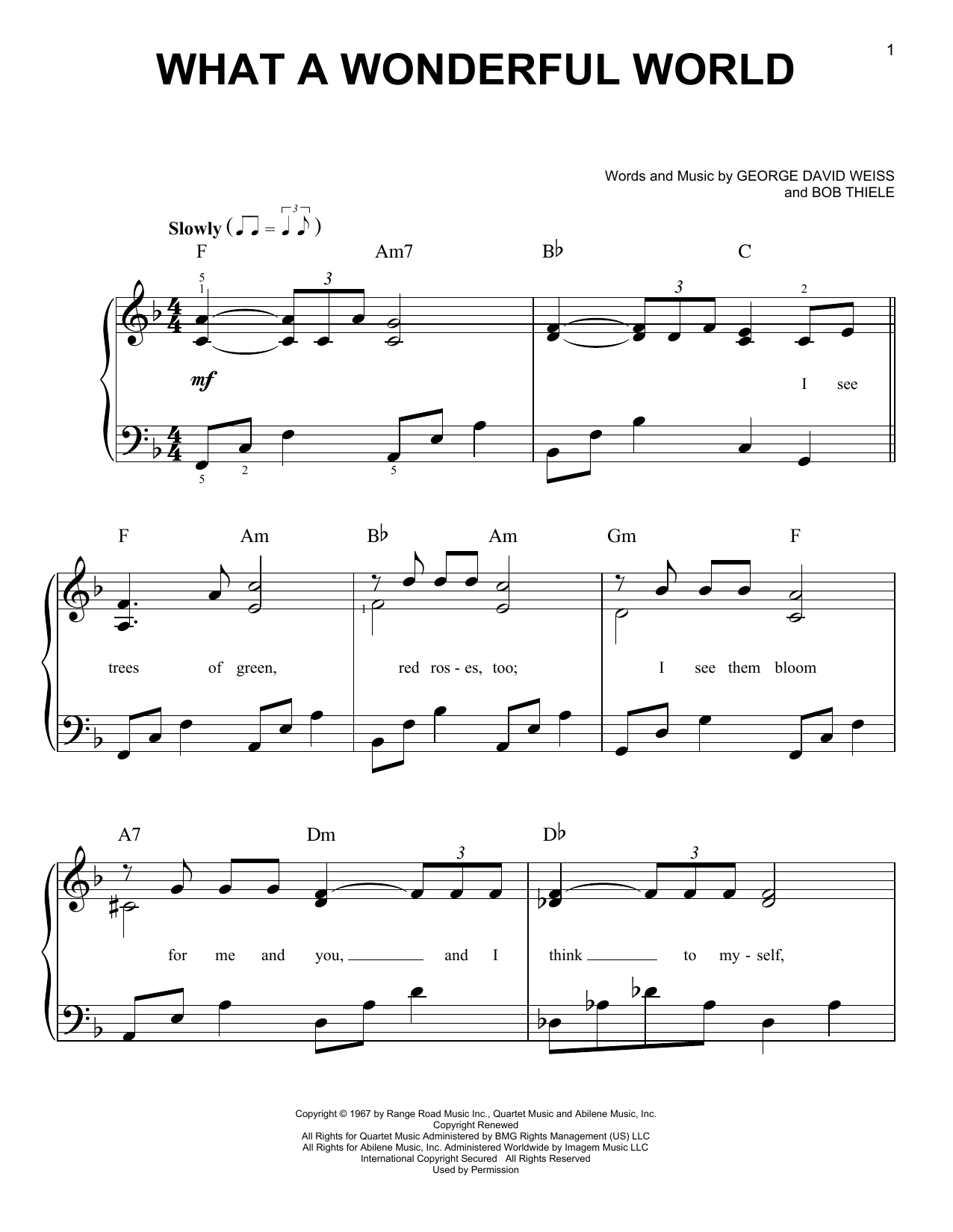
Intermediate players can choose arrangements with full chords and syncopated rhythms. These include richer left-hand textures and some walking bass lines. You can learn basic chord voicings, voice-leading, and simple fills. These versions help you grow your harmonic vocabulary.
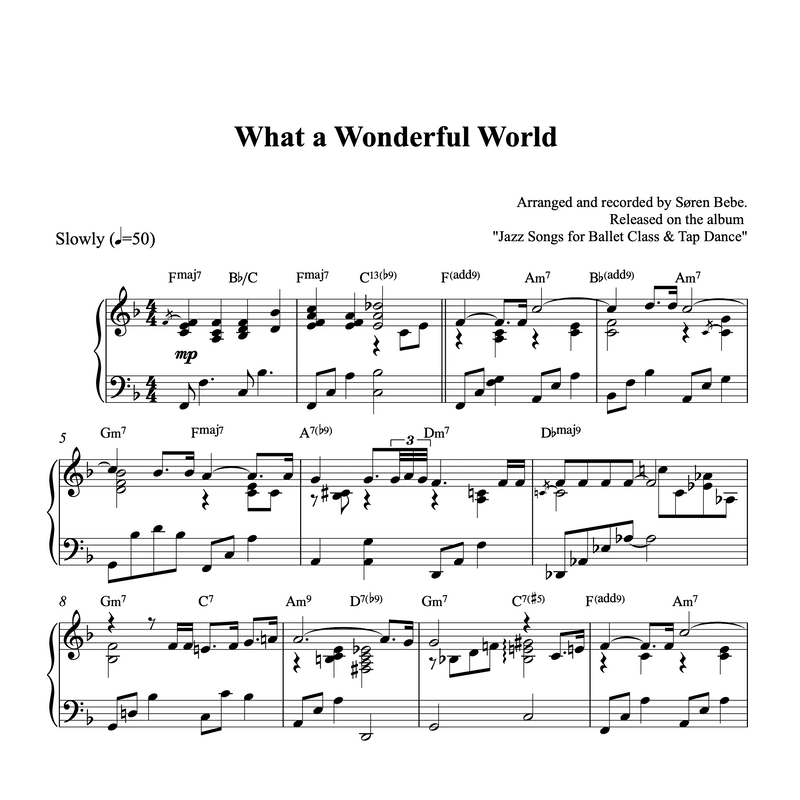
Advanced players will enjoy jazz transcriptions and solo piano arrangements. These add chord substitutions, extended harmonies (7ths, 9ths, 13ths), and reharmonizations. They also teach inner-voice movement and rhythmic displacement. If you want a performance-ready solo piece, aim for this level.
I often advise starting with a version that feels a little too easy. This builds early wins. It lets you focus on expression, not just mechanics. Once you know the melody and basic chords, layer in dynamics, pedal, and small improvisations. Over time those layers will create a personal, memorable performance.
Popular Arrangements and Where to Find Them
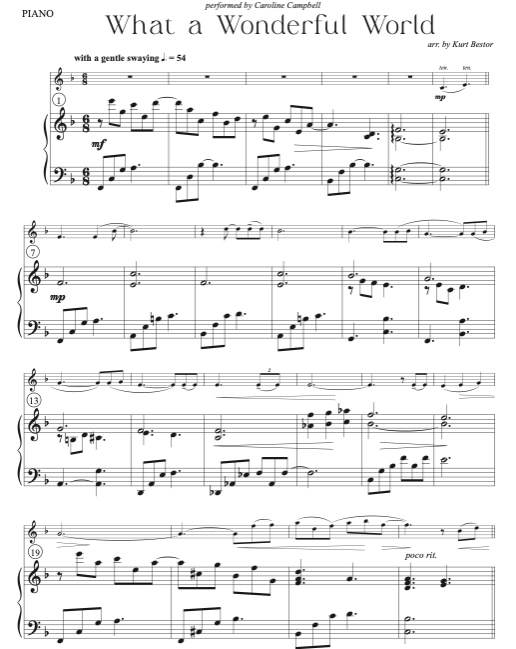
There are many legal sources for sheet music. Some sell printed editions while others offer instant digital downloads. Each source may carry beginner, intermediate, and advanced versions. Look for preview pages before you buy. Previews show layout, difficulty, and page count. This helps you avoid a mismatch.
Common sources include major publishers and specialized sheet music stores. You can also find lead sheets in fake books and digital libraries. If you need a specific key, search for transposed editions. Some sites offer printable PDFs and mobile-friendly scores for tablet use.
When choosing a file, check the formatting. Clear spacing and readable noteheads matter. So does accurate chord notation. Good editions will mark dynamics, pedaling, and suggested voicings. These small details save rehearsal time and improve musical results.
Tips for Practice and Performance
Treat the piano like a voice. The song was popularized by a singer, so sing the lyrics in your head as you play. This keeps your phrasing organic. I call this melodic phrasing. It helps your right hand shape the melody like a vocal line.
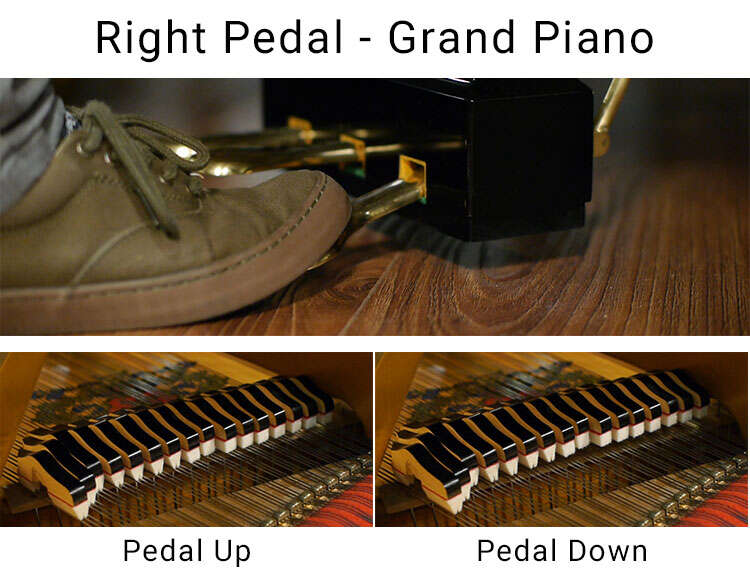
Work on pedal technique. The tune is slow and lush. The sustain pedal can enhance or muddy the sound. Change the pedal when the chord changes. This keeps the harmony clean and resonant. Practice with short pedal releases at first. You can add longer sustains later.
Another effective method is slow practice with rhythmic focus. Play short phrases at a reduced speed. Keep your hands relaxed. Gradually increase tempo only when the phrase feels natural. This method builds lasting control.
Do not fear mistakes. I once spent a week perfecting a middle-section transition before I realized I had over-practiced it. Sometimes a relaxed approach yields a more musical result than technical perfection. Make space for small errors during practice. That frees you to play more expressively.
Below are focused practice ideas to improve specific skills for this song.
Simple daily practice plan (7-day)
Day 1: Learn the melody in short phrases. Sing as you play. Use slow tempo. Keep sessions short (15–20 minutes).
Day 2: Add left-hand root notes and simple triads. Keep hands separate until comfortable.
Day 3: Combine hands. Focus on smooth hand coordination and timing.
Day 4: Work on swing feel. Use a metronome set to “swing” or listen to Louis Armstrong and match the rhythm.
Day 5: Add basic pedal work. Change pedal on chord changes. Aim for clarity.
Day 6: Explore simple chord voicings and a two-bar fill. Try small improvisations on the last phrase.
Day 7: Run through the whole arrangement with expression. Record yourself and listen back for balance and phrasing.
Common jazz chords & voicings for this song
Learn these shapes slowly. Use them where the sheet suggests or to replace basic triads.
- Major 7 (e.g., Fmaj7): root, 3, 5, 7 — soft and open.
- Dominant 7 (e.g., C7): root, 3, 5, b7 — leads well to F.
- Minor 7 (e.g., Dm7): root, b3, 5, b7 — gentle and warm.
- ii–V–I progressions: practice voice-leading between Dm7 → G7 → Cmaj7 or similar in the song’s key.
- Chord substitutions: try tritone subs (e.g., Db7 for G7) sparingly for color.
Use small left-hand voicings and keep the melody clear on the right. That balance creates a rich solo-piano texture without crowding the tune.
Frequently Asked Questions
Can beginners learn to play what a wonderful world on piano?
Yes. Many beginner versions use simplified melodies and basic chords. These arrangements focus on the song’s core structure. They make the tune accessible for new players and build confidence quickly.
In what key is the original version of the song?
The famous Louis Armstrong recording is typically in F Major. Many publishers also offer transpositions in G Major and C Major. Transposed versions help singers and players who prefer different ranges.
Should I use a lead sheet or a full piano arrangement?
Choose a lead sheet if you like to improvise. It gives melody and chord symbols only. Choose a full piano arrangement if you want everything written out. Full arrangements show exact left-hand patterns, fills, and voicings.
Where can I find reliable sheet music for this song?
There are many reputable online platforms with legal downloads of what a wonderful world piano sheet music. Look for sites that provide previews so you can judge difficulty before you buy. Also check publisher details and sample pages to confirm accuracy and layout.
How long does it take to learn this song?
It depends on your experience and the arrangement. Most students learn a basic version in a few days of steady practice. Intermediate arrangements often take a week or two. Advanced solo-piano transcriptions may take several weeks to polish.
Conclusion
Mastering this classic song is a rewarding journey. It brings calm and joy to any pianist and to listeners. Choose the right what a wonderful world piano sheet music for your skill level. Work on phrasing, tempo, and pedaling. Then add your personal touch. The goal is not only to play the right notes, but to capture the song’s hopeful, gentle spirit.
Take your time and enjoy the process. Start with a version that fits your ability. Practice small, focused sections each day. Share your progress and let the song grow with you. If you are ready to start, find your preferred arrangement today and bring this beautiful music to life.

Senior Music Reviewer
Alex Carter is a seasoned music reviewer with over a decade of experience in the world of sound and instruments. Passionate about helping musicians and enthusiasts make informed choices, he brings sharp insights and in-depth knowledge to every review. From classical instruments to modern gear, Alex combines technical expertise with a love for music to deliver content that resonates with readers.
As a Senior Music Reviewer and expert author on Tuneluma.com, Alex is dedicated to sharing honest evaluations, practical advice, and thoughtful commentary to guide readers in their musical journey.