For most people in a U.S. apartment, condo, or townhome, the best drum set for a small space is a compact electronic drum kit with mesh heads and a separate kick tower. It takes up less room than a full acoustic kit, lets you practice with headphones, and gives you control over volume.
The Roland TD-07DMK is a strong overall choice for players who want a compact, quiet-feeling kit from a well-established brand. The Yamaha DTX402K suits beginners who want a simple setup. The Alesis Nitro Max offers more built-in sounds and features for a lower typical price, though its long-term feel and support may not match higher-priced kits.
No kit is silent. The kick pedal can send low-frequency impact through floors and walls. For very tight spaces or shared buildings, a compact electronic kit on an isolation platform is usually the most practical setup.
Introduction
Small rooms create three problems for drummers: floor space, sound level, and vibration. A full acoustic kit can require a large footprint, several microphones or accessories, and enough sound control to avoid disturbing other people.
An electronic kit solves much of the space problem. You can fold or reposition some stands, lower the module volume, and use headphones for most practice. However, the kick pedal still creates mechanical noise, especially in apartments with wood or concrete floors.
This guide compares the main drum-set types, explains what to measure, and shows how to choose a kit that fits your room and your neighbors.

The Best Type of Drum Set for a Small Room
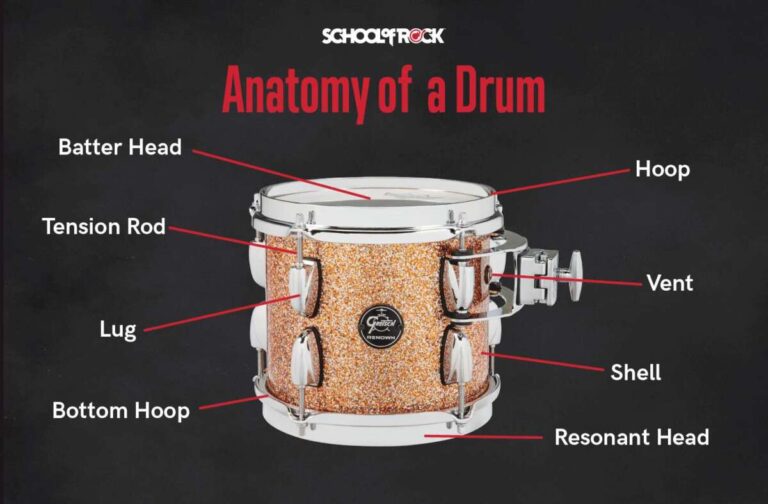
An electronic drum set is usually the best option for a small room because it combines a small footprint with adjustable sound. It also avoids the large cymbal spread and deep bass-drum shell found in most acoustic kits.
Choose an electronic kit when:
- You live in an apartment, condo, or shared home.
- You need to practice at night or early in the morning.
- You want headphone practice.
- You need multiple sounds in one kit.
- You have limited space for cymbal stands and acoustic shells.
Choose a compact acoustic kit when:
- You need natural acoustic response.
- You can play at reasonable hours.
- You have a room with enough sound treatment.
- Your building and household can handle the volume.
- You prefer a simple kit with no electronics.
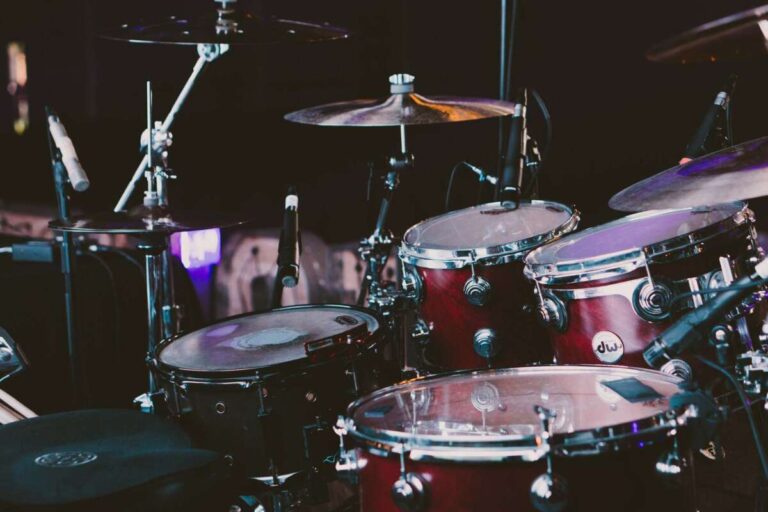
A compact acoustic kit, often called a bop kit, may use an 18-inch bass drum instead of a 22-inch drum. It saves some space, but it is still loud. Smaller shells reduce the physical size, not the basic problem of acoustic volume.
Electronic kits versus acoustic kits
| Feature | Electronic kit | Compact acoustic kit |
|---|---|---|
| Room size | Usually smaller | Larger |
| Headphone practice | Yes | No |
| Playing volume | Adjustable, but not silent | High |
| Floor vibration | Possible from kick pedal | Possible from kick and low drum |
| Setup complexity | Moderate | Moderate |
| Natural cymbal sound | Depends on module | Natural |
| Storage | Some parts can fold or move | Shells and stands take space |
| Best for shared housing | Usually | Rarely |
The key trade-off is simple: electronic kits control airborne sound, but they do not remove impact noise.

Best Compact Electronic Drum Kits
The best model depends on your priorities, not just the smallest listed size. A kit that saves a few inches may feel cramped if the pads are too close together or the kick pedal cannot sit securely.
Best overall: Roland TD-07DMK
The Roland TD-07DMK is a strong choice for a serious beginner or intermediate player who needs a compact electronic setup. Its two-piece mesh design gives the playing surfaces a more natural feel than basic rubber pads, and the separate kick pad supports a more familiar pedal position.
Why it fits small spaces:
- Compact rack-based layout.
- Mesh heads on the main playing surfaces.
- Headphone practice.
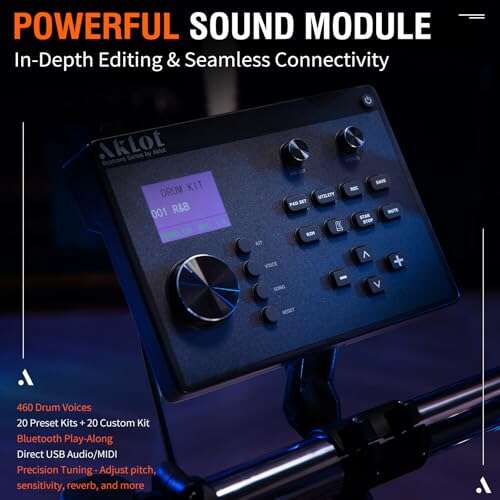
- Adjustable module sounds and practice tools.
- Established repair and support network in the United States.
Limitations:
- Cymbal and pad sizes are smaller than those on a full-size kit.
- The stand still needs room behind and around it.
- You may need to buy a kick pedal, throne, headphones, and isolation mat separately.
- It is not silent through the floor.
This kit makes the most sense when feel, size, and quiet practice matter more than having the largest number of built-in sounds.
Best for beginners: Yamaha DTX402K
The Yamaha DTX402K is aimed at new players who want a straightforward electronic drum kit. Its layout and learning features can make it less intimidating than a larger kit with many controls.
Why it fits small spaces:
- Basic rack design.
- Simple setup.
- Headphone output for private practice.
- Useful learning functions for new drummers.
- Yamaha has broad product support in the U.S.
Limitations:
- Its pad design is more basic than mesh-head kits.
- The playing feel may not satisfy a drummer who wants a more acoustic-like response.
- The included kick arrangement may feel less natural than a separate kick tower.
Pick this type of kit when ease of use matters more than advanced pad response.
Best feature value: Alesis Nitro Max
The Alesis Nitro Max is worth considering when you want a full feature set at a lower typical cost. It includes a larger collection of sounds and practice tools than many entry-level kits.
Why it fits small spaces:
- Compact electronic rack.
- Mesh playing surfaces on key parts of the kit.
- Headphone practice.
- More built-in sounds and functions than very basic starter kits.
- Often sold as a complete starter package.
Limitations:
- Confirm the current package contents before buying.
- Module features, software access, and included accessories can change by product version.
- The rack may need more adjustment time to feel comfortable.
- A lower purchase price does not always mean lower total cost after adding a throne, pedal, headphones, and mat.
This is a practical choice for a beginner who wants more sounds and features without moving to a premium kit.
Best small acoustic alternative: an 18-inch bop kit
If you need an acoustic drum set, look for a compact bop configuration with an 18-inch bass drum. Many brands make small shell packs or compact kits in this format.
A bop kit can work well in a rehearsal room, teaching studio, or private home. It is not a good solution for quiet apartment practice unless you also use low-volume heads, low-volume cymbals, or electronic triggers.

How Much Space Does a Small Drum Set Need?
Measure the playing footprint, not only the rack width. You need space for the throne, kick pedal, cymbal movement, cable routing, and safe movement around the kit.
A useful planning formula is:
Required floor area = kit width × kit depth + clearance for the player
For a compact electronic kit, a practical planning area may be about 5 feet wide by 4 feet deep, but the exact space depends on the rack, throne, pedal, and cymbal positions. Treat this as a planning estimate, not a universal product measurement.
Measure these five areas
-
Rack width
Measure from the outside edge of the leftmost pad to the outside edge of the rightmost cymbal. -
Rack depth
Include the front kick pedal and the rear legs of the rack. -
Throne clearance
Leave enough room to sit down and get up without hitting a wall or desk. -
Cable space
Allow room behind the module for power and audio cables. -
Storage space
Decide where the kit will go when you are not playing. A kit that fits only when assembled may become a daily nuisance.
A room layout should leave a little extra space beyond the listed product dimensions. Manufacturers may measure the frame alone, while real use includes pedals, a seat, and cymbal movement.
Example planning calculation
Imagine a kit that occupies about 4.5 feet by 3.5 feet before the throne is added.
- Kit area: 4.5 × 3.5 = 15.75 square feet
- Add a small movement margin around the setup
- Reserve extra space near the front for the kick pedal
The kit may fit in the room on paper, yet still feel cramped if a wall is directly behind the throne. In small rooms, comfort often matters more than the last few inches of floor savings.

What to Look for When Buying a Small Drum Set
The best small drum set should fit your body, playing style, noise limits, and budget. Do not choose by footprint alone.
1. Mesh heads
Mesh heads usually feel closer to acoustic drumheads than hard rubber pads. They can also produce less sharp surface noise. That does not make the kit silent, because sticks, rack parts, and pedals still create sound.
If possible, prioritize mesh on:
- Snare
- Toms
- Kick pad or kick tower
2. A separate kick tower
A separate kick tower usually feels more natural than a small pedal switch placed on the floor. It also lets you use a standard bass-drum pedal.
Check whether the kit includes:
- Kick tower
- Bass-drum pedal
- Kick beater
- Pedal-compatible surface
- Instructions for safe placement
Never assume these items are included. Retail packages can differ.
3. Adjustable rack positions
A compact rack should let you change pad height and angle. This matters because a kit that fits the room may still cause poor posture.
Set the kit so:
- Your shoulders stay relaxed.
- Your elbows are not forced inward.
- The snare sits near waist height.
- The kick pedal lines up with your lower leg.
- Cymbals do not require extreme reaching.
4. Headphone and audio connections
For private practice, check the exact headphone output and audio-input setup. A kit may support headphones but still require an adapter for your preferred plug.
A useful module may also offer:
- Metronome
- Coach exercises
- Recording
- USB or MIDI connection
- Bluetooth audio, depending on the model
Wireless features can change between model versions, so confirm them on the current manufacturer page.
5. Expandability
Some kits allow extra cymbals or triggers. Others have no open inputs. Expandability matters if you expect to add equipment later.
Do not pay extra for expansion if your room cannot hold the larger setup. In a very small space, a fixed compact kit may be the better long-term choice.

How to Reduce Drum Noise in an Apartment
Use headphones for electronic sound, then control the physical impact from the kick pedal and rack. This two-part approach works better than turning down the module alone.
Use an isolation platform
An isolation platform can reduce the amount of vibration transferred into the floor. A simple platform may use:
- A rigid board
- Dense foam or rubber isolation material
- A carpet or drum mat
- Enough space for the kick tower and pedal
The platform must remain stable. If it moves under your feet, it can create a safety problem and make playing harder.
Commercial isolation platforms are easier to predict, but a homemade platform can work when built carefully. Avoid soft, unstable materials that cause the kick tower to wobble.
Place the kit away from shared walls
If possible, keep the kick pedal away from a wall shared with a bedroom or neighboring unit. Low-frequency impact can travel through building structures and may be heard in another room even when the kit sounds quiet to you.
A thick rug can help prevent sliding. It does not block all sound and should not be treated as full soundproofing.
Use low-volume accessories when appropriate
For an acoustic kit, low-volume cymbals and mesh heads can reduce sound output. They do not make an acoustic kit suitable for every apartment.
For an electronic kit, softer beaters and manufacturer-approved practice surfaces may reduce some attack noise. Check the kit manual before changing the beater or adding padding near sensors.
Ask about building rules
U.S. apartment leases, condominium rules, and local quiet-hour policies can differ. Check the rules that apply to your building before you buy.
If a neighbor can clearly hear the kick through the floor, reducing the module volume will not solve the main problem. Address the vibration first.

Common Mistakes When Buying a Small Drum Set
The most common mistake is measuring only the rack. A drum set also needs a throne, pedal, cables, and room for your arms.
Other mistakes include:
- Buying a kit before checking package contents.
- Assuming headphones make the entire setup silent.
- Placing the kick pedal directly on a hard floor.
- Choosing the smallest kit without checking player comfort.
- Ignoring replacement parts and warranty support.
- Buying a full acoustic kit for an apartment without a volume plan.
- Mounting the kit so close to a wall that cymbals or sticks can strike it.
- Using a fragile table or shelf as a throne or equipment stand.
- Forgetting that a larger throne may take more space than expected.
Do not block an exit, heater, radiator, or electrical panel with the kit. Keep power cables away from the pedals and route them where feet cannot catch them.
Stop playing if the rack becomes unstable, a cable shows damage, or a pedal slips. Tighten the hardware and check the manual before continuing.

Small-Space Drum Set Decision Guide
Use this guide to narrow your choice:
| Your situation | Best fit | Main reason |
|---|---|---|
| Apartment with noise-sensitive neighbors | Compact electronic kit with mesh heads | Headphone practice and lower airborne sound |
| Very limited floor space | Basic electronic rack kit | Fewer large shells and stands |
| Beginner on a tight budget | Entry-level electronic kit | Includes core sounds and practice tools |
| Player focused on realistic feel | Midrange electronic kit with mesh heads | Better playing response and adjustment |
| Private home with flexible hours | Compact acoustic bop kit | Natural sound without a full-size footprint |
| Need to fold or store the kit often | Rack-based electronic kit | Easier to move than an acoustic shell pack |
| Need future expansion | Electronic kit with open trigger inputs | Allows added pads or cymbals |
The best overall path for most shared U.S. homes is a compact electronic kit, a stable throne, headphones, and an isolation mat or platform. If you need the most natural feel, spend more on the kick tower and mesh surfaces before paying for a large sound library.

Key Takeaways
- Best overall for most small spaces: Roland TD-07DMK or a similar compact electronic kit with mesh heads.
- Best for simple beginner practice: Yamaha DTX402K or another basic rack-based kit.
- Best for features on a lower budget: Alesis Nitro Max, after confirming the current package contents.
- Best acoustic option: An 18-inch bop kit, but only where loud playing is acceptable.
- Most important accessory: A stable isolation mat or platform for the kick pedal.
- Most important measurement: Include the throne, pedal, cables, and player clearance.
- Main limitation: Electronic drums reduce airborne sound but do not eliminate floor vibration.
Frequently Asked Questions
Are electronic drums quiet enough for an apartment?
They are usually quieter than acoustic drums, especially when used with headphones. They are not silent. Stick impact, rack noise, and kick-pedal vibration can still travel through floors and walls.
What is the smallest drum set that still feels usable?
A compact electronic kit with a separate kick tower is often the smallest usable option for regular practice. Ultra-small tabletop kits save space but may not provide a natural playing position or full-foot pedal control.
Can I use an acoustic drum set in a small apartment?
You can, but room size is only one issue. Acoustic drums are loud, and sound treatment rarely makes them quiet enough for all shared buildings. Use an acoustic kit only when your playing hours, neighbors, and building rules allow it.
Do I need a drum mat for an electronic kit?
A drum mat is not always required, but it can stop the rack and kick pedal from sliding. It also helps define the kit’s footprint. For downstairs neighbors, an isolation platform may offer more benefit than a thin mat alone.
Should I buy a kit with mesh heads?
Mesh heads are usually worth considering if playing feel and lower surface noise matter. They can feel more natural than rubber pads, but they may cost more and still do not remove kick-pedal impact.
What accessories should I budget for?
Plan for a drum throne, headphones, kick pedal if it is not included, a drum mat, and possibly an isolation platform. You may also need a headphone adapter, replacement sticks, and a USB or MIDI cable for computer use.
Conclusion
The best drum set for a small space is usually a compact electronic drum kit with mesh heads, a separate kick tower, headphone support, and a stable rack. The Roland TD-07DMK is a strong all-around option, while the Yamaha DTX402K and Alesis Nitro Max may better suit beginners with different budgets and feature needs.
Before buying, measure the full playing area. Include the throne and pedal, not just the rack. Then plan for impact noise with a mat or isolation platform. A small kit works best when it fits both your room and the people who share the building.
Sources and verification notes
Product features and package contents can change by model year, region, and retailer. Confirm current specifications with the manufacturer before purchase.
- Roland — TD-07 series product information: https://www.roland.com/us/categories/electronic_drum_sets/
- Yamaha — DTX electronic drums: https://usa.yamaha.com/products/musical_instruments/drums/el_drums/index.html
- Alesis — electronic drum sets: https://www.alesis.com/
- Vic Firth — drum and percussion education resources: https://vicfirth.com/
- National Institute for Occupational Safety and Health — noise and hearing information: https://www.cdc.gov/niosh/noise/

Senior Music Reviewer
Alex Carter is a seasoned music reviewer with over a decade of experience in the world of sound and instruments. Passionate about helping musicians and enthusiasts make informed choices, he brings sharp insights and in-depth knowledge to every review. From classical instruments to modern gear, Alex combines technical expertise with a love for music to deliver content that resonates with readers.
As a Senior Music Reviewer and expert author on Tuneluma.com, Alex is dedicated to sharing honest evaluations, practical advice, and thoughtful commentary to guide readers in their musical journey.