Introduction
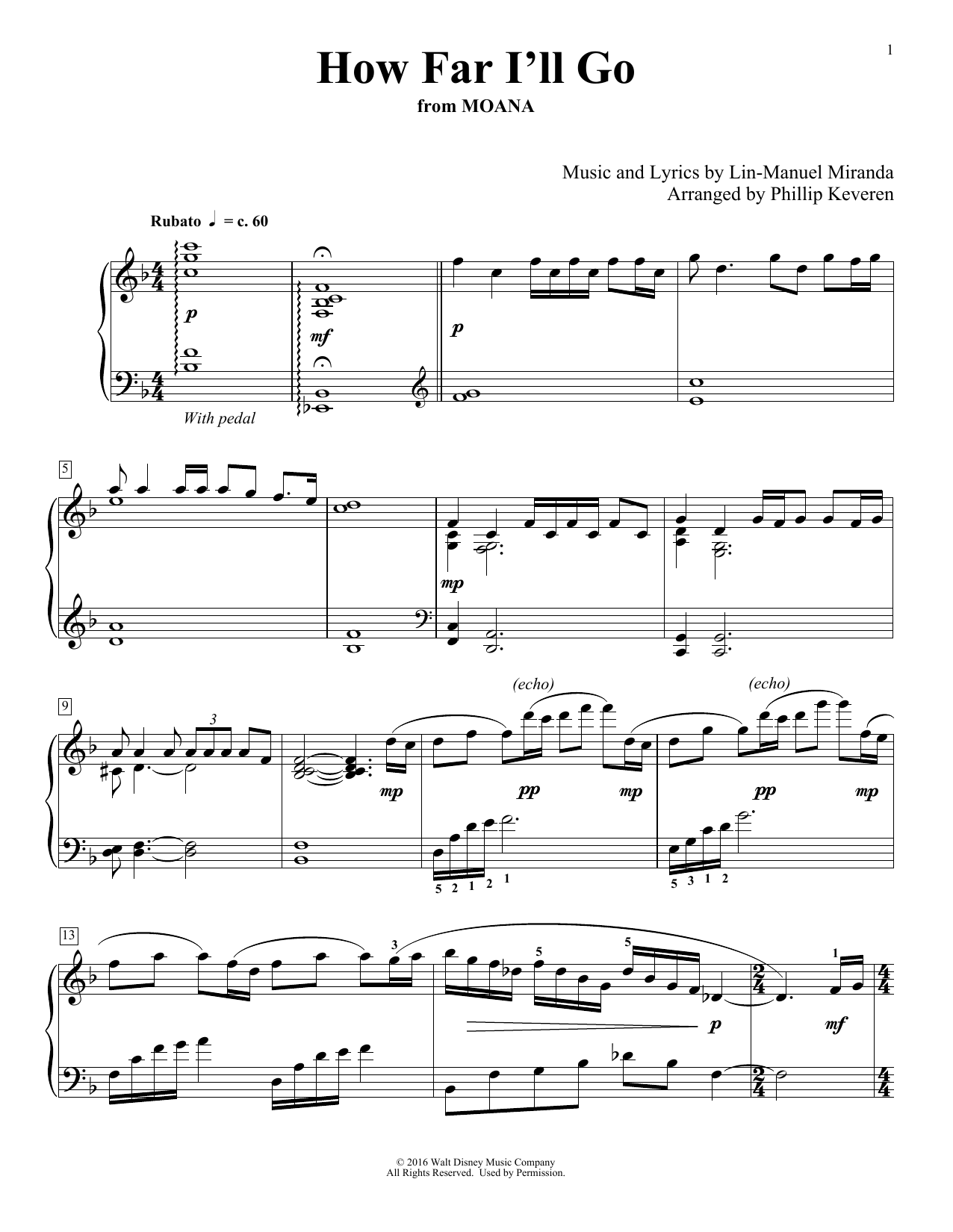
For pianists in the United States, the safest way to find “How Far I’ll Go” piano sheet music is to use a licensed music store or an official Disney songbook. The song comes from Disney’s 2016 film Moana and was written by Lin-Manuel Miranda.
You can find several arrangements for piano, including easy piano, piano solo, piano/vocal/guitar, and intermediate versions. The best choice depends on your reading level, whether you want to sing, and how closely you want the arrangement to match the movie recording.
Where to Find Legal “How Far I’ll Go” Piano Sheet Music
Licensed sheet music retailers are the best starting point. They help ensure that the composer, publisher, and copyright holders receive proper payment.
Common sources for U.S. pianists include:
- Musicnotes
- Sheet Music Plus
- Hal Leonard
- Disney songbooks sold through established music retailers
- Local music stores and school music programs
Search for the full title, “How Far I’ll Go,” and include the words “piano solo” or “easy piano” if needed.
Check the edition before buying
The same song may appear in several forms. Read the product details before you pay or download.
Look for:
- The arranger’s name
- Instrumentation
- Difficulty level
- Number of pages
- Key information, if listed
- Whether the file is digital or printed
- Printing and device limits
- Whether lyrics and chord symbols are included
A licensed digital edition may allow printing for personal use, but its terms can vary. Read the license shown at checkout.
Be careful with free PDF results
Many search results promise free piano sheet music. Some may be scans or copies shared without permission. They may also contain wrong notes, missing pages, poor scans, or unsafe download links.
A free download is not automatically legal. If a page does not clearly name the publisher, arranger, or license, choose another source.

Which Arrangement Should You Choose?
The right arrangement depends on your goal. A beginner who wants to play the melody needs a different edition from an advanced pianist preparing a recital.
| Arrangement | Best for | What to expect |
|---|---|---|
| Easy piano | New players | Simple rhythms, smaller chords, and a reduced left hand |
| Piano solo | Players who want a complete arrangement | Melody and accompaniment are combined |
| Intermediate piano | Players with stronger reading skills | Fuller harmony, wider movement, and more detail |
| Advanced piano solo | Experienced players | More complex texture and a larger musical range |
| Piano/vocal/guitar | Singers and group playing | Piano part, vocal melody, lyrics, and guitar chords |
| Lead sheet | Players who can build an arrangement | Melody, lyrics, and chord symbols with little piano detail |
Easy piano
Choose easy piano sheet music if you are still learning:
- Grand staff reading
- Chord changes
- Syncopated rhythms
- Pedal use
- Hand movement across the keyboard
An easy version may remove some details from the film arrangement. That is normal. Its purpose is to make the song playable sooner.
Piano solo
A piano solo arrangement usually places the vocal melody inside the piano part. The right hand often carries the melody while the left hand supplies bass notes, octaves, or chords.
This version works well if you want to perform without a singer.
Piano/vocal/guitar
Choose this format if you plan to sing while playing. The piano part may not sound as full by itself because the arrangement expects a voice to carry the main melody.
This edition is also useful for family performances, school programs, and small groups.
Intermediate or advanced versions
A fuller version may include:
- More active left-hand patterns
- Richer chord voicings
- Passing tones
- Wider jumps
- More detailed rhythmic figures
- Stronger contrast between quiet and loud sections
Do not choose an advanced edition only because it looks more complete. If the arrangement is far beyond your level, practice can become slow and frustrating.

How to Read the Sheet Music Before You Play
Start by studying the page. Do not play from the first note without checking the basic information.
1. Check the clefs and time signature
Most piano arrangements use treble clef for the right hand and bass clef for the left hand. The time signature tells you how beats are grouped.
Count the rhythm aloud before adding speed. This helps prevent uneven timing later.
2. Look for the key signature
The key signature tells you which notes are sharp or flat throughout the piece. Some editions change the key to make the song easier to sing or play.
Do not assume every version uses the same key. Compare the edition with your vocal range and comfort.
3. Mark repeated sections
Songs often include repeated material. Look for:
- Repeat signs
- First and second endings
- Coda markings
- Verse and chorus labels
- Dynamic changes
- Sudden changes in rhythm or texture
Marking the form helps you remember the song and avoid losing your place.
4. Find the melody
The melody is the part most listeners recognize. In a piano solo arrangement, it may appear in the right hand, but it can also move between the hands.
Play the melody alone first. Then add the accompaniment beneath it.
5. Notice the dynamics
Dynamics show how loudly or softly to play. A soft opening should not have the same force as the main section.
Use the markings as a guide rather than playing every note at one volume. The song needs shape and movement.
A Practical Way to Learn “How Far I’ll Go” on Piano
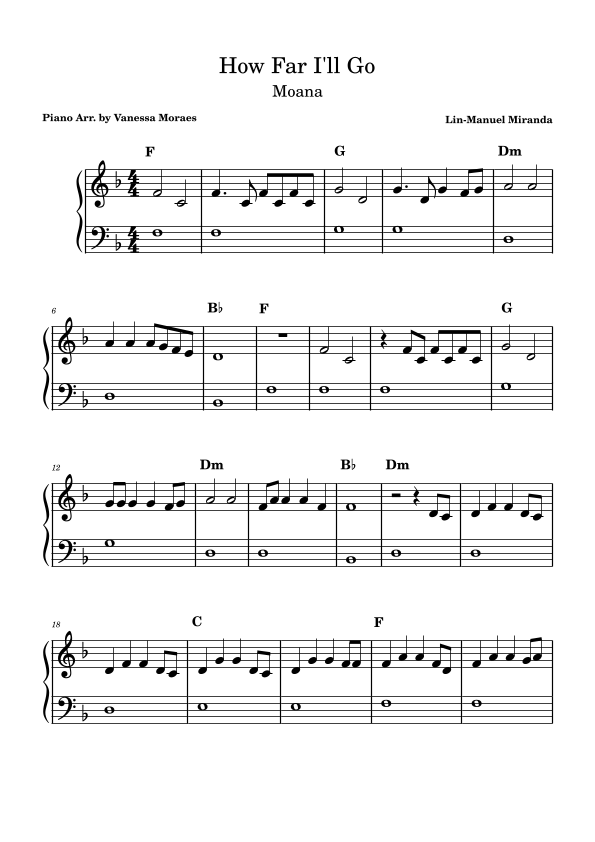
The most reliable approach is to divide the song into small sections. Trying to learn the entire piece in one sitting often creates mistakes that are hard to remove.
Step 1: Set a comfortable tempo
Begin slowly enough to play each note correctly. You can use a metronome, but accuracy matters more than speed at first.
If the song feels tense, lower the tempo. Your hands should move with control.
Step 2: Learn the right hand
Practice the melody by itself. Sing or hum along if that helps you remember the notes.
Watch for:
- Repeated notes
- Leaps
- Tied notes
- Rhythms that begin before the main beat
- Phrases that continue across bar lines
Play each phrase several times without stopping.
Step 3: Learn the left hand
The left hand may use single bass notes, blocked chords, broken chords, or repeated patterns.
Practice the left hand alone until the movement feels familiar. If a chord is difficult, reduce it to its basic notes first.
Step 4: Combine short sections
Join only two or four measures at a time. When that section feels secure, add the next one.
This method is slower at the start but usually saves time later.
Step 5: Add pedal carefully
The sustain pedal can make the song sound smooth, but too much pedal can blur the harmony.
Change the pedal when the chord changes unless the arrangement shows another approach. If the notes sound muddy, lift the pedal more often.
Step 6: Add expression
Once the notes are secure, shape the music with:
- Crescendos
- Softer verses
- A stronger chorus
- Clear melody notes
- Gentle ritardandos where appropriate
The melody should remain easy to hear. Think of the accompaniment as a supporting voice.

How Long Does It Take to Learn the Song?
The time depends on your experience, the arrangement, and how often you practice. There is no single schedule that fits every pianist.
A simple estimate may look like this:
| Player | Likely first goal | Practice focus |
|---|---|---|
| Beginner | Play a simple version slowly | Note reading and basic chords |
| Early intermediate | Play the full arrangement | Hand coordination and rhythm |
| Intermediate | Perform with expression | Phrasing, pedal, and control |
| Advanced | Refine a detailed version | Tone, balance, and interpretation |
This is a planning guide, not a promise. A short daily practice session can be more useful than one long session each week.
Try this 20-minute routine:
- Three minutes: Review the key signature and rhythm.
- Five minutes: Practice the right hand.
- Five minutes: Practice the left hand.
- Five minutes: Combine one small section.
- Two minutes: Play slowly from the beginning of that section.
Stop and correct repeated errors. Repeating a mistake at high speed makes it harder to fix.

Common Problems and Simple Fixes
The arrangement is too hard
Choose an easier edition or simplify the accompaniment. You can play only the melody and basic bass notes while learning the form.
A simpler version is not a lesser performance. It gives you a stable foundation.
The rhythm feels uneven
Count aloud and practice with a slow metronome. Clap the rhythm before playing it.
If one hand rushes, practice that hand alone. Then combine the hands at a slower tempo.
The melody disappears
The melody needs more weight than the accompaniment. Play the melody with a firm, relaxed touch and keep the other notes softer.
This is especially important when the right hand plays both melody and harmony.
The chords sound muddy
Lift the sustain pedal sooner. Also check whether you are holding extra notes after the harmony changes.
Clean pedal work often improves the sound more than playing faster.
The song does not fit your singing voice
Look for an edition that can be transposed, or choose a different key if you know how to transpose. Digital sheet music platforms may offer transposition tools, but the exact feature depends on the edition and license.
If the key change creates awkward fingerings, use a piano arrangement made for the new key or ask a qualified music teacher for help.
You cannot tell which version matches the movie
Listen to the preview when the retailer provides one. Check whether the arrangement includes the same major sections, melody, and general mood as the film version.
A piano solo arrangement may sound different from the full orchestral recording even when it is accurate.

Copyright and Personal Use
“How Far I’ll Go” is a copyrighted song. Buying a licensed arrangement generally gives you permission to use that edition under the publisher’s terms. It does not usually give permission to upload, resell, scan, or distribute copies.
Avoid:
- Sharing a purchased PDF with friends
- Posting scans in a group or forum
- Uploading the sheet music to a video description
- Selling photocopies
- Removing copyright notices
- Using a songbook scan from an unknown source
You may be able to perform the song in a school, church, or community setting, but public performance rules can depend on the venue and the organization’s licenses. Ask the venue or responsible music director when the performance is public or commercial.

Key Takeaways
- Use a licensed U.S. sheet music retailer or an official Disney songbook.
- Choose easy piano, piano solo, or piano/vocal/guitar based on your goal.
- Check the arranger, difficulty, key, format, and license before buying.
- Learn the melody first, then add the accompaniment.
- Practice in short sections and use slow, controlled repetition.
- Use the sustain pedal lightly so the harmony stays clear.
- Do not share or upload copyrighted sheet music without permission.
FAQs About “How Far I’ll Go” Piano Sheet Music
Is “How Far I’ll Go” suitable for beginners?
Yes, if you choose an easy piano arrangement. The original recording may be too complex for a new player, but a simplified edition can reduce the chord size, hand movement, and rhythm difficulty.
Can I get “How Far I’ll Go” piano sheet music with letter notes?
Some beginner arrangements may include note names or educational labels, but this varies by publisher. Letter-note versions can help at the start, but learning the staff will give you more options later.
Can I play the song without singing?
Yes. Choose a piano solo arrangement if you want the piano to carry both the melody and accompaniment. A piano/vocal edition may feel incomplete without the vocal line.
What is the best version for singing and playing?
A piano/vocal/guitar edition is often the most practical choice. It normally includes the vocal melody, lyrics, chord symbols, and a piano part. Check a preview because accompaniment difficulty varies.
Can I transpose the sheet music to another key?
Some digital editions support transposition, while printed editions may not. Check the product features before purchase. You can also ask a teacher or experienced accompanist to help move the arrangement to a comfortable key.
Why does my piano version sound different from the movie?
The movie recording includes a singer, orchestra, production effects, and instrumental layers. A piano arrangement reduces those parts into two hands, so the texture will not be identical.
Conclusion
The best “How Far I’ll Go” piano sheet music is the version that matches your skill, purpose, and preferred sound. For a new pianist, start with an easy arrangement. For solo performance, choose a piano solo edition. For singing, use piano/vocal/guitar sheet music.
Before downloading or buying, confirm the publisher, arrangement type, difficulty, key, and license. Then learn the piece in small sections, keep the melody clear, and add pedal and expression only after the notes feel secure.

Senior Music Reviewer
Alex Carter is a seasoned music reviewer with over a decade of experience in the world of sound and instruments. Passionate about helping musicians and enthusiasts make informed choices, he brings sharp insights and in-depth knowledge to every review. From classical instruments to modern gear, Alex combines technical expertise with a love for music to deliver content that resonates with readers.
As a Senior Music Reviewer and expert author on Tuneluma.com, Alex is dedicated to sharing honest evaluations, practical advice, and thoughtful commentary to guide readers in their musical journey.