Best Guitar Tuner For Electric Guitar: Top Picks For 2026
The Fender FCT-2 is the best guitar tuner for electric guitar thanks to its clear display, fast response, and flexible tuning modes.
You know the moment: your electric guitar sounded great yesterday, but today every chord feels sharp, flat, or oddly tense. You plug in, adjust the amp, and still cannot find the problem. A reliable tuner fixes that small issue before it becomes a bad practice session or a rough live set. I tested these tuners by looking at screen clarity, tuning speed, note accuracy, battery use, mounting, and real-world ease. Here are the best options for beginners, home players, gigging musicians, and guitarists who want a pedal tuner.
Fender FCT-2 Professional Clip-On Tuner

The Fender FCT-2 is a strong all-around clip-on tuner for electric guitar, bass, ukulele, and violin. Its color display makes the tuning result easy to read from several angles. I like this feature when I play near a dim amp or stand under bright stage lights. It uses vibration from the instrument, so it does not need a cable or an audible signal.
The tuner also offers calibration options for players who tune with a band, piano, or backing track. Its clamp feels firm without being harsh on a normal guitar headstock. The rotating design helps you place the screen where your eyes naturally fall. For many players, that balance of speed and simple controls makes it the best guitar tuner for electric guitar in this group.
Pros:
- Clear color screen with easy note guidance
- Works with electric guitar, bass, and other instruments
- Clip-on design needs no cable connection
- Rotating screen supports different playing positions
- Useful calibration range for more precise setup
- Fender build quality inspires confidence
Cons:
- Uses replaceable batteries rather than a built-in rechargeable cell
- The screen may feel small for players with weak eyesight
- Clip-on tuning can be less direct than a pedal on a loud stage
My Recommendation
I recommend the FCT-2 for beginners, teachers, home players, and gigging guitarists who want one tuner for several instruments. It gives a quick reading and does not add another cable to your setup. Electric guitar players can clip it to the headstock before practice, then store it in a gig bag. It offers the best guitar tuner for electric guitar value when you need clear feedback without a pedal.
| Best for | Why |
|---|---|
| Daily electric guitar practice | Fast, clear readings make tuning less of a chore. |
| Multi-instrument players | It supports guitar, bass, ukulele, and violin. |
| New guitarists | Simple controls reduce confusion during first setup. |
Snark SN5X Clip-On Chromatic Tuner

The Snark SN5X is a compact chromatic tuner made for guitar, bass, and violin. Its simple screen shows whether a note sits flat, sharp, or in tune. I find that direct layout helpful for players who do not want menus or extra features. You clip it on, pluck a string, and make a small adjustment.
The strong clamp helps the unit stay in place during normal practice. Its compact body also fits well in a small accessory pouch. This model reads vibration from the instrument, which makes it useful when an amplifier is loud or other people are playing nearby. It may be the best guitar tuner for electric guitar for a player who wants a low-cost, no-fuss tool.
Pros:
- Simple controls suit beginners
- Small size fits easily in a gig bag
- Chromatic mode supports alternate tunings
- Works for guitar, bass, and violin
- Vibration sensing works without an instrument cable
- Large tuning needle is easy to understand
Cons:
- Screen design is less modern than newer color models
- Battery life depends on remembering to switch it off
- It has fewer advanced options than premium tuners
My Recommendation
The SN5X suits students, casual electric guitar players, and anyone buying a first tuner. It keeps the job clear and avoids features that can slow you down. I would also choose it as a backup tuner for rehearsals because it takes little space. If you want affordable tuning and do not need USB charging, this is a practical best guitar tuner for electric guitar choice.
| Best for | Why |
|---|---|
| First-time players | The basic display is easy to read and use. |
| Small gig bags | The compact body adds almost no bulk. |
| Budget shoppers | It covers the core tuning task at a low cost. |
AARVI 360-Degree Clip-On Guitar Tuner

The AARVI clip-on tuner focuses on flexible viewing and broad instrument support. Its 360-degree rotating LCD display lets you turn the screen toward your face, whether you play right-handed or left-handed. It works with acoustic and electric guitar, bass, ukulele, violin, and banjo. The included guitar picks add a small but useful bonus for new players.
The automatic shutoff helps preserve battery power when you forget to turn the tuner off. I also like the light body, which does not make the headstock feel unbalanced. The screen gives simple visual feedback without forcing you to connect to an amplifier. For a beginner who wants extras in the box, it can be the best guitar tuner for electric guitar at an attractive price.
Pros:
- 360-degree screen makes viewing easy
- Supports many stringed instruments
- Automatic shutoff helps save battery life
- Includes four guitar picks
- Lightweight clamp is convenient for practice
- Chromatic operation supports standard and alternate tuning
Cons:
- Included picks may not suit every playing style
- LCD visibility can change under strong light
- Clip-on sensors need firm headstock contact for the best reading
My Recommendation
I suggest the AARVI for families, students, and musicians who play more than one instrument. The rotating screen is especially helpful when the tuner sits at an awkward angle. It is also a good starter kit because the included picks let a new player begin at once. It offers strong practical value if you want a flexible best guitar tuner for electric guitar without paying for a pedal.
| Best for | Why |
|---|---|
| Multi-instrument homes | One tuner covers guitar, bass, ukulele, violin, and banjo. |
| Left-handed players | The rotating display can face either direction. |
| New guitarists | The included picks add useful starter value. |
Fender FT-1 Professional Clip-On Tuner

The Fender FT-1 is a compact headstock tuner with a clean, easy-to-follow display. Its design suits players who want a familiar Fender accessory beside their guitar. The clip attaches to the headstock and senses string vibration, so you can tune even when the amplifier is muted. That makes it useful in bedrooms, classrooms, and backstage areas.
The FT-1 keeps the control layout simple. You do not need to study a manual before tuning a six-string guitar. Its small size also makes it easy to leave in a case pocket. While it does not replace the signal isolation of a pedal, it is a reliable everyday option and a contender for the best guitar tuner for electric guitar for Fender owners.
Pros:
- Compact design stores easily
- Clear display supports quick tuning
- Vibration sensing works without a cable
- Familiar Fender styling and branding
- Useful for quiet practice and travel
- Simple operation suits beginners
Cons:
- It offers fewer features than advanced rechargeable tuners
- Small display may be harder to see from a distance
- Clip-on models can pick up headstock movement
My Recommendation
The FT-1 is best for Fender fans, students, and players who want a basic tuner that stays out of the way. I would pack it for lessons or short trips because it takes up very little room. It is also a sensible gift for someone who just bought an electric guitar. Its value comes from ease, size, and dependable daily use rather than extra features.
| Best for | Why |
|---|---|
| Fender guitar owners | The design matches Fender accessories and instruments. |
| Travel | The small body fits in almost any case. |
| Simple tuning | Few controls make the process quick. |
D’Addario Nexxus 360 Rechargeable Tuner

The D’Addario Nexxus 360 stands out for its rechargeable design and flexible viewing angle. Instead of buying small batteries, you recharge the tuner when needed. The 360-degree display helps you see the note from the front or back of the headstock. This matters when you tune while seated, standing, or sharing a stage with another player.
The tuner has a discreet profile and a firm clip. Its design works well for electric guitar, acoustic guitar, and other string instruments. Rechargeable power adds convenience for players who practice often or travel with several devices. If battery waste bothers you, the Nexxus 360 may be the best guitar tuner for electric guitar in this review.
Pros:
- Rechargeable battery reduces the need for replacements
- 360-degree display supports many viewing positions
- Low-profile body looks neat on a headstock
- Fast visual response helps during string changes
- Useful for electric and acoustic guitar
- Good choice for frequent practice
Cons:
- It must be charged before a long session
- Rechargeable batteries lose capacity over time
- It may cost more than a basic battery tuner
My Recommendation
I recommend the Nexxus 360 for busy players, teachers, and guitarists who dislike keeping spare coin cells nearby. It is also a smart choice for a home studio where many small devices already use batteries. The rotating display and rechargeable power solve two common tuner annoyances at once. For regular electric guitar use, it offers polished convenience and strong long-term value.
| Best for | Why |
|---|---|
| Frequent practice | Rechargeable power keeps battery buying to a minimum. |
| Home studios | The compact tuner stays ready near the guitar rack. |
| Flexible setups | The 360-degree display works from many angles. |
Universal Clip-On Guitar Tuner

This universal clip-on tuner is built for several common instruments, including acoustic guitar, electric guitar, bass, ukulele, violin, and banjo. Its main appeal is simple function at a low price. The tuner clips to the headstock and reads vibration, which avoids the noise problems that affect microphone tuners. That makes it useful during group practice.
The compact screen shows pitch direction in a direct way. It is not designed as a premium studio tool, but it covers the needs of most casual players. I see it as a practical spare for a rehearsal bag or school music program. If you need the best guitar tuner for electric guitar on a strict budget, this model deserves attention.
Pros:
- Low-cost way to tune several instruments
- Vibration sensor works in noisy rooms
- Lightweight design is easy to carry
- Supports electric guitar and bass
- Simple operation requires little setup
- Useful as an emergency backup
Cons:
- Display and casing feel more basic than premium models
- Battery access may be less convenient for some users
- Accuracy can depend on careful clipping and string control
My Recommendation
This tuner is best for beginners, schools, spare instrument cases, and players who need a low-cost backup. I would not choose it first for a high-pressure professional stage, but it makes sense for practice and lessons. It gives you the core job without adding weight or cost. For casual electric guitar use, it is a sensible value pick.
| Best for | Why |
|---|---|
| Budget buyers | It provides basic chromatic tuning at a low price. |
| Music classrooms | One tuner can serve many instrument types. |
| Backup use | Its small size makes it easy to keep in a case. |
Ranch Clip-On Chromatic Tuner
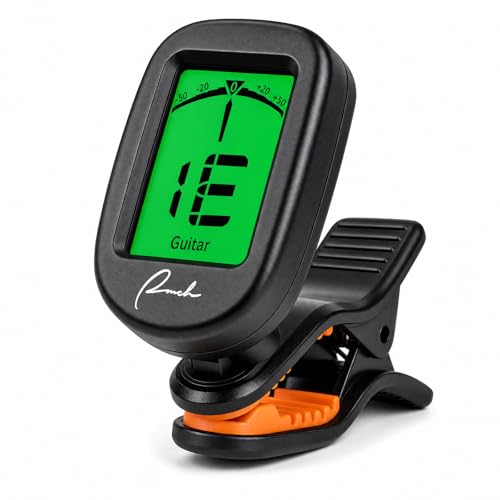
The Ranch clip-on tuner offers chromatic tuning for guitar, bass, ukulele, violin, and banjo. It uses a headstock clamp and vibration sensing, so an electric guitar does not need to be connected to an amp. This is a useful detail when I want to tune quietly before practice. The chromatic setting also supports drop tuning and other alternate setups.
Its straightforward design keeps the learning curve low. The screen gives the player a visual target instead of relying on sound alone. The tuner is small enough for a gig bag and light enough to leave on a headstock during setup. It is a useful best guitar tuner for electric guitar option for players who want broad compatibility.
Pros:
- Supports many stringed instruments
- Chromatic mode works with alternate tunings
- Vibration operation avoids room noise
- Lightweight and easy to transport
- Simple display suits new players
- Useful for quiet electric guitar tuning
Cons:
- Basic construction may not suit heavy touring
- Small controls can take practice to master
- It lacks the rechargeable feature found on newer models
My Recommendation
I recommend the Ranch tuner for students and multi-instrument households. It offers more range than a guitar-only tuner while keeping the controls simple. It also makes a good second tuner for a player who already owns a pedal. For everyday practice, the Ranch gives solid usefulness without demanding much space or money.
| Best for | Why |
|---|---|
| Alternate tunings | Chromatic operation supports tuning beyond standard pitch. |
| Quiet practice | The clip sensor reads the instrument without an amp. |
| Mixed instrument use | It works with guitar, bass, ukulele, violin, and banjo. |
Donner DT-1 Tuner Pedal
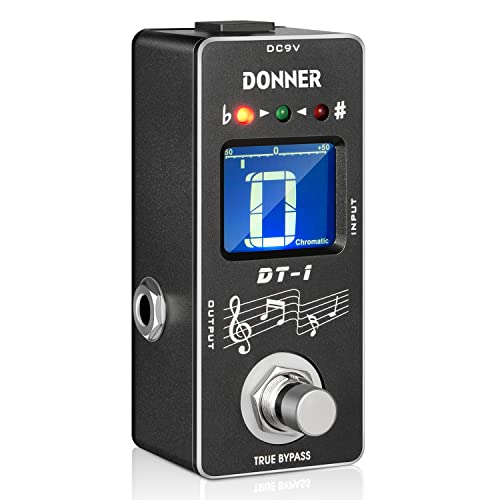
The Donner DT-1 is different from the other models here because it is a pedal tuner. You connect the electric guitar to the input, then connect the output to your pedalboard or amplifier. Pressing the footswitch mutes the signal while you tune. That silent function is a major benefit on stage, where a loud tuning note can distract the audience.
The bright pitch indicator is easy to see from a standing position. True bypass design helps keep the pedal out of the signal path when tuning is off. It needs a pedal power supply or suitable battery setup, so it is less portable than a clip-on unit. For live electric guitar work, however, it may be the best guitar tuner for electric guitar in this list.
Pros:
- Silent tuning mutes the guitar signal
- Large display is visible on stage
- Footswitch operation works with a pedalboard
- True bypass helps protect the dry signal
- Made specifically for guitar and bass setups
- Useful during live performance and rehearsal
Cons:
- Requires cables and a pedalboard position
- Less convenient for acoustic or travel use
- Needs power management like other pedals
My Recommendation
Choose the Donner DT-1 if you play live, use effects, or need silent tuning between songs. I prefer a pedal tuner on a busy stage because I can mute the signal with one tap and read the display while standing. It is not the best fit for a beginner who only practices at home. For electric guitar performance, its stage control gives it excellent value.
| Best for | Why |
|---|---|
| Live gigs | It mutes the guitar while you tune between songs. |
| Pedalboard users | It fits naturally into a wired effects setup. |
| Dark stages | The pitch display is easy to see from a distance. |
New bee Rechargeable Color Screen Tuner
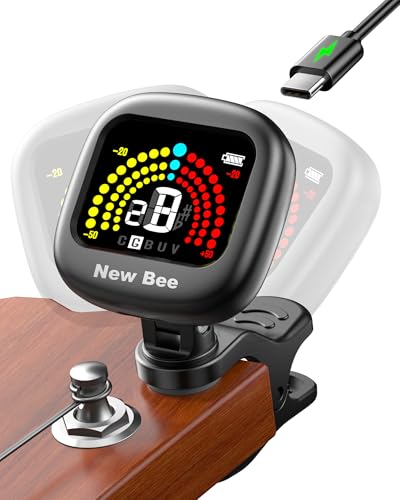
The New bee rechargeable tuner combines a clip-on format with a color display. Color feedback can make the tuning process feel faster because the player can spot the target state at a glance. It is designed for guitar use and suits players who want a modern screen without moving to a pedal. The rechargeable battery also reduces the need for spare batteries.
The clip-on format keeps it useful for quiet practice. I would place it on the headstock, pluck one string at a time, and make small adjustments until the display settles. The exact reading still depends on a clean pluck and a steady instrument. For players who value a bright screen and USB-style convenience, it is a strong best guitar tuner for electric guitar candidate.
Pros:
- Rechargeable design reduces battery costs
- Color screen gives quick visual feedback
- Clip-on use works without an amp
- Compact enough for travel
- Useful for daily guitar practice
- Modern display is friendly for beginners
Cons:
- Charging is required before extended use
- Battery performance will change with age
- Color screens may be harder to read in direct sunlight
My Recommendation
The New bee is best for home players, students, and guitarists who prefer rechargeable gear. It is a good match for someone who finds old-style needle displays hard to read. I would keep it in a practice room or attach it to a frequently played guitar. It delivers useful modern features at a price that should appeal to players who want more than a basic tuner.
| Best for | Why |
|---|---|
| Modern home setups | The color screen is quick to understand. |
| Frequent players | Rechargeable power avoids constant battery swaps. |
| Visual learners | Color feedback makes pitch direction clear. |
D’Addario Eclipse Rechargeable Tuner

The D’Addario Eclipse is a rechargeable headstock tuner with a discreet black design. It sits close to the instrument and avoids the large, bright body of some older clip-on tuners. The display is designed to show pitch status clearly while keeping the tuner visually quiet. That low-profile shape works well for players who leave a tuner attached during setup.
Rechargeable power makes it convenient for regular practice and travel. The clip reads string vibration, so it remains useful when the amplifier is off or the room is noisy. Like any headstock tuner, it works best when you pluck a clear note and avoid touching nearby strings. Its compact feel and practical display make it one of the best guitar tuner for electric guitar choices for daily use.
Pros:
- Rechargeable battery reduces replacement battery use
- Low-profile black design looks neat on the guitar
- Clip-on sensor supports silent tuning
- Compact shape fits most guitar cases
- Clear display helps with quick corrections
- D’Addario has strong experience in guitar accessories
Cons:
- Players must remember to recharge it
- Black housing can be harder to spot in a dark case
- Clip-on tuning is not as isolated as a pedal tuner
My Recommendation
I recommend the Eclipse for players who want a small tuner that blends into the instrument. It suits home practice, lessons, studio sessions, and travel. The rechargeable cell is helpful if you tune often, while the low-profile body avoids clutter on the headstock. It gives excellent everyday value for electric guitar owners who favor a clean design.
| Best for | Why |
|---|---|
| Minimalist players | The low-profile black design stays out of the way. |
| Traveling guitarists | Rechargeable power and compact size pack well. |
| Quiet practice | The vibration clip works with the amp turned off. |
How I Choose the Best Guitar Tuner for Electric Guitar
A guitar tuner has one main job: it must tell you when the string reaches the correct pitch. Yet not every tuner handles that job in the same way. I look at the sensing method first. A clip-on tuner reads vibration through the headstock, while a pedal tuner reads the guitar signal through a cable.
For home use, a clip-on model is often the easiest choice. You can tune without turning on an amplifier. You can also use it with several instruments. A pedal tuner makes more sense for a live electric guitar rig because it can mute the signal and show the reading from the floor.
Accuracy and Response
Accuracy matters, but response matters too. A tuner that gives a slow or unstable reading can make a simple task feel like a guessing game. I want the note to settle quickly after I pluck the string. I also want the indicator to move in small, clear steps as I turn the machine head.
Keep in mind that no tuner can fix a poor tuning method. Pluck the string with a steady touch. Tune up to the note when possible, rather than tuning far above it and turning down. After tuning all six strings, check them again because changing string tension can move the neck and alter earlier notes.
Clip-On Versus Pedal Tuners
Clip-on tuners win on convenience. They are small, quiet, and usually work with acoustic and electric instruments. They are ideal for practice, lessons, songwriting, and travel. The Fender FCT-2 and D’Addario Nexxus 360 show why this format remains so popular.
Pedal tuners win on stage control. The Donner DT-1 lets you mute the signal while tuning. This avoids sending an open string through the amplifier during a set. A pedal also stays in one place, so you can find it with your foot without reaching for the headstock.
Screen Size and Viewing Angle
A tuner screen should fit your playing position. A tiny screen may work at home but become hard to read under stage lights. A rotating display helps when the tuner sits behind the headstock or points away from you. That is why the AARVI and Nexxus 360 stand out for flexible setups.
Color can help, but it does not always mean greater accuracy. Treat color as a quick guide. The note name and pitch indicator still matter. On a stage, look for a display that stays visible without shining directly into your eyes.
Battery and Charging
Battery choice affects long-term convenience. Traditional clip-on tuners often use small replaceable batteries. They can work well for a long time, but you need a spare when the battery runs low. A rechargeable model removes that task but creates a new one: you must charge it before a rehearsal or show.
I suggest checking the battery before every important performance. A tuner is small, but a dead tuner can delay a full band. If you choose a rechargeable model, keep its charging cable in the same pocket as your instrument accessories.
Tuning an Electric Guitar Correctly
Start with a quiet room or mute the amplifier. Clip the tuner to the headstock, or connect the guitar to a pedal tuner. Pluck the low E string and watch the note name. If the tuner shows a note other than E, turn the tuning key slowly until the correct note appears.
Tune the strings from low E to high E, using standard tuning: E, A, D, G, B, and E. Do not pull hard on the string while you tune. After the first pass, repeat the process once more. New strings may stretch for several minutes, so check them again before playing a full song.
Why Electric Guitar Players Should Tune Often
Electric guitar strings can drift from temperature, hand pressure, string age, and bending. A guitar may sound close when played alone but badly out of tune with another instrument. Even a small pitch error becomes easy to hear in a chord. Regular tuning keeps your ear trained and your playing more enjoyable.
I tune before every practice session. I also check the guitar after carrying it outside, after changing strings, and before recording. This takes less than a minute. That minute works like a quick warm-up for both the guitar and the player.
Common Buying Mistakes to Avoid
Many guitarists buy a tuner based only on price. Price matters, but the cheapest unit may have a dim screen, weak clip, or slow response. A slightly better tuner can save time each day. Think of it as a small tool that protects every note you play.
Another mistake is choosing a clip-on model for a loud stage and expecting it to behave like a pedal. Clip-on tuners can work on stage, but nearby movement and vibration may confuse the sensor. If you play in a full band, a pedal with a mute function usually gives more control.
Some players also forget alternate tuning needs. A guitar tuned to drop D or open G still needs a chromatic tuner, but the player must read the note names with care. A standard preset will not always tell you the whole story. Chromatic mode is the safest option when you change tuning often.
FAQs Of best guitar tuner for electric guitar
What is the best guitar tuner for electric guitar?
The Fender FCT-2 is the best overall choice for most electric guitar players. It offers a clear display, fast vibration sensing, and support for several instruments. For live performers who need silent tuning, the Donner DT-1 pedal is the better fit.
Can I use a clip-on tuner with an electric guitar?
Yes. A clip-on tuner reads vibration through the guitar headstock. You can tune with the amplifier off, which makes it useful for quiet practice and backstage setup.
Are pedal tuners better than clip-on tuners?
Neither style is always better. A pedal tuner gives silent signal muting and a stage-friendly display. A clip-on tuner costs less, packs smaller, and works without cables.
Do rechargeable guitar tuners work well?
Yes, rechargeable tuners can work very well for daily practice. They reduce the need for spare batteries. Charge the tuner before rehearsals, because battery life can change with age and use.
How often should I tune my electric guitar?
Tune before every practice session and performance. Check again after changing strings, moving the guitar between rooms, or using heavy bends. Temperature and string tension can shift pitch quickly.
Final Verdict: Which Should You Buy?
The Fender FCT-2 is my top pick and the best guitar tuner for electric guitar for most players. Choose the Donner DT-1 for live work, or the D’Addario Nexxus 360 for rechargeable convenience.
A good tuner turns rough chords into clean music. Pick the style that matches your rig, keep it in your case, and tune before every session.

Senior Music Reviewer
Alex Carter is a seasoned music reviewer with over a decade of experience in the world of sound and instruments. Passionate about helping musicians and enthusiasts make informed choices, he brings sharp insights and in-depth knowledge to every review. From classical instruments to modern gear, Alex combines technical expertise with a love for music to deliver content that resonates with readers.
As a Senior Music Reviewer and expert author on Tuneluma.com, Alex is dedicated to sharing honest evaluations, practical advice, and thoughtful commentary to guide readers in their musical journey.