Introduction
The best way to buy a violin bow in the United States is to compare several bows on your own violin, with help from a skilled violin shop or bow maker. Do not choose by brand, wood type, weight, or price alone. The right bow should feel balanced, start the note cleanly, and help you control tone, rhythm, and dynamics without extra effort.
A good bow can improve the way a violin feels. A poor match can make a fine violin seem hard to play. This guide explains what to check, how much to spend, where to buy, and when professional advice is worth the cost.

What Does a Violin Bow Do?
A violin bow turns the bow hair into a controlled source of friction against the strings. That friction makes the strings vibrate. The bow also shapes volume, tone color, attack, articulation, and phrasing.
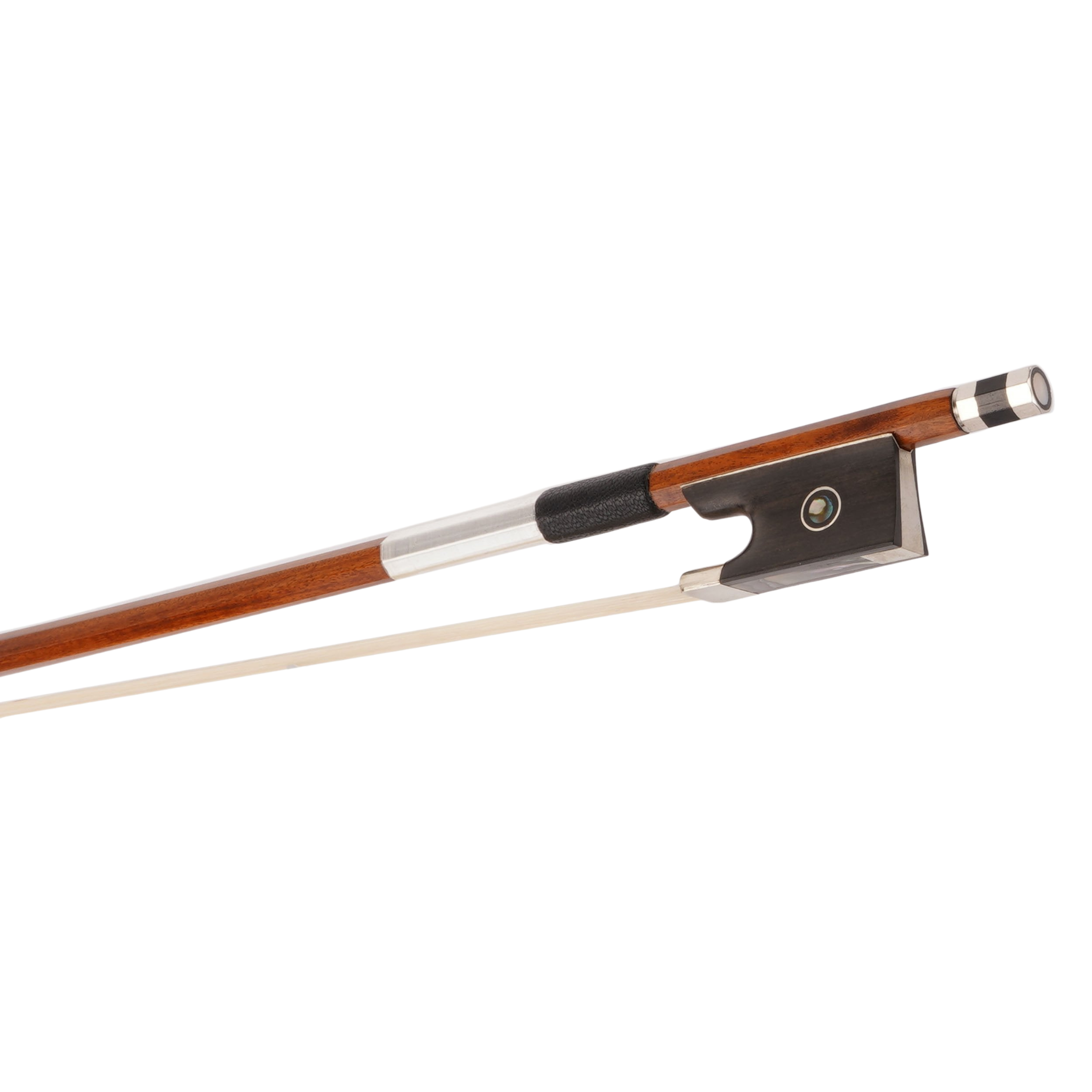
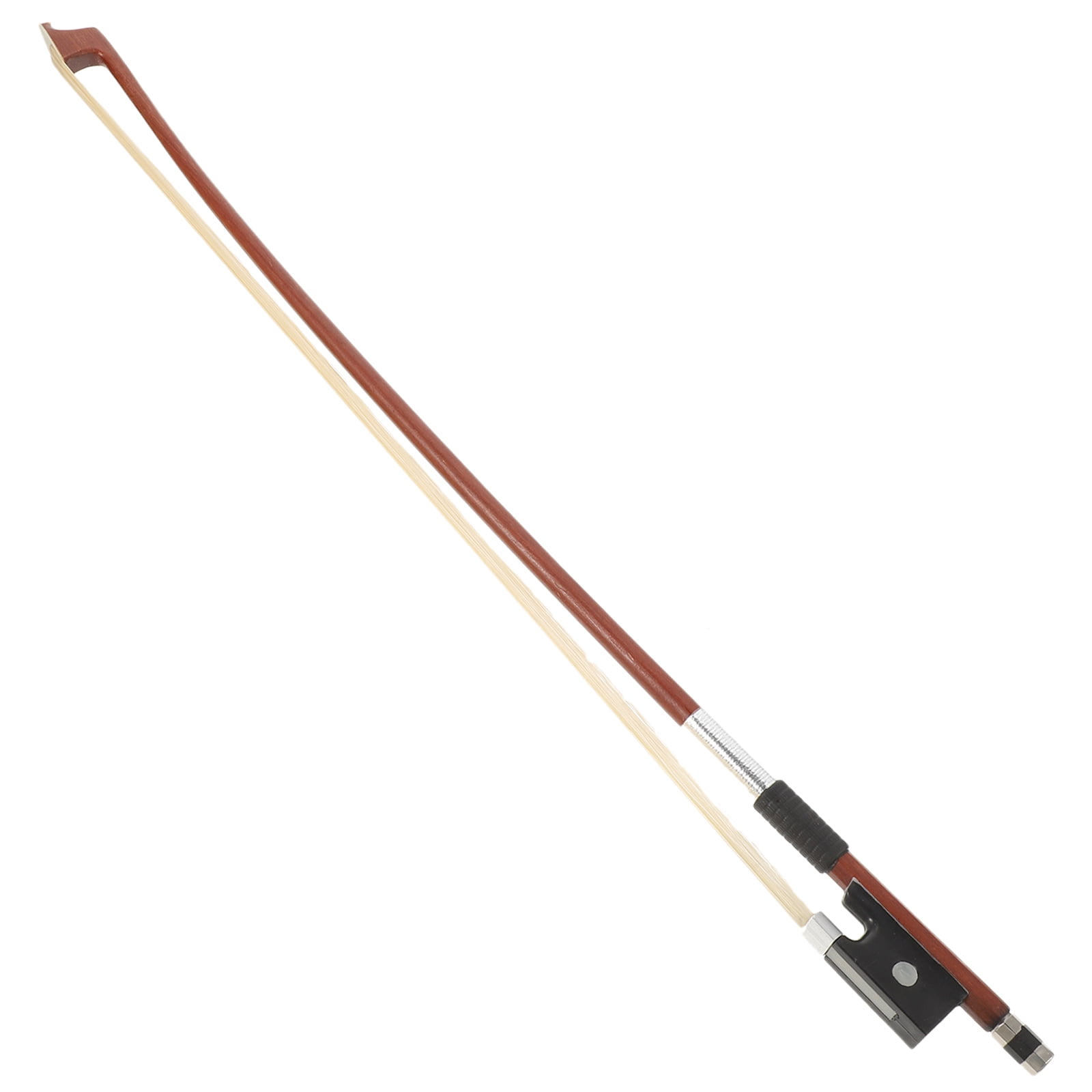
The main parts of a violin bow are:
- Stick: The long wooden or synthetic shaft.
- Bow hair: Usually horsehair. It grips the string when coated with rosin.
- Frog: The handle near the player’s hand. It holds the hair and includes the grip area.
- Button: The end screw that tightens or loosens the hair.
- Tip: The opposite end from the frog. It supports the hair and protects the stick.
- Winding and grip: Materials around the lower part of the stick. They affect comfort and balance.
- Camber: The curve built into the stick. It helps the bow spring and respond.
A violin bow is not simply a stick with hair. Its weight, stiffness, curve, balance, and workmanship work together. Small changes can affect how easily you play short strokes, long strokes, soft notes, and fast passages.
Decide What You Need Before You Shop
Start with your playing level, violin, budget, and main problems. These factors narrow the search more effectively than a general label such as “student bow” or “professional bow.”
Ask yourself:
- Do I need a full-size bow or a fractional-size bow?
- Do I play classical music, fiddle music, chamber music, or several styles?
- Do I struggle with weak tone, harsh attacks, slow response, or poor control?
- Do I need a bow for lessons, auditions, performances, or travel?
- Am I buying for a child who may soon need a larger size?
- Can I test bows at home before making a final choice?
If your current bow works well but feels worn, it may need a rehair or repair rather than replacement. A bow with loose parts, a damaged tip, a warped stick, or a poor hair job can perform badly even if its basic materials are good.
Match the bow to the player
A beginner often benefits from a bow that is stable and easy to control. A more advanced player may want a bow with a wider range of response and tone color. That does not mean an expensive bow is automatically better for a beginner.
A child may also need a smaller bow. Violin bows commonly come in sizes that match fractional violins, such as 1/16, 1/10, 1/8, 1/4, 1/2, 3/4, and 4/4. Size systems can vary slightly by maker. The bow should match the violin and the player’s reach, not just the player’s age.
Ask a teacher or violin shop to check size. Do not buy a smaller bow only because it costs less.
Choose the Bow Material
Most violin bows fall into three broad groups: pernambuco, brazilwood, and carbon fiber or another composite material. Each group includes excellent and poor examples. Material is useful as a starting point, not as a final verdict.
Pernambuco bows
Pernambuco comes from Paubrasilia echinata, a tree native to Brazil. Traditional bow makers value it for its strength, flexibility, and ability to hold a precise camber.
A well-made pernambuco bow may offer:
- A rich and complex sound
- Strong grip on the string
- Good control across the bow
- A lively response
- High value in the fine-bow market
Pernambuco bows can also be fragile. They may crack, warp, or suffer damage from heat, dryness, impact, or poor handling. Their price can vary widely based on the maker, condition, age, provenance, and quality of the individual stick.
International movement of pernambuco bows may involve wildlife-trade rules and documents. The Convention on International Trade in Endangered Species, or CITES, and the U.S. Fish and Wildlife Service regulate some cross-border movement. Rules can change, so check current requirements before buying a bow that you may take outside the United States.
Brazilwood bows
“Brazilwood” is a broad trade term. It often refers to less costly wooden bows made from species other than pernambuco, though labels and usage can vary among sellers.
Brazilwood bows may be a practical choice for:
- Beginners
- School programs
- Backup use
- Players with a small budget
- Young students who may outgrow a bow or violin
Their quality can range from weak and poorly finished to quite useful. Judge the bow by its response and condition rather than by the label alone.
Carbon-fiber and composite bows
Carbon-fiber bows use manufactured materials instead of a traditional wooden stick. Many are designed to offer consistent shape, good durability, and stable performance.
They can work well for:
- Students
- Outdoor performances
- Travel
- Humid or changing climates
- Players who want a reliable backup
- Musicians who prefer a lower maintenance option
A composite bow is not automatically inferior to a wooden bow. Some play very well. Others may sound stiff or feel less flexible. The same test applies: compare the bow on your violin.
Simple material comparison
| Material | Main strengths | Main limits | Common fit |
|---|---|---|---|
| Pernambuco | Rich response, complex tone, strong feel | Cost, fragility, possible travel paperwork | Advanced players and collectors |
| Brazilwood | Low cost and broad availability | Quality varies greatly | Beginners and school players |
| Carbon fiber or composite | Consistency, durability, travel use | Tone and feel vary by model | Students, travel, and backup use |
A useful bow can come from any of these groups. A fine material cannot rescue poor construction, and a modern material can outperform a weak wooden bow.
Check the Most Important Playing Qualities
When you test a bow, focus on what it does in your hand and on your violin. The key qualities are response, balance, weight, stiffness, camber, sound, and comfort.
Response
Response is how quickly and clearly the bow starts the note. Test soft attacks, firm attacks, and quick changes of direction.
A responsive bow should not require you to press hard to make the string speak. If the bow feels slow, it may have the wrong stiffness, poor hair, weak camber, or an unsuitable match with your violin.
Balance
Balance describes how the bow’s weight feels from frog to tip. A bow that feels too heavy at the frog may tire your hand. One that feels too light at the frog may feel unstable during short strokes.
There is no single correct balance point for every player. A player who uses a lot of off-the-string strokes may prefer a different balance from a player who spends most of the time on long legato strokes.
Weight
A full-size violin bow often weighs around 58 to 65 grams, but weight alone does not determine quality. Two bows with the same weight can feel very different because their mass is distributed differently.
Do not reject a bow only because it is slightly lighter or heavier than another. First ask whether it gives you control without strain.
Stiffness and flexibility
A bow that is too soft may feel unstable or collapse under pressure. A bow that is too stiff may feel harsh or less forgiving. The best choice depends on the violin and the player.
Test the bow with:
- Slow, full bows
- Light détaché
- Fast détaché
- Spiccato
- Martele
- Smooth string crossings
- Quiet playing near the fingerboard
- Strong playing near the bridge
You do not need advanced technique to notice basic control. The bow should not fight you during normal playing.
Sound
Listen for a clear tone with enough color for your violin. A bow may make one violin sound warm and another sound dull. It may also bring out brightness, focus, power, or softness.
Have another person play while you listen from several feet away. Players often hear more detail from in front of the violin than from behind it.
Comfort
The frog should fit your hand without sharp edges or awkward angles. The grip should feel secure but not force you to squeeze. If your thumb, wrist, or forearm hurts, stop and reset your technique.
Pain is not proof that a bow is unsuitable, but it is a reason to ask a teacher or qualified string specialist for help.

Test a Violin Bow the Right Way
A careful test is more useful than a long list of specifications. Try each bow on the same violin, with the same rosin and similar playing conditions.
Follow this test sequence
-
Inspect the bow before playing.
Look for cracks, loose parts, missing winding, damaged hair, and a crooked stick. -
Check the hair.
The hair should be reasonably even and clean. A bow with old, dirty, stretched, or uneven hair may not show its true potential. -
Tune the violin.
An out-of-tune violin makes comparison harder. -
Play open strings.
Use slow bows on each string. Listen for an even start and a steady sound. -
Play simple scales.
Use the same scale with each bow. Notice string crossings and changes of direction. -
Test quiet and loud playing.
A useful bow should work at more than one volume. -
Try several bow strokes.
Include legato, détaché, martelé, and light off-the-string strokes if you use them. -
Play music you know.
Familiar pieces help you notice control and comfort. -
Ask someone else to listen.
Your teacher or shop professional may hear differences that you miss while playing. -
Repeat the test later.
Fatigue and excitement can affect judgment. A second visit can prevent an impulsive purchase.
Use a simple score sheet
Rate each bow from 1 to 5 for:
| Test area | What to ask |
|---|---|
| Response | Does the note start when I expect? |
| Tone | Does it suit my violin? |
| Control | Can I change speed and pressure easily? |
| Balance | Does it feel stable from frog to tip? |
| Comfort | Can I play without gripping or straining? |
| Technique | Does it help my usual bow strokes? |
| Value | Does the performance match the price? |
The score is not scientific. It is a memory aid. It also helps you avoid choosing the bow that simply feels exciting for the first minute.

Know How Much to Spend
Bow prices vary widely in the United States. Current prices depend on the maker, materials, condition, workmanship, dealer, and market demand. Because prices change, treat any fixed online price list as a starting point rather than a rule.
A practical budget approach is:
- Entry level: Focus on safe construction, basic control, and a good setup.
- Intermediate level: Pay more for clearer response, better balance, and improved consistency.
- Advanced level: Compare individual bows with a respected specialist. Maker, condition, provenance, and playing quality matter greatly.
- Professional or collectible level: Obtain independent advice and written documentation before making a major purchase.
A cheap bow that needs immediate repair may cost more than a slightly higher-priced bow that is ready to play. Ask whether the price includes:
- A fresh or recent rehair
- Inspection by a bow specialist
- Repairs or setup
- A trial period
- Return shipping terms
- Sales tax
- Insurance during shipment
- A written receipt
- An appraisal or certificate, if relevant
Do not assume that a bow priced at a certain level will suit your violin. Price can reflect rarity or history as well as playing performance.
Buy From a Reliable Seller
The safest choice is usually a reputable violin shop, established bow maker, or dealer with a clear trial and return policy. A teacher can help you find suitable sellers, but the final assessment should come from testing the actual bow.
Before buying online, ask:
- Can I try the bow on my own violin?
- How long is the trial period?
- Who pays return shipping?
- What happens if the bow arrives damaged?
- Has the bow been examined for cracks or repairs?
- When was it last rehaired?
- Is the bow straight when viewed from the frog?
- Does the seller provide a receipt and description?
- Are there restrictions on international shipping?
Be careful with private listings that use words such as “professional,” “museum quality,” or “old master” without proof. A label or signature can be false, mistaken, or unrelated to the bow’s actual value.
For a costly bow, consider an independent opinion from a qualified bow maker, violin maker, or specialist. The seller’s description alone is not independent verification.

Inspect the Bow for Damage
A bow should be checked in person when possible. Some damage is easy to see. Some problems require a trained eye.
Look for:
- A stick that does not straighten when tightened
- Cracks near the tip
- Cracks in the frog
- A loose or damaged button
- Missing or loose winding
- A warped stick
- Uneven or very dirty hair
- A tip plate that is loose or damaged
- Signs of old repairs
- A frog that does not move smoothly
- A screw that feels rough or slips
Never over-tighten the hair to test a bow. Tighten it only until the stick reaches its normal playing curve. Leave space between the hair and the stick. Loosen the hair after playing.
Do not try to straighten, reglue, or repair a valuable bow at home. A failed repair can reduce its value and make later work more difficult.
Choose the Right Bow for Your Violin
A bow is part of a playing system. The violin, strings, setup, rosin, player, and bow all interact.
For example, a bright violin may pair well with a bow that adds warmth and smoothness. A dark or resistant violin may benefit from a bow that gives more focus and quick response. These are tendencies, not fixed rules.
Test the bow on:
- Your own violin
- Your usual strings
- Your regular rosin
- Music you actually play
A bow that sounds impressive on a shop violin may not work as well on yours. This is why an at-home trial is so useful.
Your teacher can assess technique and ease. A bow specialist can assess construction and condition. The best decisions often use both kinds of advice.

Common Mistakes to Avoid
Choosing by material alone
Pernambuco is not a guarantee of quality. Carbon fiber is not a guarantee of weakness. The individual bow matters more than the category.
Choosing by weight alone
Weight does not show balance, stiffness, camber, or workmanship. Use weight as one data point, not as the decision.
Testing only one bow
Your first acceptable bow may not be your best option. Compare several bows under the same conditions.
Testing only loud playing
A bow that produces power may still perform poorly in soft passages. Test the full range of volume and stroke types.
Ignoring the hair
Old or poor hair can make a good bow seem bad. Ask whether the bow needs a rehair before judging it.
Buying without a return policy
Your hand may feel different after a longer session. A return period gives you time to test the bow at home and in a lesson.
Buying for status
A famous name or old date does not replace a good match. Buy the bow that helps you play with control and comfort.
Forgetting travel rules
If you may take a pernambuco bow across borders, check current CITES and U.S. Fish and Wildlife Service requirements before travel.

Violin Bow Care After You Buy
Good care protects both performance and value.
- Loosen the hair after every playing session.
- Tighten the hair only while playing.
- Keep the bow in its case when not in use.
- Avoid cars, radiators, heaters, and direct sun.
- Do not touch the hair with your fingers.
- Use rosin in moderation.
- Wipe rosin dust from the stick with a soft, dry cloth.
- Do not use household cleaners or alcohol.
- Have the bow checked if the stick becomes crooked, the frog sticks, or the hair will not tighten evenly.
- Rehair the bow when the hair is stretched, dirty, uneven, or no longer grips well.
A luthier or bow maker should handle major repairs and straightening. Ask for help before a small issue becomes a crack or a loose part.

FAQs About Buying a Violin Bow
Should I buy a carbon-fiber or wooden bow?
Choose based on performance, price, durability, and use. A carbon-fiber bow may be useful for travel or changing climates. A wooden bow may offer a feel and tone you prefer. Test both on your violin before deciding.
Is an expensive violin bow worth it?
It can be worth it when the bow gives you better control, sound, and comfort. It is not worth paying more simply for a material, label, or age that does not improve your playing.
How much should a beginner spend on a violin bow?
Set a budget that includes a reliable bow, proper hair, and possible setup. The right amount depends on local prices and the student’s needs. A teacher or reputable shop can help you avoid spending on a bow that is hard to control.
Can I use a violin bow that is too heavy?
You may be able to use it, but extra weight can cause fatigue or make certain strokes harder. Balance and distribution matter as much as total weight. If your hand or arm tires quickly, compare lighter or differently balanced bows.
How often does a violin bow need a rehair?
There is no single schedule for every player. Many players rehair when the hair becomes stretched, dirty, uneven, or unable to grip the strings well. A busy player may need service more often than a casual player. Ask a qualified shop to inspect it.
Should I buy a bow online?
Online buying can work if the seller offers a real trial period, accurate condition details, safe shipping, and a clear return policy. Avoid buying a costly bow without the chance to test it or obtain an independent assessment.
Final Buying Checklist
Before you pay, confirm that:
- The bow is the correct size.
- It works well on your violin.
- The hair and frog are in usable condition.
- The stick is straight and has no unexplained damage.
- You tested soft, loud, slow, and fast playing.
- Your teacher or another trusted player has listened.
- The price includes all known costs.
- The seller provides a receipt and return terms.
- You understand any travel or import limits.
- You can care for and store the bow correctly.
The best violin bow is the one that gives you clear response, useful tone, steady control, and comfortable movement on your own instrument. Compare several bows, take your time, and ask a qualified professional when condition or value is uncertain.

Senior Music Reviewer
Alex Carter is a seasoned music reviewer with over a decade of experience in the world of sound and instruments. Passionate about helping musicians and enthusiasts make informed choices, he brings sharp insights and in-depth knowledge to every review. From classical instruments to modern gear, Alex combines technical expertise with a love for music to deliver content that resonates with readers.
As a Senior Music Reviewer and expert author on Tuneluma.com, Alex is dedicated to sharing honest evaluations, practical advice, and thoughtful commentary to guide readers in their musical journey.