Introduction
For piano players in the United States, “Have You Ever Seen the Rain” is a great song to learn because its warm sound comes from a simple chord cycle. Creedence Clearwater Revival released the song in 1971, and John Fogerty wrote it.
The easiest beginner version uses four basic chords: C, G, Am, and F. You can play the song with simple triads in the right hand and single bass notes in the left hand. This guide shows the chords, notes, rhythm, melody approach, and common fixes without reproducing the song’s copyrighted lyrics.
Quick Answer: What Are the Piano Chords?
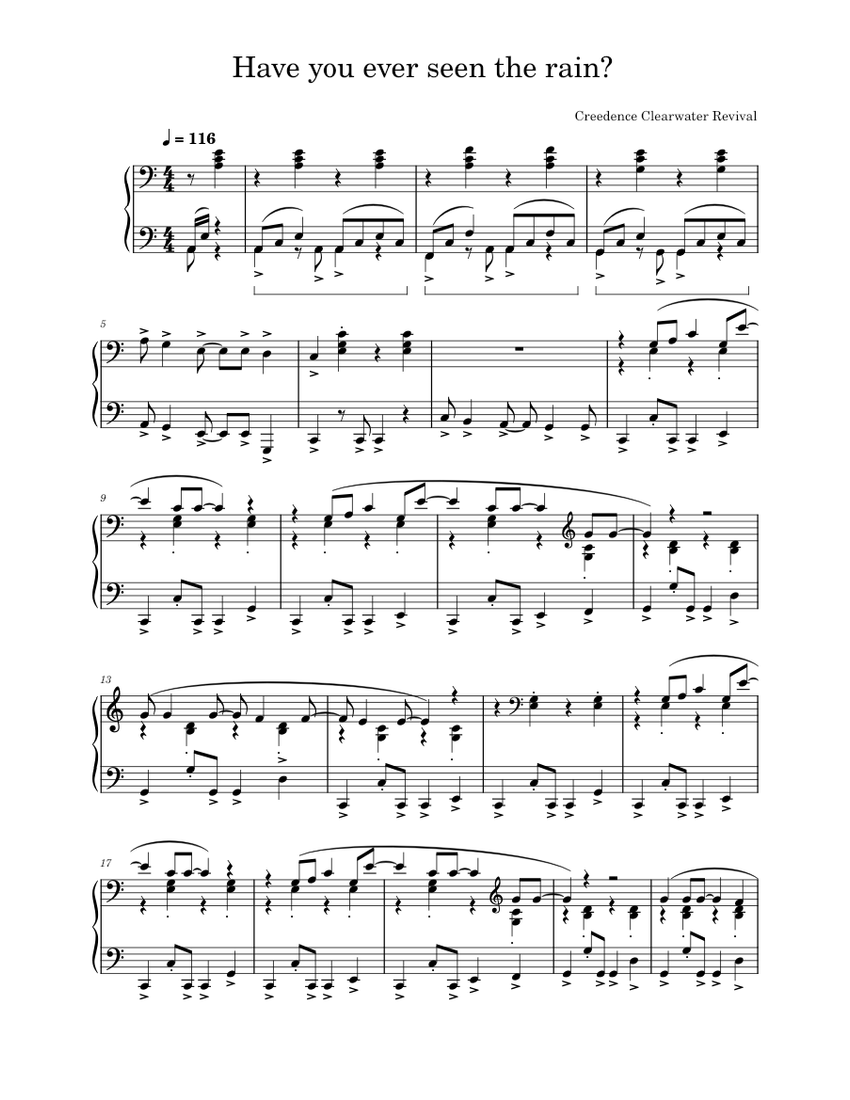
A common beginner piano arrangement uses this repeating progression:
C – G – Am – F
These chords create the main harmonic pattern for much of the song. You can play them as three-note chords in the right hand:
| Chord | Right-hand notes | Left-hand bass note |
|---|---|---|
| C major | C–E–G | C |
| G major | G–B–D | G |
| A minor | A–C–E | A |
| F major | F–A–C | F |
This is a simplified arrangement. Published piano sheets may use different voicings, passing chords, or a different key.
Song Basics
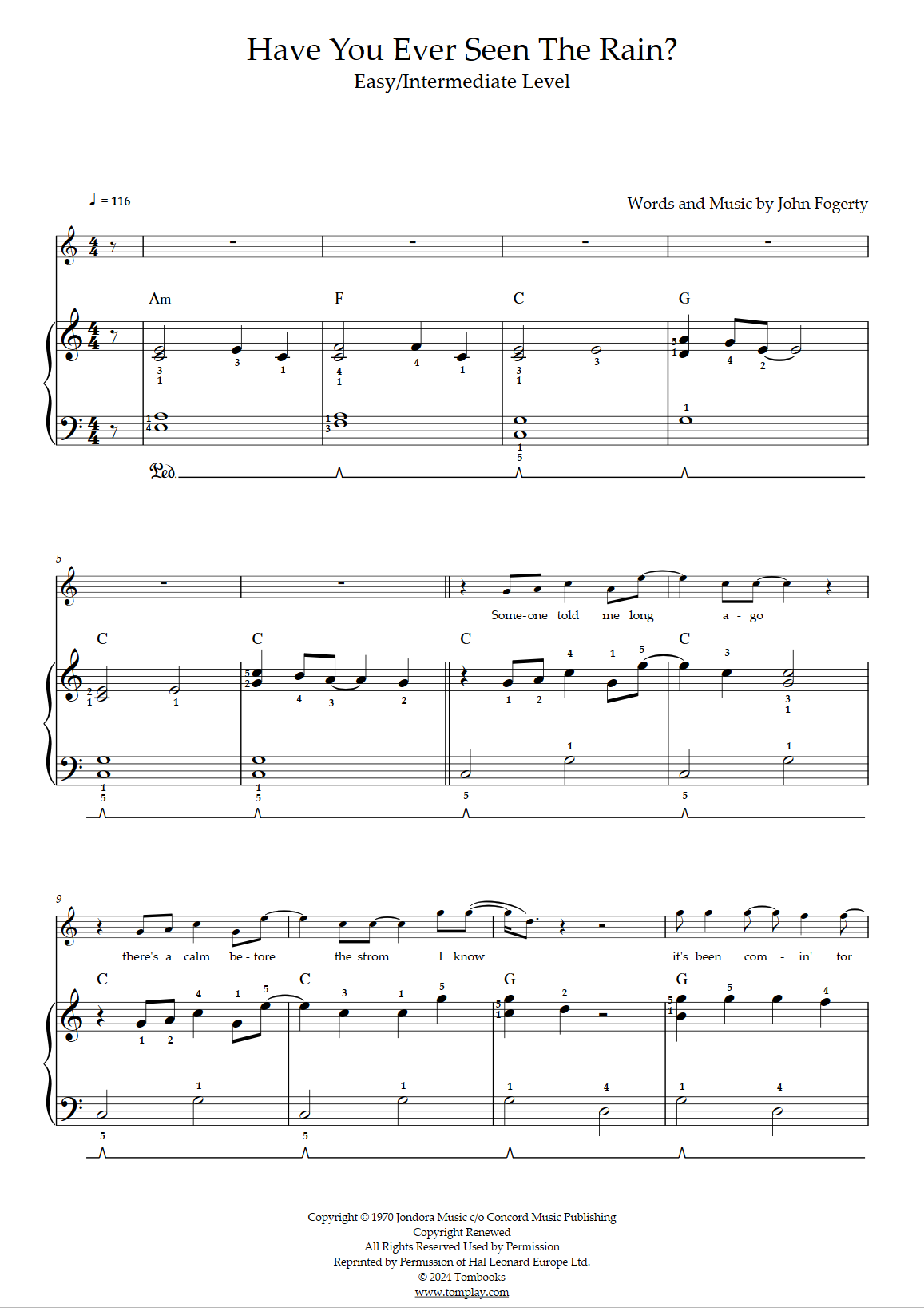
“Have You Ever Seen the Rain” is a rock song by Creedence Clearwater Revival, often shortened to CCR. It appeared on the band’s 1970 album Pendulum and became one of the group’s best-known songs.
The song sounds smooth because the chords move in a steady cycle. The emotional effect comes less from complex harmony and more from the contrast between the calm music and the song’s storm and rain imagery.
For piano, the main challenge is not learning many chords. It is keeping the beat steady while changing chords without rushing.
The easiest key for beginners
The key of C major is useful for new players because it uses only white keys:
- C major: C–E–G
- G major: G–B–D
- A minor: A–C–E
- F major: F–A–C
The F chord is often the first difficult shape because it may feel less familiar. Take time to place all three fingers cleanly.
Original key versus beginner key
Online chord charts may show the song in different keys. That does not always mean one chart is wrong. A song can be transposed to fit a singer, a guitar setup, or a player’s comfort range.
The C-based version in this guide is a practical beginner arrangement. If you play along with a recording and the notes do not match, the recording or chart may use another key.
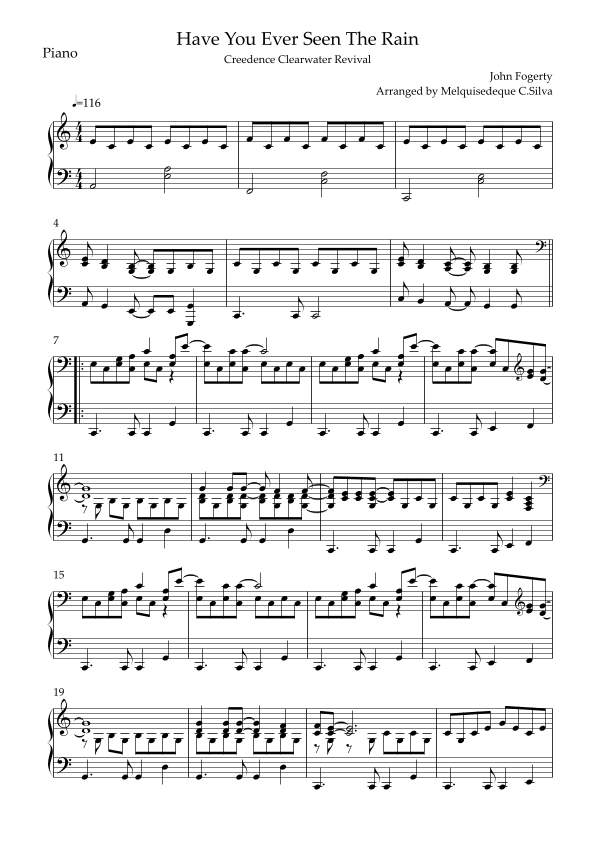
Have You Ever Seen the Rain Piano Chord Progression
The simplest chord pattern is:
C G Am F
Play each chord for one full bar if you are using a basic four-beat arrangement:
| C | G | Am | F |
Repeat the cycle while you learn the song’s form.
A more complete arrangement may change the number of beats per chord. Listen for the vocal phrasing and chord changes rather than forcing every section into the same pattern.
Basic right-hand chord shapes
Start with these root-position triads:
- C major: 1–3–5 fingers on C–E–G
- G major: 1–3–5 fingers on G–B–D
- A minor: 1–3–5 fingers on A–C–E
- F major: 1–3–5 fingers on F–A–C
Right-hand fingering can change when you use inversions. The goal is to reduce large jumps between chords.
Smoother chord changes with inversions
An inversion uses the same notes in a different order. For example:
- C major: C–E–G
- G major: B–D–G
- A minor: C–E–A
- F major: C–F–A
These shapes keep your hand closer together. They also make the changes sound smoother.
Try this compact sequence:
C major: C–E–G
G major: B–D–G
A minor: C–E–A
F major: C–F–A
The notes do not need to be played in this exact order in every arrangement. Use the version that feels comfortable and sounds clear.

How to Play the Song on Piano
Learn the song in layers. Do not add a busy rhythm before you can change chords in time.
Step 1: Practice the four chords
Play each chord slowly for four counts:
C: 1 2 3 4
G: 1 2 3 4
Am: 1 2 3 4
F: 1 2 3 4
Repeat the cycle several times. Keep your wrist loose and lift your fingers only as much as needed.
Step 2: Add the left hand
Use one bass note with the left hand while the right hand plays the chord:
- Left hand C with right-hand C major
- Left hand G with right-hand G major
- Left hand A with right-hand A minor
- Left hand F with right-hand F major
Start with whole notes. Press the bass note on beat one and hold it for the bar.
Step 3: Add a steady rock pattern
Once the slow version feels easy, try this four-beat pattern:
Beat:       1     2     3     4
Left hand:  Bass        Bass
Right hand: Chord       Chord
You can play the chord on beats one and three. This creates a simple, steady pulse without making the arrangement too busy.
Another option is to play the left-hand bass on every beat:
1 2 3 4
C C C C
Use a light touch. Repeated bass notes can sound heavy if played too loudly.
Step 4: Use broken chords
Instead of playing all three right-hand notes together, play them one at a time:
C–E–G–E
Use the same idea for each chord. This creates movement and works well during quieter sections.
Step 5: Add the melody
Learn the melody separately with your right hand. Begin with short phrases, then connect them.
Do not try to play full chords and the melody at the same time at first. A strong method is:
- Learn the melody alone.
- Learn the chord progression alone.
- Play the melody with simple left-hand bass notes.
- Add full chords after the timing feels secure.
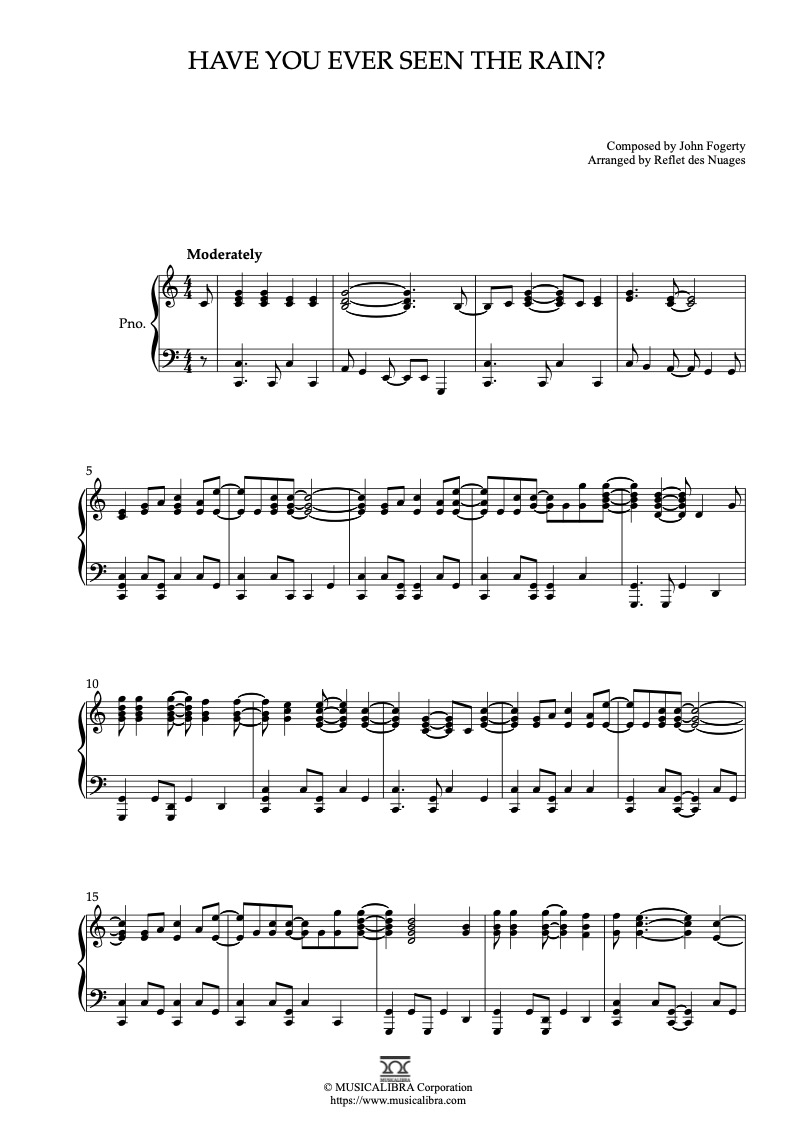
Because the melody is copyrighted, use licensed sheet music or an authorized lesson source for the exact notes.
Signs that your arrangement is working
Your version is ready to build on when:
- You can repeat the chord cycle without stopping.
- Your left hand stays in time.
- You can change from G to Am without a long pause.
- The F chord sounds clean.
- You can play softly enough to hear the melody.

A Simple Piano Practice Plan
A short practice routine often works better than one long session.
Five-minute routine
Minute one: Chord shapes
Play C, G, Am, and F slowly. Check that each note sounds clear.
Minute two: Chord changes
Move between C and G, then G and Am, then Am and F. These changes help build control.
Minute three: Full progression
Play:
C – G – Am – F
Use whole notes and a slow count.
Minute four: Add rhythm
Play the chords on beats one and three. Keep the tempo even.
Minute five: Play with a reference recording
Use a legal recording or licensed backing track. Focus on timing instead of speed.
Practice with a metronome
Start at a tempo that lets you change chords without tension. Increase the speed only when you can play the cycle three or four times without a mistake.
A metronome exposes rushed chord changes. If the click disappears under your playing, lower the tempo and use less force.
Common Problems and How to Fix Them
The F chord sounds wrong
The F major triad contains F, A, and C. If one note is missing or pressed unevenly, the chord may sound weak.
Try playing the notes one at a time. Then press them together with a relaxed hand. If needed, use an easier F shape, such as two notes at first, before adding the third note.
The chord changes are too slow
Large jumps often cause delays. Use inversions to keep the right hand closer to the next chord.
For example, move from:
C–E–G
to:
B–D–G
for G major instead of jumping to a distant root-position G chord.
The song does not match the recording
The most likely reason is a key difference. Your C arrangement may sound correct but still differ from the recording’s pitch.
You have three choices:
- Keep playing in C as a practice version.
- Transpose the chords to the recording’s key.
- Use a transposition feature on a legal backing track, if available.
Do not change random notes until you confirm the key.
The playing sounds too mechanical
Playing every chord with the same force can make the song feel flat. Keep the beat steady but vary the volume slightly.
Use lighter playing in quieter sections and a fuller touch in stronger sections. Avoid large changes that disturb the tempo.
The left hand feels too busy
Return to one bass note per bar. A simple left hand is better than a complicated part that causes missed beats.
Add octaves or repeated bass notes only after the basic pattern feels natural.

Optional Transposition Chart
If C major does not fit your voice or the recording you are using, transpose the whole progression. The important rule is to move every chord by the same number of semitones.
| C-based chord | Up 2 semitones | Up 5 semitones |
|---|---|---|
| C | D | F |
| G | A | C |
| Am | Bm | Dm |
| F | G | Bb |
For example, the C–G–Am–F progression becomes:
- D–A–Bm–G when moved up two semitones
- F–C–Dm–Bb when moved up five semitones
The chord quality stays the same. C major becomes D major, G major becomes A major, and A minor becomes B minor.
When transposing by hand, check every chord. One unchanged chord can make the entire progression sound incorrect.

Should You Use Sheet Music or Chord Symbols?
Chord symbols are usually enough for a beginner arrangement. They tell you the harmony but not every rhythm, melody note, or performance detail.
Use licensed sheet music when you want:
- The exact piano arrangement
- The full vocal melody
- Detailed rhythm notation
- Pedal markings
- Intro and ending details
- A version matched to a particular key
Use chord symbols when you want to accompany yourself or create a simple version quickly. Neither method is automatically better. The best choice depends on whether you want to copy the recording closely or make your own arrangement.
Do not rely on an unverified chord chart for the exact recording. User-made charts may simplify sections or use incorrect chord names.

Key Takeaways
- The easiest beginner arrangement uses C, G, Am, and F.
- Play the chords as right-hand triads and begin with single left-hand bass notes.
- Practice the chord cycle before adding melody or complex rhythm.
- Use inversions to make the chord changes smoother.
- A different key may explain why your piano version does not match the recording.
- Use licensed sheet music for the exact melody and full arrangement.
Frequently Asked Questions
What are the easiest piano chords for “Have You Ever Seen the Rain”?
A common simplified set is C, G, Am, and F. These chords are beginner-friendly because they can be played with white keys in the key of C major.
Is “Have You Ever Seen the Rain” hard to play on piano?
The basic chord version is suitable for beginners. The harder parts are keeping a steady rhythm, changing chords cleanly, and adding the melody while maintaining the accompaniment.
What key is the song in?
Different charts and arrangements may use different keys. A beginner version often uses C major, while a recording or published arrangement may use another key. Confirm the key before comparing individual notes.
Can I play the song with only my right hand?
Yes. You can play the chord shapes with your right hand alone. For a fuller sound, add the matching bass note with your left hand.
How can I play the exact melody?
Use authorized sheet music or a licensed piano tutorial that includes the melody. This guide focuses on chords, accompaniment, and practice methods rather than reproducing the copyrighted melody.
Conclusion
To play “Have You Ever Seen the Rain” on piano, begin with the four-chord cycle C–G–Am–F. Practice each chord, add one bass note at a time, and then build a steady rock rhythm. Once the changes feel easy, use inversions, broken chords, and the melody to create a fuller arrangement.
Your next step is simple: set a slow tempo, play the four chords for five minutes, and focus on smooth changes rather than speed.

Senior Music Reviewer
Alex Carter is a seasoned music reviewer with over a decade of experience in the world of sound and instruments. Passionate about helping musicians and enthusiasts make informed choices, he brings sharp insights and in-depth knowledge to every review. From classical instruments to modern gear, Alex combines technical expertise with a love for music to deliver content that resonates with readers.
As a Senior Music Reviewer and expert author on Tuneluma.com, Alex is dedicated to sharing honest evaluations, practical advice, and thoughtful commentary to guide readers in their musical journey.