If you are in the United States and want to play “Do You Want to Build a Snowman?” on piano, the easiest path is to start with a simple chord version. You do not need to read full sheet music at first. Learn a few basic chords, use a slow steady beat, and add the melody once your hands feel comfortable.
This guide explains how to play an easy piano version, what chords to learn, how to practice the song, and how to fix common beginner problems.

What You Need to Play the Song
You need a piano or keyboard, a simple arrangement, and a way to keep time. A keyboard with a basic piano sound is enough. You do not need weighted keys or a pedal to begin.
The song is from Disney’s Frozen. It was written by Kristen Anderson-Lopez and Robert Lopez. Because the song is copyrighted, use licensed sheet music or an authorized tutorial for the complete melody and lyrics.
For an easy piano version, focus on these skills:
- Finding notes by letter name
- Playing simple major and minor chords
- Counting in steady beats
- Using the right hand for melody
- Using the left hand for bass notes or chords
- Changing chords without stopping
A beginner arrangement may simplify the rhythm, remove passing notes, and use fewer chords. That is normal. The goal is to make the song playable while keeping its main sound.
Recommended starting level
This song is a good choice for a beginner who can:
- Find middle C
- Play five-finger patterns
- Read basic note names
- Play simple chords
- Count quarter notes and half notes
If you are completely new to piano, spend a few minutes learning note names and the C major five-finger position first.
Easy Chords for “Do You Want to Build a Snowman?”
A simple chord arrangement often uses chords from the key of F major. The exact chords may change between sheet music editions, but these are common beginner-friendly chords:
| Chord | Notes | Easy shape |
|---|---|---|
| F major | F–A–C | 1–3–5 |
| C major | C–E–G | 1–3–5 |
| B-flat major | B♭–D–F | 1–3–5 |
| D minor | D–F–A | 1–3–5 |
| G minor | G–B♭–D | 1–3–5 |
| C7 | C–E–G–B♭ | 1–3–5–7 |
The key of F major has one flat: B♭. On a piano, B♭ is the black key just to the left of B.
If the B-flat chord feels hard, play only its root note at first. For example, play B♭ with the left hand instead of the full chord. Add the other notes when your hand is ready.
The easiest left-hand method
Start with one bass note per chord:
- F chord: play F
- C chord: play C
- B♭ chord: play B♭
- D minor chord: play D
- G minor chord: play G
Hold each note for the length of the measure. This gives the song a clear base without making the left hand too busy.
When that feels easy, play the full chord with the left hand or use a broken pattern such as:
- Bass note
- Chord
- Chord
- chord
for example, with an F chord, play F in the lower register, then F-A-C together three times.

How to Play an Easy Version Step by Step
The best way to learn this song is to divide it into short sections. Do not try to play the whole song from beginning to end on your first attempt.
Step 1: Find middle C
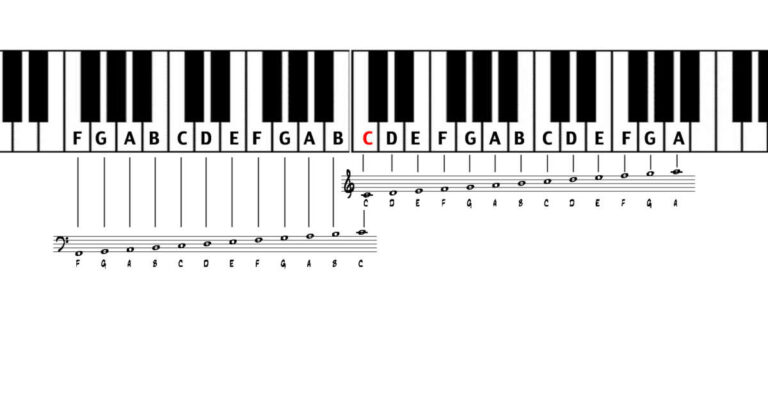
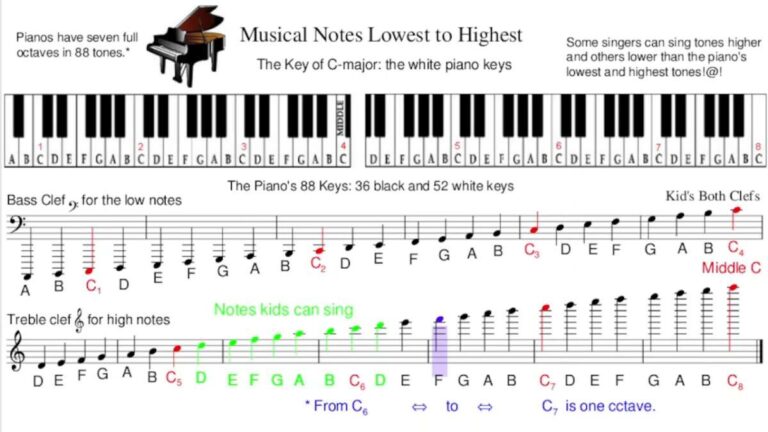
Middle C is near the center of the keyboard. On a full piano, it is usually near the brand name. On a smaller keyboard, use the group of two black keys as a guide. The white key just to the left of each group of two black keys is C.
Place your right-hand thumb on middle C. You can move your hand later as the melody changes.
Step 2: Learn the chord shapes
Practice the F, C, B♭, D minor, G minor, and C7 chords one at a time.
Play each chord slowly. Say the note names aloud if needed. Then move between two chords:
- F to C
- C to B♭
- B♭ to F
- D minor to G minor
- G minor to C7
- C7 back to F
Do not worry about speed. Smooth movement matters more than fast movement.
Step 3: Practice the left hand alone
Use one bass note for each chord. Count four beats while holding the note:
1, 2, 3, 4
Then change to the next chord. Keep the beat even. If you lose your place, stop and restart with a slower count.
Step 4: Add the right-hand melody
Use licensed sheet music or an approved lesson for the exact melody notes. Start with only one short phrase. Play it slowly with the right hand while the left hand stays silent.
Look for these signs of progress:
- You can play the phrase three times without stopping.
- You do not need to look at every key.
- Your fingers stay relaxed.
- The rhythm remains steady.
Step 5: Add simple chords
Once the right-hand phrase feels secure, add one left-hand bass note at the start of each measure. This is much easier than playing full chords right away.
After you can play the phrase with bass notes, try full chords. If the full version causes mistakes, return to single bass notes. Simplifying is part of learning, not a failure.
Step 6: Join the song sections
Practice the song in small groups:
- Opening section
- First main phrase
- Middle section
- Ending section
Play each group slowly. Then connect two groups. Continue until the entire song flows together.
Step 7: Add expression
The song has a gentle, story-like feel. Play the quiet parts softly and let important lines grow slightly louder. Avoid pressing every key with the same force.
A sustain pedal can help connect notes, but too much pedal can make the song sound muddy. If you use one, lift it when the chord changes.

A Simple Practice Plan
A short daily session works better than one long session each week. Try this 15-minute plan:
| Time | Practice task |
|---|---|
| 2 minutes | Find the hand position and warm up |
| 4 minutes | Practice chord changes |
| 4 minutes | Practice the right-hand melody |
| 3 minutes | Combine melody with bass notes |
| 2 minutes | Play one section as a performance |
Keep the tempo slow at first. A metronome set between 50 and 70 beats per minute can help, but you do not need one if you can count evenly.
Practice with a chord loop
Before playing the full song, repeat a simple loop such as:
F – C – D minor – B♭
Play one chord for four counts. Repeat the loop several times. This builds left-hand control and helps you prepare for common chord changes.
This loop is a practice tool, not a complete transcription of the song. Your authorized sheet music may use different chords or timing.
Use a simplified rhythm
If the original rhythm feels difficult, use one chord per measure. Once you can play without stopping, add more detail.
A useful progression is:
- Single bass note
- Full chord once per measure
- Bass note followed by chord
- Broken chord pattern
- Full arrangement
Move to the next level only when the current one feels steady.
Common Problems and Easy Fixes
“My left hand cannot change chords fast enough.”
Slow down and use smaller movements. Keep your fingers close to the keys. Practice only the difficult change, such as B♭ to F, instead of repeating the whole song.
You can also use only the root notes until the chord change becomes familiar.
“The song sounds wrong even though I know the notes.”
Check the key and the B♭ note. A beginner arrangement in F major normally uses B♭. Playing B natural instead can change the sound.
Also check your rhythm. A correct note played at the wrong time may sound less recognizable than a simple note played with the right timing.
“The right hand feels too high or too low.”
Move the hand to a nearby octave. Many beginner arrangements place the melody in a comfortable middle range. If your hand feels stretched, do not force it. Shift the hand position instead.
“I keep stopping after mistakes.”
Keep the beat going. If you miss a note, skip it and continue with the next beat. This is a key performance skill.
During practice, you can stop and repair the mistake. During a performance, continuing usually sounds smoother than restarting.
“The pedal makes everything blurry.”
Lift the pedal each time the chord changes. If the sound is still unclear, practice without pedal. Clean finger changes matter more than pedal use.
“I want to sing while I play.”
First learn the left-hand chords. Then sing while playing only the bass notes. Add full chords after your voice and hands can stay together.
Singing and playing at the same time is harder than either skill alone, so use a slower tempo.

Should You Use Letter Notes, Chords, or Full Sheet Music?
The best format depends on your experience and your goal.
| Method | Best for | Main benefit | Main limit |
|---|---|---|---|
| Letter notes | Complete beginners | Easy to start | Rhythm may be unclear |
| Chord chart | Singers and casual players | Simple accompaniment | Does not show the exact melody |
| Easy sheet music | Early piano students | Shows notes and rhythm | Requires basic reading |
| Full sheet music | Experienced players | More detail and expression | Takes longer to learn |
For most beginners, easy sheet music plus chord symbols is the most useful choice. It shows the melody while giving you a simpler left-hand option.
Before downloading or printing music, check that it is licensed. An authorized arrangement may also include helpful fingering, rhythm marks, and a suggested difficulty level.
How Long Does It Take to Learn?
The time varies by experience and practice habits. A beginner who practices for 10 to 15 minutes most days may learn a simple section within a few sessions. Learning the complete song with both hands may take longer.
Your progress depends on:
- Whether you already read music
- How often you practice
- The difficulty of your arrangement
- How quickly you learn chord shapes
- Whether you want to sing while playing
- How close you want your version to sound to the recording
Do not compare your first week with another player’s finished performance. Aim for one small improvement each session.
Copyright and Performance Tips
“Do You Want to Build a Snowman?” is a copyrighted song. You may learn and perform it for personal use, but you should obtain authorized music for the full melody, lyrics, or arrangement.
If you post a performance online, the platform may handle some licensing, but rules vary by site and country. In the United States, public performance and online use can involve separate rights. Check the platform’s current rules or speak with a qualified music-rights professional if you plan a commercial use.
Do not copy and share a complete scan, full note transcription, or full lyric transcription without permission.
Quick Checklist Before You Play
Use this checklist before each practice session:
- Find middle C.
- Check the key signature.
- Identify the B♭ key.
- Warm up with the main chords.
- Practice one short section.
- Add the left hand slowly.
- Use a metronome if your rhythm slips.
- Keep your hands relaxed.
- Stop using the pedal if the sound becomes muddy.
- Play the section once without stopping.
You are ready to move on when you can play a section with a steady beat and only a few mistakes.
Frequently Asked Questions
Is “Do You Want to Build a Snowman?” easy to play on piano?
A simplified version can be suitable for beginners. The melody is manageable, but the rhythm, key changes, and singing part may make the full version more challenging. Start with bass notes and simple chords.
What key is the song in?
Many arrangements use F major or a nearby transposed key. Check your specific sheet music because arrangements may change the key to suit a singer or a student’s skill level.
Can I play the song with only one hand?
Yes. A right-hand melody arrangement can work for early learners. You can later add bass notes or chords to make the sound fuller.
Do I need a sustain pedal?
No. A sustain pedal is optional. Learn the notes and rhythm first. Add pedal only when you can change chords cleanly.
What is the easiest way to play it for singing?
Use left-hand root notes or simple block chords while singing. Keep the accompaniment steady and slow. A chord chart may be more useful than a detailed solo piano arrangement.
Conclusion
The easiest way to learn “Do You Want to Build a Snowman?” on piano is to begin with simple chords and single bass notes. Practice short sections, keep a slow beat, and add the right-hand melody from authorized sheet music.
Start with F, C, B♭, D minor, G minor, and C7. Once those chords feel familiar, combine them with the melody and add gentle expression. With steady practice, you can build a playable beginner version without trying to master the full arrangement at once.

Senior Music Reviewer
Alex Carter is a seasoned music reviewer with over a decade of experience in the world of sound and instruments. Passionate about helping musicians and enthusiasts make informed choices, he brings sharp insights and in-depth knowledge to every review. From classical instruments to modern gear, Alex combines technical expertise with a love for music to deliver content that resonates with readers.
As a Senior Music Reviewer and expert author on Tuneluma.com, Alex is dedicated to sharing honest evaluations, practical advice, and thoughtful commentary to guide readers in their musical journey.