Introduction
For guitar players in the United States, the easiest way to play “Do-Re-Mi” is in C major with the chords C, F, and G7. This simple version fits the song’s familiar melody and works well for singing, classroom music, and beginner practice.
“Do-Re-Mi” comes from the 1965 American film The Sound of Music. Richard Rodgers wrote the music, and Oscar Hammerstein II wrote the lyrics. The movie version is associated with Julie Andrews, but you do not need advanced guitar skills to play a basic accompaniment.
The chord pattern below is a simplified teaching arrangement. Different songbooks may use extra chords, a different key, or a capo. Start with the basic version, then add the optional changes when the main pattern feels easy.


Easy Do-Re-Mi Guitar Chords in C
The beginner version uses three main chords:
- C major
- F major
- G7
Here are the chord shapes in standard tuning, from the lowest string to the highest string:
C major:  x32010
F major:  133211
G7:       320001
The numbers show which fret to press on each string. An x means you do not play that string.
If the full F chord feels hard, use this smaller version:
Easy F: xx3211
The easy F shape avoids the full barre chord. It is a good choice for new players because it requires less hand strength.
Chord chart
| Chord | Common name | Basic shape |
|---|---|---|
| C | C major | x32010 |
| F | F major | 133211 |
| Easy F | F major, small shape | xx3211 |
| G7 | G dominant seventh | 320001 |
Press each string near the fret wire, but not directly on top of it. Keep your thumb behind the neck and let each note ring clearly.
Do-Re-Mi Chord Progression
The simplest progression follows a repeated pattern:
C   F   C
C   G7  C
Use that pattern for each short teaching phrase. The first line usually moves from C to F and back to C. The next line moves from C to G7 and resolves to C.
A practical chord layout looks like this:
Phrase 1:   C   F   C
Phrase 2:   C   G7  C

Phrase 3:   C   F   C
Phrase 4:   C   G7  C

Phrase 5:   C   F   C
Phrase 6:   C   G7  C

Phrase 7:   C   F   C
Phrase 8:   C   G7  C
This is a phrase-based chord chart, not a full printed lyric sheet. Hold each chord until the melody reaches the next change. If you are singing, listen for the natural end of each musical phrase rather than changing chords on every syllable.
The final G7 to C movement gives the song its sense of return. G7 creates tension, while C sounds settled. This is one of the most useful chord movements for beginners to learn.


How to Play the Song Step by step
follow these steps if you are still learning basic chord changes.
1. Tune the guitar
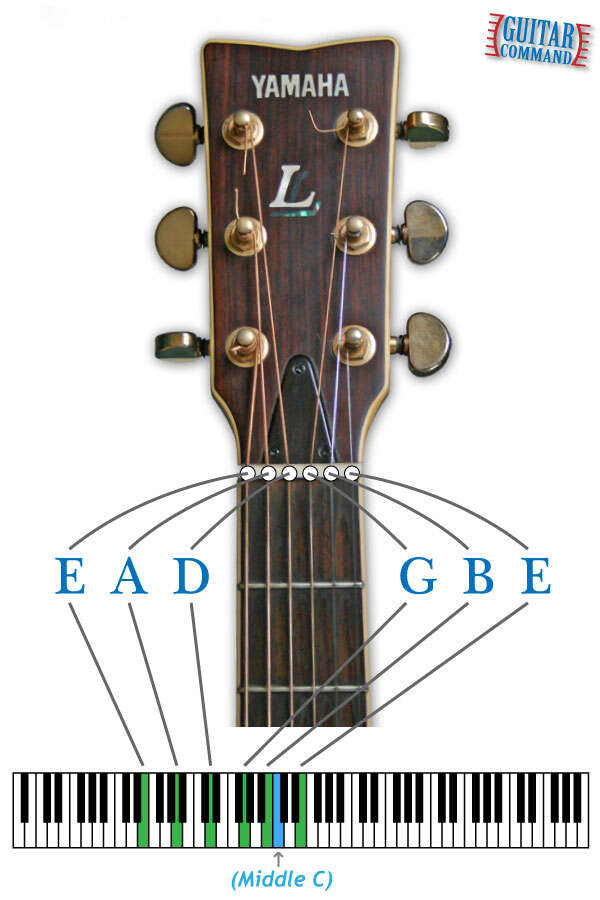
Use standard tuning:
E A D G B E
A digital tuner or a reliable tuning app can help. A guitar that is out of tune will make correct chord shapes sound wrong.
2. Practice the three shapes
Play each chord one at a time. Pick each string slowly.
Check for:
- Muted strings that should ring
- Buzzing notes
- Fingers touching nearby strings
- A wrist that feels tense
- A thumb that has moved too far over the neck
Correct the shape before adding a rhythm.
3. Practice the chord changes
Start with these pairs:
C to F
F to C
C to G7
G7 to C
Change slowly. You do not need to strum at first. Place your fingers, check the sound, then move to the next chord.
4. Add a steady strum
Begin with four downstrokes per measure:
1   2   3   4
D   D   D   D
Here, D means a downstroke. Keep your hand moving at a steady pace, even when you miss a stroke.
When that feels comfortable, try:
D   D U   U D U
1 & 2 &   3 & 4 &
This pattern gives the song a lighter folk and musical-theater feel. Use gentle strokes rather than hitting every string hard.
5. Add the melody with your voice
Play the chords first. Then sing or hum the melody. If the chord changes feel late, mark the change above the phrase where it occurs.
Do not rush to match a recording. A slower tempo gives you more time to change from C to F or from C to G7.


6. End on C
After the last phrase, slow down slightly and let the final C chord ring. This gives the song a clear ending.

Strumming Patterns for Do-Re-Mi
The best first pattern is four steady downstrokes:
D D D D
This pattern is simple and keeps the beat clear. It also lets you focus on chord changes and singing.
For a more flowing sound, use:
D D U U D U
Count it as:
1 2 & & 4 &
A simpler way to feel the pattern is:
Down, down-up, up-down-up
Start slowly. If the pattern feels uneven, return to four downstrokes. Good rhythm matters more than a complex strum.
Picking pattern
You can also use a basic picking pattern:
Bass – G – B – high E – B – G
For a C chord, the bass note is usually the fifth string. For F, use the sixth or fourth string, depending on the shape. For G7, begin with the sixth string.
Do not worry about copying a studio arrangement. A clean, even picking pattern is enough for a solo guitar version.
Transposing the Chords to Another Key
The C-major version is friendly for beginners, but it may not suit every singer. If the song feels too low or too high, move the chords to another key.
Here are common options:
| Key | Basic chord family | Beginner note |
|---|---|---|
| C | C, F, G7 | Easiest open-chord version |
| G | G, C, D7 | Good for many guitar players |
| D | D, G, A7 | Bright sound; watch the F-sharp chord if added |
| A | A, D, E7 | Useful for some lower voices |
In the key of G, the same basic pattern becomes:
G   C   G
G   D7  G
In the key of D, it becomes:


D   G   D
D   A7  D
The relationship stays the same:
- Start on the home chord
- Move to the fourth chord
- Return home
- Move to the dominant seventh chord
- Resolve home again
If you want to keep the familiar C shapes but change the pitch, use a capo. For example, a capo on the second fret raises the sounding pitch by two half steps while you continue to play C, F, and G7 shapes.
A capo changes the pitch, not the chord shapes under your fingers. Choose its position based on your vocal range and the version you want to sing.

Common Problems and Simple Fixes
The F chord sounds muted
The full F chord uses a barre, which means one finger presses several strings at once. This can be difficult at first.
Try the easy F shape:
xx3211
If that still feels hard, play only the top four strings. Build strength gradually instead of squeezing the neck as hard as possible.
The G7 chord sounds harsh
G7 has a strong pull back to C. That tension is normal. If individual notes sound wrong, check that your first finger is not touching the high E string and that your second finger is firmly placed on the low E string.
The song feels too fast
Use a metronome at a slow setting, such as 60 beats per minute. Play one chord per count if needed. Increase the speed only when you can make clean changes several times in a row.
The chord changes do not match the melody
You may be changing too early or too late. Listen for the end of each musical phrase. In this simplified arrangement, the chord normally changes with the phrase rather than with every word.
Songbooks may also place the changes differently. A printed arrangement can use passing chords, added seventh chords, or a different key.
The guitar sounds too loud for singing
Use a softer strum and fewer strings. You can also play only the bass note and the top three strings. The voice should remain clear above the accompaniment.
Your fingers hurt
Short practice sessions are better than forcing long ones. Stop if you feel sharp pain, numbness, or tingling. Mild fingertip soreness can occur while building calluses, but pain in the wrist or hand is a reason to rest and adjust your position.

Beginner, Intermediate, and Full Versions
Choose the version that matches your current skill.


| Version | Chords | Best for |
|---|---|---|
| Beginner | C, F, G7 | First-time chord players |
| Easier F version | C, easy F, G7 | Players avoiding barre chords |
| Intermediate | C, F, G7, Am, Dm | More color and smoother movement |
| Full arrangement | More passing chords and detailed rhythm | Players following sheet music or a licensed arrangement |
The three-chord version is enough to accompany the main song. Extra chords are not required to make it recognizable.
An intermediate arrangement may use minor chords or passing chords between the main changes. These additions can make the accompaniment sound richer, but they also make the chart harder to follow.
If you are playing with other musicians, ask which key and arrangement they are using. Two chord charts can both be correct while using different keys or different levels of detail.
How to Make the Chords Sound More Musical
Use dynamics instead of adding many chords. Play the early phrases softly, then strum with more energy as the song grows.
You can also vary the texture:
- Use light downstrokes for the opening.
- Add the upstrokes after the chord changes feel secure.
- Pick the bass note before a new chord.
- Let the final C chord ring.
- Avoid stopping between every phrase.
A steady pulse helps the singer more than a busy strumming pattern. Think of the guitar as a frame around the melody, not a contest with it.
For a classroom or group setting, keep the rhythm simple. For a solo performance, add a short instrumental introduction using C, F, and G7 before the singing begins.

Frequently Asked Questions
What are the easiest guitar chords for “Do-Re-Mi”?
The easiest common version uses C, F, and G7. If the full F chord is difficult, use the smaller xx3211 F shape.
What key is easiest for playing “Do-Re-Mi” on guitar?
C major is usually the easiest starting key because it uses familiar open chords. The best key for singing may be different, so transpose or use a capo if needed.
Can I play “Do-Re-Mi” with only three chords?
Yes. A simplified arrangement can use C, F, and G7 for the main phrases. More detailed arrangements may add chords, but they are optional for beginner accompaniment.
Should I use a capo?
Use a capo when you want a higher pitch but prefer to keep the C, F, and G7 shapes. Move the capo until the song fits your voice.
Is the F chord required?
The F chord appears in the basic C-major arrangement, but you can use the easy F shape instead of a full barre chord. The song can also be transposed to another key with different chord shapes.
Key Takeaways
- The easiest beginner key is C major.
- The main chords are C, F, and G7.
- Use xx3211 for an easier F chord.
- Start with four downstrokes per measure.
- Change chords at the ends of musical phrases.
- Use a capo or transpose the song to fit your voice.
- Practice clean chord changes before adding complex strumming.
Conclusion
A simple C-major arrangement makes “Do-Re-Mi” approachable on guitar. Learn C, F, and G7 first, practice the phrase pattern slowly, and add a fuller strum only after the changes feel natural.
Your next step is to play the progression with four downstrokes, then sing the melody at a comfortable speed. When that feels steady, try the light down-up pattern or move the song to a key that better fits your voice.



Senior Music Reviewer
Alex Carter is a seasoned music reviewer with over a decade of experience in the world of sound and instruments. Passionate about helping musicians and enthusiasts make informed choices, he brings sharp insights and in-depth knowledge to every review. From classical instruments to modern gear, Alex combines technical expertise with a love for music to deliver content that resonates with readers.
As a Senior Music Reviewer and expert author on Tuneluma.com, Alex is dedicated to sharing honest evaluations, practical advice, and thoughtful commentary to guide readers in their musical journey.