Can You Play Piano With Long Nails: Essential Tips
Yes, you can play piano with long nails, but shorter nails make comfort, control, and accuracy much easier.
Can you play piano with long nails without changing your style or hurting your hands? The answer depends on your nail length, nail shape, piano technique, and willingness to adjust. This guide explains how long nails affect piano playing, which techniques work best, and when trimming your nails may be the wiser choice.
Can You Play Piano With Long Nails?
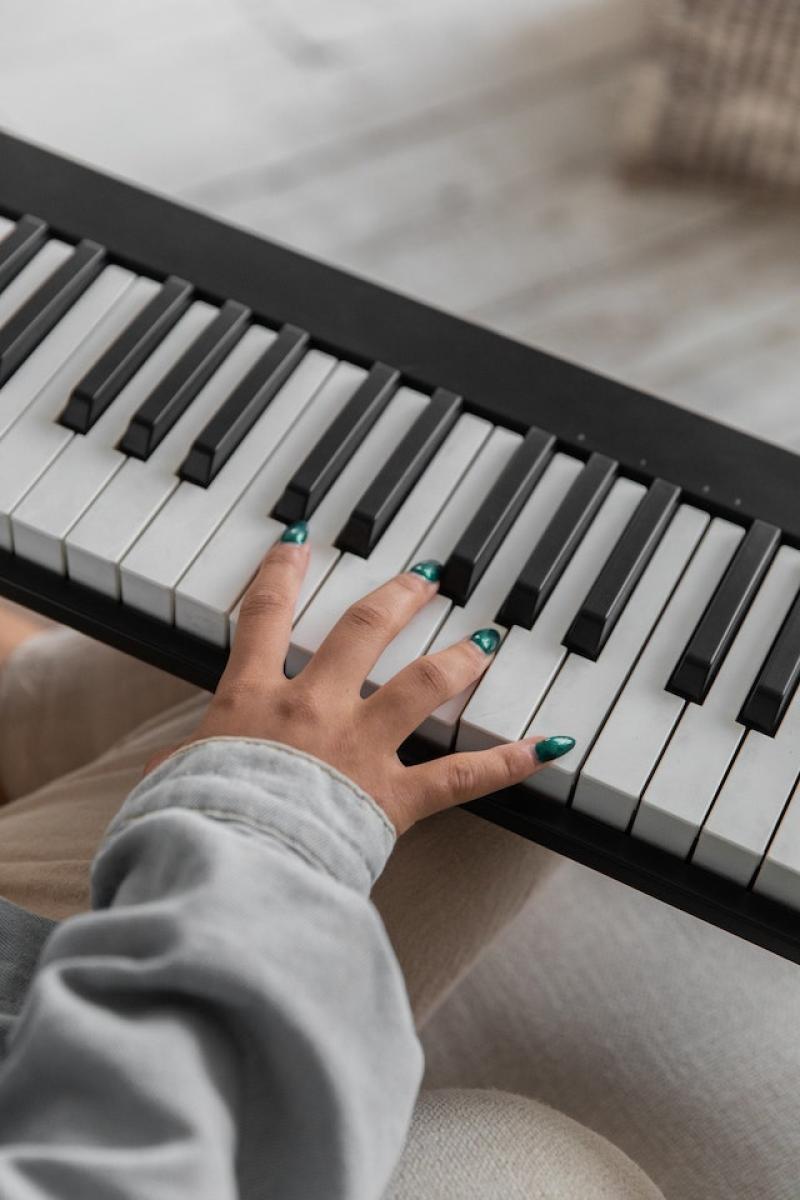
Yes, you can play piano with long nails. Many casual players and some performers manage it with careful technique. However, long nails can make it harder to press keys with the soft fingertip, which is the natural contact point taught in most piano methods.
When nails extend far past the fingertip, they may hit the key before your finger does. This can create a clicking sound and force your fingers into a flatter position. That position may reduce control, speed, and comfort.
Can you play piano with long nails at any length? Not always comfortably. Very long acrylic, gel, or square-shaped nails can make proper finger placement difficult. Short or medium nails with a rounded shape are usually easier to manage.

How Long Nails Affect Piano Technique
Piano playing depends on small movements and steady control. Your fingers must press, release, and move across the keys with accuracy. Long nails can change how those movements feel.
Here are the most common effects:
• Less fingertip contact: Your nail may touch the key instead of your finger pad.
• A flatter hand position: You may stretch your fingers forward to keep your nails from striking the keys.
• More clicking noise: Hard nails can tap the key surface during fast passages.
• Reduced speed: Long nails may slow scales, arpeggios, and repeated notes.
• More tension: You may tighten your fingers, wrist, or forearm to avoid uncomfortable contact.
• Increased risk of nail damage: A nail can catch between keys or press against a key edge.
A curved nail often works better than a long, square nail. The curve gives your finger more room to meet the key. Still, shape alone cannot remove every problem caused by excessive length.

The Best Nail Length for Piano Players
There is no single perfect nail length for every pianist. The right length depends on your hand size, finger shape, playing level, and the type of music you play.
As a practical guide, your nails should usually stay close to the fingertip. When you place your hand in a natural playing position, your nails should not touch the key tops before your fingers do.
Try this simple test:
-
Place your hand over the keys as if you are about to play.
-
Relax your wrist and keep your fingers gently curved.
-
Press a key with each finger.
-
Listen for clicking and notice whether your nail touches the key.
-
Play a slow five-finger pattern.
If your nails hit the keys, feel pressure, or force your hand flat, they are probably too long for comfortable piano playing.
Many teachers suggest keeping nails short enough that they do not interfere with the fingertip. For some players, this means trimming them even with the fingertip. Others can manage a small amount of length, especially with a rounded shape.

Can You Play Piano With Acrylic or Gel Nails?
Can you play piano with long nails made from acrylic or gel? Yes, but artificial nails often create more challenges than natural nails. They may be thicker, harder, and less flexible than natural nails.
Acrylic nails can produce a sharp tapping sound when they contact the keys. They may also make it harder to curve your fingers. Long extensions can catch on the edges of black keys, especially during fast movement.
Gel nails may feel lighter, but the same basic issue remains: extra length changes your finger angle. The material does not matter as much as the distance between your fingertip and the nail edge.
If you wear artificial nails, these choices may help:
• Choose a short length.
• Ask for a rounded or oval shape.
• Avoid very thick extensions.
• Test the nails on a piano before committing to a new style.
• Practice slowly after each nail appointment.
• Keep a nail file nearby for small adjustments.
A short almond shape may work for some players, but a very pointed nail can still affect accuracy. Comfort and control matter more than the name of the nail shape.

Piano Techniques That Work Better With Long Nails
Can you play piano with long nails by changing your technique? Often, yes. Small adjustments can reduce contact between your nails and the keys.
First, keep your fingers curved rather than flat. A rounded finger lets the fingertip reach the key before the nail. Imagine holding a small orange in your palm. Your knuckles should stay loose, and your wrist should remain level.
Next, avoid pressing with the nail edge. Use the soft pad of the finger as much as possible. This may require slower practice because your hand must learn a slightly different angle.
You can also try these methods:
• Lower your fingers from above instead of sliding them forward.
• Keep your thumb relaxed and avoid collapsing it inward.
• Use a light touch rather than pressing harder.
• Practice scales at a slow speed.
• Keep your wrist flexible during repeated notes.
• Lift each finger cleanly after playing.
• Use a piano with lighter action if your current instrument feels stiff.
Do not force your fingers into an unnatural position. If a change causes wrist pain, finger pain, or forearm tension, stop and reset. Good technique should feel controlled, not strained.

How to Practice Piano With Long Nails
If you are learning how to play piano with long nails, begin with simple exercises. Do not start with fast songs or difficult chords. Your first goal is to find a comfortable finger angle.
Try this practice routine:
-
Play five notes slowly with your right hand.
-
Repeat the pattern with your left hand.
-
Listen for nail clicks.
-
Check that your fingertips touch the keys first.
-
Relax your hand after each short pattern.
-
Add simple scales when the five-finger pattern feels easy.
-
Increase speed only when your hand stays relaxed.
A mirror can help. Watch whether your fingers remain rounded or flatten as you move across the keyboard. You can also record the sound. A clear recording will reveal clicks that may be hard to notice while you are focused on playing.
In teaching and practice settings, one common mistake is to adapt too much too soon. Players sometimes flatten their hands or lift their wrists to avoid their nails. That may solve the noise for a moment, but it can create tension over time. A small trim is often safer than a major change in technique.

What Music Is Easier With Long Nails?
Can you play piano with long nails more easily when the music is simple? Yes. Music with slow melodies and few large movements is usually more comfortable.
These styles may be easier:
• Slow ballads
• Simple chord patterns
• Basic worship music
• Beginner songs
• Single-note melodies
• Light accompaniment parts
These styles may be harder:
• Fast classical pieces
• Repeated octaves
• Rapid scales
• Dense chord music
• Jazz with quick chord changes
• Music that uses wide leaps
• Pieces that require strong finger independence
The difficulty also depends on your nail shape and the piano itself. A soft keyboard with light keys may feel easier than a heavy acoustic piano. Still, a light keyboard cannot fully solve a technique problem caused by excessive nail length.

Does Playing Piano Damage Your Nails?
Playing piano usually does not damage healthy nails when your technique is relaxed. However, long nails can crack, split, or lift if they hit the keys repeatedly or catch during movement.
Artificial nails may be more likely to separate from the natural nail if you use force. A damaged nail can expose sensitive skin and make practice painful. Do not continue playing through sharp pain or bleeding.
Watch for these warning signs:
• Persistent soreness under the nail
• Cracks or splits
• Redness or swelling
• Pain in the fingertip
• Tingling in the hand
• Wrist or forearm discomfort
If symptoms continue, rest the hand and consider speaking with a medical professional. Nail care and piano technique are separate issues, so a nail technician may help with nail damage while a qualified piano teacher can help with hand position.

Long Nails, Piano Tone, and Sound Quality
Long nails can affect tone as well as comfort. A piano key responds to the speed and force of your finger. If your nail changes your finger angle, your touch may become less even.
You may notice that some notes sound louder than others. This happens because your fingers are not contacting the keys in the same way. A nail may also create a bright tapping sound that sits above the piano tone.
A clean piano tone comes from controlled contact and release. Think of each key as a small door. Your finger should open it smoothly, not strike it with a hard object. This is why a relaxed fingertip usually gives better musical results than a nail-first approach.
Should You Trim Your Nails to Play Piano?
You may not need to trim your nails completely. The better question is whether your nails interfere with sound, comfort, or technique.
Trimming is worth considering if:
• Your nails click on most notes.
• You cannot keep your fingers curved.
• You feel pain during practice.
• You struggle with scales or chords.
• Your nails catch between black and white keys.
• Your hand becomes tense after a short session.
You can trim only the nails that cause the most trouble. The thumb and index finger may need different care from the middle, ring, and little fingers. File rough edges smoothly, since a sharp corner can catch on keys or clothing.
A pianist does not need to choose between music and personal style. Many players keep attractive nails by choosing a shorter length or a shape that supports natural finger movement.
Practical Tips for Balancing Nails and Piano
Can you play piano with long nails and still maintain good habits? Yes, if you treat nail care as part of your practice setup.
Use these practical tips:
• Test nail length before a performance.
• Carry a small file to fix rough edges.
• Warm up with slow scales.
• Keep your hands clean and dry.
• Take breaks during long practice sessions.
• Avoid playing through pain.
• Ask a piano teacher to watch your hand position.
• Record yourself from the side.
• Practice on the same type of piano you will use in public.
• Trim or reshape nails before learning a demanding piece.
One useful lesson is to solve the smallest problem first. If one nail clicks, file that nail instead of changing your whole hand position. If every nail interferes, shorten them and rebuild your relaxed technique.
Frequently Asked Questions
Can you play piano with long nails as a beginner?
Yes, beginners can play piano with long nails, especially when starting with simple songs. Shorter nails usually make it easier to learn proper finger curvature, control, and relaxed hand position.
How long can nails be for playing piano?
Nails can extend slightly beyond the fingertip, but they should not touch the keys before your fingers do. The ideal length varies, so test your nails with slow scales and simple chords.
Can you play piano with acrylic nails?
Yes, but short acrylic nails are usually easier to manage than long extensions. A rounded shape and thin design may reduce clicking, tension, and unwanted contact with the keys.
Do pianists have to keep their nails short?
No, pianists do not all keep their nails the same length. However, short nails are common because they support accurate touch, curved fingers, fast movement, and quiet playing.
Can long nails cause hand pain while playing piano?
Long nails can contribute to pain if they force your fingers, wrist, or forearm into an awkward position. Stop if you feel sharp or lasting pain, then adjust your nails or ask a qualified teacher to check your technique.
Is it harder to play classical piano with long nails?
It can be harder because classical music often requires fast scales, precise finger work, and curved hand positions. Some players can adapt, but very long nails may limit speed and tone control.
Conclusion
Can you play piano with long nails? Yes, but your comfort and technique depend on nail length, shape, and hand position. Short, rounded nails usually make piano playing easier, while very long acrylic or square nails may cause clicking, tension, and reduced control.
Start with slow practice, keep your fingers curved, and test your nails on the keys. If your nails interfere with sound or comfort, trim or reshape them rather than forcing your hands into an awkward position. Try these tips during your next practice session, and share your experience with other piano players.

Senior Music Reviewer
Alex Carter is a seasoned music reviewer with over a decade of experience in the world of sound and instruments. Passionate about helping musicians and enthusiasts make informed choices, he brings sharp insights and in-depth knowledge to every review. From classical instruments to modern gear, Alex combines technical expertise with a love for music to deliver content that resonates with readers.
As a Senior Music Reviewer and expert author on Tuneluma.com, Alex is dedicated to sharing honest evaluations, practical advice, and thoughtful commentary to guide readers in their musical journey.