What Are The 6 Strings On A Guitar: String Guide
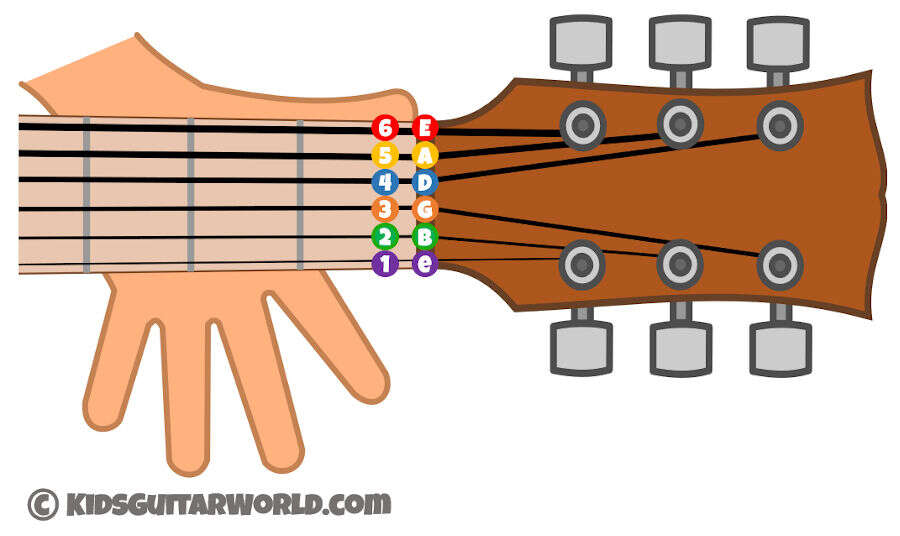
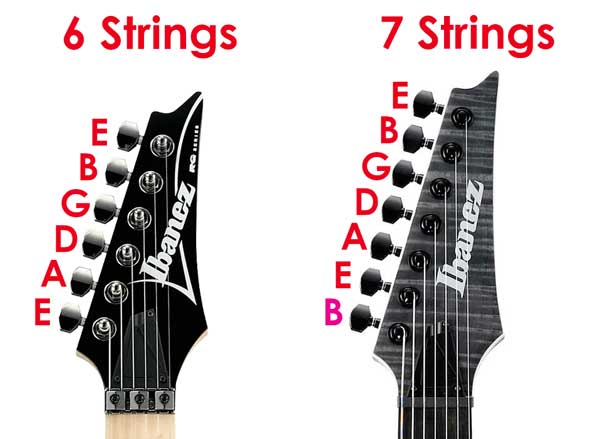
The six guitar strings are E, A, D, G, B, and E, arranged from the thickest string to the thinnest.
Understanding what are the 6 strings on a guitar gives you a strong start with tuning, chords, scales, and reading guitar tabs. Whether you play acoustic, electric, or classical guitar, learning each string’s name and sound makes the fretboard much easier to navigate.

What Are the 6 Strings on a Guitar?
The six guitar strings are usually tuned to these notes:
| String number | Common name | Note | Scientific pitch | Approximate frequency |
|---|---|---|---|---|
| 6th string | Low E | E | E2 | 82.41 Hz |
| 5th string | A string | A | A2 | 110.00 Hz |
| 4th string | D string | D | D3 | 146.83 Hz |
| 3rd string | G string | G | G3 | 196.00 Hz |
| 2nd string | B string | B | B3 | 246.94 Hz |
| 1st string | High E | E | E4 | 329.63 Hz |
The thickest string is the 6th string, or low E. The thinnest string is the 1st string, or high E.
The two E strings have the same note name, but they are two octaves apart. The low E sounds deep and full, while the high E sounds bright and sharp.
This standard setup explains what are the 6 strings on a guitar in the most common tuning: E, A, D, G, B, E from the thickest string to the thinnest.

Guitar String Names From Thickest to Thinnest
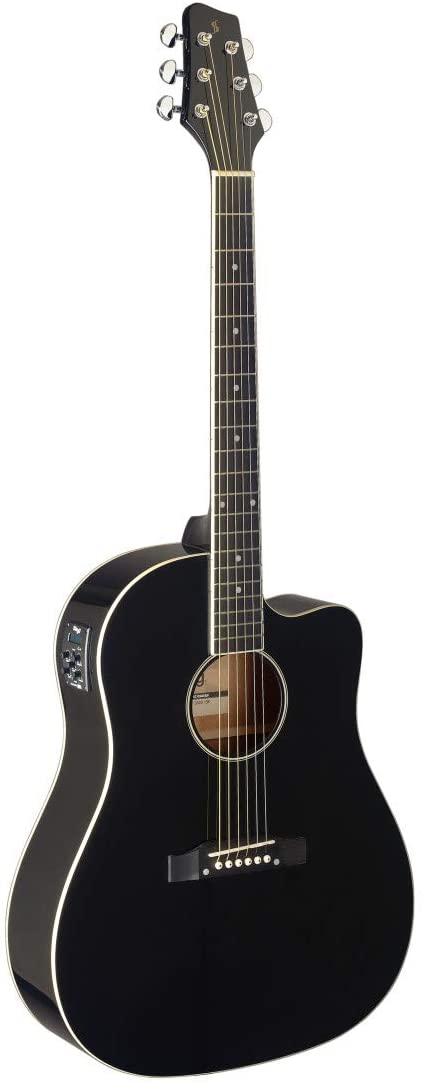
When you hold a guitar in playing position, the thickest string is closest to your face. The thinnest string is closest to the floor.
The order is:
- 6th string: Low E
- 5th string: A
- 4th string: D
- 3rd string: G
- 2nd string: B
- 1st string: High E
Many beginners find the numbering confusing. The thickest string is called the 6th string, not the 1st string. Guitarists number strings by their position in the musical order, moving from the highest-pitched string to the lowest-pitched string.
This means the 1st string is the high E, even though it sits at the bottom when you look at the guitar while holding it.
A useful way to remember what are the 6 strings on a guitar is to say the notes in this order:
E A D G B E
You can also memorize them with the phrase:
Eddie Ate Dynamite, Good Bye Eddie
Some players use “Every Amateur Does Get Better Eventually.” Any phrase works if it helps you recall the six notes quickly.
Why Does a Guitar Have Two E Strings?
A guitar has two E strings because the same note in different octaves gives the instrument a wider range. The low E supports bass lines and rich chord sounds, while the high E allows bright melodies and higher notes.
The low E is tuned to E2. The high E is tuned to E4. This two-octave gap helps the guitar cover both rhythm and lead parts.
Think of the two E strings as two voices singing the same word at different heights. They share the same note name, but they do not sound identical.
The two E strings also make common guitar shapes easier to use. For example, many open chords use both E strings to create a broad, balanced sound.
When learning what are the 6 strings on a guitar, beginners often think the two E strings are mistakes. They are not. They are an important part of the guitar’s range and design.

How Guitar Strings Create Different Pitches
String pitch depends mainly on three things:
• String length: A longer vibrating length usually creates a lower pitch.
• String tension: A tighter string usually produces a higher pitch.
• String thickness: A thicker string usually produces a lower pitch.
The guitar’s tuning machines change tension. Turning a tuning peg one way tightens the string and raises its pitch. Turning it the other way loosens the string and lowers its pitch.
The frets change the vibrating length. When you press a string behind a fret, you shorten the part that vibrates. A shorter vibrating length produces a higher note.
This is why the same string can play many notes. The open 6th string plays E, but pressing different frets creates F, F-sharp, G, and many other notes.
String material also affects tone. Steel strings often sound bright and loud. Nylon strings tend to sound softer and warmer. The note names still help explain what are the 6 strings on a guitar, even when the string material changes.

Standard Guitar Tuning Explained
Standard tuning is the most common tuning for six-string guitars. From the 6th string to the 1st string, it is:
E A D G B E
The distance between most neighboring strings is a perfect fourth. The main exception is the gap between the G and B strings, which is a major third.
That unusual G-to-B interval affects chord shapes and scale patterns. It is one reason guitar patterns can feel slightly different when they cross from the 3rd string to the 2nd string.
To tune accurately, use a chromatic tuner or a reliable digital tuning app. Tune slowly, and always check the string again after making an adjustment.
A practical tuning routine is:
- Play the 6th string and match it to low E.
- Tune the 5th string to A.
- Tune the 4th string to D.
- Tune the 3rd string to G.
- Tune the 2nd string to B.
- Tune the 1st string to high E.
- Play a simple chord and check the sound.
Many guitar teachers also use the fifth-fret method. The 5th fret of the 6th string matches the open 5th string. The 5th fret of the 5th string matches the open 4th string, and so on. The exception is the 3rd string: its 4th fret matches the open 2nd string.

How the Six Strings Help You Play Chords
Every chord uses a group of notes from the musical alphabet. The six strings give you several places to play those notes at once.
For example, an open G major chord often uses:
• 6th string: G at the 3rd fret
• 5th string: B at the 2nd fret
• 4th string: open D
• 3rd string: open G
• 2nd string: open B
• 1st string: G at the 3rd fret
This chord uses all six strings. By contrast, an open D major chord usually uses only the 4th, 3rd, 2nd, and 1st strings. You should avoid striking the 6th and 5th strings in that shape.
This detail matters because knowing what are the 6 strings on a guitar is not only about memorizing names. It also helps you understand which strings to play or mute in each chord.
When I help new players troubleshoot chords, unwanted open strings are a common problem. A chord may have the correct finger shape, yet sound muddy because the player strums a string that does not belong in the chord.
Acoustic, Electric, and Classical Guitar Strings
Acoustic and electric guitars often use steel strings, but their string sets are not identical.
Acoustic guitar strings are built for volume and projection. Electric guitar strings are often lighter and work with magnetic pickups. Classical guitars use nylon or composite strings, which feel softer and produce a mellow tone.
The standard note order usually remains E, A, D, G, B, E. However, guitarists can use alternate tunings for different sounds and playing styles.
Common alternate tunings include:
• Drop D: D, A, D, G, B, E
• D standard: D, G, C, F, A, D
• Open G: D, G, D, G, B, D