How Do You Write A Song On Guitar: Easy Guide
To write a song on guitar, choose a mood, build chords, create a melody, add lyrics, and refine the structure.
Learning how do you write a song on guitar becomes much easier when you treat the process as a series of small, creative choices. You do not need advanced music theory, expensive gear, or a perfect voice. With a few chords, a clear feeling, and a simple method, you can turn a guitar idea into a complete song.
Start With a Feeling, Theme, or Story
The best songs often begin with one strong idea. It may be a feeling, a memory, a question, or a short phrase that stays in your mind.
Before you pick up your guitar, ask yourself:
• What do I want this song to say?
• What emotion should the listener feel?
• Is the song about love, loss, freedom, anger, hope, or change?
• What image or moment can represent the main idea?
A clear theme helps every later choice. A sad story may work well with slow chords and a minor sound. A joyful song may need a bright rhythm and open chords.
Do not try to explain your whole life in one song. Focus on one moment. For example, “missing someone” is broad, but “driving past our old coffee shop” gives you a clear scene.
In my own songwriting practice, the strongest ideas often came from small details. A line about an empty chair can say more than a long paragraph about loneliness. Specific images make lyrics feel real.
Write down five to ten words linked to your theme. Then turn one of those words into a title or opening line. This gives your guitar playing a clear direction.
Choose a Simple Chord progression
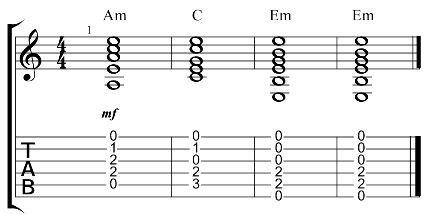
When people ask how do you write a song on guitar, chords are often the best place to begin. A chord progression creates the emotional base of the song.
You can start with three or four chords. Many memorable songs use simple progressions because the melody, rhythm, and lyrics give them character.
Try one of these common progressions:
• G, D, Em, C
• C, G, Am, F
• D, A, Bm, G
• Am, F, C, G
These chords work well in many pop, folk, country, and rock songs. They are also friendly for beginner guitar players.
Play each progression slowly. Listen to how the chords feel together. Do not worry about originality at this stage. A familiar chord pattern can still support a fresh melody and meaningful lyrics.
You can also change the order of the chords. For example, C, G, Am, and F will create a different feeling from Am, F, C, and G, even though the chords are the same.
How Chord Choice Changes Emotion
Major chords often sound bright, open, or confident. Minor chords can feel darker, softer, or more reflective. However, the full emotion depends on tempo, rhythm, melody, lyrics, and performance.
Try these simple experiments:
• Play the same chords slowly and then quickly.
• Use gentle fingerpicking, then try strong strumming.
• Start with a minor chord for a thoughtful mood.
• End on the main major chord for a sense of arrival.
A chord progression is like the floor of a room. It supports the song, but it is not the entire house.
 progression”
style=”max-width: 100%; height: auto; border: 2px solid black; border-radius: 10px; display: block; margin: 0 auto;”
loading=”lazy”
/>
Find a Strumming Pattern or Guitar Groove
A chord progression may sound plain until you add rhythm. The groove gives the song movement and helps define its style.
Start with a basic four-beat pattern:
• Down, down, down, down
Then try a common pattern such as:
• Down, down-up, up-down-up
Count evenly as you play. You can count “one and two and three and four and” to keep your hand moving.
Do not force your hand to strum on every count. Sometimes the spaces between strums create more feeling than the strums themselves. Muted hits, pauses, and softer strokes can make a simple progression sound more professional.
If you want a folk or country feel, try steady downstrokes with a relaxed tempo. For pop, use a regular pattern with clear accents. For rock, focus on strong downstrokes and a steady pulse.
One mistake I often see is changing the strumming pattern too much. New writers may add extra movements because they think the song sounds empty. In many cases, a steady pattern gives the singer more room and makes the chorus easier to remember.
Record yourself on your phone. Listening back helps you notice timing problems that are hard to hear while playing.

Create a Vocal Melody
Once you have chords and rhythm, hum or sing a melody over the progression. Use simple sounds at first. Words can come later.
Let your voice explore different notes. Notice which notes sound stable and which ones create tension. The stable notes often work well at the end of a line.
A strong melody usually has contrast. The verse may use a lower range, while the chorus rises and feels more open. This change gives the song energy.
Try this process:
-
Play the chord progression on a loop.
-
Hum a short idea using only three or four notes.
-
Repeat the idea until it feels natural.
-
Change the ending of the second line.
-
Raise the melody for the chorus.
Do not make every line sound different. Repetition helps listeners remember a song. A small melodic phrase can become a powerful hook when you repeat it with purpose.
If you struggle to create a melody, speak your lyric in rhythm first. Then stretch certain words into sung notes. This approach makes the melody feel natural because it grows from the way you speak.
When learning how do you write a song on guitar, many beginners focus only on chord shapes. The melody is just as important. A basic chord progression with a memorable melody will usually sound stronger than complex chords with no clear vocal idea.
Write Lyrics That Sound Natural
Good lyrics communicate a feeling through clear words and vivid details. You do not need complicated language. Simple lines can carry strong emotion when they are honest and specific.
Begin with your best phrase. It may become the chorus, title, or first line. Write freely without editing every word. Editing too early can stop useful ideas from appearing.
A simple lyric structure may look like this:
• Verse one: Introduce the situation.
• Pre-chorus: Build tension or expectation.
• Chorus: State the main emotion or message.
• Verse two: Add a new detail or change the story.
• Bridge: Offer a fresh thought or point of view.
Use sensory details when possible. Instead of saying, “I feel lonely,” you might write, “Your coffee cup still sits beside the sink.” The second line gives the listener something to see.
Match Words to the Melody
Place important words on strong beats or higher notes. Avoid forcing too many syllables into one musical phrase. If a line feels crowded, remove a word or slow the melody.
Read your lyrics aloud. If the words feel awkward when spoken, they may feel even more awkward when sung. Natural language usually creates better vocal phrasing.
Rhymes can help, but they should not control the meaning. Forced rhymes often sound predictable. Near rhymes and repeated vowel sounds can feel more natural.
When I revise lyrics, I look for vague words first. Words such as “thing,” “stuff,” and “somewhere” may hide a stronger image. Replacing them with a place, object, sound, or action can make the song more personal.

Build a Clear Song Structure
A song structure gives listeners a path to follow. Many guitar songs use a simple verse and chorus format, but you can choose the form that suits your idea.
Common structures include:
• Verse, chorus, verse, chorus, bridge, chorus
• Verse, verse, chorus, verse, chorus
• Intro, verse, pre-chorus, chorus, verse, chorus, outro
• Verse, chorus, verse, chorus
The verse usually moves the story forward. The chorus contains the main hook and emotional center. A bridge provides contrast before the final chorus.
You do not need every section to use new chords. You can create contrast through rhythm, melody, dynamics, lyrics, or arrangement.
For example:
• Play the verse softly with fingerpicking.
• Add a stronger strum in the chorus.
• Use fewer instruments in the bridge.
• Raise the vocal melody in the final chorus.
A song does not need to be long. A focused two-and-a-half-minute song can feel complete if each section has a clear purpose.
If you are unsure whether a part belongs in the song, ask what it adds. Does it reveal new information, increase emotion, or make the hook stronger? If not, shorten it or remove it.

Add a Memorable Hook
A hook is the part people remember after the song ends. It may be a lyric, melody, rhythm, guitar riff, or chord change.
The chorus often carries the main hook, but a guitar riff can introduce it before the vocals begin. Even two or three notes can become recognizable when repeated with a clear rhythm.
To develop a hook:
• Use a short phrase.
• Repeat the key words.
• Give the phrase a strong rhythm.
• Place it in the chorus or song title.
• Make it easy to sing after one or two listens.
A hook should support the song’s main idea. If the song is about leaving home, a repeated phrase such as “I’m heading west tonight” gives the listener a clear center.
Avoid adding too many hooks. One strong idea is usually better than several competing ideas. Let the verses support the main hook instead of distracting from it.
The best hooks often feel simple after they are written. That simplicity is not a weakness. It means the idea is clear.

Use Guitar Techniques to Add Character
You can make a song sound richer without using difficult chords. Small guitar techniques can change the mood and help your song stand apart.
Try these options:
• Use a capo to move the song into a comfortable vocal key.
• Replace open chords with seventh chords for a warmer sound.
• Add hammer-ons or pull-offs to create motion.
• Use fingerpicking for a quiet or intimate verse.
• Add palm muting for a softer rhythmic texture.
• Play a short intro riff based on the chord notes.
A capo changes the pitch while allowing you to keep familiar chord shapes. This can make singing easier. Always choose the key that fits your voice, not the key that looks easiest on a chord chart.
You can also use chord extensions. For example, Cadd9, G, and Em7 may sound more colorful than basic C, G, and Em chords. Add these changes only when they serve the mood.
Technique should support the song. A difficult guitar part does not automatically make a song better. If the listener remembers the feeling and melody, the guitar is doing its job.

Record and Review Your First Draft
Your first draft is not supposed to be perfect. It is a map of the song’s potential.
Record a rough version with your phone or a basic recording app. Include the whole song, even if some parts feel unfinished. A complete rough take gives you more useful information than a perfect eight-bar loop.
Listen for these points:
• Does the chorus feel different from the verse?
• Can you hear the main lyric clearly?
• Does the melody fit the chords?
• Does the song lose energy anywhere?
• Is the ending satisfying?
Take notes instead of judging yourself. “The second verse feels too long” is useful. “This song is bad” does not tell you what to fix.
A practical habit is to leave the recording alone for one day. Fresh ears make it easier to hear weak lines, uneven timing, or sections that need more contrast.
Keep several versions of your song. Sometimes an idea that seems wrong today becomes useful in another song later.

Revise Without Losing the Original Idea
Songwriting is often more about revision than inspiration. The first version may contain the emotional truth, while later drafts improve the words and structure.
Make one type of change at a time. First fix the structure. Then work on the lyrics. After that, adjust the melody and guitar arrangement.
Ask yourself:
• Is the main idea clear?
• Does every section support the title?
• Is there a line that sounds forced?
• Does the chorus arrive soon enough?
• Can I remove anything without weakening the song?
Do not polish away every rough edge. A song can sound too clean if you remove all natural speech, surprise, or vulnerability.
One lesson I have learned from writing songs is that the line I want to delete is sometimes the most honest line in the draft. Before removing it, try changing the surrounding lines. The problem may be the setup, not the line itself.
Get feedback from someone who listens to the style you want to write. Ask specific questions rather than asking whether they “like it.” Useful feedback focuses on clarity, emotion, melody, and memorability.
Common Mistakes New Guitar Songwriters Make
Understanding common problems can save you time and frustration. Most beginner mistakes are easy to correct once you recognize them.
Using Too Many Chords
More chords do not always create more interest. A small set of chords can sound powerful when the rhythm and melody are strong.
Starting With Lyrics That Have No Melody
A page of poetry is not always a song. Read the words aloud, find a natural rhythm, and shape the lines around the guitar.
Making Every Section Sound the Same
If the verse and chorus use the same volume, rhythm, and melody, the song may feel flat. Add contrast through dynamics or arrangement.
Changing Chords Too Quickly
Fast chord changes can make the song feel rushed. Let each chord last long enough to support the vocal phrase.
Ignoring the Singer’s Comfortable Range
A song can sound great on guitar but fail when you sing it. Change the key with a capo or transpose the chords to fit your voice.
Editing Before Finishing
Stopping after every line can prevent the song from developing. Finish a rough draft first, then improve it.
When learning how do you write a song on guitar, progress comes from finishing songs, not only starting them. Even an imperfect finished song teaches you more than ten unfinished ideas.
A Practical 30-Minute Songwriting Exercise
If you want to practice how do you write a song on guitar, set a timer for 30 minutes. The time limit keeps you from overthinking every choice.
Follow this plan:
-
Choose one emotion or image for five minutes.
-
Pick four chords and play them for five minutes.
-
Create a simple strumming pattern for five minutes.
-
Hum a chorus melody for five minutes.
-
Write four lines for a verse and four lines for a chorus for seven minutes.
-
Record one complete rough version for three minutes.
Use only chords you already know. The goal is not to write a masterpiece. The goal is to connect an idea, a guitar pattern, a melody, and a few lyrics.
After the exercise, save the recording. Give the song a clear file name and write down the key, tempo, and chord progression. These small details help you return to the idea later.
Repeat the exercise each week. Regular practice builds instinct. Over time, you will notice chord patterns, rhythms, and lyric ideas more quickly.
Basic Music Theory That Helps
You can write songs without reading music, but a little theory can make the process easier. Chords in the same key tend to work well together because they share related notes.
For example, the key of G major includes these common chords:
• G major
• A minor
• B minor
• C major
• D major
• E minor
• F-sharp diminished
You do not need to use all of them. G, C, Em, and D are enough to create many songs.
The first chord often feels like home. The dominant chord, such as D in the key of G, can create tension that wants to return to G. This movement helps a song feel complete.
You can also learn the notes on the sixth and fifth strings. This makes it easier to move chord shapes, build riffs, and understand the fretboard.
Theory is a tool, not a rulebook. Use it to understand why something works, then trust your ear. If a chord surprises you in a good way, keep it.
How Long Does It Take to Write a Song?
There is no fixed timeline. Some songs appear in one sitting, while others develop over months. Both processes are normal.
A short song may take 20 minutes to draft but several hours to revise. The time depends on your experience, the style, the lyrics, and how complete you want the final recording to be.
Do not compare your process with famous songwriters. Public stories often focus on sudden inspiration and ignore the many drafts, failed ideas, and editing sessions behind the final song.
Set a small goal instead:
• Write one chorus today.
• Create one guitar riff this week.
• Finish one rough demo this month.
Small goals reduce pressure and help you build a steady habit. The more often you write, the easier it becomes to recognize useful ideas.
Frequently Asked Questions About How Do You Write a Song on Guitar
Do I need to know music theory to write a song on guitar?
No, you can write a song by using your ears, a few chords, and a clear feeling. Basic theory can help you choose chords and change keys, but it is not required to begin.
How many chords should a beginner use?
Start with three or four chords. A simple progression gives you room to focus on melody, rhythm, lyrics, and song structure.
Should I write the lyrics or music first?
Either approach can work. Start with whichever arrives naturally, then shape the other part to match the mood, rhythm, and message.
How do I make my guitar song sound original?
Use specific lyrics, a personal vocal melody, a distinct rhythm, or a memorable guitar pattern. Familiar chords can still sound fresh when your story and musical choices are personal.
What if I cannot sing well?
You can still write strong songs. Hum, speak, or record your melody quietly while you develop it, and choose a key that feels comfortable for your voice.
How do I know when my song is finished?
A song is usually ready when its main idea is clear, the sections have purpose, and further changes no longer improve the result. Save the original version before making major edits.
Conclusion
Learning how do you write a song on guitar starts with a simple idea, not perfect technique. Choose a feeling, build a small chord progression, find a melody, write clear lyrics, and shape the parts into a structure that listeners can follow.
Record your drafts, revise with patience, and let your own experiences guide the words. Pick up your guitar today, write four chords and one honest line, then keep going until you have a complete song. Explore more songwriting exercises, share your first draft with a trusted listener, and keep writing.

Senior Music Reviewer
Alex Carter is a seasoned music reviewer with over a decade of experience in the world of sound and instruments. Passionate about helping musicians and enthusiasts make informed choices, he brings sharp insights and in-depth knowledge to every review. From classical instruments to modern gear, Alex combines technical expertise with a love for music to deliver content that resonates with readers.
As a Senior Music Reviewer and expert author on Tuneluma.com, Alex is dedicated to sharing honest evaluations, practical advice, and thoughtful commentary to guide readers in their musical journey.