How Do You Play The Bass Guitar: Beginner Guide
You play bass by locking into the drum groove, fretting clean notes, and shaping a steady musical pulse.
Learning how do you play the bass guitar is less about showing off and more about making every song feel strong, clear, and alive. This guide explains the instrument, basic technique, rhythm, practice methods, and common mistakes so you can start playing real bass lines with confidence.
How Do You Play the Bass Guitar?
The bass guitar connects rhythm and harmony. It often follows the drummer’s kick drum while supporting the chords played by the guitar, piano, or other instruments. A good bass line can make a simple song feel full.
To learn how do you play the bass guitar, follow these basic steps:
- Hold the bass in a relaxed position.
- Tune the strings to E, A, D, and G.
- Learn to press notes behind the frets.
- Pluck the strings with your fingers or a pick.
- Practice steady timing with a metronome.
- Learn simple scales, grooves, and songs.
- Listen closely to the drummer and other musicians.
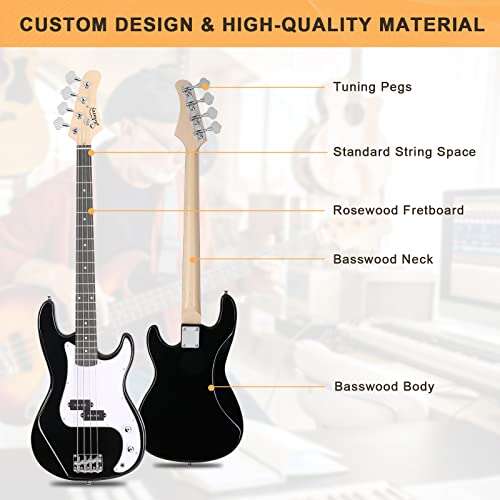
A standard four-string bass has thicker strings and a longer neck than a guitar. The lowest string is usually tuned to E, followed by A, D, and G from thickest to thinnest.
The bass is usually played one note at a time, but it still requires strong musical awareness. You need to know when to play, when to stop, and how much energy each note should have.

Learn the Parts of the Bass Guitar
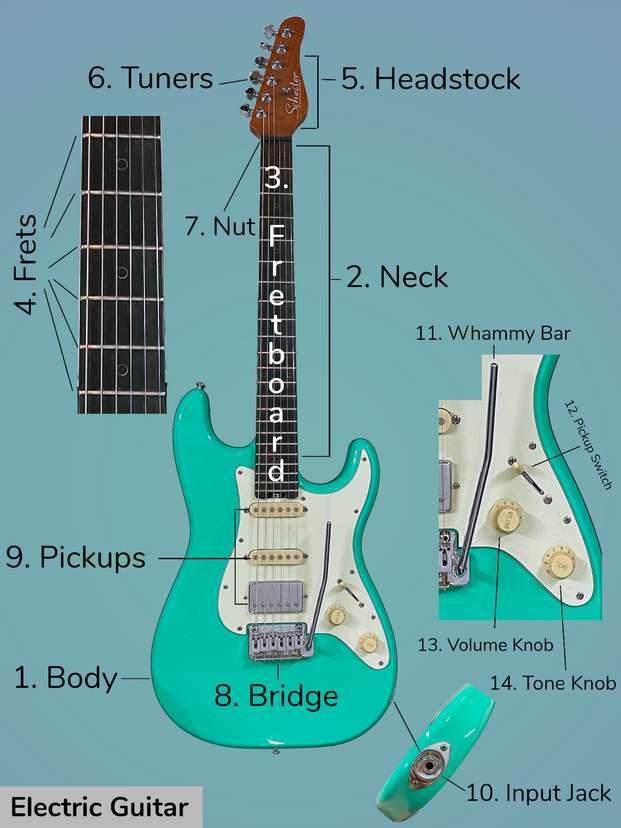
Knowing the parts of your instrument makes lessons and instructions easier to follow. It also helps you solve small problems without confusion.
The neck and frets
The neck holds the frets and fingerboard. Frets divide the neck into musical steps called semitones. When you press a string just behind a fret, you shorten the string and raise its pitch.
Do not press directly on top of the metal fret. Place your finger just behind it. This usually gives you a cleaner note with less effort.
The strings
A standard four-string bass uses this tuning from low to high:
• E string: the thickest and lowest string
• A string: the second string
• D string: the third string
• G string: the thinnest and highest string
Many players use a five-string bass with a low B string. However, a four-string bass is often easier for beginners because the neck is less crowded.
The pickups and controls
Pickups sense the vibration of the strings and send the sound to an amplifier. Most basses have controls for volume and tone. Some active basses also include bass, middle, and treble controls.
The bridge holds the strings in place near the body. The tuning machines sit at the headstock and let you adjust each string’s pitch.
Understanding these parts gives you a clearer answer to how do you play the bass guitar because your hands, ears, and equipment all work together.
Set Up Your Posture and Hand Position
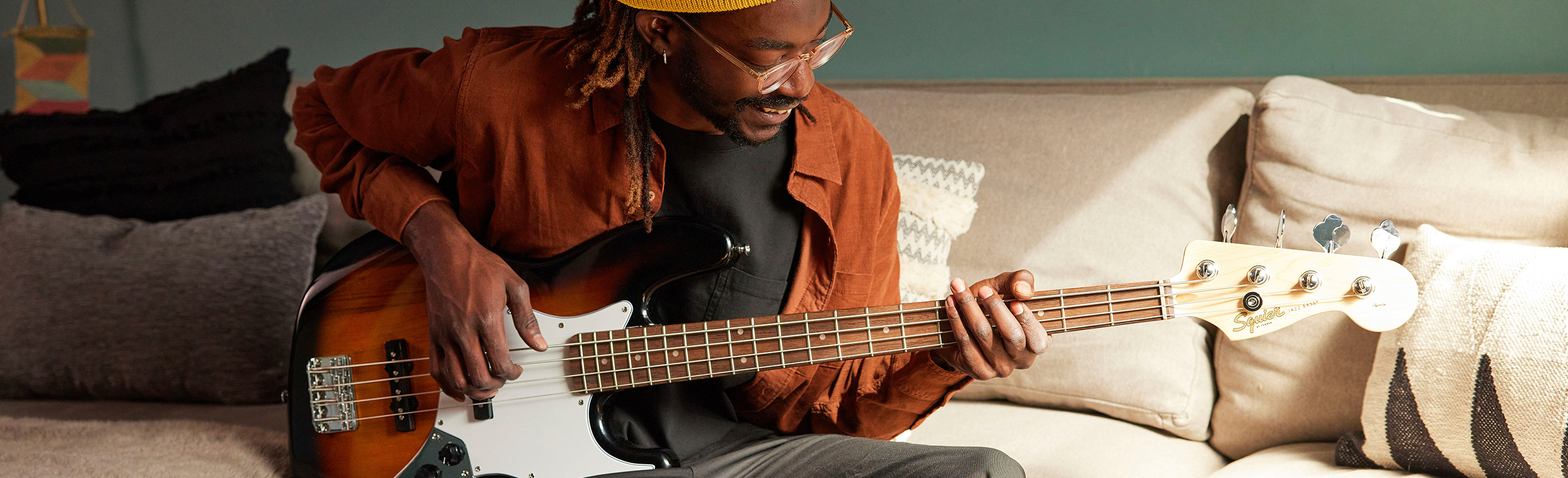
Good posture helps you play longer without pain. Sit or stand with your shoulders loose and your wrists fairly straight. Let the bass rest against your body instead of holding it up with your arms.
If you play while sitting, place the bass body on your thigh. Keep the neck slightly raised. If you play standing, adjust the strap so the bass sits at a similar height.
Your fretting hand
Your fretting hand presses the strings against the neck. Keep your thumb behind the neck, roughly across from your first or second finger. Avoid squeezing the neck too hard.
Use one finger for each fret when possible:
• First finger for the index finger
• Second finger for the middle finger
• Third finger for the ring finger
• Fourth finger for the little finger
This system helps you move smoothly and reduces unnecessary stretching.
Your plucking hand
Many bass players pluck with the index and middle fingers. Alternate them in a steady pattern. For example, use your index finger for the first note and your middle finger for the second note.
Rest your thumb on the pickup or the lowest string. When you move to a lower string, move your thumb with it. This gives your hand stability and helps control unwanted noise.
Relaxation matters more than force. New players often grip the neck and strike the strings too hard. A softer touch can produce a cleaner sound and make fast playing easier.

How Do You Play Bass Notes Cleanly?
A clean note starts with accurate fretting and controlled plucking. Place your fretting finger close to the fret, then pluck the string with a steady motion.
Try this simple exercise:
- Play the open E string.
- Fret the first fret and play the note.
- Fret the second fret and play the note.
- Continue to the fourth fret.
- Repeat the pattern on the A, D, and G strings.
Listen for buzzing, weak notes, and extra sounds. If a note buzzes, move your finger closer to the fret or press slightly harder. If other strings ring, lightly touch them with a free finger.
Muting is one of the most important bass skills. The instrument has low, powerful notes, so unwanted noise can quickly make a performance sound messy.
Use your plucking hand to mute strings below the one you are playing. Use your fretting hand to lightly touch strings above it. This is a small technique, but it creates a much more professional sound.
When learning how do you play the bass guitar, focus on sound before speed. A slow, clean note is more useful than a fast note full of buzzes and noise.

Learn Bass Rhythm and Timing
Bass is a rhythm instrument as much as it is a string instrument. Even a simple note can sound great when it lands at the right time.
Start with a metronome set between 60 and 80 beats per minute. Tap your foot with each beat. Then play one note on every click. Keep the volume and spacing even.
Next, play only on beats one and three. Then try beats two and four. This teaches you how bass lines sit inside different grooves.
The drummer’s kick drum is especially important. Listen for where the kick lands, then match or answer it with your bass line. You do not need to copy every drum hit, but your parts should support the main pulse.
Count before you play
Count music in groups of four:
“1, 2, 3, 4.”
Then count smaller parts:
“1 and 2 and 3 and 4 and.”
This helps you understand eighth notes and keeps your playing steady. Counting out loud may feel strange at first, but it builds strong internal timing.
A useful practice test is to stop the metronome for one bar and bring it back on the next bar. If your beat lines up with the click, your timing is improving.
This rhythm work answers a major part of how do you play the bass guitar. Your goal is not only to play the right note. Your goal is to place the note in the right spot.

Learn Scales, Chords, and Root Notes
You do not need to learn every theory topic before playing songs. Begin with root notes and a few useful scales.
The root note is the note that gives a chord its name. For example, the root of a G major chord is G. Playing the root at the right time can already create a useful bass part.
Start with these concepts:
• Natural notes: A, B, C, D, E, F, and G
• Whole steps: two frets apart
• Half steps: one fret apart
• Major scale: a bright, common seven-note pattern
• Minor scale: a darker pattern often used in rock, blues, and pop
• Octave: the same note played higher or lower
The major scale pattern on bass is:
Whole step, whole step, half step, whole step, whole step, whole step, half step.
You can also learn the minor pentatonic scale. It is a five-note scale used in rock, blues, country, and many modern styles. It is simple, flexible, and useful for creating fills.
Chord tones are also important. The root, third, and fifth of a chord form the basic sound of many bass lines. Start by playing the root and fifth together, then add the third when you feel comfortable.
Theory should support your ear. Play a pattern, listen to its mood, and notice how each note feels against the chord.

How Do You Play the Bass Guitar With a Pick or Fingers?
Both fingerstyle and pick playing are useful. Neither method is automatically better. Your choice depends on the music, tone, speed, and comfort you want.
Fingerstyle bass
Fingerstyle uses the index and middle fingers to pluck the strings. It is common in funk, soul, jazz, R&B, pop, and many rock styles.
Benefits include:
• Smooth control over volume
• Easy movement between strings
• A warm and rounded tone
• Strong connection to groove playing