What Are Arpeggios On Guitar: Easy Guide To Playing
Arpeggios on guitar are chord tones played one at a time instead of strummed together.
If you have heard a guitarist play a smooth, rolling pattern that outlines a chord, you have heard an arpeggio. Understanding what are arpeggios on guitar will help you connect chords, scales, solos, and music theory in a practical way. This guide explains the idea clearly, shows useful guitar shapes, and offers simple practice methods you can use today.

What are arpeggios on guitar?
What are arpeggios on guitar? An arpeggio is a chord played one note at a time. The notes may move from low to high, high to low, or in a repeating pattern.
For example, a C major chord contains these notes:
- C, the root
- E, the major third
- G, the perfect fifth
When you strum those notes together, you play a C major chord. When you play C, E, and G separately, you play a C major arpeggio.
An arpeggio is not simply a random group of notes. It follows the structure of a chord. This gives it a strong sense of harmony, even when the notes are played separately.
You can think of a chord as a group photo. An arpeggio shows each person in the photo one at a time. The group stays the same, but your ear notices each part more clearly.
The most common arpeggios come from basic triads:
- Major triads contain a root, major third, and perfect fifth.
- Minor triads contain a root, minor third, and perfect fifth.
- Diminished triads contain a root, minor third, and diminished fifth.
- Augmented triads contain a root, major third, and augmented fifth.
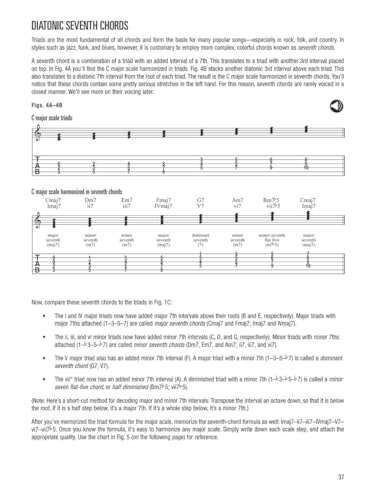
Larger chords create larger arpeggios. A dominant seventh arpeggio includes the root, major third, perfect fifth, and minor seventh. A major seventh arpeggio includes the root, major third, perfect fifth, and major seventh.

How arpeggios differ from chords and scales
Many new guitarists confuse arpeggios, chords, and scales because they use some of the same notes. The main difference is how those notes function and how you play them.
A chord usually means several notes sounding at the same time. You might strum all six strings or use a smaller group of strings.
An arpeggio uses the notes of a chord, but you play them one after another. Each note is clear, separate, and easy to hear.
A scale is a series of notes arranged by pitch. It often covers a larger set of notes than a single chord. For example, the C major scale contains seven notes:
C, D, E, F, G, A, and B.
The C major arpeggio uses only C, E, and G. Those three notes define the sound of the C major chord.
Here is a simple comparison:
- Chord: C, E, and G played together.
- Arpeggio: C, E, and G played separately.
- C major scale: C, D, E, F, G, A, and B played in order.
Scales are useful for creating melodies and runs. Arpeggios are useful for outlining harmony. Skilled guitarists combine both. They may use arpeggio notes to land on strong targets, then add scale notes to connect them.
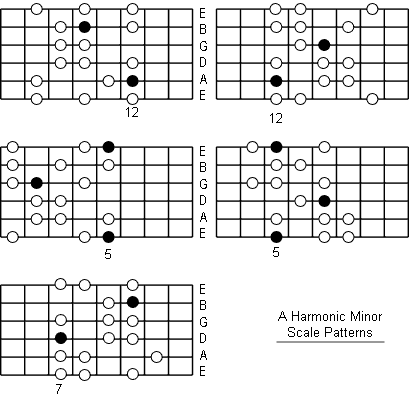
This difference matters during improvisation. If a backing track plays A minor, an A minor arpeggio gives you the notes that most clearly describe the chord. An A natural minor scale gives you more choices, but some notes will sound less stable.

Why guitarists use arpeggios
Arpeggios have a clear musical purpose. They help a guitarist explain the chord progression without playing full chords.
A clean arpeggio can make a simple progression sound open and emotional. This is common in pop ballads, rock intros, country songs, classical guitar, jazz, and film music.
Guitarists use arpeggios to:
- Create flowing rhythm parts.
- Build melodic guitar solos.
- Outline chord changes.
- Improve fretboard knowledge.
- Add movement to repeated chords.
- Connect rhythm guitar and lead guitar.
- Develop picking accuracy.
- Create contrast between quiet and loud sections.
Arpeggios also help you hear harmony. When you play only the root note of each chord, the progression may sound basic. When you add the third and seventh, the character becomes much clearer.
For example, the third tells your ear whether a chord is major or minor. The seventh can add tension, color, or a strong desire to resolve.
One lesson I often emphasize when helping players is this: do not rush to play fast arpeggios. First, listen to how each chord tone changes the mood. A slow three-note pattern can teach your ear more than a fast exercise played without control.

Common guitar arpeggio shapes
Guitar arpeggios can appear in many positions. You do not need to learn every shape at once. Start with simple triads and learn where the root notes are.
Major triad arpeggios
A major triad has this formula:
- Root
- Major third
- Perfect fifth
In the key of C, the notes are C, E, and G. In the key of G, the notes are G, B, and D.
A basic major arpeggio may use two or three strings. You can pick each note separately, then repeat the pattern across the strings.
The major third gives this arpeggio its bright and stable sound. If you accidentally replace it with a minor third, the entire mood changes.
Minor triad arpeggios
A minor triad has this formula:
- Root
- Minor third
- Perfect fifth
An A minor arpeggio contains A, C, and E. The minor third creates the darker or more reflective quality associated with minor chords.
Minor arpeggios are useful in rock, blues, metal, jazz, and emotional acoustic music. They also form the foundation of many expressive guitar solos.
Seventh arpeggios
Seventh arpeggios add one more chord tone. A dominant seventh arpeggio contains:
- Root
- Major third
- Perfect fifth
- Minor seventh
A G7 arpeggio contains G, B, D, and F. This sound often creates tension that wants to resolve to C.
Seventh arpeggios are central to blues and jazz guitar. They help you target important notes while following the harmony of a progression.
Sweep-picking arpeggios
Sweep picking uses one smooth pick motion across several strings. The picking hand moves in one direction, while the fretting hand plays one note per string.
This technique can make arpeggios sound fast and fluid. However, sweep picking is not the definition of an arpeggio. You can play arpeggios with alternate picking, fingerstyle, hybrid picking, tapping, or a thumb pick.
That distinction prevents a common mistake. Many beginners think they must learn sweep picking before learning what are arpeggios on guitar. In reality, clean note control comes first. Speed is a later result.

How to play a basic guitar arpeggio
Start with a simple A minor arpeggio. The notes are A, C, and E. You can play the notes on different strings or use a familiar open A minor chord shape.
Try this process:
- Fret one note at a time.
- Pick each note slowly.
- Let only the intended note ring.
- Stop unwanted string noise with both hands.
- Repeat the pattern until every note sounds clear.
- Increase the tempo only when the pattern feels relaxed.
Use a metronome at a slow setting, such as 60 beats per minute. Play one note per click. When that feels easy, play two notes per click.
You can also practice a simple three-note pattern:
- Root
- Third
- Fifth
- Third
- Root
For A minor, that becomes:
- A
- C
- E
- C
- A
This pattern sounds musical but remains easy to control.
Next, try changing the order:
- Root, fifth, third, root
- Root, third, fifth, octave
- Root, fifth, octave, fifth
- Root, third, fifth, third
The notes stay the same, but the rhythm and order create different musical effects.
A useful personal practice lesson is to record yourself for one minute. Listen for buzzing, uneven volume, extra string noise, and rushed notes. Most players notice problems more easily in a recording than while they are focused on playing.

Arpeggios across the fretboard
Learning one shape is useful, but learning where the chord tones sit across the neck is much more powerful.
Start by finding the root notes. For an A minor arpeggio, locate several A notes on the fretboard. Then find the minor third, C, and the fifth, E, near each root.
This approach helps you avoid memorizing shapes without understanding them. A shape is only a map. The root, third, and fifth are the landmarks.
You can connect arpeggio shapes with the CAGED system. Each open chord form offers a way to visualize related chord tones across the neck. The system is not the only method, but it can make the fretboard easier to organize.
Practice one chord in three areas:
- Low position near the nut.
- Middle position around the fifth fret.
- Higher position near the twelfth fret.
Then play the same arpeggio upward in one area and downward in another. This trains your hands to move while keeping the harmony in focus.
Do not try to cover the entire neck in one week. Learn one shape, identify its root notes, and use it in a song or backing track. Practical use makes the pattern easier to remember.