What Is Action On A Guitar: Easy Setup Guide
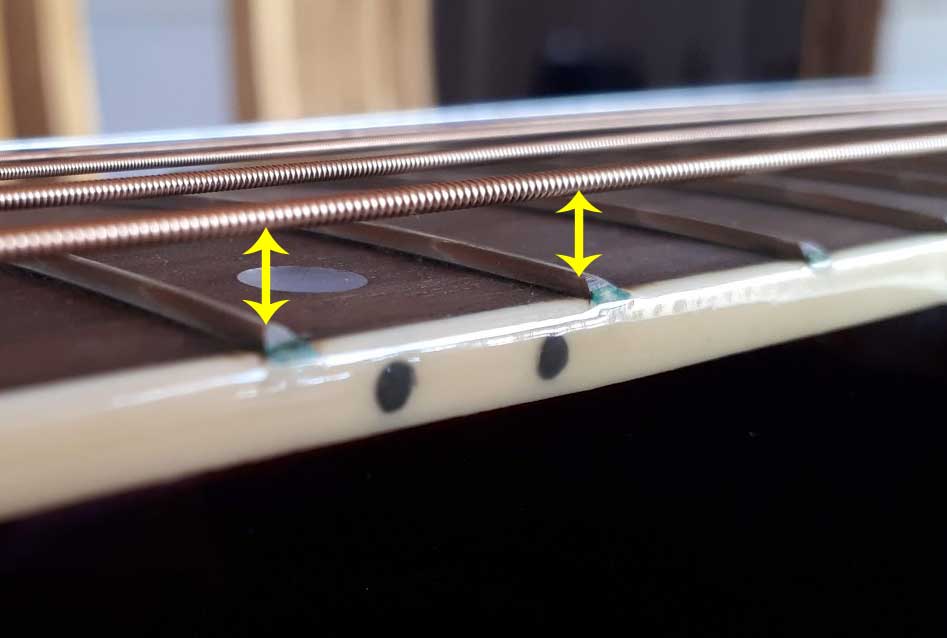
Guitar action is the distance between each string and the frets, which affects comfort, tone, and playability.
If you have ever wondered, “what is action on a guitar?” you are asking about one of the most important parts of a guitar setup. Action controls how hard you must press the strings, how clearly notes ring, and how easily the guitar plays. In this guide, you will learn how to measure guitar action, identify high or low action, understand common causes, and make safe adjustments.
What Is Action on a Guitar?
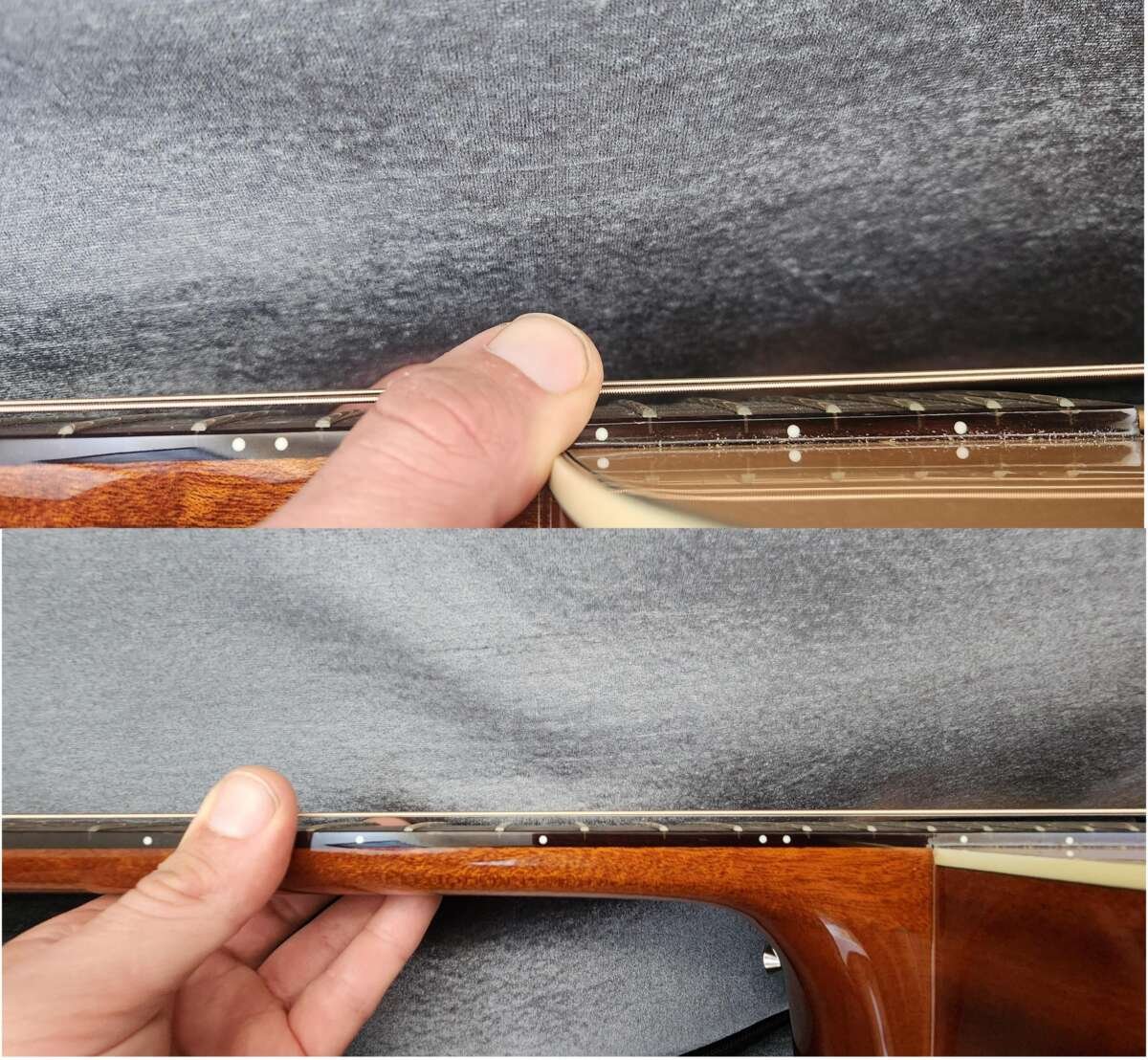
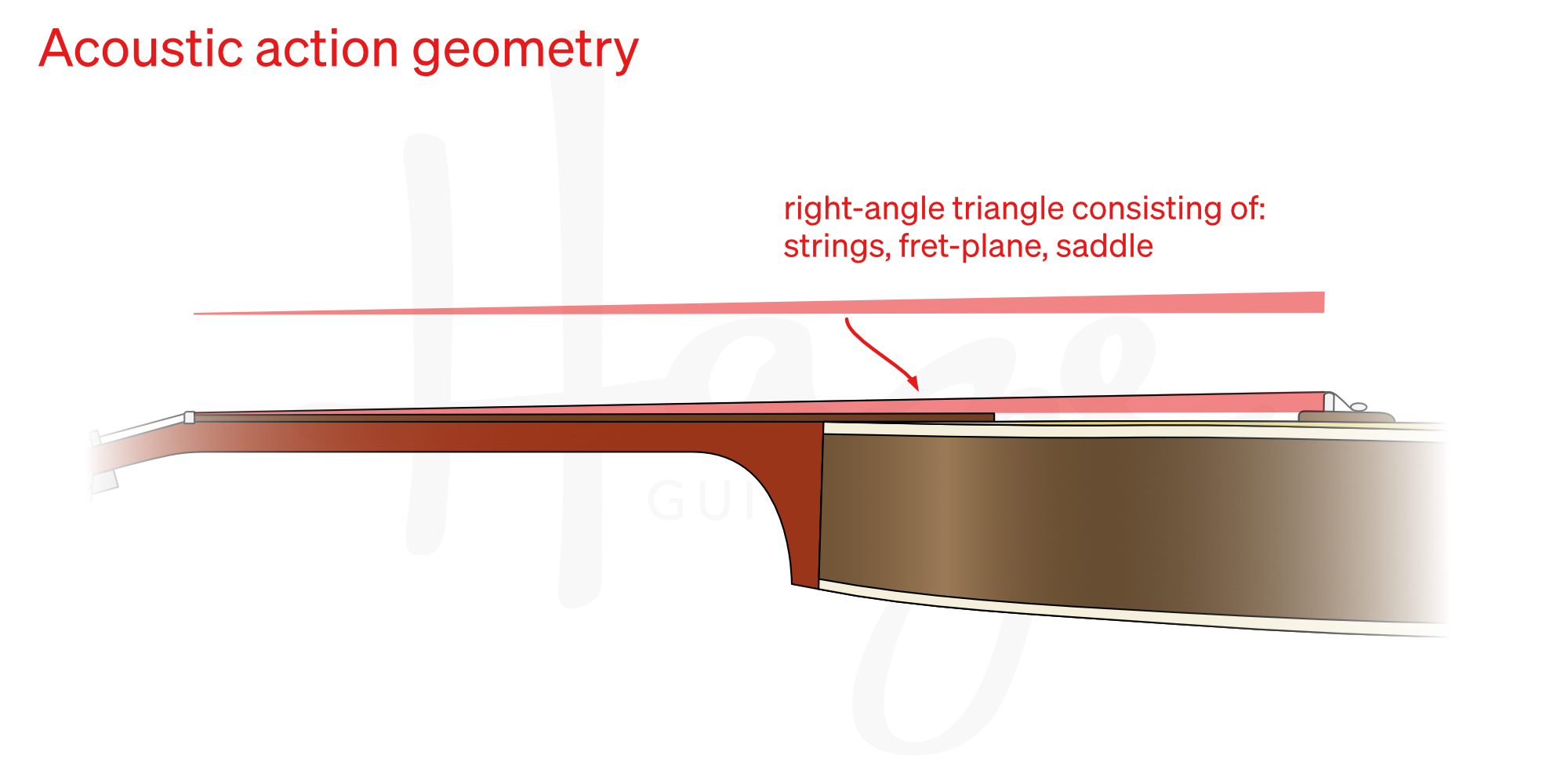
Guitar action is the height of the strings above the fretboard. More exactly, it is measured from the top of a fret to the bottom of the string above it.
Think of action as the guitar’s playing height. If the strings sit too high, the guitar can feel stiff and tiring. If they sit too low, the strings may buzz against the frets.
When players ask, “what is action on a guitar?” they usually want to know whether their guitar is easy to play. The answer depends on several factors, including the guitar type, playing style, string gauge, neck shape, and setup.
Action is not the same across the entire fretboard. It normally increases slightly as you move from the nut toward the bridge. This rise gives the strings room to vibrate without hitting the frets.
Why Guitar Action Matters
The right action creates a balance between comfort, tone, and clean notes. It should feel easy under your fingers without causing unwanted fret buzz.
Low action often feels fast and comfortable. It can work well for electric guitarists who use light to medium picking. However, very low action may create buzzing, weak notes, or poor sustain.
High action can produce a strong, open sound because the strings have more room to vibrate. Yet it can make chords harder to fret and may cause hand pain during long practice sessions.
Here is how action affects your playing:
• Comfort: Lower action usually requires less finger pressure.
• Fret buzz: Action that is too low can make strings touch nearby frets.
• Intonation: Very high action can pull notes sharp when you press them down.
• Tone: Action changes the string’s vibration space and can affect volume and sustain.
• Technique: Lead players may prefer lower action, while some acoustic players prefer slightly higher action for stronger strumming.
In my experience, many players blame their fingers or strings when the real problem is poor action. A small setup change can sometimes make a guitar feel like a completely different instrument.
How to Measure Guitar Action
You can measure guitar action at home with a small string-action gauge or a ruler marked in millimeters. A specialized gauge is easier to read, but a precise ruler can work well.
Follow these steps:
-
Tune the guitar to normal pitch.
-
Hold the guitar in your usual playing position.
-
Measure at the 12th fret, which is the most common reference point.
-
Place the ruler on top of the 12th fret.
-
Measure the distance to the bottom of the string.
-
Check both the lowest and highest strings.
Measure the low E string and the high E string first. These two measurements show whether the action is fairly even across the fretboard.
Do not measure from the fretboard wood. The fret itself is the correct reference point. Measuring from the wood can make the action seem higher than it really is.
A capo can help when checking neck relief. Place it at the first fret, press the string at the last fret, and check the gap around the seventh or eighth fret. This test does not measure action directly, but it helps reveal whether the neck curve is affecting it.
Typical Guitar Action Measurements
There is no single perfect action height. Guitar makers use different designs, and players have different needs. The following ranges are useful starting points, not strict rules.
Electric guitar action
Many electric guitars feel comfortable around these measurements at the 12th fret:
• High E string: About 1.5 to 2.0 mm
• Low E string: About 2.0 to 2.5 mm
A light player may prefer slightly lower action. A strong picker may need more height to prevent buzzing.
Steel-string acoustic guitar action
Acoustic guitars often need a little more action because their strings move more widely when played.
• High E string: About 2.0 to 2.5 mm
• Low E string: About 2.5 to 3.0 mm
Flatpickers and hard strummers may prefer action near the higher end of this range. Fingerstyle players often like a lower setup.
Classical guitar action
Classical guitars commonly use higher action because nylon strings vibrate in a wider arc.
• Treble strings: About 2.5 to 3.5 mm
• Bass strings: About 3.0 to 4.0 mm
These numbers can vary by instrument and playing style. Always check the manufacturer’s specifications when they are available.
When explaining what is action on a guitar, these ranges help put the term into practical context. They show that “good action” is not one exact number for every guitar.
Low Action vs. High Action
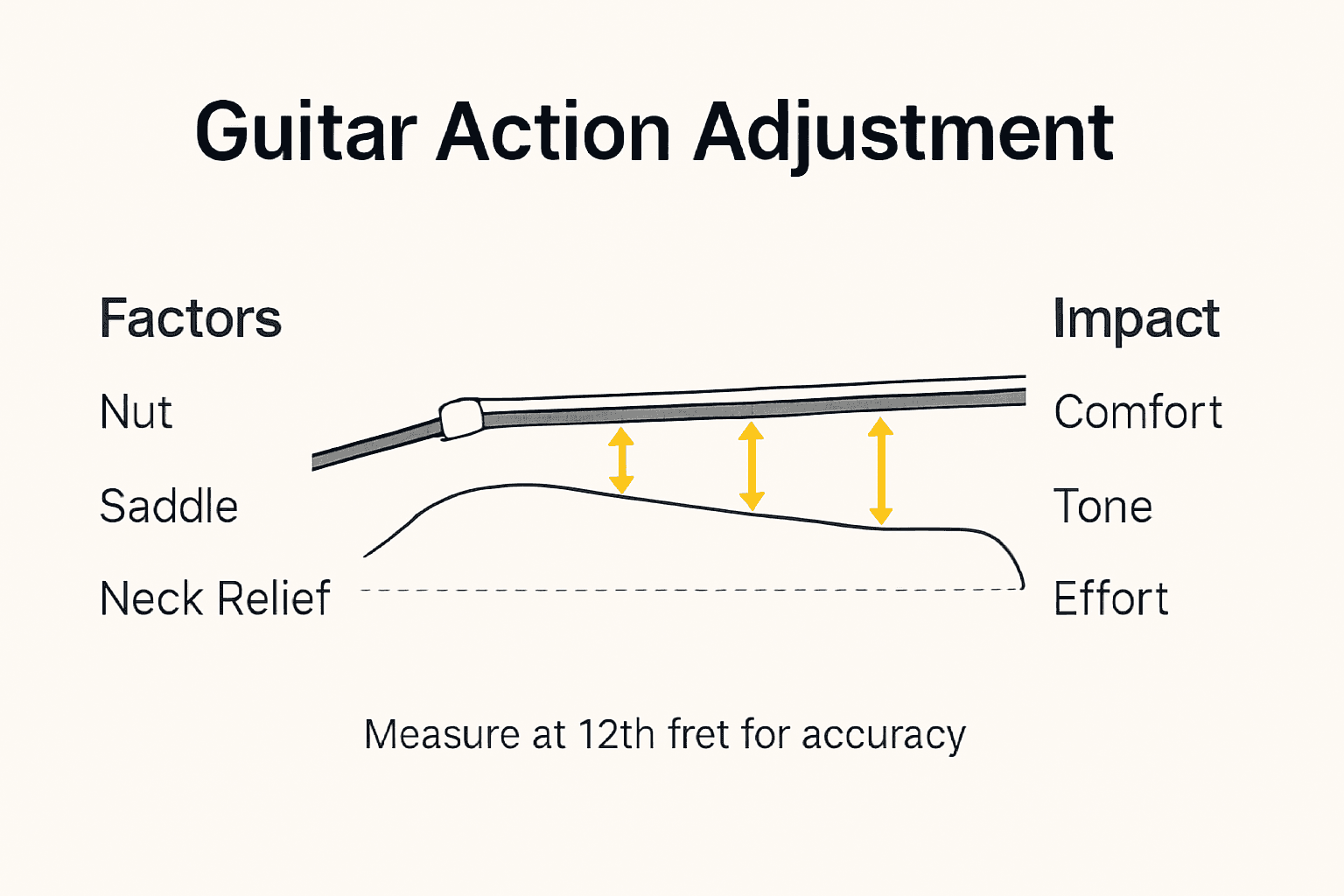
Low and high action both have benefits and drawbacks. The best choice depends on your hands, technique, and guitar.
Advantages of low action
• Easier fretting
• Faster movement between notes
• Less finger fatigue
• Comfortable barre chords
• A smooth feel for bends and lead playing
Problems with action that is too low
• Fret buzz
• Notes that lose volume
• Poor sustain
• Buzz that becomes worse with heavy picking
• Notes that sound uneven across the neck
Advantages of high action
• More room for string vibration
• Less chance of fret buzz
• Strong response for aggressive strumming
• Sometimes a fuller acoustic tone
Problems with action that is too high
• Chords feel difficult to press
• Barre chords become tiring
• Notes may sound sharp when fretted
• The guitar can feel slow or uncomfortable
The goal is not to make the action as low as possible. The goal is to find the lowest clean action that suits your playing. That distinction prevents many setup problems.

What Causes High or Low Guitar Action?
Several guitar parts work together to determine action. Changing one part can affect the others.
Neck relief
Neck relief is the slight forward curve in the neck. A small amount of relief gives the strings room to vibrate. Too much relief raises the action, especially around the middle frets.
A neck that is too flat or curved backward may cause fret buzz. This is why a truss rod adjustment must be made carefully.
Nut height
The nut controls string height near the first fret. If the nut slots are too high, open chords feel difficult even when the action at the 12th fret looks normal.
If the nut slots are too low, open strings may buzz. Filing nut slots is a precise job, so it is often best left to a qualified guitar technician.
Saddle height
The saddle controls much of the action on an acoustic guitar. Lowering the saddle can reduce action, while raising it can increase action.
Saddle work is not reversible without adding material or replacing the part. Remove small amounts only, and measure often.
Bridge and neck angle
On an acoustic guitar, a swollen top, loose bridge, or changing neck angle can raise the action. A neck reset may be needed when the guitar remains difficult to play even after a proper setup.
String gauge and tuning
Heavier strings create more tension and can change the neck curve. Lower tunings reduce tension and may allow the strings to vibrate more widely, causing buzz.
String changes can alter action slightly. Always check the setup after changing string gauge.
How to Adjust Guitar Action Safely
The correct adjustment depends on the guitar’s design. Electric guitars often use bridge saddles or individual height screws. Acoustic guitars usually require saddle work, which is more involved.
Before adjusting anything, record the current measurements. Take photos of the bridge, saddle, and truss rod area. This gives you a reference if you need to return to the original setup.
For electric guitars
-
Tune the guitar accurately.
-
Measure the action at the 12th fret.
-
Adjust the bridge height in small steps.
-
Retune the guitar.
-
Check every fret for buzzing.
-
Test bends, chords, and hard picking.
Adjust both sides of the bridge evenly when possible. Individual string saddles can then be fine-tuned for a balanced feel.
For acoustic guitars
Acoustic action usually requires more care. The saddle may need to be removed and sanded from the bottom.
A useful rule is that removing about 1 mm from the saddle may reduce the 12th-fret action by about 0.5 mm. This is an estimate, not a guarantee, because guitar geometry varies.
Do not sand the saddle while it is still in the guitar. Remove it, work slowly on a flat surface, and keep the bottom perfectly level.
For truss rod adjustments
A truss rod changes neck relief, not the entire guitar action. Turn it in very small increments, often one-eighth of a turn at a time, then retune and recheck the neck.
Stop if the adjustment feels unusually tight. A damaged truss rod can lead to expensive repairs.
From years of setup advice, the most common mistake is reaching for the truss rod before checking the bridge, nut, relief, and fret condition. Action is a system, not a single screw.

How to Fix Fret Buzz
Fret buzz occurs when a vibrating string touches one or more frets. It can come from low action, incorrect neck relief, uneven frets, loose hardware, or an aggressive picking style.
Try these checks:
• Confirm that the guitar is tuned correctly.
• Test whether the buzz happens on open strings, fretted notes, or both.
• Check the neck relief.
• Inspect for loose screws, tuners, or bridge parts.
• Raise the action slightly if it is extremely low.
• Try a lighter picking attack to see whether the buzz changes.
Buzz in one small area may point to an uneven fret. Buzz across many frets may suggest a relief or action problem.
A little acoustic buzz can be normal during strong playing. Buzz that is heard through an amplifier or affects sustain needs attention.

Does Guitar Action Affect Intonation?
Yes, guitar action can affect intonation. When action is high, you must press the string farther down to reach the fret. That extra movement increases string tension and may make the note sound sharp.
This effect is most noticeable on fretted notes higher up the neck. It can make chords sound out of tune even when the open strings are perfectly tuned.
Intonation also depends on scale length, string gauge, fret placement, saddle position, and tuning. Adjusting action alone may not solve an intonation problem.
Check intonation after setting action. Compare the 12th-fret harmonic with the fretted 12th-fret note using a reliable tuner. If the fretted note is sharp, the saddle usually needs to move away from the nut. If it is flat, it may need to move toward the nut.

Guitar Action for Different Playing Styles
The best action depends on how you play.
Fingerstyle
Fingerstyle players often like moderate or low action. A clean setup makes individual notes easy to fret and reduces hand fatigue.
Strumming
Strong strumming usually needs a little more room for string movement. Slightly higher action can reduce buzz and preserve a full acoustic sound.
Lead guitar
Lead players often favor low electric guitar action for bends, slides, and fast runs. However, action that is too low can cause notes to choke during wide bends.
Slide guitar
Slide players need higher action because the slide should glide over the frets without pressing the strings down. A guitar set up for slide may feel uncomfortable for normal fretting.
Alternate tunings
Lower tunings can increase string movement. A setup that works in standard tuning may buzz in drop D or another low tuning. Heavier strings can help, but they may also require a new setup.
When deciding what is action on a guitar for your own needs, start with your technique rather than copying another player’s measurements.
Common Mistakes to Avoid
Many action problems become worse because the adjustment is rushed.
• Do not lower the action before checking neck relief.
• Do not assume every buzz requires a higher bridge.
• Do not measure action while the guitar is poorly tuned.
• Do not remove large amounts from an acoustic saddle at once.
• Do not copy another guitar’s measurements without considering string gauge and playing style.
• Do not ignore a warped neck, loose bridge, or lifting top.
• Do not judge action by sight alone; measure it and play every area of the neck.
One mistake I often see is lowering the bridge until the first few frets feel great, only to create buzzing higher up the neck. A guitar should be tested across the full fretboard, not just near the nut.
When to Visit a Guitar Technician
A professional setup is worthwhile when the guitar has a serious or unclear problem. This is especially true for acoustic guitars, vintage instruments, and guitars with expensive finishes.
Visit a technician if:
• The truss rod feels stuck or extremely tight.
• The bridge is lifting from the guitar top.
• The neck looks twisted or badly warped.
• The action changes quickly without a string change.
• Frets are uneven or worn.
• The guitar still buzzes after basic adjustments.
• The saddle must be heavily lowered.
A good technician checks neck relief, nut height, saddle height, fret condition, intonation, tuning stability, and hardware. This complete approach is more reliable than changing one part and hoping for the best.
Seasonal humidity can also affect acoustic guitar action. Dry air may shrink the top and fretboard, while excess moisture can swell the body. Keeping the instrument in a stable environment helps maintain a consistent setup.
Frequently Asked Questions About What Is Action on a Guitar
What is action on a guitar?
Action is the distance between the strings and the tops of the frets. It affects how comfortable the guitar feels, how clearly notes ring, and how much fret buzz occurs.
What is the best guitar action height?
There is no single best height for every player. Many electric guitars work well around 1.5 to 2.5 mm at the 12th fret, while steel-string acoustics often use about 2.0 to 3.0 mm.
How do I know if my guitar action is too high?
High action feels stiff and makes chords or notes harder to fret. You may also notice that fretted notes sound sharp because you must press the strings down a long distance.
How do I know if my guitar action is too low?
Very low action often causes fret buzz, weak sustain, or notes that choke during bends. If buzzing occurs across many frets, the action or neck relief may need adjustment.
Can I lower the action on my guitar myself?
You can make small adjustments on many electric guitars if you use the correct tools and measure carefully. Acoustic saddle work and nut filing are less forgiving and may be safer with a trained guitar technician.
Does lower action make a guitar easier to play?
Usually, yes. Lower action reduces the pressure needed to fret notes, but action that is too low can create buzz and poor sustain.
Does changing strings change guitar action?
It can. A different string gauge changes tension and may alter neck relief, bridge response, and playing feel, so the guitar may need a new setup afterward.
Conclusion
Guitar action is the space between the strings and frets, and it plays a major role in comfort, tone, fret buzz, and intonation. The right action is not the lowest possible setting. It is the lowest clean setting that matches your guitar, strings, tuning, and playing style.
Measure at the 12th fret, check neck relief, and make small changes. If the problem involves the nut, saddle, frets, or neck angle, get help from a skilled technician. Use this guide to inspect your guitar, apply careful adjustments, and share your setup experience in the comments.

Senior Music Reviewer
Alex Carter is a seasoned music reviewer with over a decade of experience in the world of sound and instruments. Passionate about helping musicians and enthusiasts make informed choices, he brings sharp insights and in-depth knowledge to every review. From classical instruments to modern gear, Alex combines technical expertise with a love for music to deliver content that resonates with readers.
As a Senior Music Reviewer and expert author on Tuneluma.com, Alex is dedicated to sharing honest evaluations, practical advice, and thoughtful commentary to guide readers in their musical journey.