Best Digital Piano For Jazz: Top Picks For Players
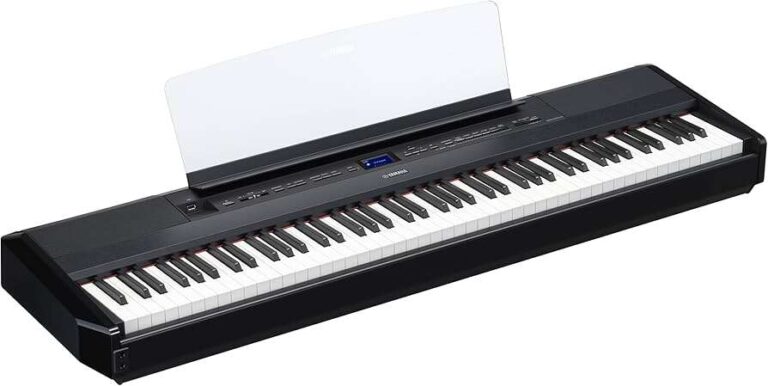
The Yamaha P-145BT is the best digital piano for jazz, blending realistic weighted keys, clear piano tone, and useful Bluetooth.
You sit down to play a jazz standard, but your old keyboard feels flat, light, and slow under your fingers. That can make voicings, swing rhythms, and soft chord colors hard to control. I looked for digital pianos with useful key response, a convincing acoustic-piano tone, strong sustain control, and enough flexibility for home practice. The models below cover quiet apartment playing, beginner lessons, portable jam sessions, and serious jazz study. As of 2026, these are practical choices for players who want jazz feel without the cost or upkeep of a full acoustic piano.
Digital Piano 88-Key Semi-Weighted Set

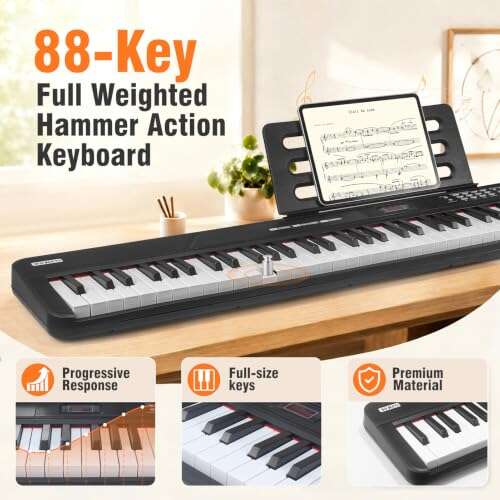
This full-size 88-key digital piano gives beginners and casual players the full range needed for jazz practice. Its semi-weighted action offers more resistance than a basic synth keyboard, so your fingers can learn better control over chords and melody lines. The built-in speakers make it easy to start playing without extra gear. I also like the included stand and sustain pedal because they create a ready-to-play setup in one box.
Bluetooth, MIDI, USB, and MP3 support add useful tools for modern practice. You can play along with backing tracks, connect a tablet, or record ideas into music software. The action may not feel as refined as Yamaha’s weighted systems, but it remains approachable for new players. For a first home piano, this set offers broad features at a friendly price.
Pros:
- Full 88-key range supports complete jazz voicings
- Semi-weighted action feels more piano-like than light keys
- Includes a stand and sustain pedal
- Bluetooth and USB/MIDI support modern practice
- Built-in speakers work well for home sessions
- MP3 support helps with play-along practice
Cons:
- Key response is less expressive than premium weighted action
- Included furniture may feel basic under heavy use
- Sound quality is aimed more at beginners than gigging players
My Recommendation
I recommend this model for a new jazz student who wants a complete setup without buying each accessory separately. It gives you all 88 keys, which matters when you study low bass notes, left-hand shell voicings, and wide two-handed chords. The semi-weighted action also helps you build finger strength before moving to a more advanced instrument. It is a sensible starting point for home lessons and daily practice.
| Best for | Why |
|---|---|
| First-time jazz students | Simple controls and a complete starter package |
| Home practice | Speakers, Bluetooth, and MP3 playback reduce setup time |
| Budget buyers | Includes key accessories at a lower overall cost |
Yamaha P71 Weighted Digital Piano

The Yamaha P71 remains one of the safest choices for players who value a clean, focused piano experience. Its 88-key weighted action gives your playing more control than a light keyboard. Yamaha’s Graded Hammer Standard design makes the lower keys feel heavier and the upper keys lighter, much like an acoustic piano. That design suits jazz because it lets you shape soft chord tones and stronger accents with greater confidence.
This model keeps the control panel simple, which I see as a benefit for focused practice. It includes a sustain pedal and power supply, so you can begin playing right away. The piano sound has the clear Yamaha character that works well for stride, ballads, blues, and modern chord work. It does not offer Bluetooth or a large selection of arranger features, but its core playing feel is far more important than flashy extras.
Pros:
- Reliable 88-key weighted action
- Graded key resistance supports better technique
- Clear acoustic-piano tone suits many jazz styles
- Simple layout keeps practice distraction-free
- Includes sustain pedal and power supply
- Compact body fits small rooms
Cons:
- Limited voices and built-in features
- No Bluetooth audio connection
- Basic sustain pedal may feel light
My Recommendation
The Yamaha P71 is best for beginners and intermediate players who want dependable weighted keys above all else. I would choose it for a student who plans to study jazz seriously and wants a solid foundation in touch, dynamics, and pedal control. It also works well for adults who need a quiet, compact practice instrument. If you want the best digital piano for jazz on a sensible budget and do not need many extra sounds, the P71 deserves close attention.
| Best for | Why |
|---|---|
| Jazz technique | Weighted keys encourage proper finger control |
| Focused practice | Simple design keeps attention on the music |
| Small homes | Compact size offers a full range without a large cabinet |
Alesis Recital Play 88-Key Bundle

The Alesis Recital Play is designed for players who want a complete keyboard package and an easy learning path. Its 88-key layout gives jazz students room for full chord shapes, bass movement, and melody. The bundle format makes it practical for a first instrument because you do not have to search for every small accessory. Built-in speakers also let you practice without connecting an amplifier.
For jazz, I value the full range more than a large bank of effects. You can use this keyboard to work through blues scales, ii-V-I progressions, standards, and simple improvisation. The action is intended for accessible home use, so advanced players may want a more precise weighted feel. Still, it offers a useful bridge between a small beginner keyboard and a full digital piano.
Pros:
- Full 88-key range for traditional piano study
- Beginner-friendly bundle reduces extra purchases
- Built-in speakers support instant practice
- Useful format for lessons and home playing
- Suitable for chords, scales, and simple improvisation
- Easy choice for families sharing one instrument
Cons:
- Action may not satisfy advanced jazz pianists
- Sound options are less detailed than premium digital pianos
- Bundle components may be entry-level in quality
My Recommendation
I recommend the Recital Play for a beginner who wants a low-stress way to start. It suits children, adult learners, and families that need a practical keyboard for lessons. The 88 keys help you avoid outgrowing the instrument too quickly. If your main goal is to learn jazz basics and build a regular practice habit, this bundle offers good value and simple operation.
| Best for | Why |
|---|---|
| Beginner lessons | Full range and simple controls support steady progress |
| Family use | Easy setup works for several skill levels |
| Starter budgets | Bundle format limits the need for extra purchases |
Yamaha P145BT 88-Key Digital Piano
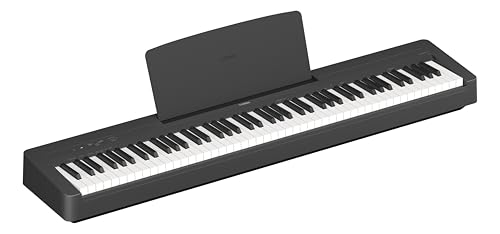
The Yamaha P145BT is my top all-around pick in this group. It combines Yamaha’s trusted piano approach with weighted keys, a compact body, and Bluetooth support. The GHC action gives the keyboard a firm, controlled response that feels more natural for chord work than many low-cost keyboards. That matters when you play dense jazz harmony and need every note to speak at the right volume.
Bluetooth makes the P145BT more useful than older minimalist models. You can stream lessons or backing tracks from a compatible device while hearing the audio through the piano’s speakers. The instrument remains simple enough for a beginner but capable enough for years of practice. It is not a stage piano with deep editing, yet its balanced touch, useful connectivity, and strong acoustic-piano voice make it a powerful home tool.
Pros:
- Weighted 88-key action offers confident piano control
- Bluetooth adds convenient lesson and backing-track use
- Compact design works well in apartments and offices
- Built-in speakers provide clear home volume
- Full range supports advanced jazz voicings
- Yamaha build quality inspires long-term confidence
Cons:
- Fewer sounds than an arranger keyboard
- May need a stronger stand for frequent performance use
- Pedal and accessories can vary by package
My Recommendation
The P145BT is best for the player who wants one dependable instrument for lessons, standards, theory work, and relaxed playing. I consider it the best digital piano for jazz among these options because it balances key feel, sound, portability, and wireless practice tools. It suits beginners who want room to grow and experienced players who need a compact backup piano. Availability and package contents can change, so check the current listing before ordering.
| Best for | Why |
|---|---|
| Overall jazz practice | Strong mix of touch, tone, range, and useful features |
| Apartment players | Compact body and quiet headphone practice fit small spaces |
| Backing tracks | Bluetooth makes play-along sessions fast and simple |
RockJam RJ5061 61-Key Keyboard Kit

The RockJam RJ5061 takes a different approach from the 88-key digital pianos here. Its 61 keys make the keyboard lighter and easier to move, while the stand, bench, and headphones create a useful starter kit. For basic jazz melodies, blues patterns, and simple chord exercises, the range works well. It also takes less space than a full-size piano.
I would not choose this model for a pianist who needs realistic weighted action or wide left-hand bass patterns. However, it can be a good first step for a child, casual learner, or singer who wants to find notes and practice simple harmony. The headphones are helpful when other people are sleeping or working nearby. Its main strength is convenience, not advanced piano realism.
Pros:
- Portable 61-key layout saves space
- Includes stand, bench, and headphones
- Good for basic melodies and chord lessons
- Beginner-friendly starter package
- Easy to move between rooms
- Useful for quiet practice with headphones
Cons:
- 61 keys limit full jazz piano range
- Keys are not the best match for classical technique
- Less suitable for advanced two-handed arrangements
My Recommendation
The RJ5061 is best for a beginner who values portability and a complete kit over a realistic piano action. It can introduce a young player to jazz chords, rhythm, and ear training without taking over a room. I also like it for singers and songwriters who need a simple tool for sketching ideas. Choose an 88-key weighted model instead if you plan to study serious jazz piano technique.
| Best for | Why |
|---|---|
| Young beginners | Small layout and included bench make lessons approachable |
| Portable practice | 61 keys are easier to move than a full digital piano |
| Quiet homes | Headphones allow private playing |
88-Key Semi-Weighted Piano Bundle

This 88-key keyboard focuses on value and flexibility. The semi-weighted keys give beginners a modest piano-like response while keeping the instrument lighter than a fully weighted digital piano. The package includes a stand, carrying case, headphones, power supply, and sustain pedal. That combination makes it easy to create a practice corner at home or take the keyboard to a lesson.
USB-MIDI compatibility is especially helpful for players who want to use learning apps or record simple ideas. You can work on jazz scales, chord inversions, and guide-tone lines without needing a separate interface. The action will not copy the feel of a quality acoustic piano, but it offers more range than a 61-key board. I see it as a practical learning and songwriting keyboard for adults.
Pros:
- Full 88-key range supports complete piano exercises
- Semi-weighted response improves control over light keys
- Includes stand, case, headphones, and sustain pedal
- USB-MIDI works with computers and learning software
- Portable enough for lessons and small rehearsals
- Good accessory value for new players
Cons:
- Key action is not fully weighted
- Carrying case and stand may not suit heavy touring
- Built-in tone is less refined than Yamaha’s piano sound
My Recommendation
This keyboard is best for an adult beginner who wants flexibility at a low cost. It fits players who practice with apps, record at home, or need to carry the instrument from room to room. The complete bundle helps keep the first purchase simple. If you want the best digital piano for jazz mainly for learning chords and songs, this model is useful; if touch is your top goal, select a true weighted Yamaha instead.
| Best for | Why |
|---|---|
| Adult beginners | Full range and simple accessories support steady study |
| Music software | USB-MIDI connects to lessons and recording tools |
| Mobile practice | Case and light design make transport easier |
61-Key Beginner Digital Keyboard
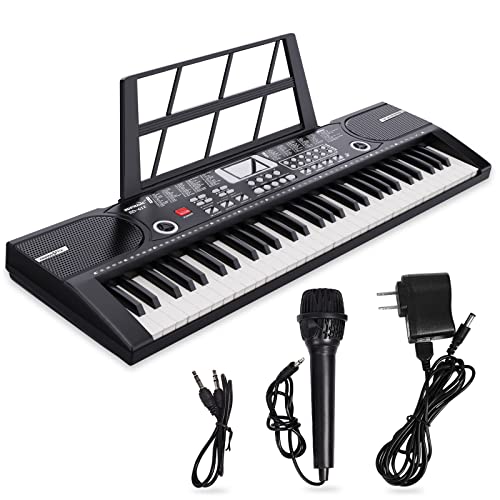
This 61-key electronic keyboard is made for simple learning and casual music making. It includes built-in speakers, a microphone, a music stand, and a power supply. Those extras make it attractive for children or new players who want to explore music without a complex menu. The compact size also makes it easy to place on a desk or small table.
For jazz, the keyboard can handle basic scales, melodies, and three- or four-note chords. Its 61 keys do not provide the same range as a full piano, so advanced left-hand bass work will feel restricted. The microphone adds a fun feature for singing and early performance practice. I would treat this as an introduction to keyboard playing rather than a long-term jazz piano solution.
Pros:
- Compact 61-key design fits small spaces
- Built-in speakers need no extra amplifier
- Includes a microphone for singing and play
- Music stand supports lesson books and sheet music
- Simple choice for children and first-time players
- Lightweight format is easy to store
Cons:
- Limited range for advanced jazz arrangements
- Not a weighted piano action
- May be outgrown as technique improves
My Recommendation
I recommend this keyboard for a child or casual learner who is still deciding whether piano is the right hobby. It makes early practice feel friendly and removes many setup barriers. Use it for note reading, basic rhythm, simple melodies, and starter chord shapes. Serious jazz students should move to an 88-key weighted instrument once they begin studying wider voicings and touch control.
| Best for | Why |
|---|---|
| Children | Small size and microphone make practice engaging |
| Casual playing | Easy controls support quick music sessions |
| Small rooms | Compact body stores with little effort |
Second 88-Key Semi-Weighted Keyboard

This second 88-key semi-weighted keyboard offers a broad piano range with a practical collection of accessories. The stand, carrying case, headphones, power supply, and sustain pedal help a new player start without a long shopping list. The semi-weighted action gives some resistance under the fingers and works well for basic jazz practice. It also keeps the instrument more portable than many cabinet-style digital pianos.
USB-MIDI support lets you use the keyboard with a laptop, tablet, or compatible music app. That is useful when you want to slow down a backing track or record a chord idea. I would use it for beginner standards, blues patterns, and ear-training drills. Players who need nuanced velocity response or a premium pedal system should look higher in the range.
Pros:
- 88 keys allow full jazz piano exercises
- Accessory bundle offers strong convenience
- USB-MIDI supports apps and recording
- Headphones enable quiet practice
- Carrying case helps with transport
- Suitable for beginners and hobby musicians
Cons:
- Semi-weighted keys lack true hammer action
- Entry-level speakers may sound thin at high volume
- Included stand may need careful setup
My Recommendation
This keyboard is best for a budget-minded adult who wants 88 keys and modern connections. It makes sense for a home studio, a beginner lesson space, or a player who moves between locations. The full range is a major advantage over 61-key options. I would choose it when accessories and USB-MIDI matter more than the most realistic acoustic-piano touch.
| Best for | Why |
|---|---|
| Home recording | USB-MIDI supports simple digital music work |
| Quiet practice | Headphones help reduce noise for others |
| Budget 88-key use | Full range comes with useful starter gear |
61-Key Portable Digital Piano

This portable 61-key keyboard targets beginners who need a light and easy instrument. Its smaller key count reduces weight and makes storage simple. It can handle basic melodies, pop chords, blues ideas, and early jazz exercises. If you live in a small apartment or carry your keyboard to a weekly lesson, the portable shape can be a real benefit.
The trade-off is range and touch. You may need to shift octaves when practicing left-hand bass lines or playing a standard with wide voicings. The keys are also better suited to casual learning than advanced piano technique. Still, a portable keyboard can keep practice alive because it is easy to reach, move, and use for a few minutes each day.
Pros:
- Light and easy to carry
- 61 keys suit basic lessons and melodies
- Stores well in small homes
- Approachable option for new players
- Useful for travel and casual songwriting
- Quick setup encourages frequent practice
Cons:
- Not enough range for full jazz piano study
- Light action gives limited touch feedback
- May require octave changes during chord work
My Recommendation
I recommend this model for someone who needs the smallest practical keyboard. It is a good fit for travel, occasional practice, and early music lessons. It can help you learn rhythm, note names, and basic jazz harmony before you invest in a full digital piano. For long-term jazz development, plan to upgrade to 88 weighted keys as your playing becomes more demanding.
| Best for | Why |
|---|---|
| Travel | Light body makes transport less tiring |
| Small apartments | Compact design stores with ease |
| Early lessons | Enough keys for basic scales and songs |
Donner DEP-20 Weighted Digital Piano

The Donner DEP-20 is a full-size weighted digital piano built for players who want a more traditional setup. It includes a furniture stand and three-pedal unit, which gives the instrument a more permanent piano feel. The 88 keys provide enough room for walking bass, rootless voicings, stride patterns, and wide melodic lines. That makes it more suitable for serious jazz study than most 61-key keyboards.
The three pedals are useful when you practice sustain control, half-pedaling ideas, and expressive ballads. Its sound and action may not match a high-end stage piano, but the overall format feels more complete than a bare portable keyboard. I especially like it for a home player who wants the look and stability of a traditional piano without acoustic maintenance. Measure your room carefully because the furniture stand takes more space.
Pros:
- Full 88-key weighted keyboard
- Furniture stand creates a stable home setup
- Three-pedal unit supports expressive playing
- Wide range works for advanced jazz voicings
- Good choice for long practice sessions
- More piano-like presence than a lightweight board
Cons:
- Less portable than slab-style digital pianos
- Sound realism may trail Yamaha models
- Furniture assembly requires extra time
My Recommendation
The DEP-20 is best for a home pianist who wants weighted keys, a stable stand, and three pedals at a reasonable cost. It suits students who plan to practice for years and need more physical support than a basic keyboard offers. The complete design also works well in a dedicated music room. If you want a full home setup and do not need Bluetooth or frequent transport, this is a strong value choice for jazz study.
| Best for | Why |
|---|---|
| Home jazz study | Weighted keys and full range support serious practice |
| Pedal technique | Three pedals offer more control than a single switch |
| Permanent setups | Furniture stand feels stable and piano-like |
How I Choose a Digital Piano for Jazz
Jazz exposes a keyboard’s weaknesses quickly. A poor action can make quiet guide tones jump out, while a weak sustain pedal can blur an entire chord. I focus first on touch, then on tone, range, speakers, connections, and long-term comfort. The best digital piano for jazz should respond like a musical partner, not like a row of plastic switches.
Weighted Action Matters Most
Weighted keys use resistance to imitate an acoustic piano. This resistance helps you control volume with your fingers. Jazz players need that control for soft intros, sharp accents, comping, and solo lines. A semi-weighted keyboard can work for a beginner, but true weighted action usually gives better feedback.
Graded action is another useful feature. The bass keys feel heavier, while the treble keys feel lighter. This layout mirrors an acoustic piano and can make scales and wide voicings feel more natural. Models such as the Yamaha P71 and P145BT are strong choices when touch is your main concern.
Why 88 Keys Help Jazz Players
A 61-key keyboard can teach basic harmony, but 88 keys give you much more freedom. Jazz often places a bass note far below a right-hand chord. You may also play a melody high above the middle register. With 88 keys, you do not need to move octaves as often.
Full size also supports proper lesson material. Many jazz books assume a standard piano range. If you plan to study stride, walking bass, solo piano, or advanced voicings, I suggest starting with 88 keys when your space and budget allow.
Touch Sensitivity and Velocity
Touch sensitivity changes the sound based on how hard you press a key. This feature is essential for jazz. It lets you play a chord softly, bring out one top note, or make a solo phrase sing. Without touch response, every note can sound too even and lifeless.
When testing a piano, I play the same chord at three levels: very soft, medium, and strong. I listen for a smooth change in volume. I also check whether the keys trigger notes evenly across the range. Small differences may not bother a new player, but they become clear after months of practice.
Piano Tone and Dynamic Color
A good jazz tone should not be harsh. It should leave room for chord color and melodic detail. A bright voice can work for big-band playing, but a warmer tone often feels better for ballads and late-night practice. Headphones can reveal details that small built-in speakers hide.
I do not judge a piano by the number of voices alone. A large sound list looks impressive, but most jazz players spend much of their time with one main piano tone. A clear, expressive piano voice is more valuable than hundreds of sounds you rarely use.
Sustain Pedal Quality
The sustain pedal connects your hands to the instrument. It lets notes ring, supports smooth legato, and adds depth to ballads. A basic pedal can work for early lessons, but a stronger pedal feels more stable and lasts longer.
Three-pedal systems offer soft, sostenuto, and sustain functions. The sostenuto pedal is less important for most beginners, but it can help advanced players hold selected bass notes while playing above them. If you want a cabinet-style home piano, the Donner DEP-20 has an advantage here.
Speakers, Headphones, and Bluetooth
Built-in speakers make practice simple. You can sit down and play without setting up an amplifier. Look for speakers that sound clear at low volume, since jazz practice often involves subtle notes rather than loud effects.
Headphone output is vital for apartment living. Bluetooth audio is also useful because you can stream lessons and backing tracks from a phone or tablet. The Yamaha P145BT stands out in this group for that reason. Bluetooth does not replace good keys, but it can help you practice more often.
MIDI and USB Connections
MIDI sends performance data to a computer or tablet. It does not send the piano’s audio by itself. With MIDI, you can use virtual instruments, notation apps, recording programs, and interactive lessons.
USB-MIDI is a useful feature for modern students. You can record a jazz idea before you forget it, then listen for timing problems. You can also slow down a backing track and practice a difficult phrase. For home studio users, USB-MIDI may matter more than extra built-in sounds.
Best Digital Piano for Jazz: Buying Tips
Start with your actual playing goal. If you want to learn jazz piano technique, prioritize weighted 88-key action. If you want to sing, write songs, or play simple chords, a 61-key keyboard may be enough. If you share walls with neighbors, add headphones and Bluetooth to your checklist.
Think about where the piano will live. A cabinet model looks attractive and feels stable, but it takes more room. A portable model fits small spaces and can move to a rehearsal. Measure the width, depth, and height of your chosen stand before you buy.
Set aside money for a proper bench. A dining chair is often too high or too low, and poor posture can cause pain. Your elbows should sit near the key surface, with relaxed shoulders and a straight back. A stable bench can improve practice as much as a small feature upgrade.
Do not ignore return policies and warranty terms. Digital pianos contain electronics, speakers, sensors, and circuit boards. A trusted brand or seller makes support easier if something fails. Check the current product page for exact package contents, since bundles may change over time.
Jazz Practice Ideas for a New Digital Piano
Once your piano arrives, avoid playing only songs you already know. Start with major and minor seventh chords. Move through ii-V-I progressions in several keys. Keep the left hand simple, then add guide tones and a small melody in the right hand.
Use the metronome on beats two and four. This creates a light jazz pulse and improves your sense of time. Begin slowly and leave space between phrases. Good jazz is not a race; it is a conversation with rhythm.
Record yourself once a week. Listen for uneven chords, rushed endings, and notes that sound too loud. A phone recording can reveal issues that are hard to notice while you play. This habit helps you improve faster than simply repeating the same tune.
Practice with headphones when you need to focus on touch. Then use the speakers to hear how your sound fills the room. The best digital piano for jazz should help you hear both detail and balance. Think of the tone as a canvas: your fingers provide the color.
FAQs Of best digital piano for jazz
Is an 88-key piano better for jazz?
Yes, an 88-key piano gives you the full range used in jazz lessons and traditional piano music. It supports low bass notes, wide chord shapes, and high melodies. A 61-key keyboard can work for beginners, but you may outgrow it sooner.
Do I need weighted keys to learn jazz piano?
You can begin without weighted keys, but weighted action usually helps you learn better finger control. It responds more like an acoustic piano and supports soft, medium, and strong playing. Choose semi-weighted keys only when budget or portability matters most.
Is the Yamaha P145BT the best digital piano for jazz?
For many home players, yes. It offers a full 88-key weighted range, a focused piano tone, compact size, and Bluetooth audio. It may not be the best choice for someone who needs many arranger sounds or deep sound editing.
Can I use a digital piano with jazz backing tracks?
Yes. Bluetooth audio, USB, or an auxiliary connection can let you play along with tracks, depending on the model. You can also use MIDI with a computer or tablet and practice with music software.
Should beginners buy a 61-key or 88-key keyboard?
Choose 61 keys for basic lessons, small rooms, and easy transport. Choose 88 keys if you plan to study jazz seriously or want to build strong piano technique. An 88-key model usually offers better long-term value.
Final Verdict: Which Should You Buy?
The Yamaha P145BT is my top choice and the best digital piano for jazz in this group. Its weighted action, full range, clear tone, compact body, and Bluetooth tools cover the needs of most home players.
For lower cost, consider the Yamaha P71 or a semi-weighted bundle. Choose the Donner DEP-20 for a stable home setup. The right piano is the one that makes you want to play daily.

Senior Music Reviewer
Alex Carter is a seasoned music reviewer with over a decade of experience in the world of sound and instruments. Passionate about helping musicians and enthusiasts make informed choices, he brings sharp insights and in-depth knowledge to every review. From classical instruments to modern gear, Alex combines technical expertise with a love for music to deliver content that resonates with readers.
As a Senior Music Reviewer and expert author on Tuneluma.com, Alex is dedicated to sharing honest evaluations, practical advice, and thoughtful commentary to guide readers in their musical journey.