How Long Does Piano Tuning Take: Time And Cost Guide
Most piano tuning appointments take about 60 to 90 minutes for a normally maintained piano.
Knowing how long piano tuning takes helps you plan your day and prepare the instrument for the best result. A skilled piano technician checks pitch, adjusts the tension of many strings, and listens for balance across the keyboard. The piano’s condition, tuning history, type, and location can all change the appointment length.
How long does piano tuning take?
For most upright and grand pianos, a standard tuning takes about one to two hours. A well-maintained piano that is close to standard pitch may take only 60 minutes. A piano that has not been tuned for years may need two hours or more.
The main goal is not speed. The goal is stable pitch, clean intervals, and a pleasing tone from the lowest bass note to the highest treble note. Piano tuning is more like balancing a large musical system than turning a few simple knobs.
Here is a general guide:
• Regularly tuned upright piano: 45 to 75 minutes
• Regularly tuned grand piano: 60 to 90 minutes
• Piano that has missed several tunings: 90 minutes to 2 hours
• Piano with major pitch changes: 2 to 4 hours, often over more than one visit
• Piano needing repairs or regulation: Longer than a standard tuning appointment
These are useful estimates, not strict limits. A technician may need more time if strings are rusty, tuning pins are loose, or the piano has severe pitch problems.

What happens during a piano tuning?
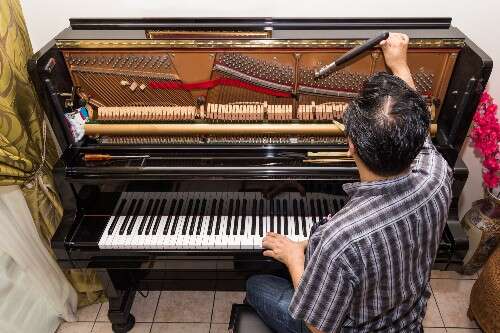
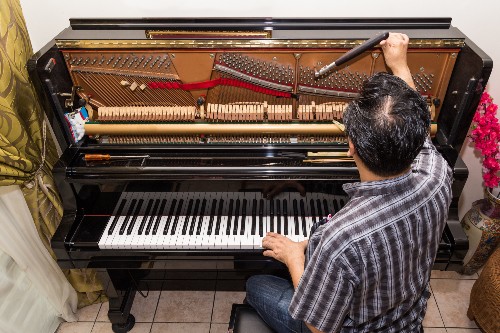
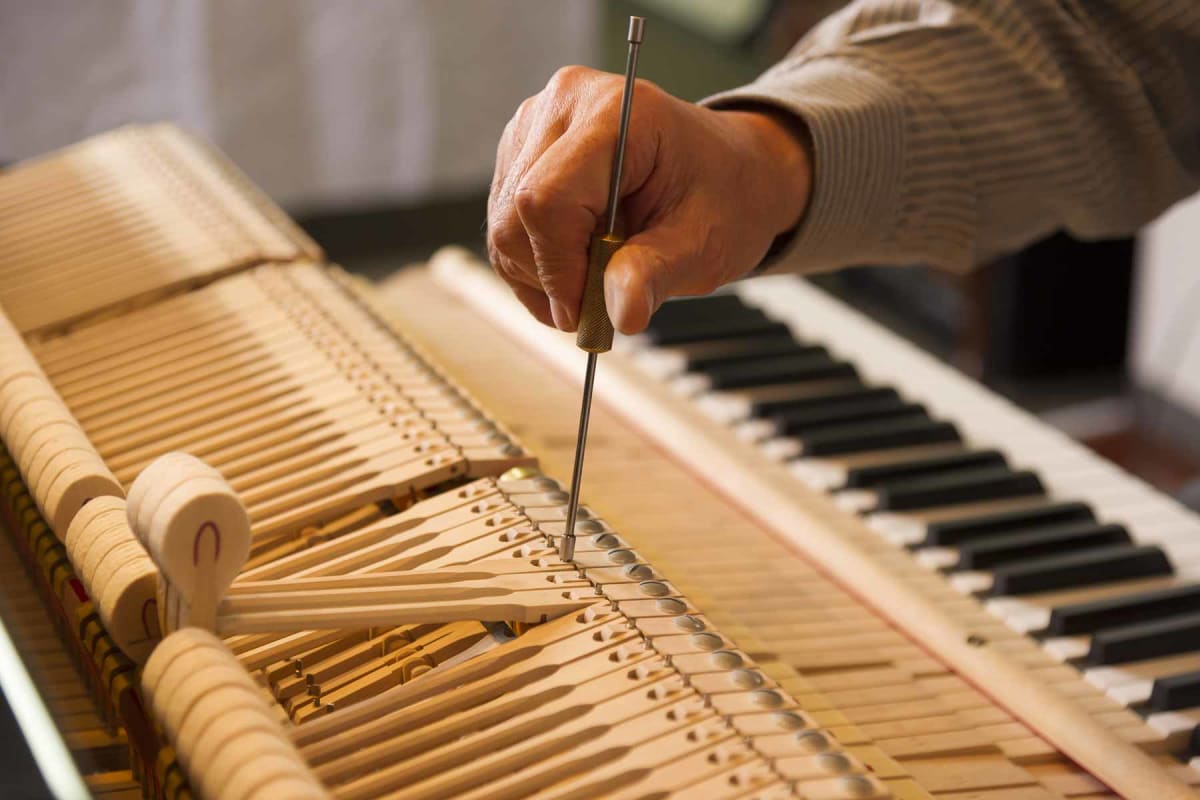
A piano tuner does much more than make each key sound “right.” The technician examines the instrument, measures its pitch, and adjusts the string tension with a tuning lever.
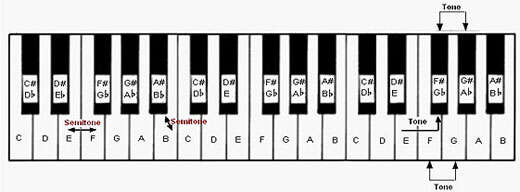
Most modern pianos use equal temperament. This system divides the octave into 12 nearly equal parts. It allows the piano to sound consistent in every key, although some intervals are slightly adjusted to create a musical balance.
A typical tuning may include these steps:
-
The technician checks the piano’s overall pitch.
-
They inspect the strings, pins, bridges, and soundboard for visible problems.
-
They set a central reference pitch, often A4 at 440 hertz.
-
They tune the middle section, called the temperament section.
-
They tune the remaining notes by matching octaves and other intervals.
-
They test the piano across its full range.
-
They make small corrections for unison quality and stability.
Each piano string can carry high tension. A piano may have more than 200 strings, depending on its design. Small changes in one area can affect nearby notes, so the technician must work with care.
This explains why how long piano tuning takes can vary even between two similar instruments. One piano may respond quickly, while another may need repeated adjustments before the pitch settles.
What factors affect piano tuning time?
Several conditions can change how long piano tuning takes. The largest factor is usually the piano’s tuning history.
How often the piano is tuned
A piano that receives regular service is usually easier to tune. Many manufacturers and piano organizations recommend tuning a piano at least twice a year, especially when it is played often or exposed to seasonal changes.
A home piano used casually may remain acceptable with one tuning each year. A concert piano, music school piano, or heavily used teaching instrument may need tuning several times a year.
Regular care helps the piano stay close to pitch. It can also reduce the chance of large and costly pitch corrections.
How far the piano is out of tune
If the pitch is only slightly low, a technician may complete the work in one pass. If the piano is far below standard pitch, the strings may need more than one adjustment.
A large pitch change can cause the piano to drift soon after the appointment. In that case, the technician may perform a pitch raise first and then complete a fine tuning. This process can take two visits or several hours.
The piano’s size and design
A small upright often takes less time than a full concert grand. However, size is not the only issue. The condition of the action, strings, bridges, and tuning pins matters just as much.
Grand pianos have longer strings and larger soundboards. They can offer a rich sound, but they also require careful control across a wider tonal range.
The piano’s age and condition
Old pianos may have brittle strings, worn tuning pins, cracked bridges, or damaged felt. A technician must work slowly when a part may fail under tension.
A piano with broken strings cannot receive a complete tuning until those strings are replaced. Some repairs can be done during the appointment, while others need separate work.
The room and climate
Temperature and humidity affect wood, felt, and the soundboard. Rapid changes can move the piano’s pitch and make tuning less stable.
The instrument may need extra time if it has just been moved, sits near a heat vent, or is in a room with very dry air. Keeping indoor humidity fairly stable can help the piano hold its tuning.

Does a piano need more than one tuning?
Sometimes, yes. A single tuning may not be enough when a piano has been neglected or has dropped well below standard pitch.
A technician may first raise the piano close to the correct pitch. The strings then need time to settle. A second tuning brings the instrument to a more stable and accurate level.
This is common with:
• Pianos that have not been tuned for several years
• Instruments moved from one climate to another
• Newly rebuilt or newly strung pianos
• Pianos with loose tuning pins
• Instruments that have suffered a major pitch drop
A pitch raise is not the same as a normal tuning. It involves broader adjustments and may leave some notes unstable if the piano is in poor condition. Ask the technician whether the quoted service includes one tuning, a pitch correction, or a follow-up visit.
How long does a piano tuning take after moving?
After a piano move, allow about 60 to 90 minutes for a standard tuning. Some instruments may need longer if the move was difficult or the piano traveled through a very different climate.
It is often wise to wait one to three weeks after the move before scheduling the final tuning. This gives the piano time to adjust to the new room. A technician may still tune it sooner if you need to play it right away.
The best waiting period depends on the move, the weather, and the piano’s condition. A short local move in stable weather may require less settling time than a long move across several states.
Avoid placing the piano beside a radiator, fireplace, air vent, or sunny window. These locations can cause uneven temperature changes and make tuning less stable.

How long does piano tuning take for an upright piano?
An upright piano usually takes about 45 to 90 minutes to tune. A well-maintained upright may be finished in less time, while an older or neglected instrument may need two hours or more.
Upright pianos vary widely in quality and condition. A compact spinet may have limited access to some parts, while a taller studio upright may have a stronger tone but more strings and a larger soundboard.
The technician may also notice problems that are not part of basic tuning. These can include sticking keys, noisy pedals, worn hammers, and loose action parts. The technician should explain these issues before doing extra work.
How long does piano tuning take for a grand piano?
A grand piano commonly takes 60 to 120 minutes for a standard tuning. A large concert grand or a piano with serious pitch problems may take longer.
Grand pianos often require close attention to unisons. A unison is a group of two or three strings that should produce one clear note. If even one string is slightly off, the note may sound rough or wavy.
A technician may also check the una corda pedal, dampers, and action response. These checks are useful, but repairs and regulation are separate services from basic tuning.
How to prepare for a piano tuning appointment
A few simple steps can help the appointment run smoothly. Preparation also gives the technician enough space to work safely.
• Clear books, decorations, and objects from the piano.
• Make sure the technician can reach the keyboard, pedals, and front panels.
• Keep pets and young children away during the appointment.
• Tell the technician when the piano was last tuned.
• Mention any broken strings, sticking keys, or unusual noises.
• Explain whether the piano was recently moved.
• Keep the room at a normal, comfortable temperature.
Do not try to tune the piano with a phone app or household tools. Digital tools can measure pitch, but they do not replace the skill needed to manage string tension and stabilize the instrument. A poorly placed adjustment can damage the pin, string, or soundboard.
One practical lesson from professional piano service is that clear information saves time. If you tell the technician about the piano’s history before the visit, they can bring the right tools and set a more accurate schedule.

How often should a piano be tuned?
Most household pianos should be tuned at least once a year. Many technicians recommend twice a year because seasonal humidity changes can move the piano’s pitch.
Consider tuning more often if:
• The piano is played daily.
• Several people take lessons on it.
• The piano is used for performances or recording.
• The instrument is new or recently rebuilt.
• The piano is in a room with large humidity swings.
• The piano sounds noticeably out of tune.
A new piano may need extra tunings during its first year. Its strings and soundboard are still settling, so the pitch can move more quickly.
Regular tuning is not only about sound. It helps maintain proper string tension and gives a technician a chance to notice small problems before they become expensive repairs.
How much does piano tuning cost?
In the United States, a standard piano tuning often costs about $100 to $250. Prices vary by region, piano type, technician experience, travel distance, and the condition of the instrument.
A basic tuning may cost less than a pitch raise or a service call for a difficult instrument. Additional charges may apply for broken strings, stuck pins, repairs, or a second visit.
Ask for a clear estimate before the appointment. Useful questions include:
• Does the price include a pitch raise?
• Will the technician charge extra if the piano is very flat?
• Are repairs included?
• Is a follow-up tuning part of the service?
• Does the price include travel?
Very low prices may not include the time needed for a careful job. At the same time, a higher price does not automatically guarantee better work. Look for training, experience, clear communication, and good local reviews.
Signs your piano needs tuning now
Your piano may need service even if you are not sure what sounds wrong. Some changes are easy to hear, while others are easier to notice during play.
Common signs include:
• Chords sound rough or muddy.
• Octaves do not blend.
• Notes create a noticeable beating sound.
• The piano sounds different from one room to another.
• The instrument no longer matches another instrument.
• The piano has not been tuned in the past year.
• A piano teacher or musician says the pitch is off.
If you play with singers or other instruments, tuning becomes more important. A piano that is slightly flat can make the whole group sound unsettled.
Common mistakes that make piano tuning harder
The biggest mistake is waiting until the piano is severely out of tune. A long gap between appointments can lead to a pitch correction, extra labor, and a less stable result.
Other mistakes include:
• Placing the piano beside a heat source
• Ignoring broken or buzzing strings
• Moving the piano without professional help
• Expecting tuning to fix worn action parts
• Scheduling only one visit after years of neglect
• Choosing a tuner based only on the lowest price
A piano tuner cannot solve every problem by adjusting pitch. Regulation, voicing, repairs, and cleaning are different services. A good technician will explain what tuning can and cannot do.
Frequently Asked Questions About How Long Does Piano Tuning Take
How long does piano tuning take for a piano tuned every year?
A piano tuned every year usually takes about 45 to 90 minutes. The exact time depends on the piano’s size, condition, and how much its pitch has changed.
How long does piano tuning take if the piano has not been tuned for 10 years?
It may take two hours or more, and the piano may need a pitch raise before fine tuning. In some cases, the technician will recommend a second appointment so the strings can settle.
Can a piano be tuned in 30 minutes?
A very small, well-maintained piano may receive a quick service in about 30 minutes, but a complete professional tuning often takes longer. Rushing can reduce accuracy and leave unsteady unisons.
Should I tune my piano before or after moving it?
It is usually best to wait one to three weeks after a move, then schedule a tuning. The ideal timing depends on the distance, climate change, and condition of the piano.
Does humidity change how long piano tuning takes?
Yes. Large humidity changes can move the piano’s pitch and make the strings less stable. A technician may need extra time to make careful adjustments, especially if the instrument is far from standard pitch.
Can a piano tuner fix sticky keys during a tuning?
A tuner may fix a simple issue during the visit, but sticky keys often require separate repair or regulation. Ask whether the quoted price includes minor repairs before work begins.
Conclusion
For most instruments, how long piano tuning takes is about 60 to 90 minutes. A neglected, damaged, recently moved, or severely flat piano may need two hours, a pitch raise, or more than one visit.
Regular tuning, stable room conditions, and honest communication with a qualified technician can help your piano sound better and stay in tune longer. Schedule a professional evaluation if the piano sounds rough, has not been tuned recently, or is important for lessons, performances, or recording.

Senior Music Reviewer
Alex Carter is a seasoned music reviewer with over a decade of experience in the world of sound and instruments. Passionate about helping musicians and enthusiasts make informed choices, he brings sharp insights and in-depth knowledge to every review. From classical instruments to modern gear, Alex combines technical expertise with a love for music to deliver content that resonates with readers.
As a Senior Music Reviewer and expert author on Tuneluma.com, Alex is dedicated to sharing honest evaluations, practical advice, and thoughtful commentary to guide readers in their musical journey.