Best Mic Stand For Guitar Players: Top Stable Picks
The best mic stand for guitar players balances stability, reach, height, portability, and easy access to your instrument.
You know the moment: your guitar sounds great, but the mic keeps drifting, the stand blocks your picking hand, or one small bump sends the whole setup toward the floor. A good mic stand fixes that stress. I looked at low-profile, desk, floor, and accessory options with a guitarist’s needs in mind. The right choice depends on your playing position, mic type, room size, and whether you perform live or record at home.
Stage Rocker Low-Profile Boom Stand

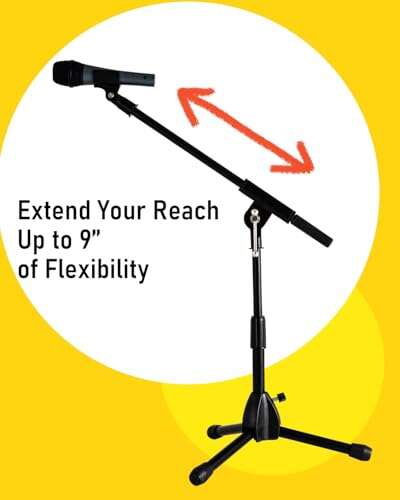
The Stage Rocker SR610121B is made for players who want the microphone close to the guitar without a tall stand taking over the room. Its low height range suits acoustic guitar recording, guitar amp miking, cajón work, and other close mic jobs. The tripod base folds, which makes storage and transport much easier. The adjustable boom also gives you useful reach when the mic must sit just beyond the guitar body.
I like this shape for seated players because it keeps the stand low and out of the way. It can also sit near a kick drum or small speaker cabinet when you need a compact stand for more than guitar work. The light build helps on small gigs, though I would still place it on a flat surface and avoid heavy microphones with long boom extension. For many home studios, this is a smart and simple answer to the question, “What is the best mic stand for guitar players?”
Pros:
- Low profile keeps the guitar area clear
- Folding tripod stores in a small space
- Telescoping arm adds useful mic reach
- Light weight helps with travel and setup
- Works well for seated acoustic guitar recording
- Useful around amps, drums, and small cabinets
Cons:
- Low height does not suit standing vocals
- Long boom extension can reduce balance
- Very heavy microphones may need extra care
My Recommendation
I recommend this Stage Rocker stand for seated guitarists, home recordists, and players who want a small stand near an amp. Its low profile helps you place a mic at the guitar’s sound hole, bridge, or speaker cone without fighting a tall tripod. It is also a good pick for a compact rehearsal kit.
| Best for | Why |
|---|---|
| Seated acoustic players | Low height keeps the mic close and the floor clear. |
| Small home studios | It folds down and takes little storage space. |
| Close amp miking | The short boom reaches an amp without a large footprint. |
Choose it when portability and low placement matter more than maximum height. It offers strong value when available at its current Amazon price.
InnoGear Weighted Desk Boom Stand

The InnoGear desk microphone stand brings a boom arm to a table, shelf, or studio desk. Its weighted base helps resist movement, while the soft-grip clutch lets you change the arm position without a harsh twist. It supports common 3/8-inch and 5/8-inch mounting needs, so it can suit many USB and dynamic microphones. This makes it useful for guitar lessons, home demos, livestreams, and close amp recording.
For guitar players, a desk stand works best when the microphone stays in one main spot. Place it beside your laptop for a lesson, in front of a small amplifier, or near an acoustic guitar while you record a song. The base does use desk space, so check the width of your work area before buying. If you record at a fixed station, this may be the best mic stand for guitar players who prefer a tidy setup.
Pros:
- Weighted base offers good desk stability
- Boom arm makes mic placement more flexible
- Soft-grip clutch is easy to adjust
- Supports common microphone thread sizes
- Good fit for lessons and voice-and-guitar videos
- Compact setup for a fixed recording desk
Cons:
- Not suitable for a full standing stage setup
- Base takes up valuable desk space
- Desk vibration can reach a sensitive microphone
My Recommendation
I would choose this model for guitarists who record at a desk or teach online. It is especially useful when your microphone, computer, and guitar all live in one small corner. The weighted base feels more secure than a tiny plastic desktop tripod, but it still needs a solid desk.
| Best for | Why |
|---|---|
| Online guitar lessons | The boom brings the mic close without blocking the screen. |
| Home demo recording | It offers repeatable placement at a fixed desk. |
| USB microphone users | Common thread support helps fit popular mic mounts. |
This is a practical desk solution, not a replacement for a tall stage stand. Its value is highest for musicians who want a stable home recording corner.
InnoGear Floor Mic Stand with Boom

The InnoGear floor stand is the most familiar style for singers and guitar players. Its boom arm gives you room to place a vocal mic near your mouth while keeping the stand away from your strumming hand. You can also aim the microphone toward an acoustic guitar, amplifier, or second performer. That flexibility makes a floor boom stand a useful center piece for both practice and live work.
A good floor stand should feel steady before you add a microphone. I suggest spreading the legs fully, tightening each clutch by hand, and placing one leg toward the direction of the boom. That simple setup lowers the chance of a tip when you move around. If you need one general-purpose option, this is a strong candidate for the best mic stand for guitar players on a budget.
Pros:
- Full floor design suits standing or seated use
- Boom arm keeps the mic away from the guitar body
- Works for vocals, amps, and acoustic guitar
- Easy style for beginners to understand
- Useful for rehearsals, open mics, and home studios
- Offers more placement range than a desk stand
Cons:
- Needs more floor space than a desktop model
- Loose clutches can cause unwanted movement
- May not be ideal for crowded stages
My Recommendation
This stand suits the guitarist who wants one stand for many jobs. Use it for singing while playing, miking an acoustic guitar, or placing a microphone in front of a guitar amp. It is also a sensible first purchase for a new musician because its design is familiar and easy to adjust.
| Best for | Why |
|---|---|
| Singer-guitarists | The boom provides room for both the mic and guitar. |
| Open-mic performers | It fits common stage layouts and quick setup needs. |
| First-time buyers | The standard floor design is simple to learn. |
Buy this one if you want broad use rather than a specialist stand. It gives good overall value when you need a flexible floor option.
JCWINY Foldable Desk Mic Stand

The JCWINY desk stand is a portable tripod for musicians who need a quick mic position on a table. Its foldable form makes it easy to carry to lessons, small sessions, or a friend’s recording space. The adjustable design can work with several microphone types when the included clip matches your microphone. It is a simple tool for spoken parts, guitar demos, and close-range recording.
This style is best when you do not need a long reach. Set it on a firm table and keep the microphone close to the guitar or your mouth. Since lightweight desk tripods can react to bumps, I would avoid placing it at the edge of a crowded desk. It is a useful low-cost choice for players who value travel more than heavy-duty stage strength.
Pros:
- Folds for simple travel and storage
- Small tripod footprint suits narrow desks
- Adjustable position helps with basic mic work
- Useful for lessons, podcasts, and guitar demos
- Easy to set up without a floor stand
- Works well for light microphones and short sessions
Cons:
- Less stable with large, heavy microphones
- Limited reach compared with a boom floor stand
- Desk bumps may create handling noise
My Recommendation
I recommend the JCWINY for traveling guitar teachers, casual creators, and players who record in more than one room. It is a handy backup stand too. Keep it in a gig bag for moments when a venue has no spare mic support.
| Best for | Why |
|---|---|
| Traveling musicians | The foldable tripod is easy to pack. |
| Small desks | Its compact base uses little table space. |
| Light microphones | The design works well for simple close mic jobs. |
It is not the best mic stand for guitar players who need a large stage boom. For portable desk use, however, it offers a convenient and affordable role.
D’Addario Pick Holder for Mic Stands

The D’Addario Mic Stand Accessory System Pick Holder is not a microphone stand by itself. It is an add-on that places guitar picks within easy reach during a performance. That small detail can save a song when you drop a pick or want to change pick thickness between parts. It is designed for players who already use a compatible mic stand.
I see the most value here on stage, where bending down to search for a pick can break your focus. Mount it where your picking hand can find it without hitting the microphone. It can also help teachers keep spare picks ready during lessons. Think of it as a small upgrade that makes the best mic stand for guitar players more useful.
Pros:
- Keeps spare picks close during a song
- Reduces the need to search the floor
- Useful for live shows and rehearsals
- Supports faster pick changes
- Adds function without needing another table
- Easy accessory for guitar-focused mic setups
Cons:
- Does not replace a microphone stand
- May not fit every stand or clamp position
- Can be easy to bump if placed too close
My Recommendation
I recommend this accessory for gigging guitarists who often drop picks. It is also helpful for players who use several pick styles in one set. Place it on the side of the stand that does not interfere with your picking arm.
| Best for | Why |
|---|---|
| Live acoustic players | Spare picks stay close during a show. |
| Teachers | It keeps extra picks ready for students. |
| Players who change picks | It makes quick pick changes easier. |
Buy it as a useful stand accessory, not as your main mic support. Its price is usually modest, and its value is clear during a busy set.
Dunlop 12-Inch Mic Stand Pickholder

The Dunlop Microphone Stand Pickholder gives guitarists a long, simple place to store spare picks. Its 12-inch length can hold a useful supply for a rehearsal or show. The goal is direct: keep picks near the mic stand so you can grab one without losing time. It makes sense for guitarists who use a stand on stage and want a low-tech fix for a common problem.
A pickholder cannot improve microphone sound, but it can improve your performance flow. I prefer accessories that solve one problem without adding much weight or setup work, and this one follows that idea. Check the fit on your stand before the first show, then place it outside the path of your guitar. It is a good companion to the best mic stand for guitar players, especially for live work.
Pros:
- Long holder provides room for several picks
- Keeps picks at hand during performances
- Simple concept with little setup
- Useful for acoustic, electric, and bass players
- Helps reduce interruptions after a dropped pick
- Good accessory for regular stage players
Cons:
- It is an accessory, not a complete mic stand
- Fit and placement depend on your stand
- May be unnecessary for players who use one pick
My Recommendation
This Dunlop pickholder is best for musicians who play full sets and want backup picks close by. It suits players who dislike pockets, floor boxes, or bulky guitar accessories. I would add it to a stage setup after choosing the main stand that fits your microphone and playing position.
| Best for | Why |
|---|---|
| Long live sets | It keeps more spare picks within reach. |
| Electric guitarists | It works well beside a vocal mic stand. |
| Simple stage rigs | It adds useful storage without extra furniture. |
Its value comes from convenience, not sound or stability. It is worth considering if dropped picks are a regular stage headache.
InnoGear Two-Pack Desk Boom Stands
This InnoGear set includes two desk boom stands, which can help a guitarist build a multi-mic recording setup. Use one microphone for voice and another for guitar, or place separate mics near two amplifiers. A two-stand set also helps when a friend joins your session. The desk format keeps both microphones close to a recording surface without filling the floor with tripods.
Two stands give you more options, but they also demand a strong, wide desk. I would leave space between the bases and keep cables away from the adjustment points. The set makes sense for creators who record often and want matched support at both sides of a workstation. For stereo experiments or guitar-and-vocal videos, it may be the best mic stand for guitar players who need two positions at once.
Pros:
- Two stands support multi-mic recording
- Useful for voice and guitar at the same time
- Matched pair creates a neat studio look
- Desk design saves floor space
- Good for two amplifiers or two performers
- Offers backup support if one stand is in use
Cons:
- Two weighted bases need a large desk
- Not suited to full-height stage performance
- Desk vibration can affect sensitive microphones
My Recommendation
I recommend this set for guitar content creators, home studios, and teachers who record with two microphones. It is more useful than a single desk stand when you need both speech and instrument sound. It also gives you a spare for guests or future recording plans.
| Best for | Why |
|---|---|
| Guitar and vocal recording | One stand can hold each microphone. |
| Small two-person sessions | Each performer can have a nearby mic. |
| Home studio upgrades | The pair supports more recording methods. |
Choose this set only if your desk can handle both bases. When used on a firm surface, it offers strong value for multi-mic guitar work.
KEREAL Adjustable Floor Mic Stand

The KEREAL floor stand covers a wide height range, from low seated positions to taller standing use. Its gooseneck-style adjustment can help you fine-tune the microphone angle after setting the main height. The included phone holder is useful for lyrics, chord charts, set lists, or lesson notes. Two mic clips also make the stand more flexible for different microphones.
That broad range makes this model attractive to families, teachers, and performers who share gear. A young player can use a lower setting, while an adult can raise it for singing. The phone holder adds convenience, but keep the phone light and centered so it does not pull the stand to one side. If you want a flexible all-around option, this could be the best mic stand for guitar players who need height range and extra features.
Pros:
- Wide height range supports seated and standing use
- Gooseneck helps with fine mic angle changes
- Phone holder keeps charts and lyrics nearby
- Two clips improve microphone flexibility
- Useful for lessons, karaoke, and small stages
- Works for players of different heights
Cons:
- Extra accessories can add weight up high
- Gooseneck parts need careful tightening
- Phone placement may affect balance
My Recommendation
I would choose KEREAL for a shared music room or a guitarist who also sings and uses a phone for lyrics. It is a good fit for students because the height can change as they grow. It also suits casual stage use when you want one stand to handle several tasks.
| Best for | Why |
|---|---|
| Families and students | The broad height range fits different users. |
| Singer-guitarists | The stand supports a flexible vocal position. |
| Players using charts | The phone holder keeps notes close. |
This is a feature-rich choice for the money. Use sensible weight limits and check each joint before playing.
String Swing Mic Stand Guitar Hanger

The String Swing CC04K is a guitar hanger made to attach to a microphone stand. It gives your instrument a place to rest while you sing, speak, or switch guitars. This can keep a second acoustic, electric, or bass guitar within reach during a performance. It also helps reduce the temptation to lean an instrument against an amp or chair.
For safety, I would treat this as a stand accessory, not a reason to overload a light tripod. Use it only with a stable, fully opened stand, and check that the guitar hangs clear of cables and feet. The padded contact area is important because any hanger should protect the finish and neck. When paired with a strong stand, this accessory can make a guitar setup feel more organized and calm.
Pros:
- Keeps a second guitar close during a show
- Works with acoustic, electric, and bass guitars
- Reduces floor clutter and unsafe leaning
- Useful for quick instrument changes
- Can help organize a home studio
- Protective contact helps reduce finish marks
Cons:
- Requires a strong and stable mic stand
- Adds side weight that may affect balance
- Not ideal for fragile or unusual headstocks
My Recommendation
This hanger is best for performers who switch guitars during a set or keep a spare instrument nearby. It is also handy in a studio where floor space is tight. I would not attach it to a small desk stand or a weak low-profile model unless the maker clearly supports that use.
| Best for | Why |
|---|---|
| Multi-guitar performers | A second instrument stays within easy reach. |
| Small studios | It keeps guitars off the floor. |
| Fast instrument changes | It cuts down on movement between songs. |
It offers strong practical value when used with a solid floor stand. Stability must come first because a guitar is far more costly than the accessory.
Stage Rocker Adjustable Low-Profile Stand

The Stage Rocker SR610111 is a compact low-profile stand for close placements around drums, tables, and guitar amplifiers. Its telescoping boom gives more reach than a straight short stand. The low format helps keep the stand out of a guitarist’s feet and sight line. A cable holder also helps keep the microphone lead from spreading across the floor.
I find this type of stand especially useful for amp miking. Place it in front of the speaker, aim the microphone, and leave the guitar player free to move. It can also work near an acoustic guitar when you want a low microphone position. This is a specialist tool, but it may be the best mic stand for guitar players who care about clean amp placement and a small footprint.
Pros:
- Excellent for guitar amp close miking
- Low height stays clear of feet and hands
- Telescoping boom offers placement flexibility
- Cable holder helps reduce floor clutter
- Compact design suits crowded rooms
- Useful for drums, tables, and cabinets too
Cons:
- Not designed for normal vocal height
- Short profile limits general use
- Careless boom placement can affect balance
My Recommendation
I recommend this Stage Rocker model for electric guitarists who record or perform with a mic in front of an amp. It is also a good choice for engineers who need several low stands around a small stage. Do not buy it as your only stand if you plan to sing while standing.
| Best for | Why |
|---|---|
| Guitar amp miking | The low design places a mic near the speaker. |
| Crowded stages | It uses less floor and vertical space. |
| Small recording rooms | The compact footprint keeps paths clear. |
This model delivers good value as a focused amp-miking stand. It works best beside, not instead of, a full-height vocal stand.
How to Choose the Best Mic Stand for Guitar Players
The right stand starts with your playing position. A seated acoustic guitarist often needs a low stand or desk boom. A singer who plays while standing needs a floor boom with enough height and reach. An electric guitarist who records an amplifier may need a short stand that can sit close to the speaker.
Stability matters more than a low price. Look for a firm base, strong leg spread, smooth clutch, and a boom that does not sag under the microphone. A heavy studio condenser may need more support than a small dynamic mic. Always check the microphone weight, shock mount, cable, and boom length as one complete load.
Reach changes how comfortably you play. A boom lets you move the microphone away from your picking hand. It can also help you place a vocal mic above the guitar neck or a recording mic beside the sound hole. Short booms work well for amps, while longer booms suit vocals and seated instruments.
Portability is important for lessons, rehearsals, and open mics. Folding legs and a short boom make a stand easier to carry, but lighter stands may move more when bumped. For travel, I prefer a stand that folds quickly and has simple knobs. For a fixed studio, a heavier base often makes more sense.
Thread fit is another detail that can stop a good purchase from working. Many microphone clips use a standard 5/8-inch thread, while some mounts use 3/8-inch threads or an adapter. Check the mount before ordering. This matters most with USB microphones, shock mounts, and camera-style accessories.
Mic Placement Tips for Guitar Players
For an acoustic guitar, avoid pointing a microphone directly at the center of the sound hole if the tone sounds boomy. Start near the area between the 12th fret and the neck joint. Move the mic a few inches at a time while you listen. A small change in angle can soften harsh pick noise or add more body.
For a guitar amp, start with the microphone a short distance from the speaker grille. Aim toward the space between the center and edge of the speaker. The center often sounds brighter, while the edge can sound warmer. Use your ears instead of trusting a fixed rule because every amp, room, and microphone reacts in its own way.
When singing and playing at once, keep the vocal microphone high enough to clear the guitar. Place the boom from the side rather than directly across your strumming arm. This creates a clear path for your hands. It also reduces the chance of hitting the stand during a strong performance.
Secure the cable after you set the mic. Leave a small service loop near the microphone so the cable does not pull on the clip. Route the rest of the cable along the stand or stage edge. Good cable control protects your sound and your audience from a trip hazard.
Common Mistakes to Avoid
One common mistake is choosing a desktop stand for a standing performance. The microphone may sit too low, and the player may lean forward to reach it. That can hurt your posture and change your vocal sound. Match stand height to the way you actually play.
Another mistake is extending the boom too far. A long boom shifts weight away from the base and makes a light stand less stable. Keep the boom as short as your setup allows. If you need a long reach, use a larger base or a stronger floor stand.
Players also forget to tighten the clutch after changing height. A loose joint can slowly drop during a song. Tighten it firmly by hand, but do not force it with pliers. Inspect the stand before every show, especially when you attach a guitar hanger or phone holder.
Finally, do not place the stand where your guitar cable, instrument case, or foot can catch it. A stand may be strong, but a sideways pull can still tip it. Keep one tripod leg pointed toward the boom for better support. That small habit can protect your microphone and guitar.
FAQs Of best mic stand for guitar players
What is the best mic stand for guitar players who sing?
A full-height floor boom stand is usually the best choice. It gives you enough height for vocals and keeps the microphone away from your strumming hand.
Is a low-profile mic stand good for guitar amps?
Yes. A low-profile stand works well for close-miking an amplifier because it places the microphone near the speaker without blocking the player.
Do guitar players need a boom arm?
Most guitar players benefit from a boom arm. It adds reach and helps move the microphone away from the guitar, picking hand, and instrument cable.
Can I hang a guitar from a microphone stand?
You can use a purpose-built guitar hanger with a strong, stable floor stand. Avoid adding a guitar to a light desk or low-profile stand unless its support is clear.
Are desk mic stands good for recording guitar?
They can be excellent for fixed desk setups, online lessons, and close recording. They are less useful when you need standing height or wide movement around the room.
Final Verdict: Which Should You Buy?
For most players, the InnoGear floor microphone stand with boom is the best mic stand for guitar players because it handles vocals, acoustic guitar, amps, practice, and small gigs. Choose Stage Rocker for low amp placement or InnoGear desk models for fixed home recording.
Match the stand to your playing position, microphone weight, and room. A stable boom, tidy cable path, and easy adjustment will make every guitar session feel smoother.

Senior Music Reviewer
Alex Carter is a seasoned music reviewer with over a decade of experience in the world of sound and instruments. Passionate about helping musicians and enthusiasts make informed choices, he brings sharp insights and in-depth knowledge to every review. From classical instruments to modern gear, Alex combines technical expertise with a love for music to deliver content that resonates with readers.
As a Senior Music Reviewer and expert author on Tuneluma.com, Alex is dedicated to sharing honest evaluations, practical advice, and thoughtful commentary to guide readers in their musical journey.