What Is A Guitar Luthier: Skills, Services, And Career
A guitar luthier builds, repairs, and maintains stringed instruments so they sound and play their best.
If you have ever wondered what is a guitar luthier, you are asking about one of the most skilled craftspeople in the music world. A luthier combines woodworking, acoustics, electronics, and careful setup work to create or restore guitars. This guide explains what a guitar luthier does, when you may need one, how much services can cost, and how to choose the right professional.

What Is a Guitar Luthier?
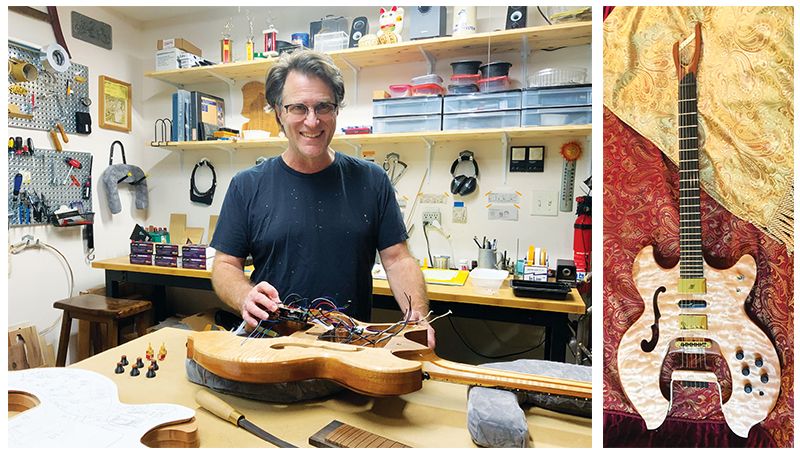
The simplest answer to what is a guitar luthier is this: a luthier is a specialist who makes, repairs, restores, or adjusts stringed instruments. The word traditionally referred to makers of lutes, but today it often includes experts who work on acoustic guitars, electric guitars, basses, violins, mandolins, and related instruments.
A guitar luthier may work in a small workshop, a guitar store, a factory, or a private studio. Some focus on building custom instruments. Others mainly repair damage, improve playability, or perform guitar setups.
Unlike a general woodworker, a guitar luthier must understand how wood, strings, tension, vibration, and humidity affect an instrument. A small change in the neck or bridge can alter the guitar’s tone and comfort.
In simple terms, a guitar luthier is part craftsperson, part technician, and part acoustic engineer.

What Does a Guitar Luthier Do?
A guitar luthier may handle everything from a basic adjustment to a full guitar build. The exact work depends on the luthier’s training and specialty.
Common services include:
• Building custom acoustic or electric guitars
• Repairing cracks, dents, loose braces, and broken headstocks
• Adjusting neck relief and string action
• Replacing frets
• Repairing or replacing bridges and nuts
• Installing pickups, preamps, and other electronics
• Refinishing or touching up damaged areas
• Restoring vintage guitars
• Correcting buzzing, poor intonation, and tuning problems
• Replacing tuners, strap buttons, and other hardware
A guitar luthier also checks how the parts work together. For example, high action may come from a bridge problem, a neck issue, a worn nut, or a poor setup. Treating only the symptom can waste money.
Good luthiers diagnose the cause before suggesting a repair. That careful process is one of the clearest differences between expert instrument work and a quick adjustment.
Guitar Builder vs. Guitar Repair Technician
People often use “luthier” and “guitar technician” as if they mean the same thing. They overlap, but the roles can differ.
A guitar builder designs and creates instruments. This work may include selecting wood, shaping the neck, carving braces, installing frets, applying finish, and setting up the completed guitar.
A guitar repair technician focuses on maintenance and restoration. Their work may include fret leveling, electronics repair, truss rod adjustments, and fixing structural damage.
Many professionals do both jobs. However, some luthiers specialize in one area. A builder may not accept major repairs, while a repair specialist may not build complete instruments.
When asking what is a guitar luthier, remember that the title covers a wide range of skills. Always ask about the person’s specific experience before handing over an expensive or vintage guitar.
How a Guitar Luthier Builds an Instrument
Building a guitar involves many careful steps. Each choice affects the sound, feel, durability, and appearance of the finished instrument.
Choosing the Wood
A luthier selects wood based on strength, weight, stability, appearance, and acoustic goals. Common guitar woods include spruce, cedar, mahogany, maple, rosewood, walnut, and ebony.
For acoustic guitars, the top has a major effect on sound. Spruce often offers a strong, clear response, while cedar may provide a warmer sound with less force. These are general traits, not fixed rules.
Shaping the Body and Neck
The luthier cuts and shapes the body plates, sides, braces, neck, and fingerboard. The work must be precise because the guitar needs to withstand constant string tension.
The neck must be strong but comfortable. The body must vibrate well without becoming too fragile. This balance is similar to building a bridge that also needs to sing.
Installing Frets and Hardware
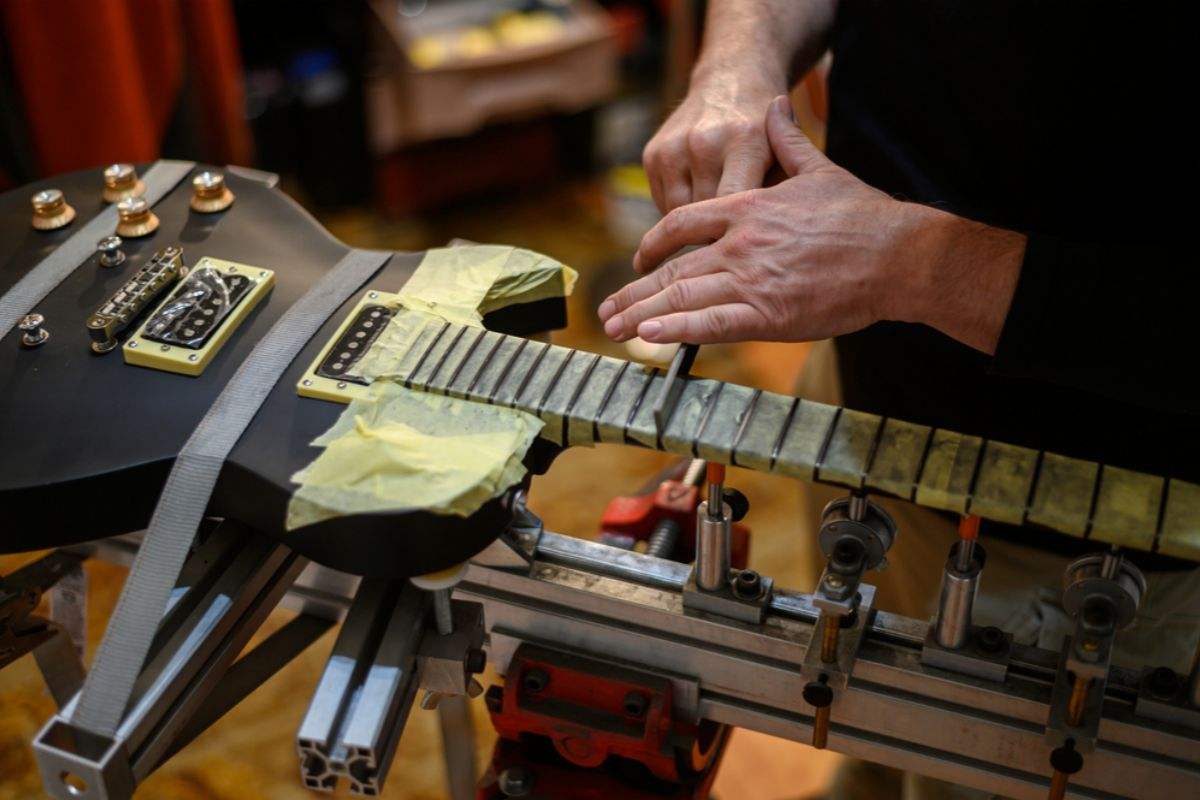
The luthier installs frets at precise positions. Even a small spacing error can cause poor intonation, so this step requires accurate measurement.
The bridge, nut, tuning machines, pickups, and controls are then installed. Finally, the guitar receives a detailed setup so the strings sit correctly and the notes play in tune.
Voicing and Final Setup
On an acoustic guitar, the luthier may adjust braces and other internal parts to refine the instrument’s response. This work requires experience because removing too much wood can weaken the guitar or create an overly bright sound.
The final setup includes checking action, neck relief, intonation, fret condition, tuning stability, and overall comfort.

When Should You Visit a Guitar Luthier?
You do not need to visit a guitar luthier every time your strings become old. Many routine tasks, such as changing strings and cleaning the fretboard, are easy to learn.
Professional help becomes useful when the problem involves structure, precision, or permanent damage.
Consider booking a luthier when:
• The guitar has severe fret buzz
• The action is too high or too low
• The neck looks bowed or twisted
• The guitar will not stay in tune
• The intonation is inaccurate
• A fret is loose, sharp, or worn down
• The bridge is lifting
• The body or neck has a crack
• The headstock has broken
• Electronics cut out or produce noise
• You want to install a new pickup or bridge
• You own a vintage or valuable instrument
A common mistake is turning the truss rod without knowing what it does. The truss rod controls neck relief, but it cannot fix every action problem. Too much force can damage the neck or hardware.
When in doubt, stop adjusting and ask a qualified guitar luthier to inspect the instrument.

What Is a Guitar Setup?
A guitar setup is a group of adjustments that helps an instrument play comfortably and accurately. It is one of the most common services offered by a guitar luthier.
A setup may include:
• Adjusting neck relief